Vintage-style equalizers can seem intimidating to beginners because they may not show a graphical frequency curve. Once you understand their basic controls, however, they are straightforward to use. Using V-EQ4 as an example, this article explains high-pass and low-pass filters, as well as shelf and bell controls. Understanding these tools can help you add character to tracks and expand your sound-shaping options when mixing.
Understanding Vintage Equalizer Controls
An essential effect for mixing is the equalizer.
It adjusts frequency ranges to shape the sound.
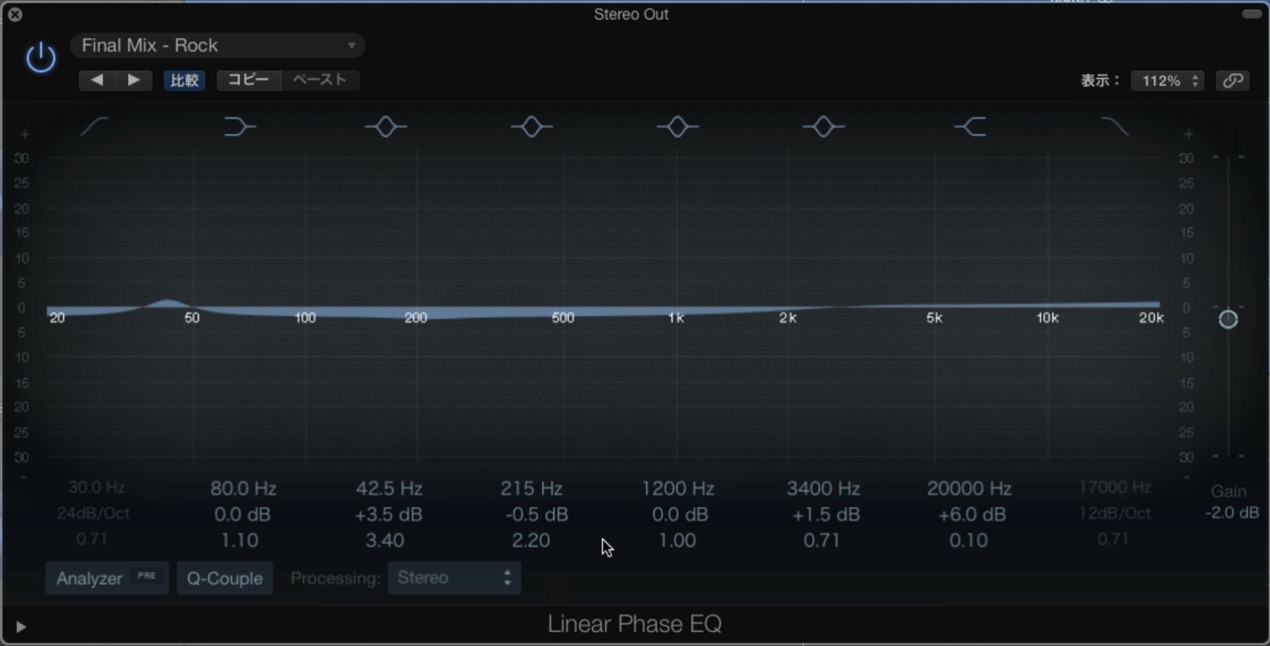
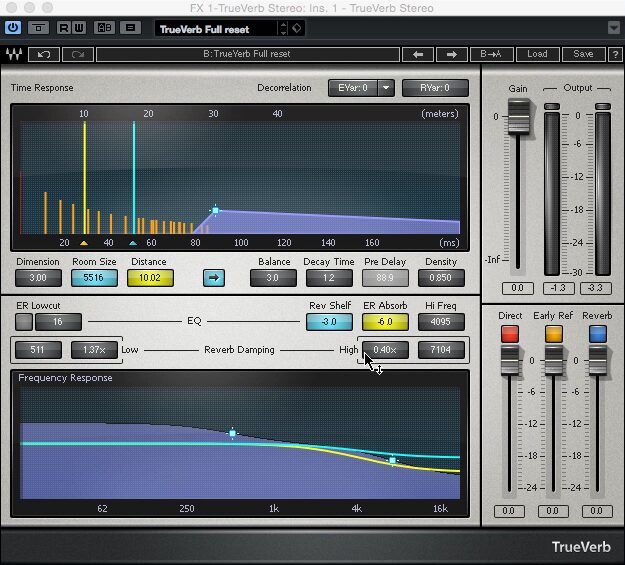
Perhaps the equalizer you use most often is

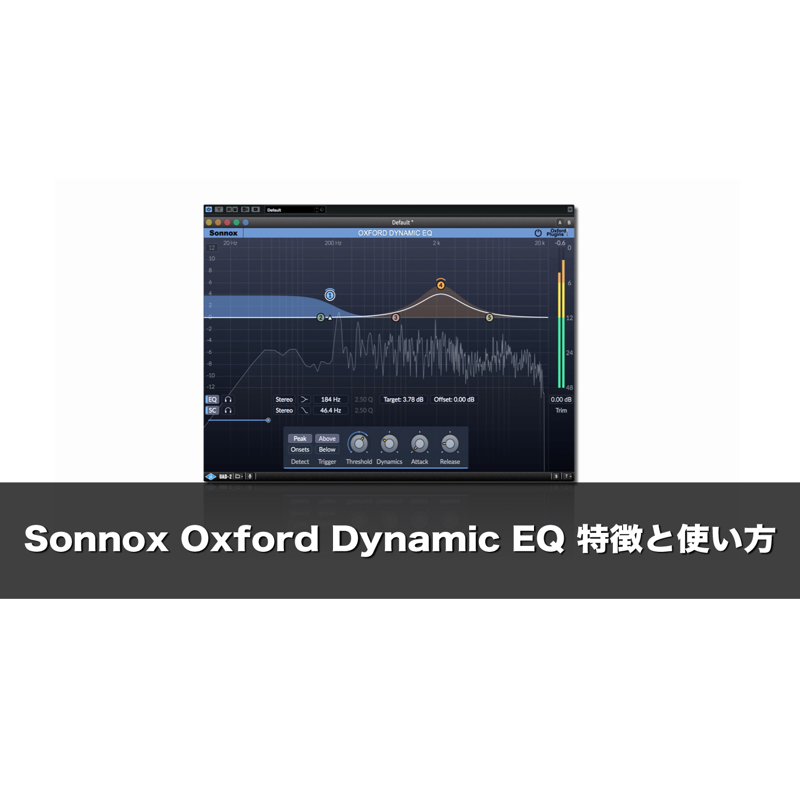
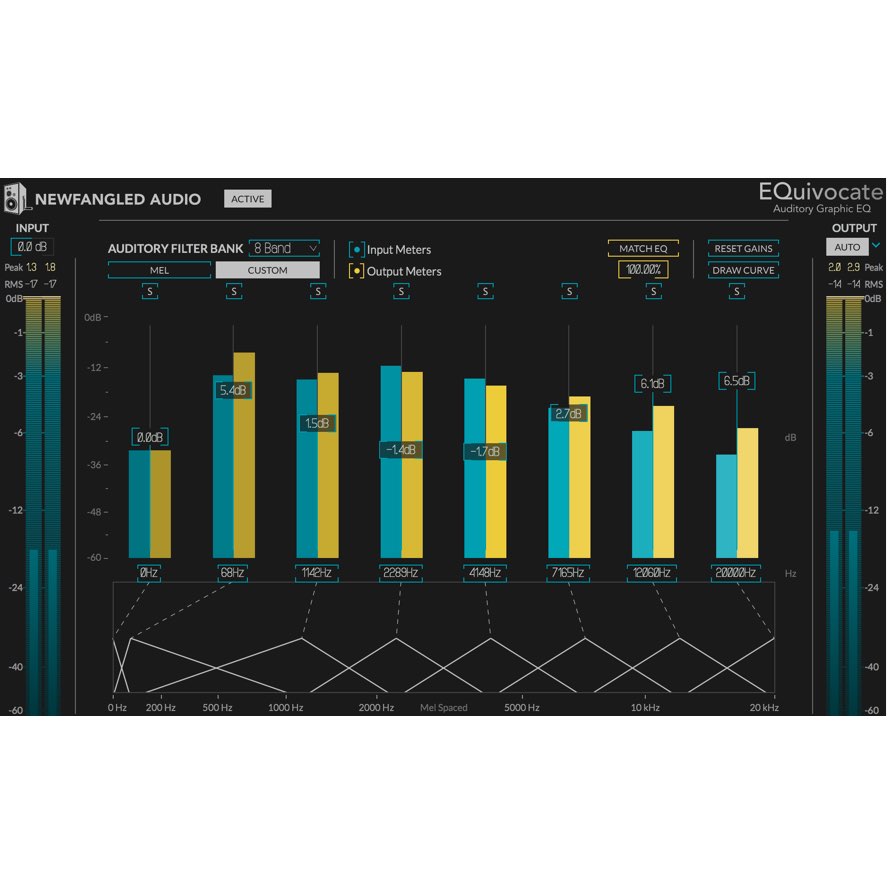
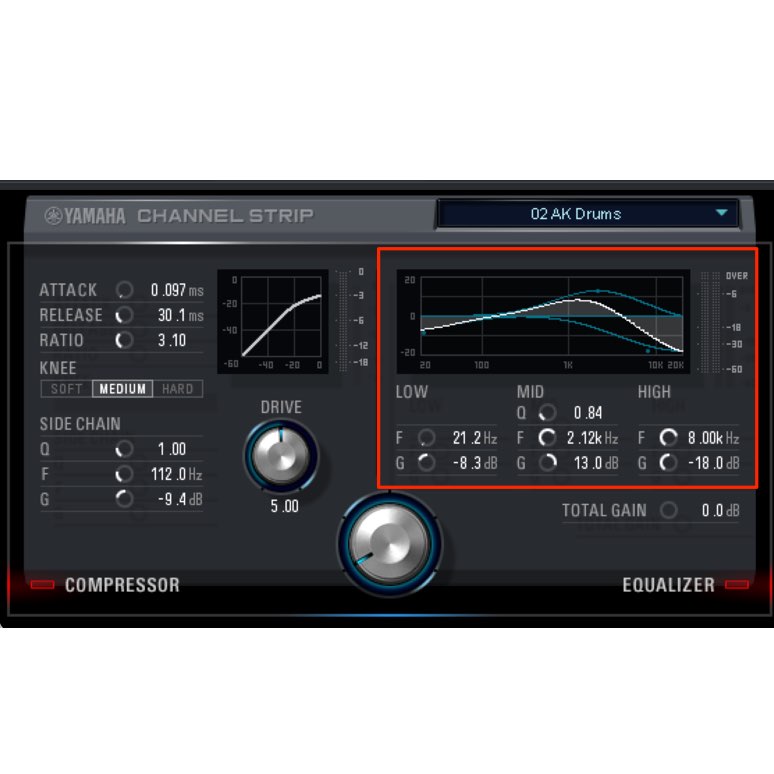
the type that displays its frequency response graphically, like this one.
Many DAWs include one by default, so it may be your main EQ.
There are many other types of equalizer as well.
Some recreate vintage models
and can give a track a distinctive character.

Without a graphical frequency display, however,
they may feel difficult to use.
To help, we will explain
the basic concepts of vintage equalizers.
Once you get the hang of them, they are easy to use,
so give them a try and broaden your sound-shaping options.
As examples, we will compare Waves Q10 and V-EQ4 throughout the explanation.
Vintage Equalizer Concepts and Use
Selected Questions and Answers from YouTube

I don’t understand how to read the meter on the far right. Could you explain it?

This is a level meter showing the output level after the equalizer. Use the OUTPUT knob to its left to adjust the level: for example, raise it to compensate for level lost when cutting frequencies, or lower it if boosting has increased the level.
Low Cut and High Cut

When using equalizers and synthesizers,
it helps to understand the terms HP and LP.
- HP stands for high-pass filter, also called a low cut.
- LP stands for low-pass filter, also called a high cut.
Once you understand that,
choose the cutoff frequency where the filter begins to reduce the unwanted range.
The other abbreviations mean:
- LF: Low Frequency — lows
- LMF: Low-Mid Frequency — low mids
- HMF: High-Mid Frequency — high mids
- HF: High Frequency — highs
Shelf

This symbol represents a shelf.
It gradually boosts or cuts frequencies beyond the selected point.
Use the outer black knob to select the frequency,
and the inner white knob to set the amount of boost or cut.
Bell

This symbol represents a bell, also called a peak.
Its curve forms a peak or dip centered on the selected frequency.
Use the outer black knob to select the frequency,
and the inner white knob to set the amount of boost or cut.
The HiQ button outlined in green sets the width of the affected range (Q).
When lit, it narrows the range.
Frequently Asked Questions
Q1. How does a vintage equalizer differ from an EQ with a graphical display?
An EQ with a frequency-response display can be intuitive to use visually, while vintage-style EQs often use knobs without showing a curve. Many vintage models emulate analog equipment and can add distinctive character to a track.
Q2. What do HP and LP stand for?
HP means high-pass filter, or low cut; LP means low-pass filter, or high cut. An HP filter attenuates frequencies below its cutoff, while an LP filter attenuates frequencies above it.
Q3. When should I use a shelf or a bell?
A shelf gradually boosts or cuts a broad range beyond the selected frequency. A bell acts around a center frequency and can provide a more localized adjustment, making it useful for finer corrections.
Q4. What does the HiQ button on V-EQ4 do?
HiQ changes the Q, or width, of the bell band. When enabled, it narrows the affected frequency range.
NEW ARTICLES
Latest English Articles