A survey of 2,226 music production users reveals a gap between strong interest in AI and how it is used. Some 83.5% are interested in AI technology, around 80% already use tools such as AI plugins or voice synthesis, and about 87% of AI-tool users report saving time or working more efficiently. At the same time, 68.8% are concerned about copyright and rights issues, and professional users are especially concerned about effects on their work. One striking pattern is that younger users are more cautious about AI-generated music, while more experienced users tend to be more open to AI. Attitudes differ considerably by age and experience.
Are experienced producers more open to AI? The survey results
Thank you to everyone who took part in our Christmas survey at the end of 2025!
This survey focused on music production and AI.
We asked about AI-tool use and views on AI-generated music, and some unexpected patterns emerged.
Here are the findings, including differences by age group and years of music production experience.
Music Production & AI survey results video
Excerpt from the questions and answers on YouTube

How did you distinguish professionals from amateurs?

The “professional” and “amateur” categories in this survey are based on how respondents described themselves. They are not defined by strict criteria; please regard them as reference groups for comparing trends among people who make music.
Who responded?
First, let's look at the respondents by gender, age, production experience, and purpose.
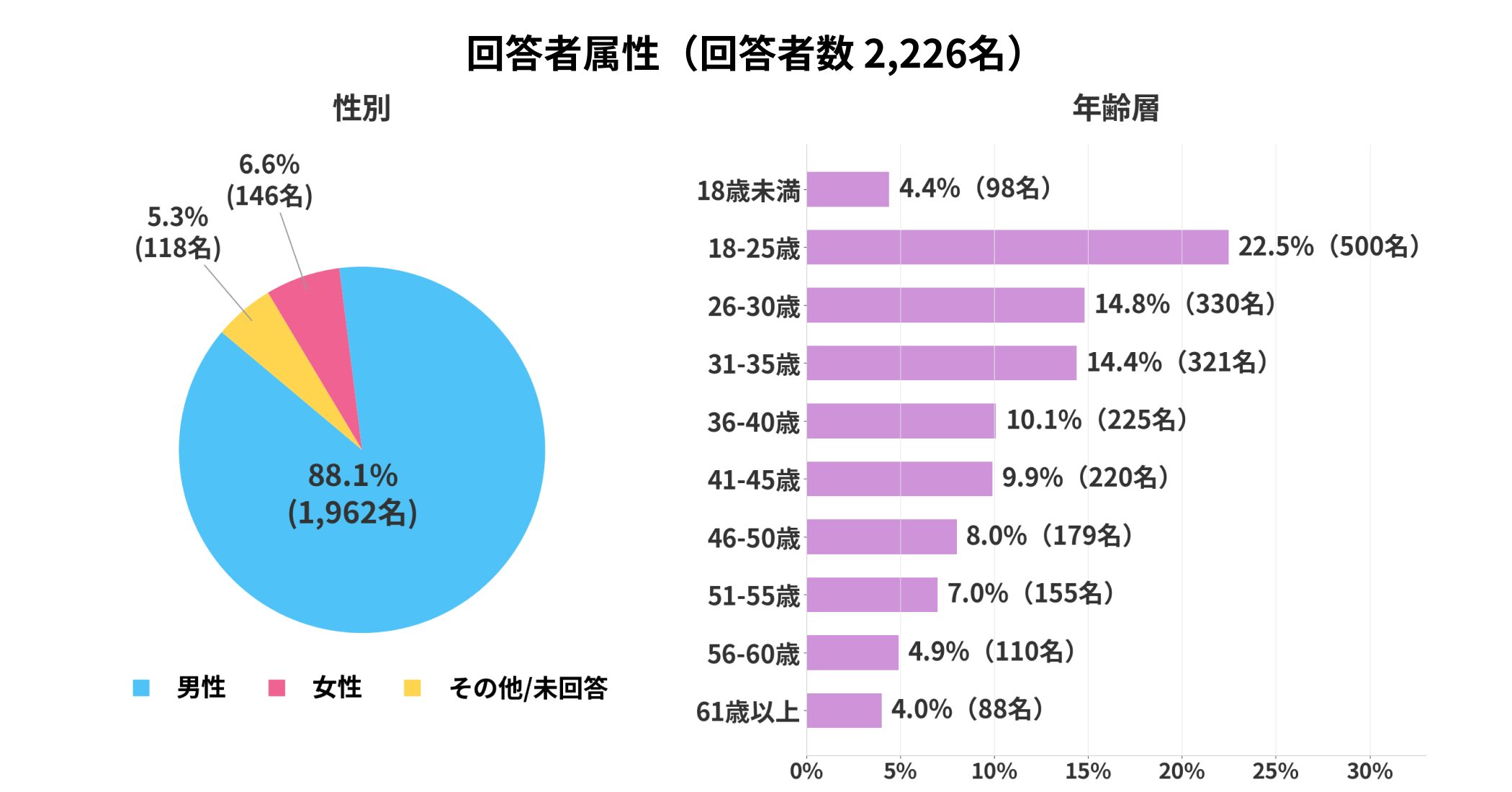
The respondents were 88.1% men and 6.6% women.
People aged 18–35 accounted for 51.7%, so more than half were in the younger age range.
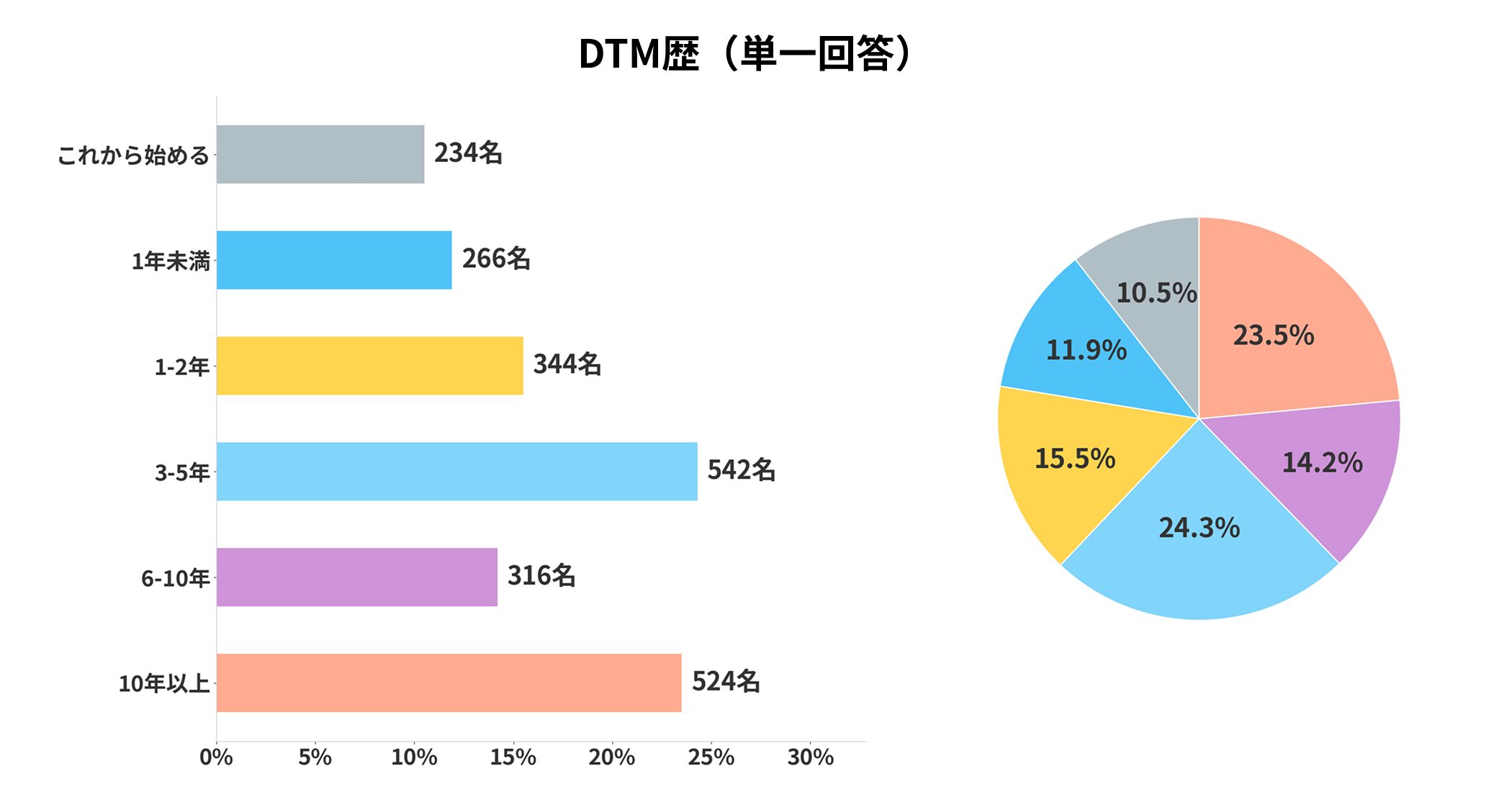
Those with at least three years of music production experience made up 62%, indicating many intermediate to advanced respondents.
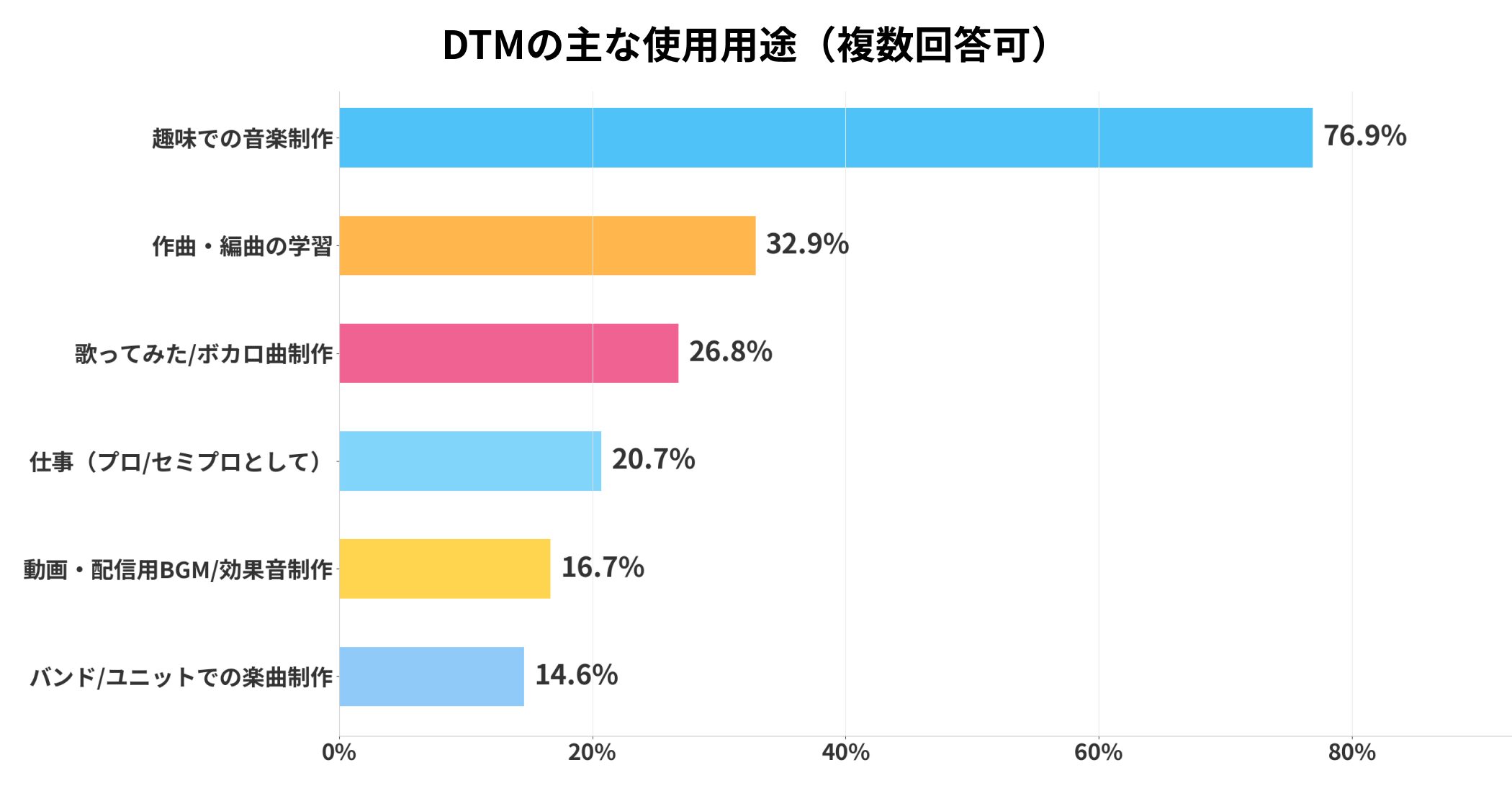
Among all respondents, 76.9% make music as a hobby and 20.7% identify as professional or semi-professional.
J-pop, anime songs, and Vocaloid were the most common production genres, together accounting for 43.0%.
DAW rankings
Next, let's look at the main DAWs respondents use.
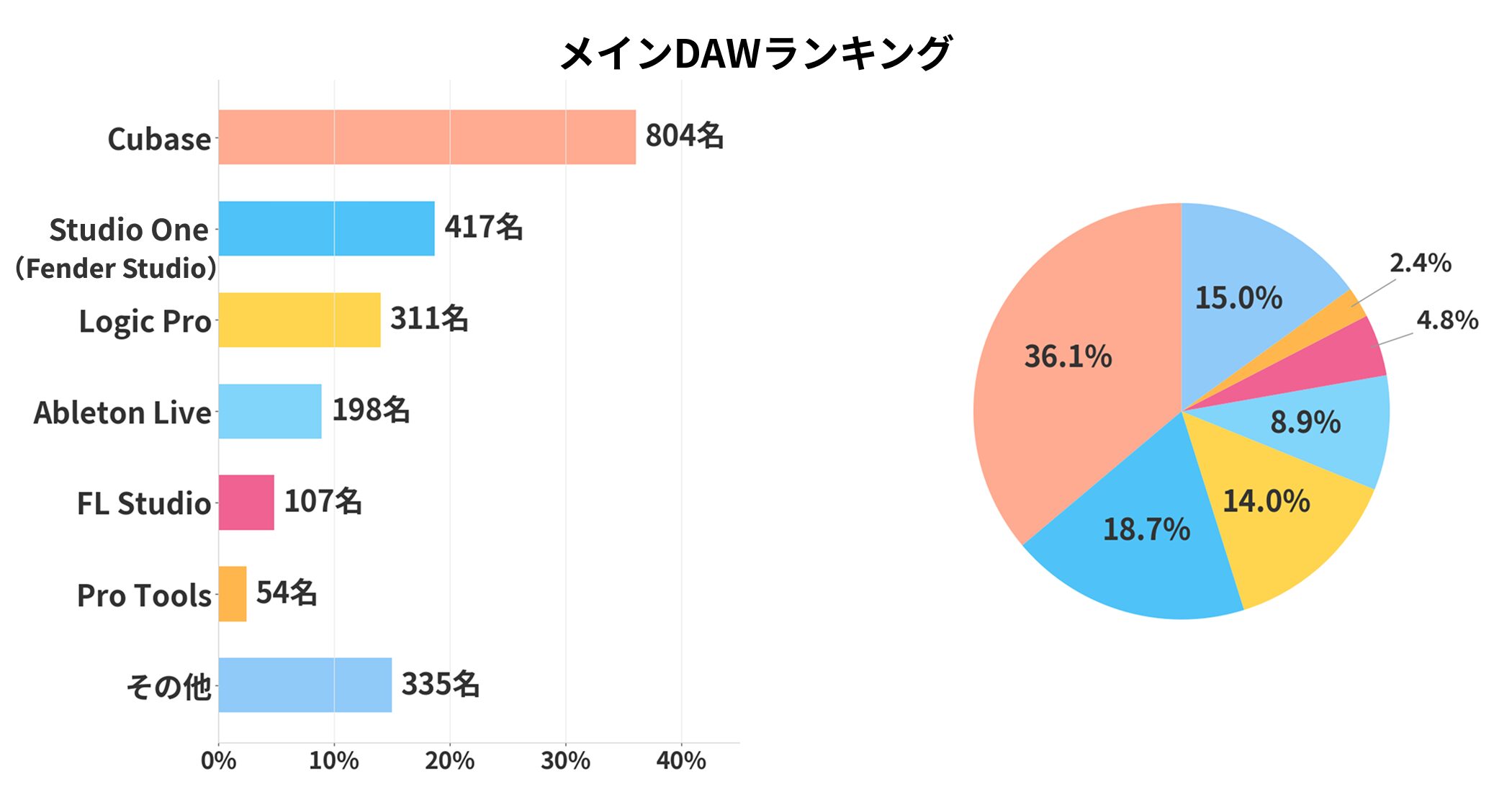
Cubase remained the most-used main DAW at 36.1%.
Studio One was second at 18.7%; following its move under Fender, it has been renamed “Fender Studio.”
Logic Pro came third at 14.0%.
The leading products have not changed much since last year.
Interest in AI technology
Now to the survey's main topic: the AI findings.
Interest in AI technology
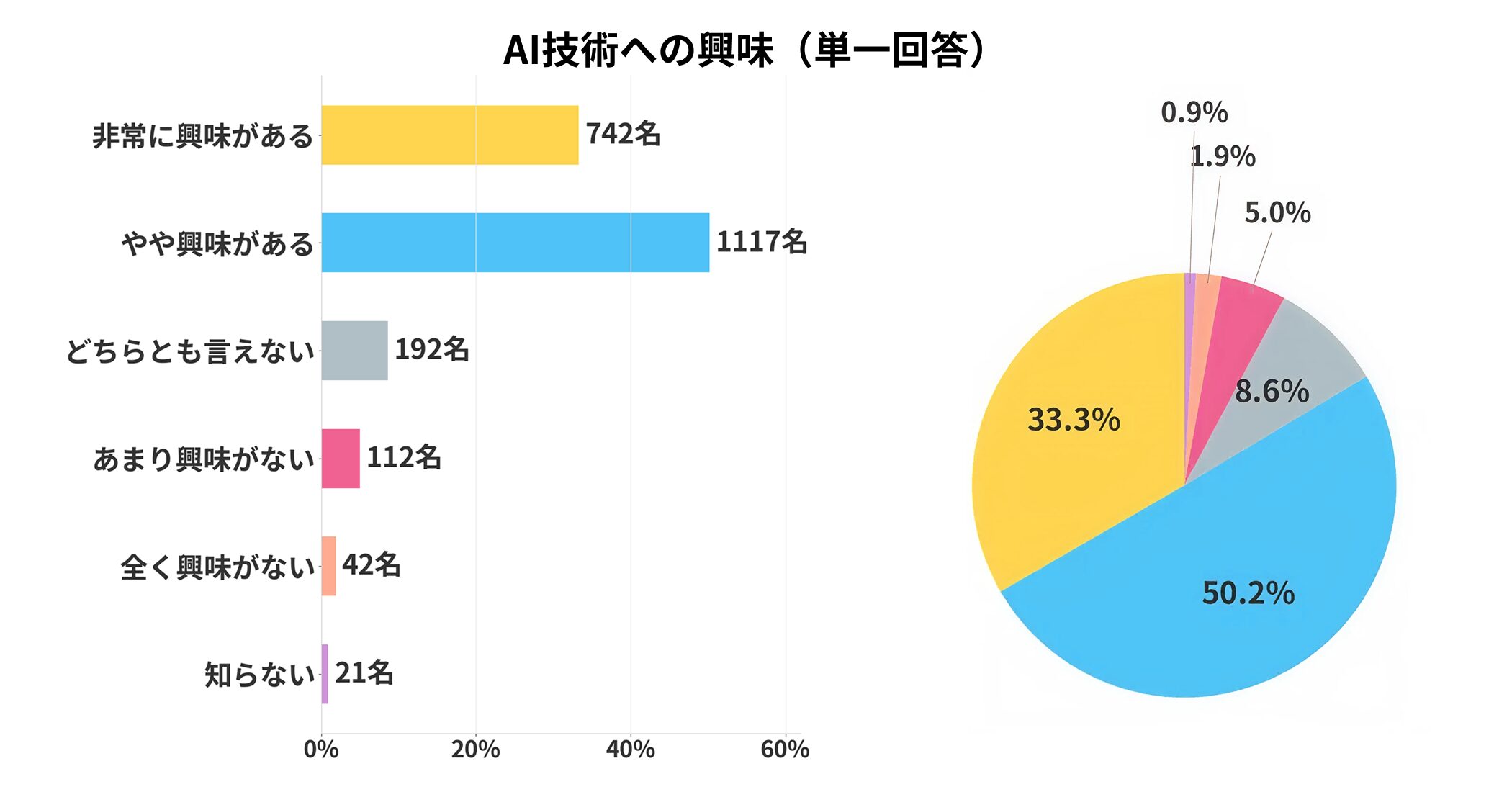
Combining “very interested” (33.3%) and “somewhat interested” (50.2%), 83.5% expressed interest in AI technology.
Only around 7% said they were not interested.
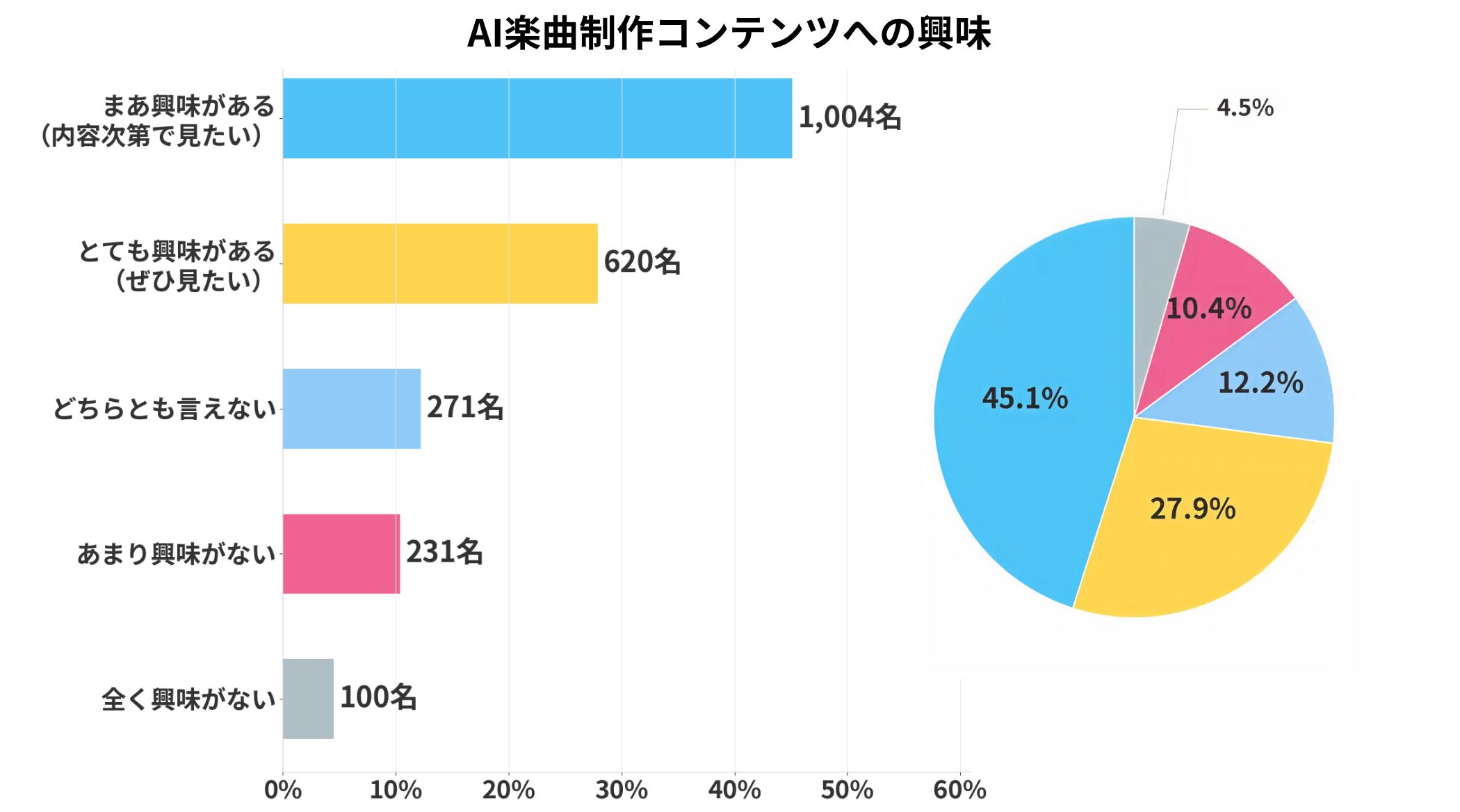
When asked about content that combines AI with music production, around 70% said they were interested.
This suggests broad interest in using AI for creative work as well.
Use of AI tools
Next, what kinds of AI tools are respondents actually using?
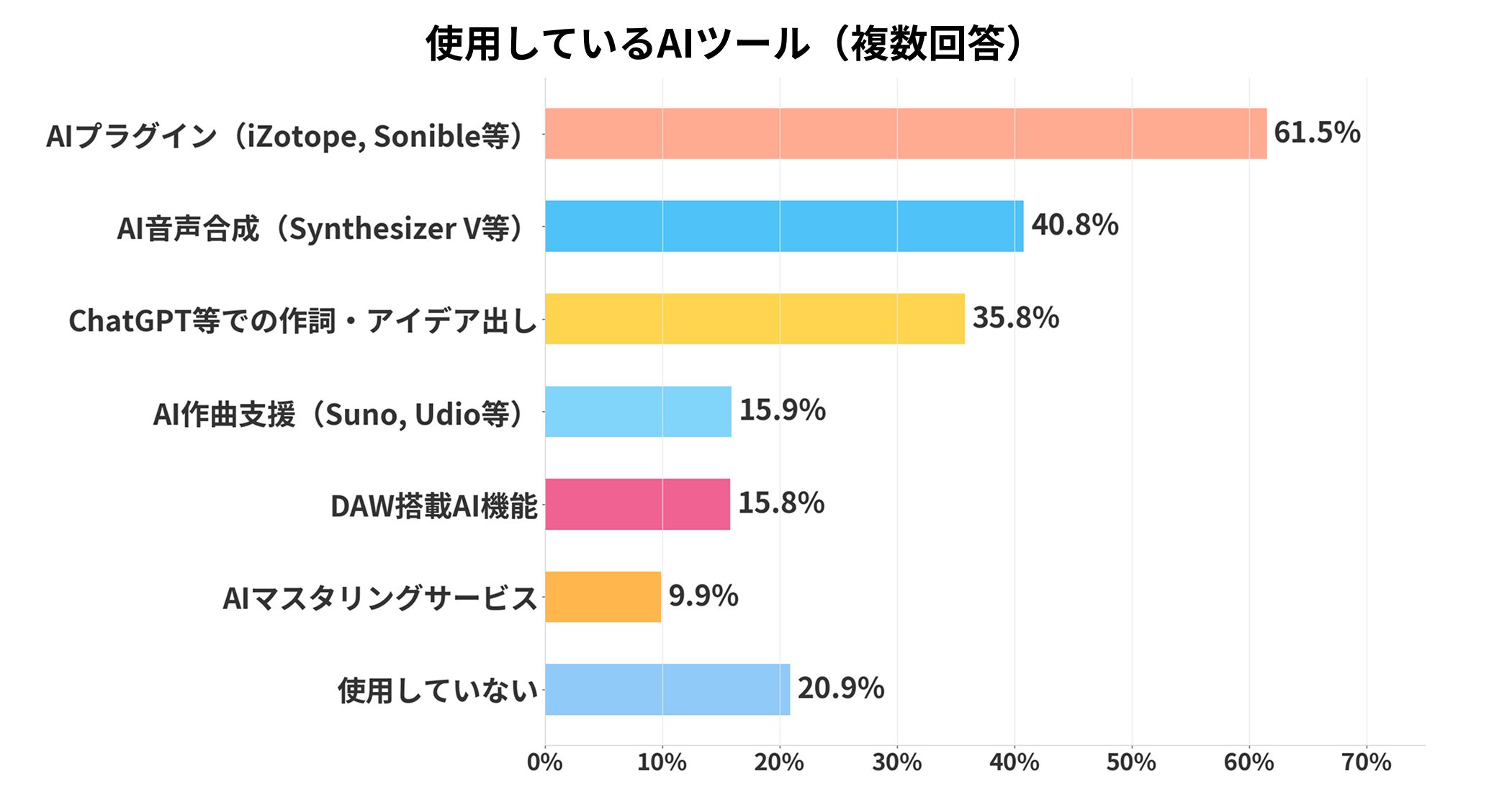
The most common were AI plugins such as iZotope and Sonible products, at 61.5%.
AI voice synthesis such as Synthesizer V and ACE Studio followed at 40.8%, then ChatGPT for lyrics and ideas at 35.8%.
AI composition services such as Suno and Udio accounted for 15.9%, and AI features built into DAWs for 15.8%.
Around 80% already use some form of AI tool.
By contrast, awareness of AI features built into DAWs, such as stem separation, was relatively low.
Some respondents may be using such features without thinking of them as AI.
Why some respondents have not used AI tools
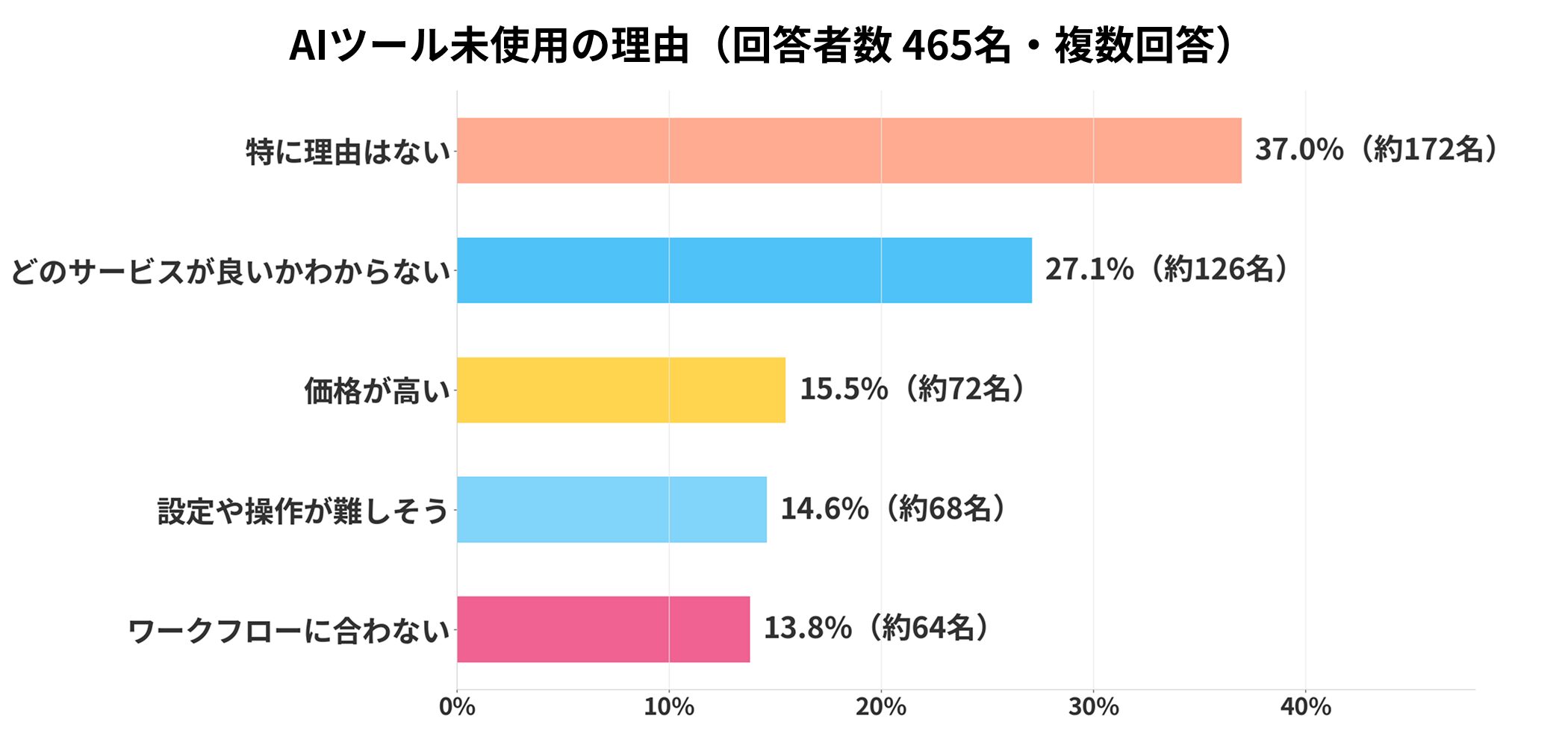
We asked the roughly 20% who do not use AI tools why they had not tried them.
The most common answer was “no particular reason / just haven't used them” at 37.0%, followed by “I don't know which service is good” at 27.1%.
Many are not actively rejecting AI.
Enjoyable tasks versus tasks to hand over to AI
Comparing the “most enjoyable” step in making music with the step respondents would like AI to handle reveals an interesting pattern.
The most enjoyable part of making music
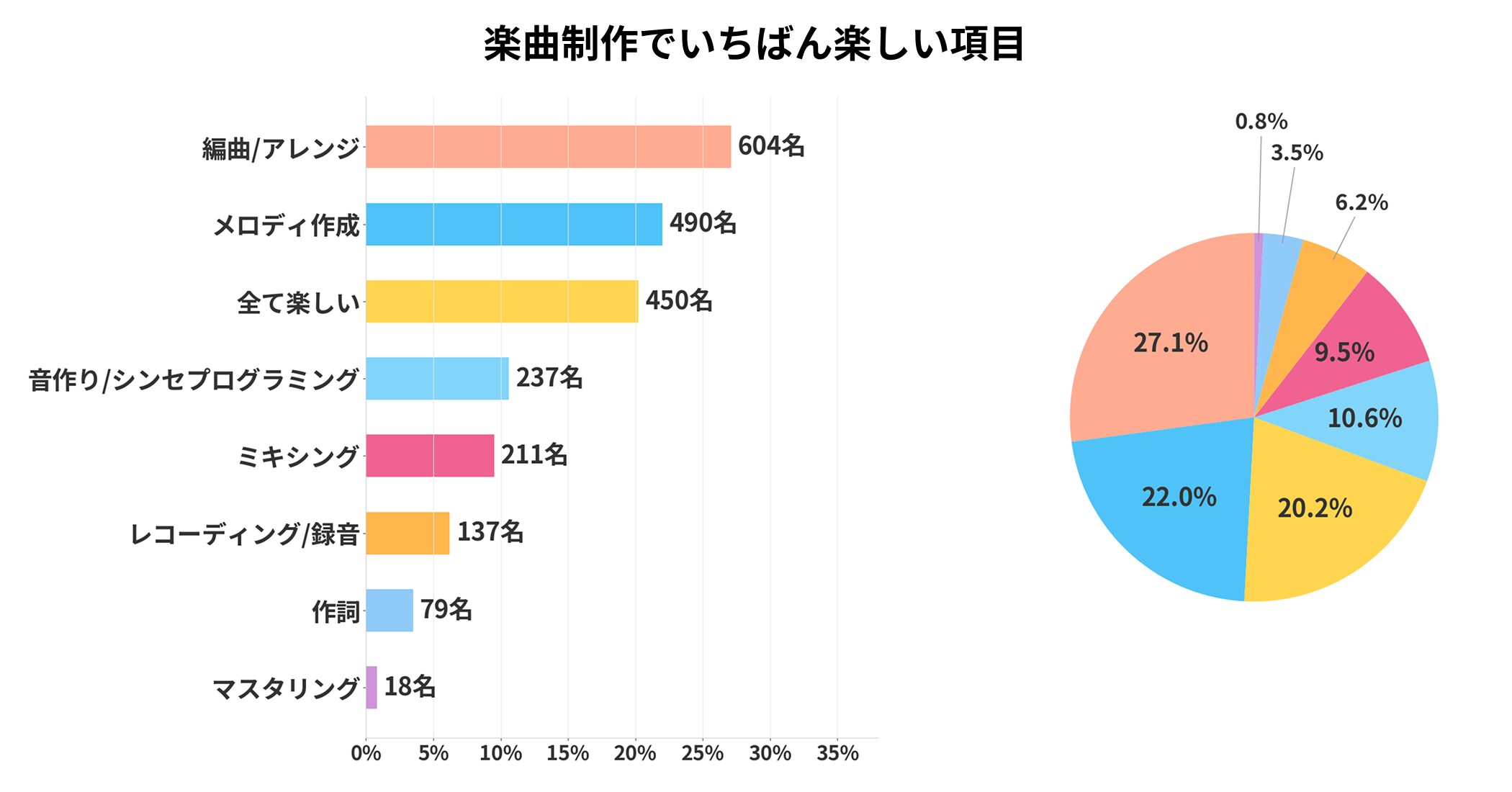
Arrangement ranked first at 27.1%, followed by composing melodies at 22.0%.
These creative steps were the top choices.
Another 20.2% answered that “everything is enjoyable,” showing a group that enjoys the whole process of music production.
Mastering was lowest at 0.8%.
Tasks respondents want to use AI for
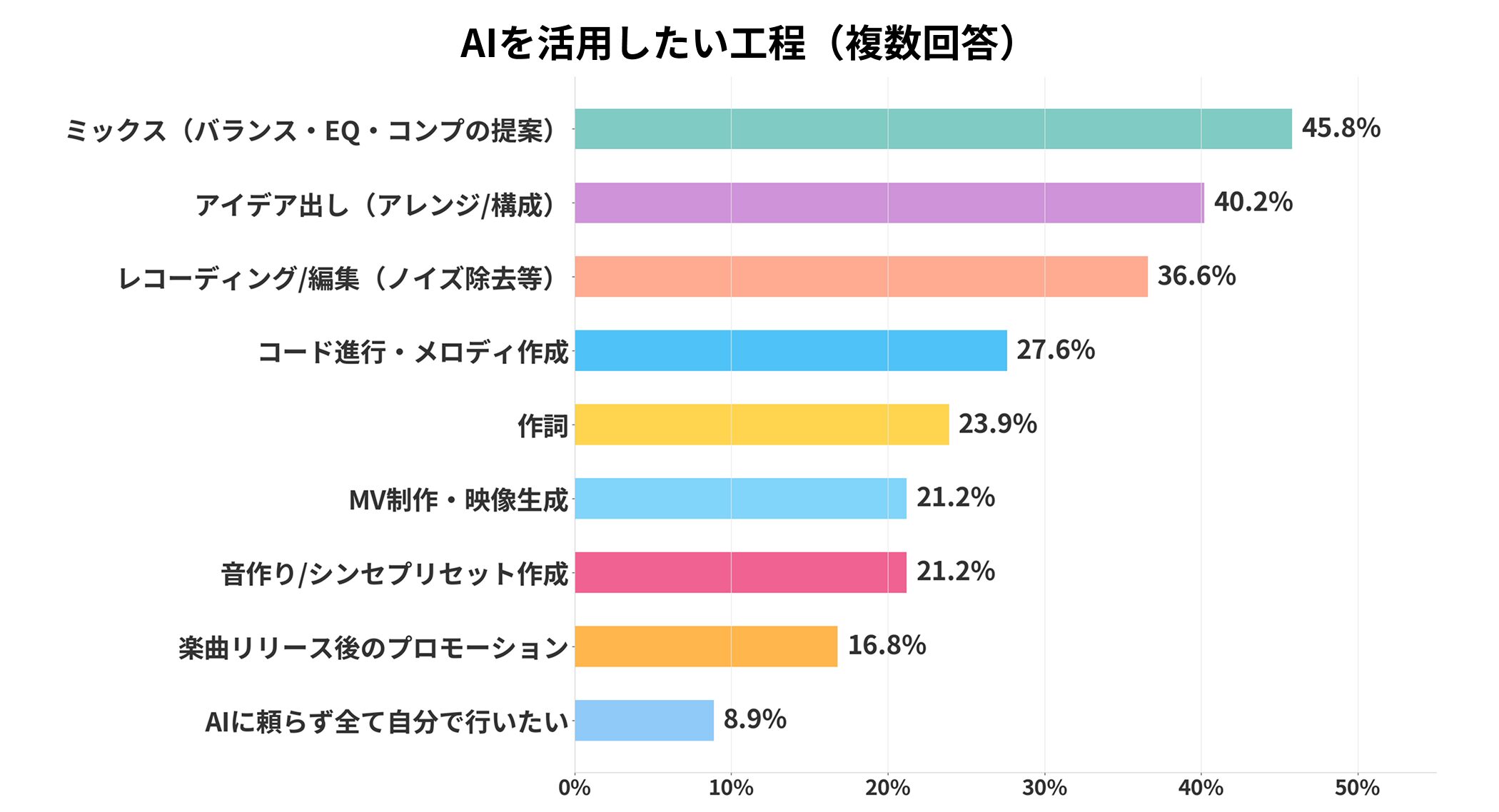
Among those who use AI or would like to, mixing/mastering led at 45.8%.
Idea generation followed at 40.2%, then recording/editing at 36.6%.
* In the survey question, the mixing option included “mixing/mastering.”
Respondents tend to want AI to handle tasks they find less enjoyable.
Only 8.9% wanted to do everything themselves.
Benefits and concerns of using AI
Here are the reported benefits of AI and the concerns respondents raised.
Perceived time savings and efficiency
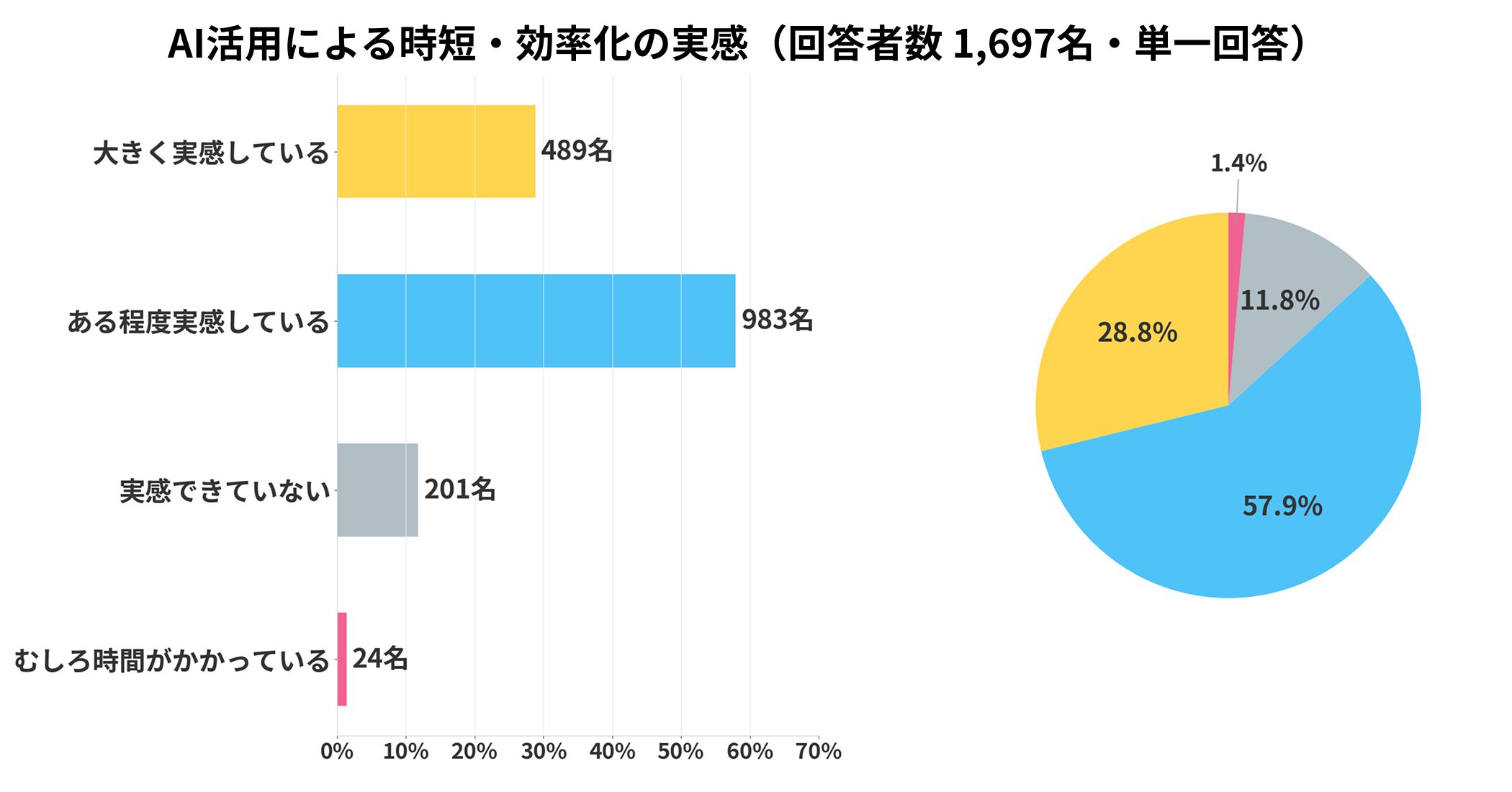
We asked people who had used AI tools whether they felt those tools saved time or improved efficiency.
“Strongly agree” (28.8%) and “somewhat agree” (57.9%) together mean about 87% reported a benefit.
Only 1.4% said AI was actually taking more of their time.
Concerns about using AI
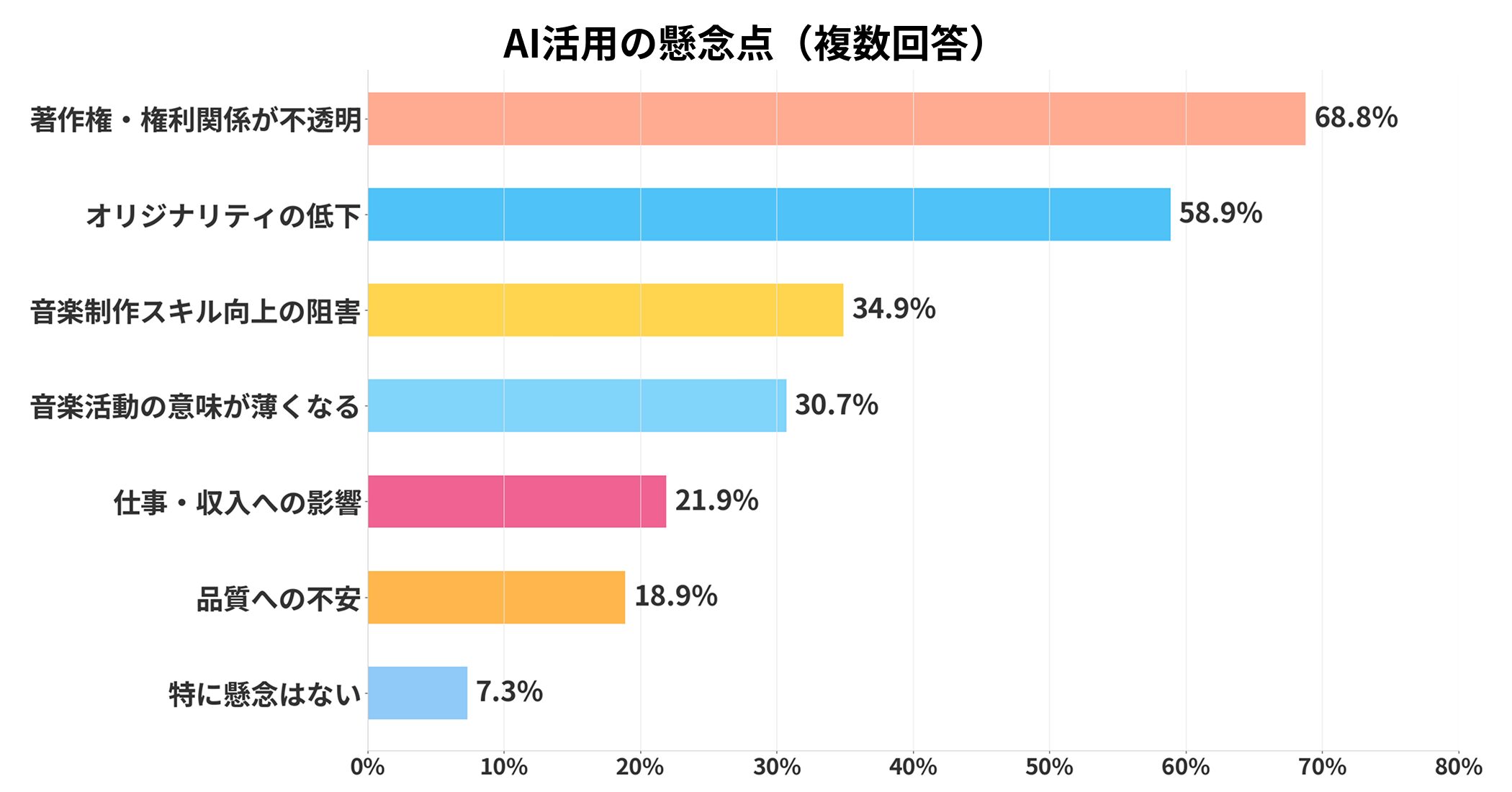
Respondents also expressed concerns about using AI.
The most common was uncertainty about copyright and rights issues (68.8%), followed by a loss of originality (58.9%).
Copyright and originality were the two leading concerns.
Even people who use AI remain uneasy about these issues.
Views on AI-generated music
We asked about AI services that generate entire songs, such as Suno and Udio.
Attitudes toward AI-generated music
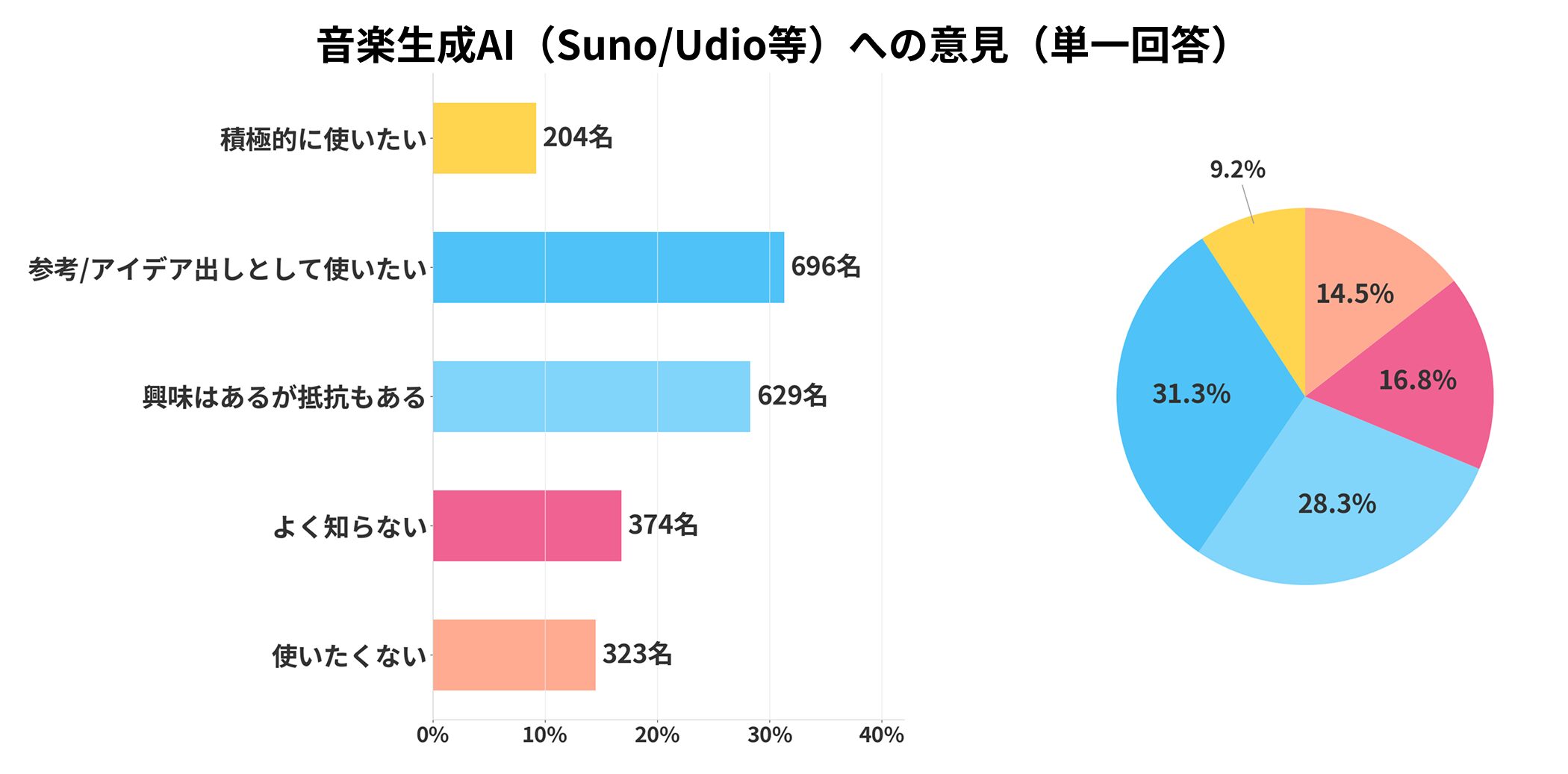
Positive views (“want to use it actively” plus “want to use it for reference or ideas”) stood at 40.5%. Negative views (“have reservations” plus “don't want to use it”) stood at 42.8%—almost evenly divided.
Unlike the broad acceptance of AI plugins, opinions on AI music generation are split.
A further 16.8% answered “I don't know much about it,” suggesting awareness is also an issue.
AI's potential impact on the music industry

Some 56.9% expected a positive or strongly positive impact, versus 17.1% who expected a negative or strongly negative one.
More than half expected a positive impact, though 25.9% answered “I don't know,” reflecting uncertainty about the future.
Surprising patterns in cross-tabulated responses
Cross-tabulating the responses revealed more detailed patterns.
Main DAW × AI-tool use
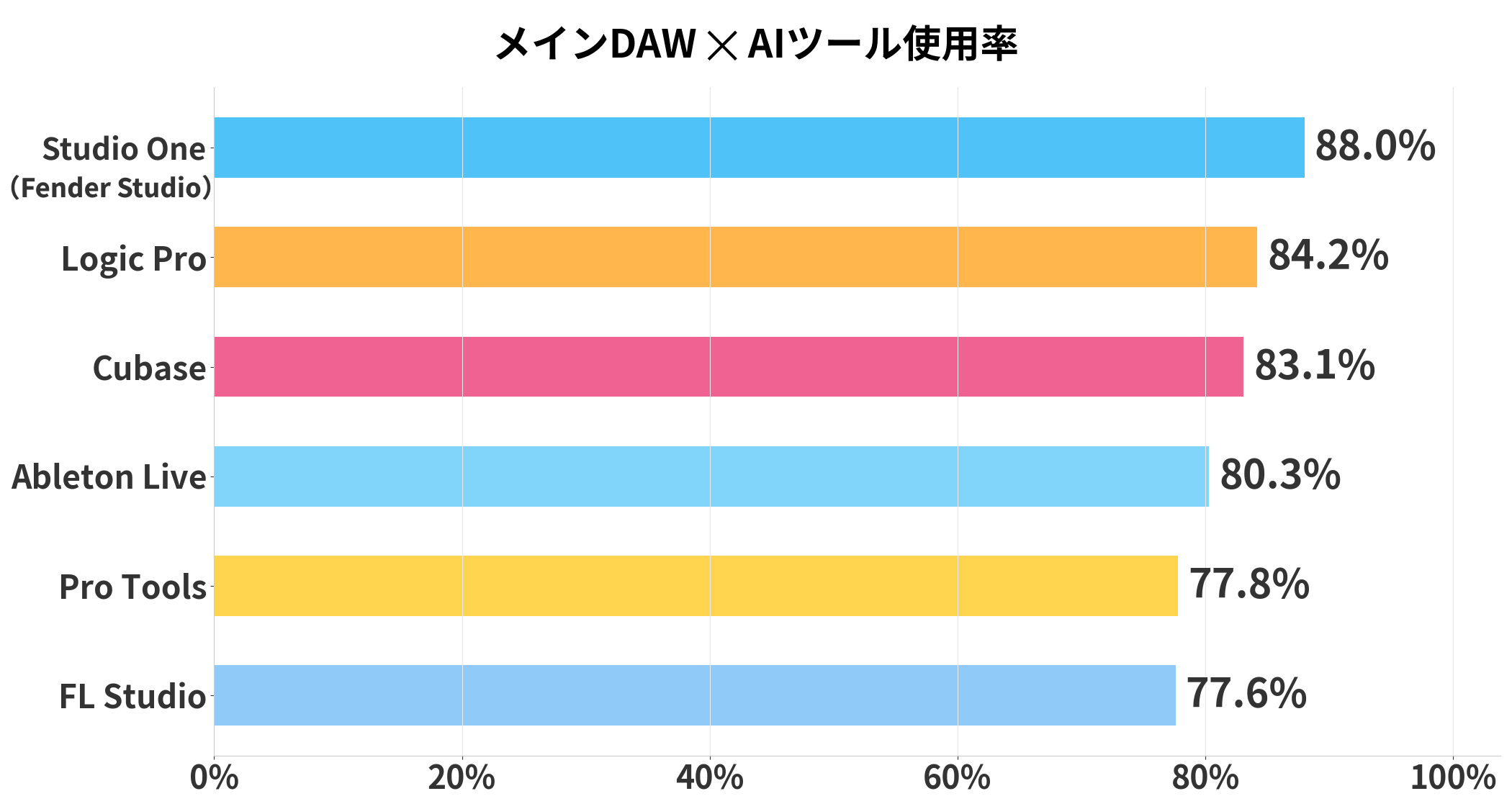
Studio One users had the highest AI-tool use rate by DAW, at 88.0%.
Logic Pro followed at 84.2%, then Cubase at 83.1%.
Age group × views on AI-generated music
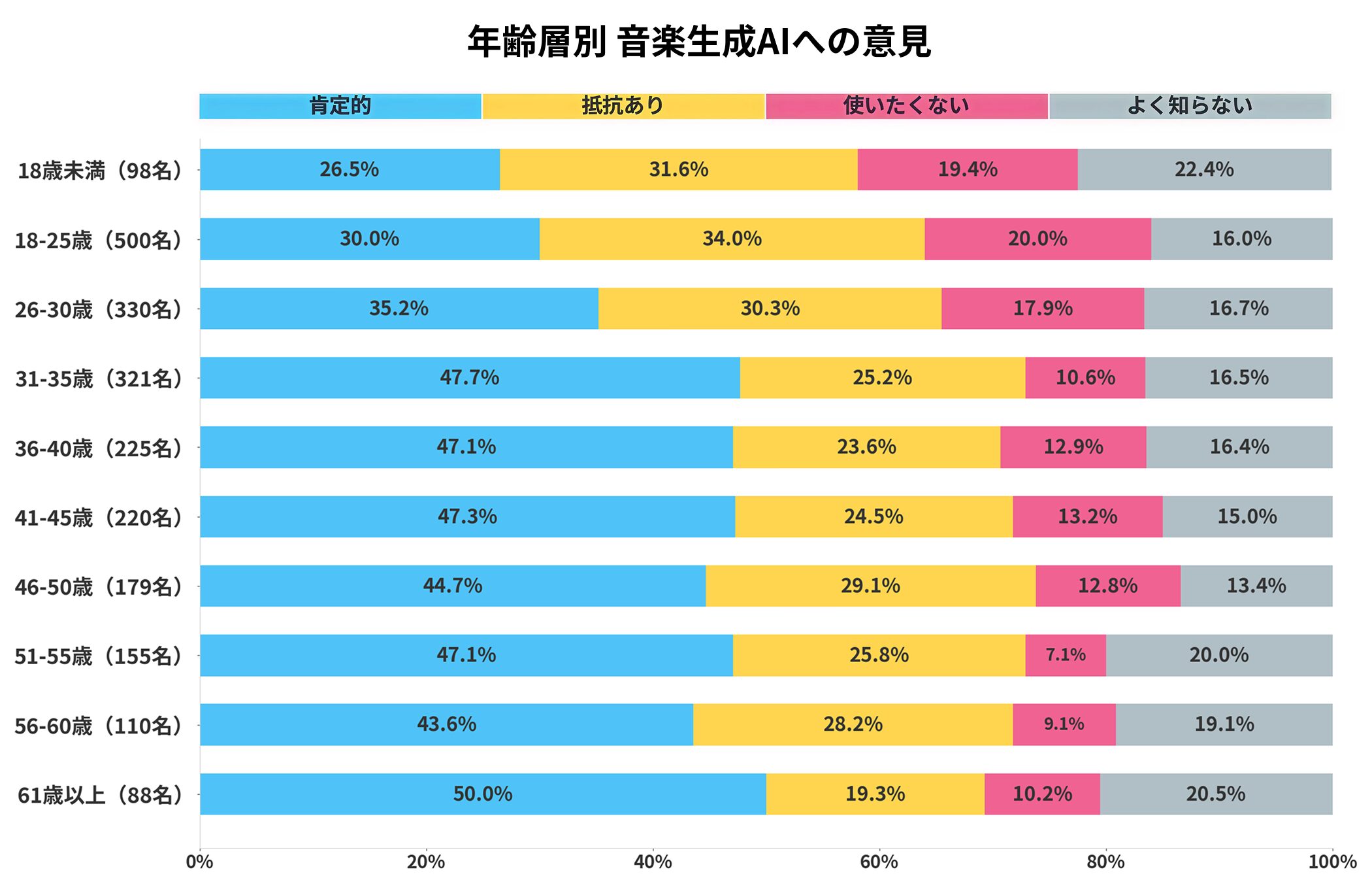
Contrary to the idea that younger people are naturally more enthusiastic about AI, younger users were more cautious, while older users were more accepting.
The balance between positive and negative views reversed around age 30.
Younger respondents may place more value on developing and demonstrating their own skills. Older respondents may already have an established musical style and therefore see AI more readily as a tool that supports their expression. These are possible explanations, not conclusions established by the survey.
Professional/amateur × AI concerns
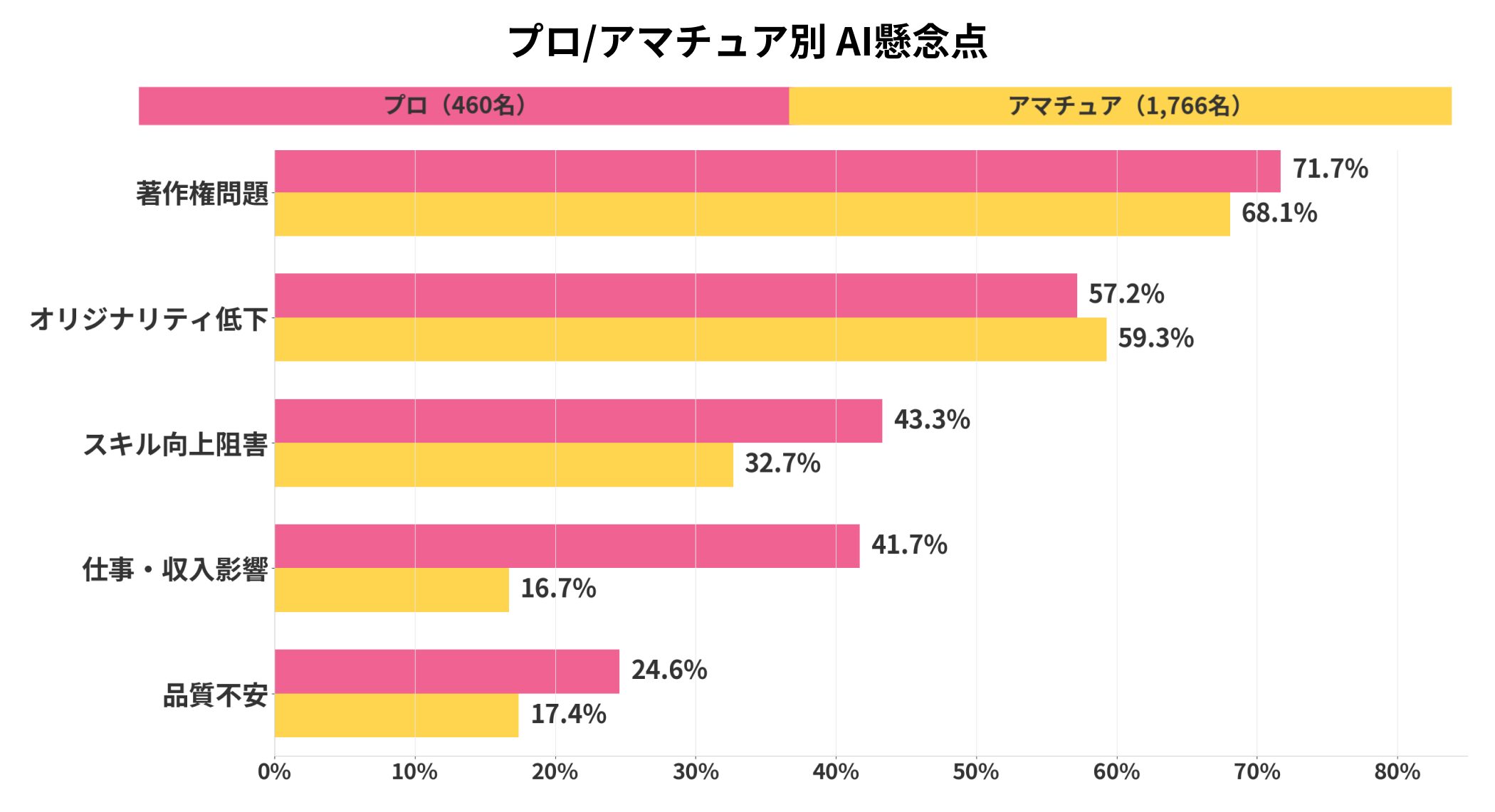
Professionals were much more concerned about effects on their work and income; the gap versus amateurs was 25 percentage points.
On loss of originality, professionals and amateurs expressed almost equal levels of concern.
Professional/amateur × interest in AI
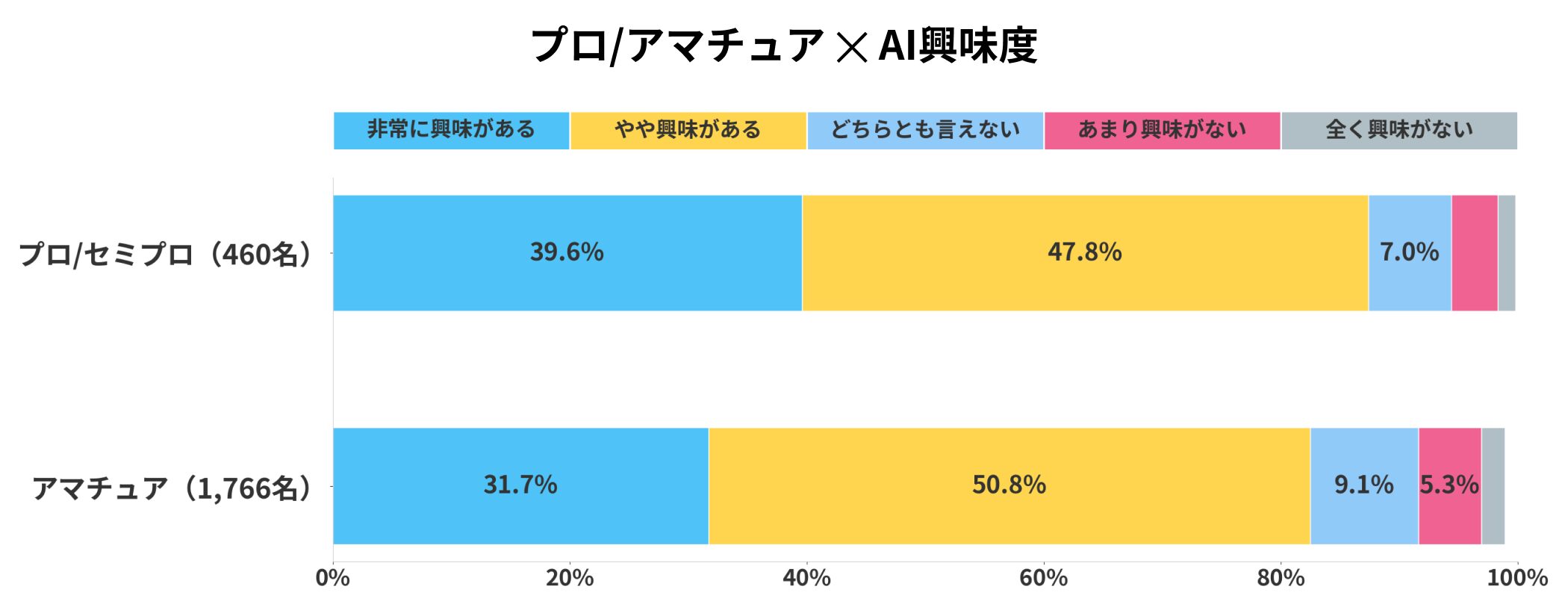
Despite their concerns, professionals showed greater interest in AI (87.4% versus 82.5%).
This suggests a desire to make AI useful while understanding its risks.
Professionals who depend on music for their livelihood may be especially alert to new tools.
Years of music production experience × interest in AI
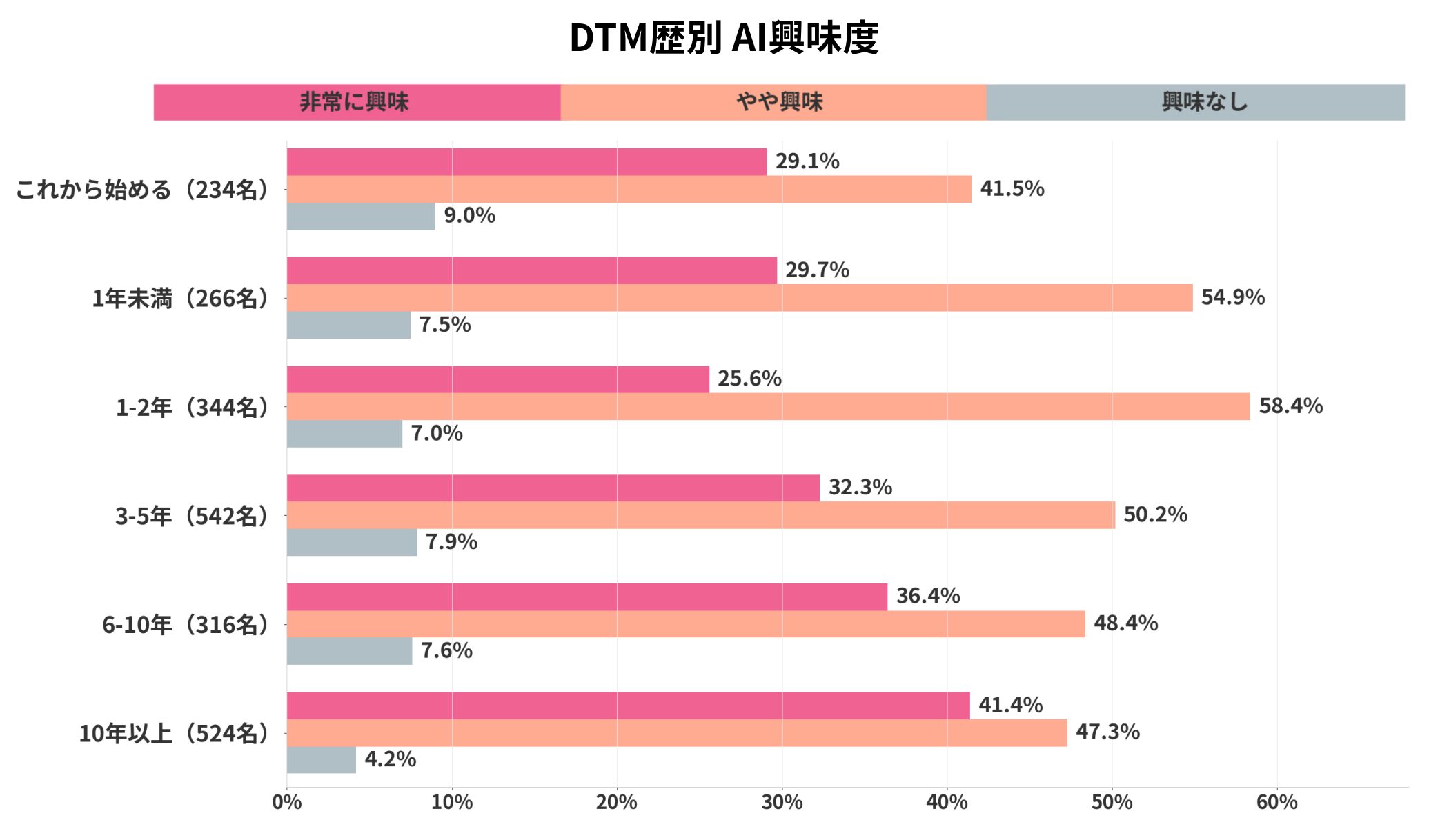
Among respondents with at least 10 years of experience, 41.4% were “very interested” in AI—the highest share—and only 4.2% expressed “no interest,” the lowest share.
More experienced users tended to be more open to AI, another unexpected pattern.
Perhaps experience helps people identify their weak points and limits, making AI's potential benefits easier to imagine.
The unexpected pattern in this survey was that younger respondents tended to be cautious about AI, while experienced and professional users showed higher interest.
With experience, people may be more likely to see AI as a tool they can put to work.
Sleepfreaks will continue making content informed by your feedback.
Finally, thank you again to all 2,226 people who took part.
Frequently asked questions
Q1. How many music producers use AI tools?
Around 80% of survey respondents already use some form of AI tool. AI plugins such as iZotope products were the most common (61.5%), followed by AI voice synthesis (40.8%) and ChatGPT for lyrics and ideas (35.8%).
Q2. Does using AI really improve efficiency?
Some 87% of users reported saving time or working more efficiently, including 28.8% who said they felt a strong benefit. The article also identifies mixing/mastering as the most popular task respondents wanted AI to handle.
Q3. Do users agree about AI-generated music?
Views were almost evenly split: 40.5% positive and 42.8% negative. Younger respondents were more cautious, while older respondents tended to be more positive.
Q4. What is the biggest concern about using AI?
Uncertainty about copyright and rights issues was the leading concern at 68.8%, followed by loss of originality at 58.9%. Respondents saw these as the main challenges.
Q5. Do professionals and amateurs have different concerns about AI?
Professional users expressed concern about effects on their work and income by more than 25 percentage points above amateurs. Occupational risks appear to affect how they evaluate AI.
NEW ARTICLES
Latest English Articles