This article explains how to program funky clavinet backing, even if you are new to music production and cannot play the keyboard. We begin with a paradiddle-inspired approach using the left and right hands, then add chords, adjust note durations to shape the groove, and mix in another chord. These techniques can help you bring a polished funk feel to your arrangements.
Program a Funky Clavinet Part
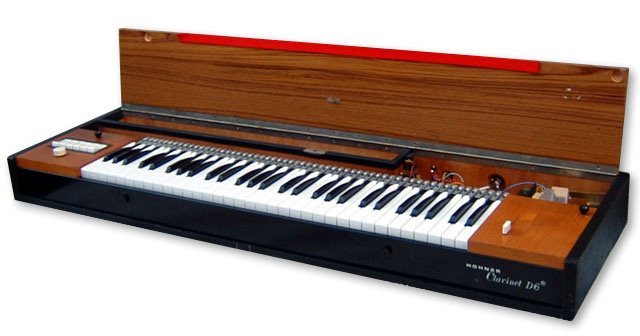
The clavinet is a great instrument to use when you want to bring elements of funk into an arrangement.
But even when listening to a performance, it can be difficult to work out exactly how it is played.
In this two-part series, we’ll explain how to easily recreate clavinet playing techniques by programming notes, even if you cannot play the keyboard.
Let’s get started.
Watch the Video
1. Programming Clavinet Backing, Part 1 (this article)
2. Programming Clavinet Backing, Part 2
The Basic Clavinet Backing Technique: Paradiddles
One basic approach to playing the clavinet is the paradiddle technique.
Here, a paradiddle-inspired pattern means playing a succession of notes with the left and right hands separately or in alternation.
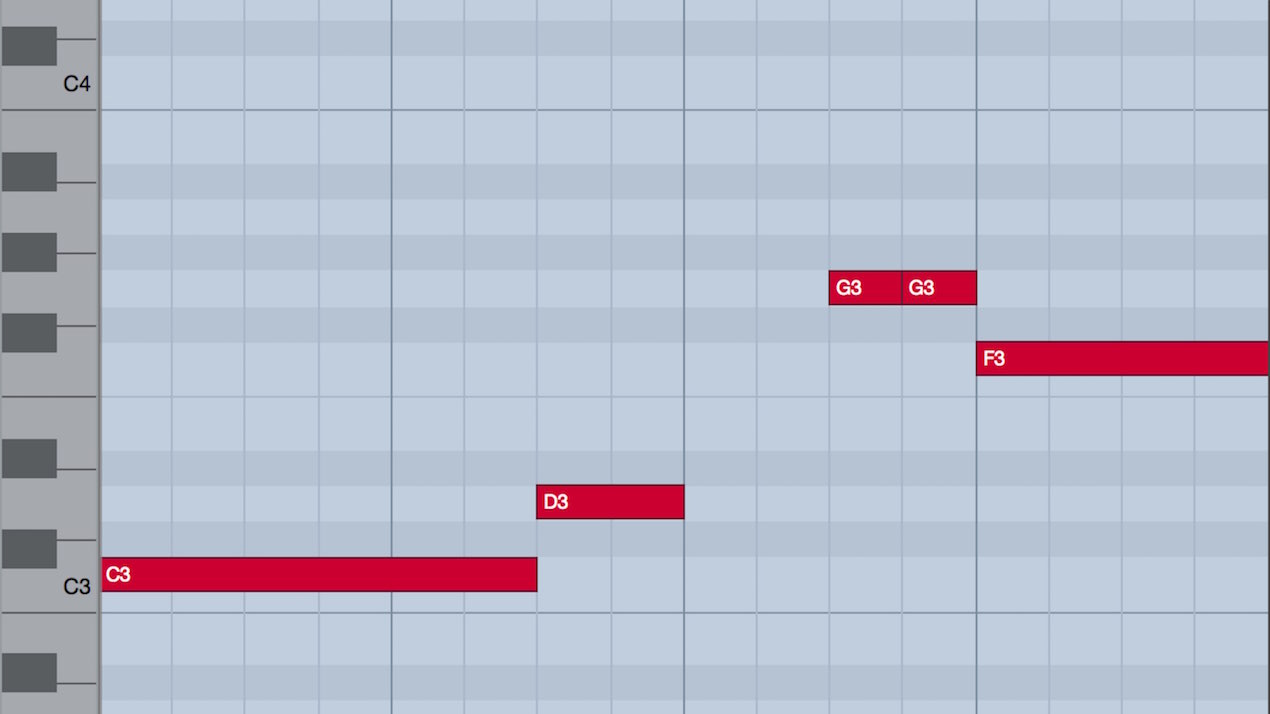
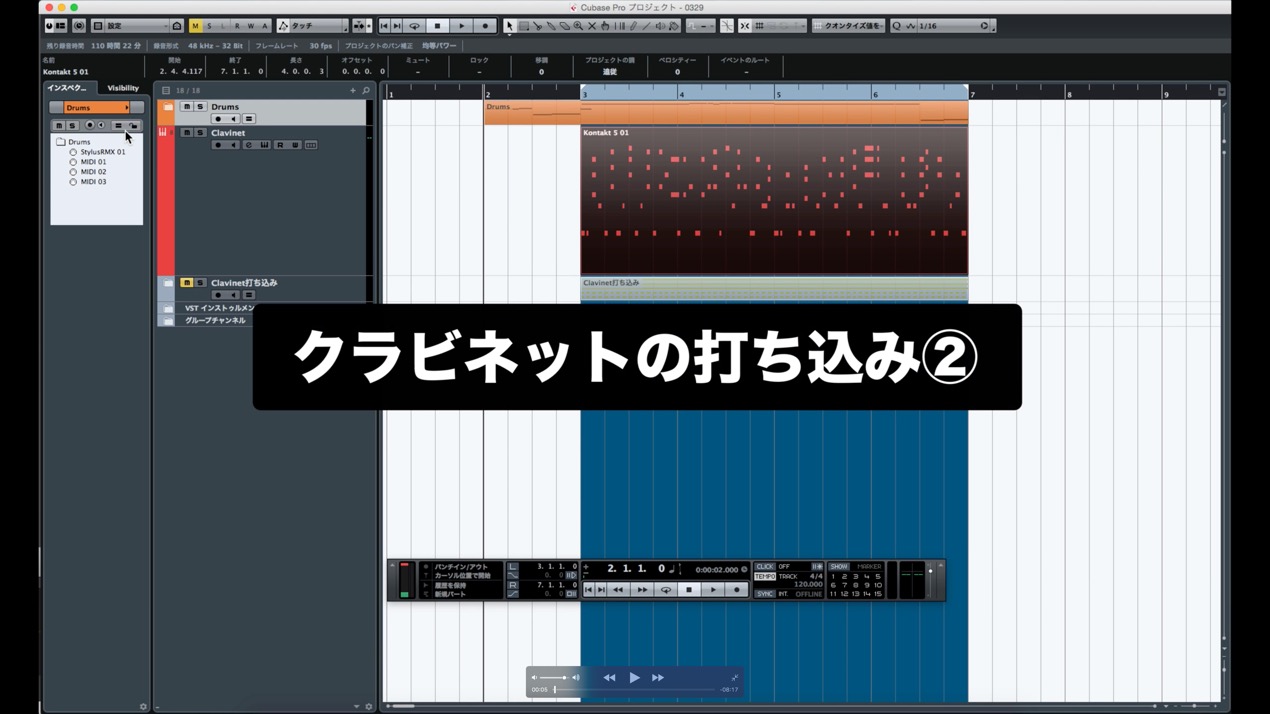
Programming the basic pattern produces something like this.
Even if you are not actually playing it, think of the lower part as the left hand and the higher part as the right hand.

You can repeat this pattern, but this time let’s make the rhythm a little simpler while following the principle of
not playing the left and right hands at the same time.
Here is the simpler pattern.

Here, we repeat a pattern of two left-hand notes followed by one right-hand note.
Add Chords
After repeating the octave pattern above, let’s add a chord to the right-hand part.
We’ll use an Am7 chord in this example.

The key point is that the left hand is already playing the root, A, so
the right hand voices the chord with the other notes: C, E, and G (the 3rd, 5th, and 7th).
Of course, the left hand does not have to stay on A: you can add movement by mixing in the 5th, E,
while keeping the notes separate rather than playing them as a chord.

The part is starting to sound more like a clavinet performance.
Adjust Note Duration to Create a Groove
When programming clavinet, note duration is very important.
To bring out a crisp sixteenth-note groove, shorten every note to less than a sixteenth note.
It is a simple adjustment, but it should immediately bring the part to life.

Mix in a Different Chord
To make the phrase even funkier, try mixing a different chord into the right-hand part.
Start with a chord that does not move too far from the original position.
Here, we’ll choose three notes from the D7 chord—D, F-sharp, A, and C—and insert them between the existing chords.

The chord changes create accents and add movement to the backing.
These are the basic techniques for programming clavinet backing.
In the next article, we’ll explore techniques for making the part more practical and refined.
Frequently Asked Questions
Q1. Can I program clavinet backing without being able to play the keyboard?
Yes. With the approach in this article, you do not need keyboard skills. Understand the principle behind the paradiddle-inspired pattern and place notes in your DAW to recreate a realistic clavinet part.
Q2. What is the paradiddle technique?
It is a way of producing successive notes by playing the left and right hands separately or in alternation. Derived from a drumming technique, it can be adapted to the keyboard to create lively, funky clavinet parts.
Q3. Why is adjusting note duration important?
Shortening the notes brings out a crisp sixteenth-note feel and helps create the sharp sound and groove associated with a clavinet. It is a key step in making a programmed part feel more realistic.
Q4. What should I consider when changing chords?
Choose a chord that does not move too far from the original chord position. The change can create an accent and give the backing more movement.
NEW ARTICLES
Latest English Articles