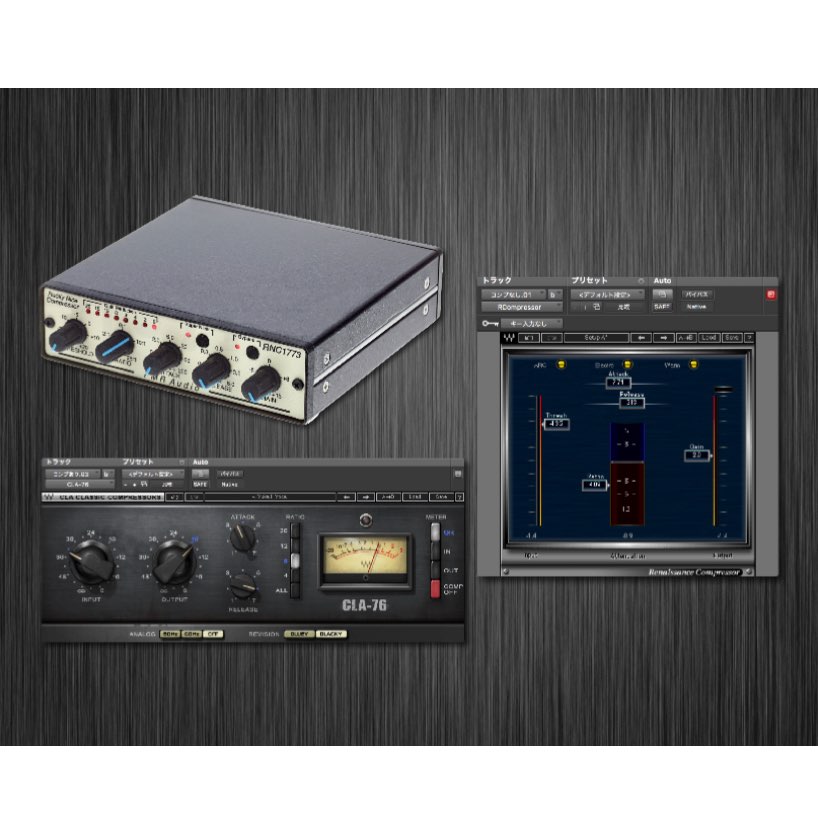
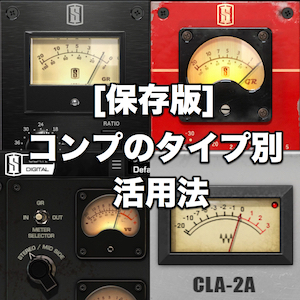
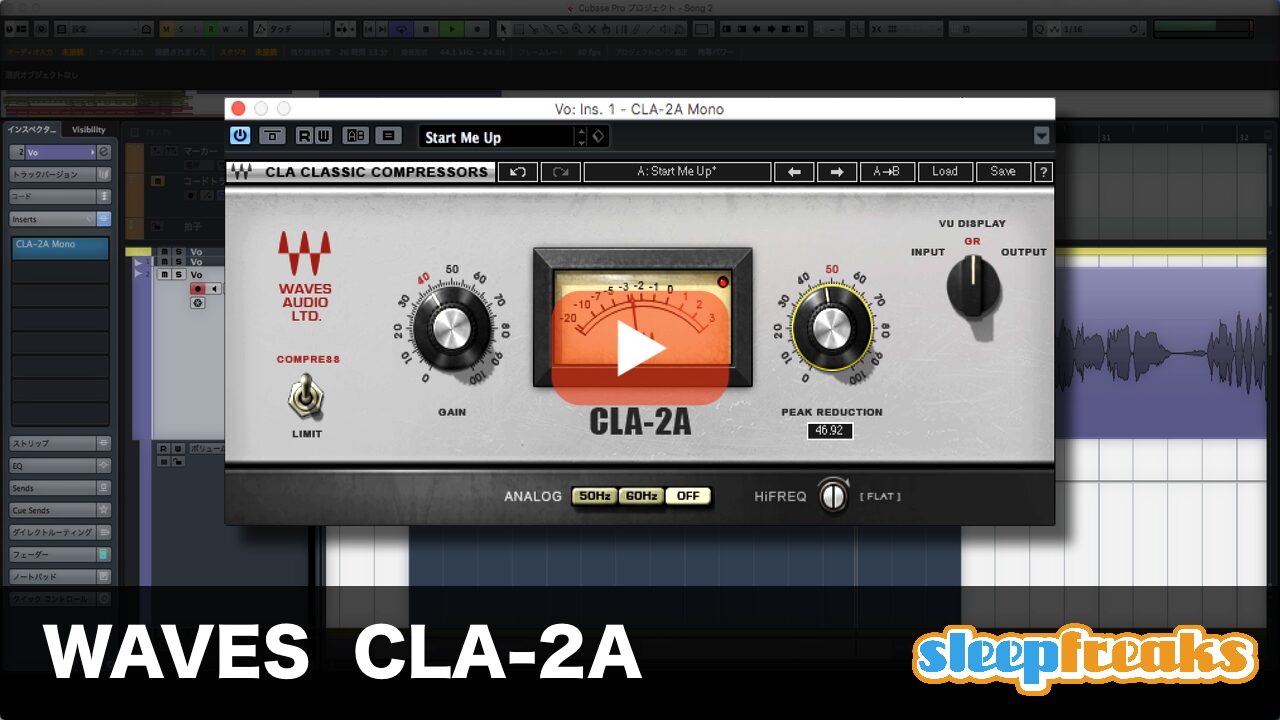
Vintage compressors do more than control level: they can add character and texture to a mix. Using Waves CLA-76 as an example, this guide introduces fixed-threshold operation and explains what to watch for when setting attack and release. Different compressors can add harmonics and respond differently, so even similar settings may produce different coloration and perceived distance.
How vintage compressors work

A compressor
reduces a signal’s dynamic range. If they all compress, why are there so many types?
That is because different compressors
add different harmonics and offer different ways to control compression.
Even with the same settings,
the perceived distance and coloration can change considerably.
Vintage compressors are particularly distinctive.
They can add thickness and character, making them valuable mixing tools.
Here we explain some basic concepts
to understand before working with vintage compressors.
Vintage compressor video tutorial
Questions and answers from the YouTube video

May I think of the compressor threshold as an absolute value? For example, if the input is −2 dB and the threshold is −5 dB, I understand that the compressor acts on the 3 dB difference. Some vintage compressors have positive threshold values. With positive settings on compressors such as the API 2500 and SSL 4000, would a +6 dB source and a +3 dB threshold work on a 3 dB difference in the same way? I have also seen online answers saying it works like an expander. If the first interpretation is correct, why would the assumed input level be high enough to ensure such strong compression? I have not found an explanation and would appreciate your guidance.

In the idealized case, compression above the threshold follows the ratio: if the signal is 3 dB over the threshold at 3:1, the output above threshold is 1 dB, giving 2 dB of gain reduction. Vintage-style plug-ins may deliberately model nonlinear behavior and need not follow the displayed digital values exactly. In the original response, we suggested that the positive settings on SSL and API models reflect an analog reference and may produce gain reduction in a DAW even at +15. This is an observation rather than a universal calibration rule: check the specific plug-in’s reference level and use the gain-reduction meter and your ears.
Are the attack and release controls on an API compressor also reversed compared with R-Comp and similar plug-ins?
Assuming you mean the Waves API 2500, follow the values printed on the knobs: left is faster and right is slower. Attack is shown in milliseconds (one thousandth of a second), while release is shown in seconds.
Thank you for the informative videos. When using NI’s VC 76 on a stereo or mono audio track, is there a setting in VC 76 to choose stereo or mono processing? With Waves, the plug-in itself offers mono and stereo versions.
Thanks for your question. In our check, we did not find such a setting. In our Cubase setup, it appeared that mono or stereo was applied automatically according to the track. Please check this in your own setup.
Compressors with a fixed threshold

Many vintage compressors do not have a separate threshold control.
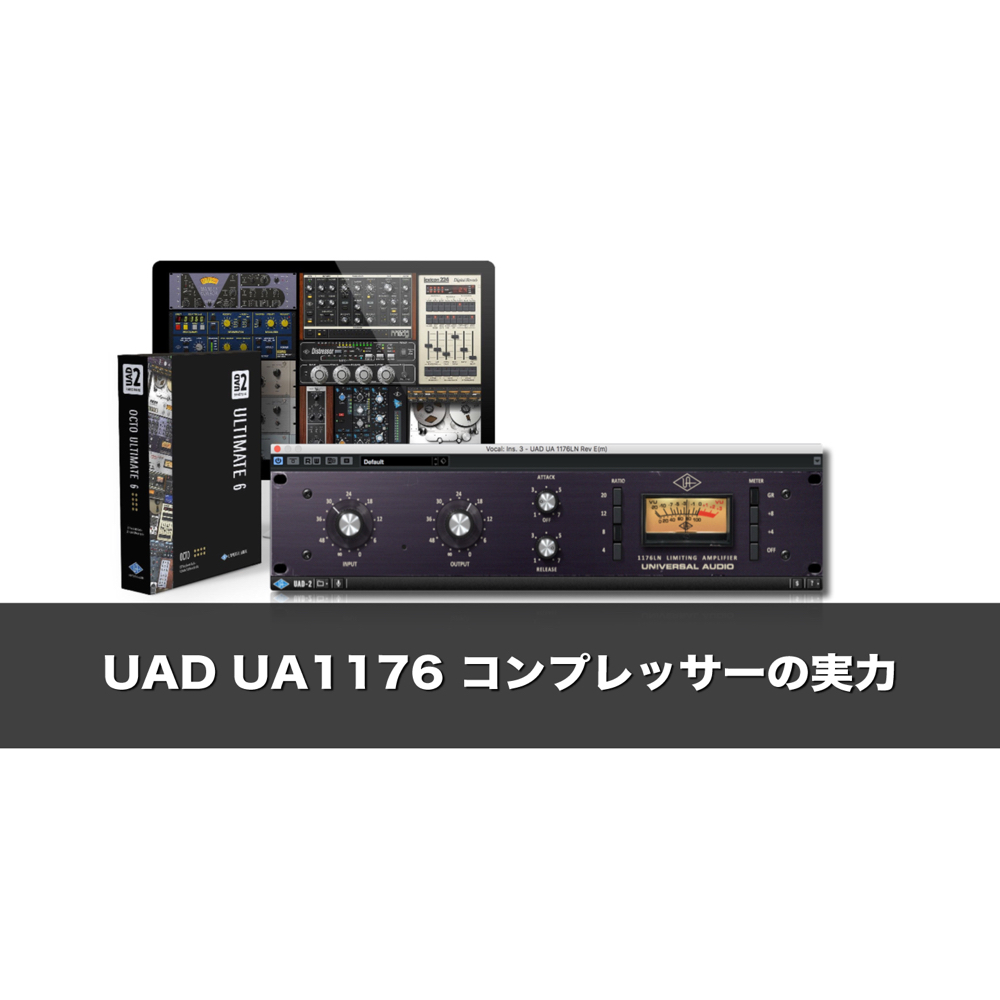
Instead, the Input control adjusts how much compression occurs.

The threshold is fixed,
and raising the input level drives more of the signal into compression.
Check the attack and release settings

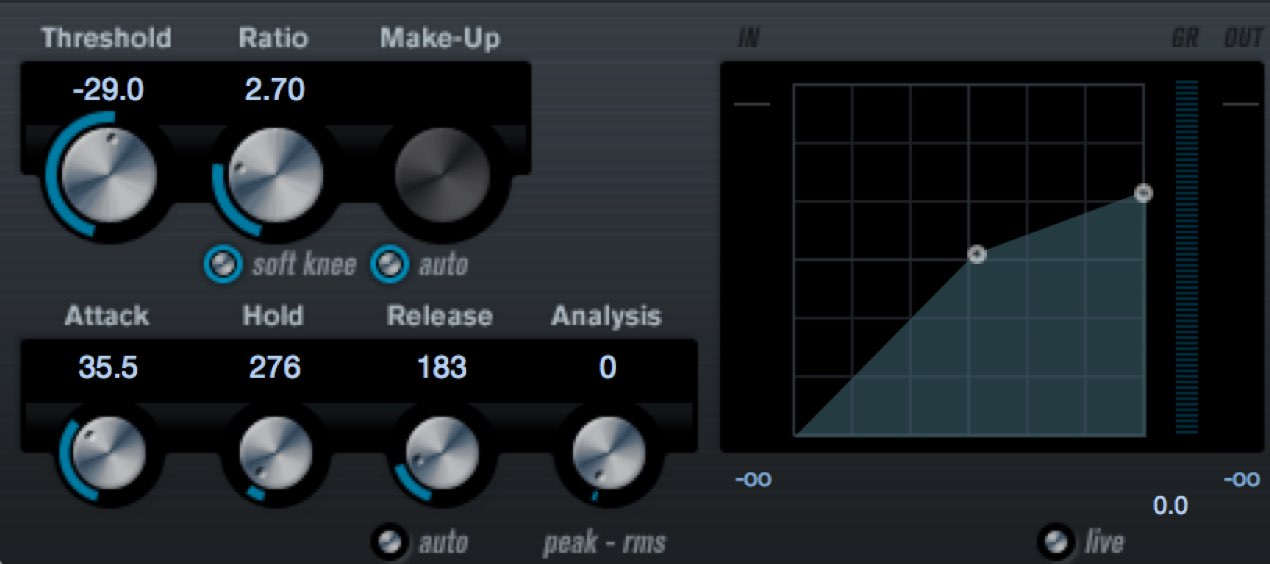
On many modern compressors, turning the controls to the left
makes the attack faster and the release shorter, so gain reduction ends sooner.

Other compressors may use the opposite direction,
so always check how the controls work on the model you are using.
Threshold explained

Ratio explained
Attack explained
Release explained
Frequently asked questions
Q1. How do vintage compressors differ from modern compressors?
Vintage compressors can add thickness and distinctive coloration through harmonics and their particular compression behavior. Modern compressors tend to offer more precise and transparent compression, although the sound varies by model.
Q2. How do I adjust compression when the threshold is fixed?
Use the Input knob to raise the signal level relative to the fixed threshold. This changes how strongly the signal is compressed; the threshold itself does not move.
Q3. What should I watch for when setting attack and release?
The direction of the attack and release knobs can differ between compressors. Check how each control affects the sound before using it.
NEW ARTICLES
Latest English Articles