This article summarizes what DTM producers should understand about pickups and their circuits, key factors that determine a guitar's tone. By learning the two pickup types, single-coil and humbucker, as well as the electrical differences between active and passive circuits, you'll be able to choose guitar instruments suited to the genres you produce. Using Three-Body Technology's Heavier7Strings as an example, you'll also gain practical know-how for inferring electrical characteristics from a pickup's appearance and the number of knobs, a shortcut to choosing guitar tones for heavy metal and rock production.
A guitar body has PUs (pickups), microphones that convert string vibration into an electrical signal, built into it, and pickups broadly come in two shapes and two types of electrical circuit.
Also, the tone differs depending on the pickup's shape and circuit, so by the time you finish reading this article, it may well become a shortcut to finding the guitar tone you like.
This time I'd like to explain using Three-Body Technology's Heavier7Strings as an example.
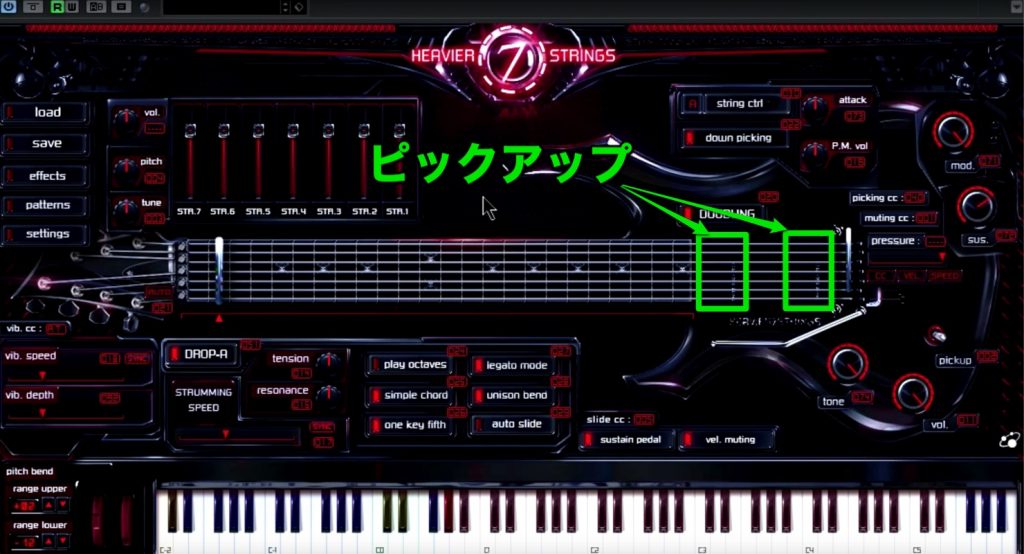
Types of pickups: the difference between single-coil and humbucker
- Single-coil pickups, suited to rock, pop and jazz

Stratocasters and others use them. They pair well with solid-state amps and give a clear sound, so with cutting (rhythmic strumming) they produce a crisp, sparkling sound. Compared with humbuckers, they are more susceptible to noise.
- Humbucker pickups (humbucking, "hum"), suited to rock, hard rock and metal

Les Pauls and others use them. They pair well with distortion pedals and give a heavily distorted sound, so with power chords on a 7-string guitar they produce a powerful, thick sound. Compared with single-coils, they are less susceptible to noise.
Types of pickup circuits: how to tell active from passive
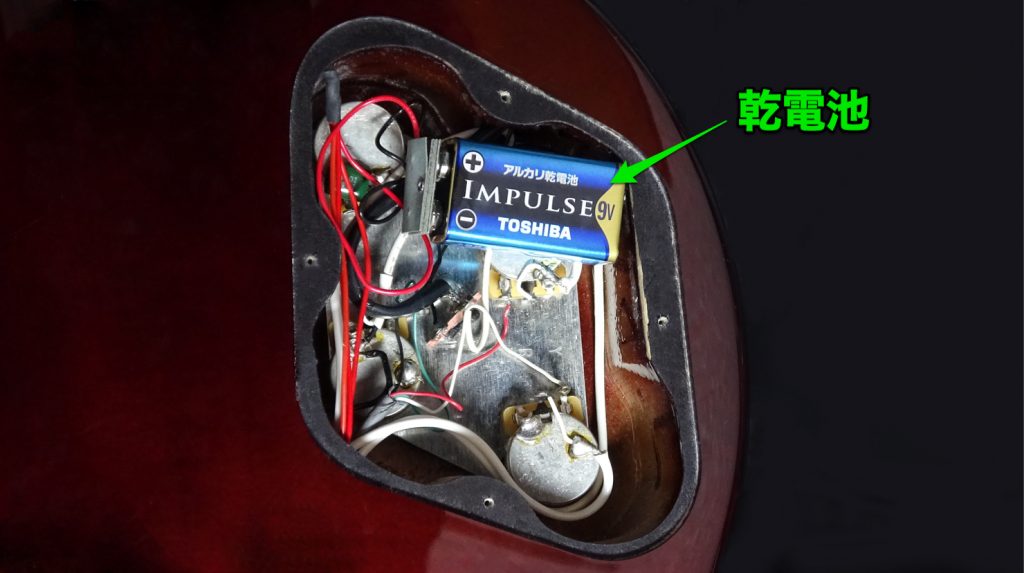
- What is an active circuit?
An active circuit needs power, so it requires a 9V battery (a square battery). In many cases it has a built-in preamp, so on some models the tone control knob lets you adjust EQ.
It has little noise, so you can create a digital-sounding sound with loudness.
*Some pickups keep working as passive even when the battery runs out.
- What is a passive circuit?
A passive circuit doesn't need power, and in most cases it has two control knobs: volume and tone.
With noise mixed in, you can create an analog, warm sound.
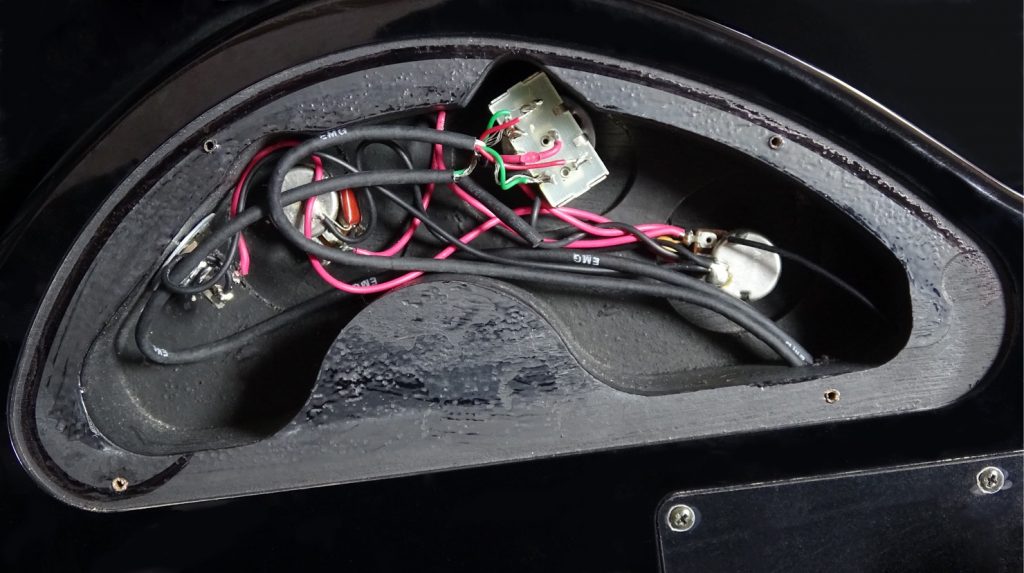
From the above, Heavier7Strings has large pickups and two knobs, volume and tone, so I thought it probably uses humbucker pickups and a passive circuit (though active-sounding). Therefore it's a guitar instrument suited to the heavy low end of heavy metal and the like.
There are also humbuckers sold in the shape of single-coils,
Sound House: single-size humbuckers
and conversely, single-coils in the shape of humbuckers are also sold.
Some musicians use single-coil pickups even for heavy metal, so be sure to create your own sound by checking the tone of the guitar together with the backing music!
Buy the product

Crypton Future Media has released an electric guitar instrument called "REAL STRAT 4."
How to Use Heavier7Strings (1): Basic Overview

How to Use Heavier7Strings (2): Playing Techniques

Real Guitar 4 new feature "SONG": video

About the author
Twitter ID: @k5_stud1o
K5-STUDIO: About services & lessons
Frequently asked questions
Q1. Which is better for beginners, single-coil or humbucker?
It depends on the genre. Single-coils suit you if you want a clear sound, and humbuckers if you want a thick sound with less noise. We recommend DTM beginners choose according to the genres they produce.
Q2. Where can I check pickup information when choosing a guitar instrument?
It's often listed in the specs section of the product page or in the manual. You can also tell whether it's single-coil or humbucker, active or passive, by comparing the actual audio demos.
Q3. Is there a difference in loudness between active and passive circuits?
Yes. Active circuits have a built-in preamp, so they're louder with a digital-sounding character, while passive circuits sound analog and warm. It's important to choose according to the genre you produce.
NEW ARTICLES
Latest English Articles