
This article explains a mixing technique for making reverb sound more natural and clear: inserting a compressor on a reverb track set up with send/return. By compressing the level differences in the reverb component, you can raise the send amount without it sounding unnatural and control the texture of the reverb. Setting parameters such as Ratio, gain reduction, Attack, and Release appropriately greatly improves how it sounds, achieving professional spatial expression.
Adjust the texture of reverb by compressing only the reverb component
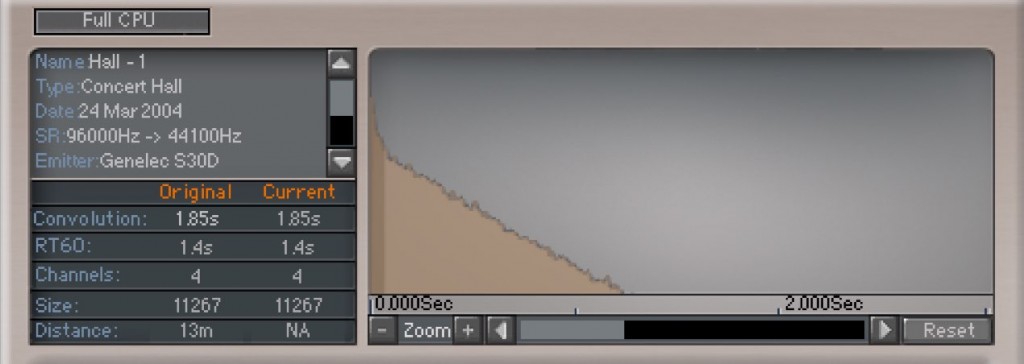
This time, we introduce a compressor technique for use with send/return.
When mixing,
there are many situations where you want to apply more reverb.
But when you raise the send amount, it starts to sound oddly artificial...
Many of you have probably had that experience.
Ways to solve this include
- Reconsidering the type of reverb
- Using a delay alongside it
- Cleaning up the low end with EQ
- Reviewing the balance of each track
- Reviewing volume automation
We cover these in other articles,
but there is one more interesting technique.
It is a technique that applies "a compressor to the reverb component".
It reduces level differences in the reverb component, letting the reverb come through more clearly.
Now let's get into the explanation.
Reverb technique video
Excerpt of a question and answer from the YouTube video

I often see examples of sending to two channels each with a reverb inserted. What is the advantage of that?

Combining the characteristics of multiple reverbs has the advantage of creating a more complex sound and making fine adjustments easier. Another merit is that you can apply effects such as EQ after each reverb and edit each reverb component individually.
Video key point: applying and setting the compressor
This technique is very simple.
Just apply a compressor to the effect track set up with send/return.
How to apply send/return in each DAW

 Logic
 Cubase
 Ableton Live
 Studio One
 FL Studio
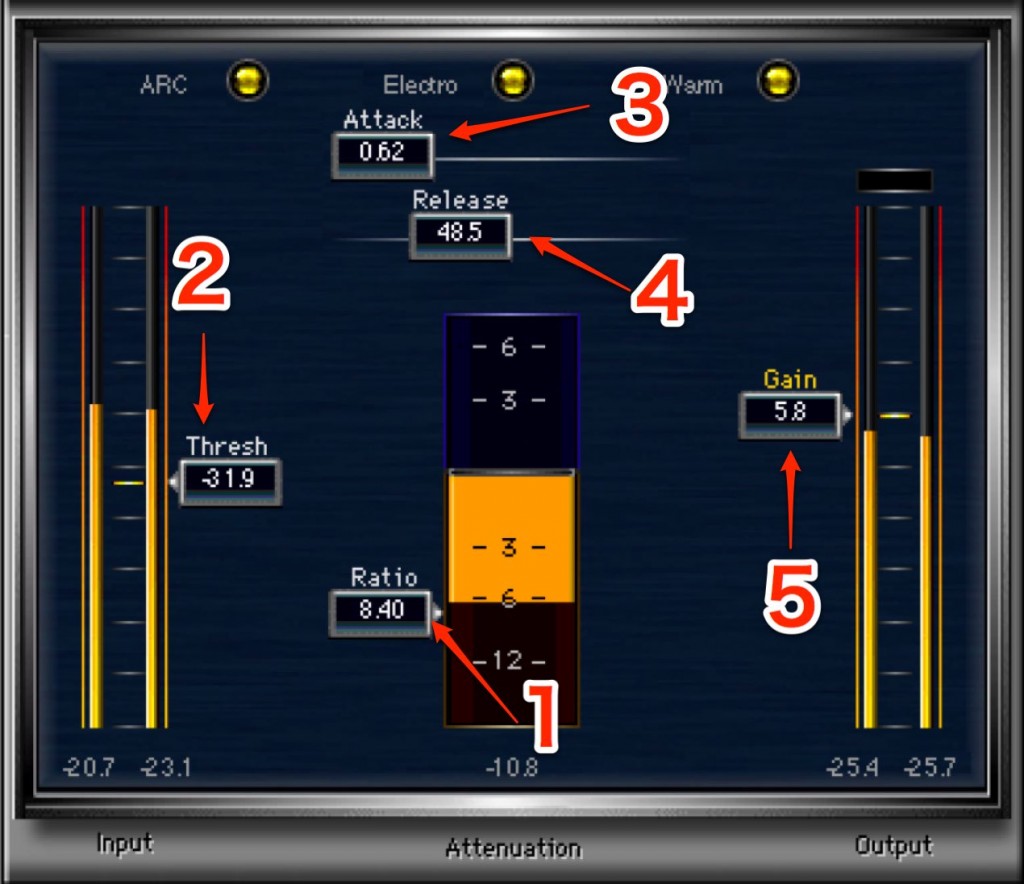
- 1. Set Ratio high for strong compression
- 2. Adjust so the gain reduction is fairly deep (-6 dB here)
- 3. Set Attack fast so the level is compressed immediately
- 4. Set Release fast to emphasize the reverb tail
- 5. Raise the level to make up for the amount compressed in "2. gain reduction"
This reduces level variation in the reverb component,
and even if the level meter barely changes, it sounds quite different.
Be sure to try it.
Frequently asked questions
Q1. What is the benefit of compressing reverb?
It reduces level differences in the reverb component so the reverb sounds clearer and more natural. Even when you raise the send amount, it is less likely to sound unnatural, and the tail is emphasized.
Q2. What are the most important compressor parameters?
Ratio and gain reduction are important. Setting Ratio high and gain reduction deep gives a strong compression effect. A fast Attack compresses immediately, and a fast Release emphasizes the tail.
Q3. Can beginners use this technique?
Yes, it is very simple. Just insert a compressor on the reverb track set up with send/return and adjust the parameters.
Q4. Can it be applied the same way in any DAW?
Yes. The same principle applies in all major DAWs, including Pro Tools, Logic, Cubase, Ableton Live, Studio One, and FL Studio.
NEW ARTICLES
Latest English Articles











