
ARTURIA V Collection 7 expands the possibilities for music production with Synthi V, an emulation of the vintage Synthi AKS synthesizer released in 1972. Its innovative pin matrix enables intuitive sound design without complicated patch-cable wiring. B-3 V2 also receives a redesigned interface, while Analog Lab 4 adds AI-based preset searching to help you find the sound you need quickly. The Concert feature is optimized for live performance, allowing rapid switching between multiple presets as you play.
A Major Update Featuring a Legendary Synthesizer

Continuing from the previous article, we will explore ARTURIA V Collection 7.
Here, we will look at the newly added legendary synthesizer Synthi V, along with B-3 V2 and Analog Lab 4, whose sounds and features have also been enhanced in this update.
V Collection 7 Video Tutorial
Product URL: https://bit.ly/2J7BPjU
Purchase here
Japan customer support listed in the original article: Korg / KID Customer Service — Tel: 0570-666-569
- 1V Collection 6: Analog Lab 3
- 2V Collection 6: DX7 V Overview and Operators
- 3V Collection 6: Controlling DX7 V Parameters
- 4V Collection 6: DX7 V Modulation and Effects
- 5V Collection 7 Overview: Mellotron V and CZ V
- 6V Collection 7: Synthi V, B-3 V2 and Analog Lab 4
- 7V Collection 8: New Instruments and the Standout Vocoder V
Selected Questions and Answers from the YouTube Video

I'm very interested in how you created the B-3 V2 sound with effects. Apart from the six effects shown at the bottom at 5:36, are you using any insert or send effects? It sounds as though the attack has been softened, giving it an airy quality.

The sound was created using B-3's internal effects. We have made the preset available to download, so please take a look: https://www.dropbox.com/s/ybkpkeqglo12zbe/B-3_Preset.b3v2x?dl=0
Synthi V
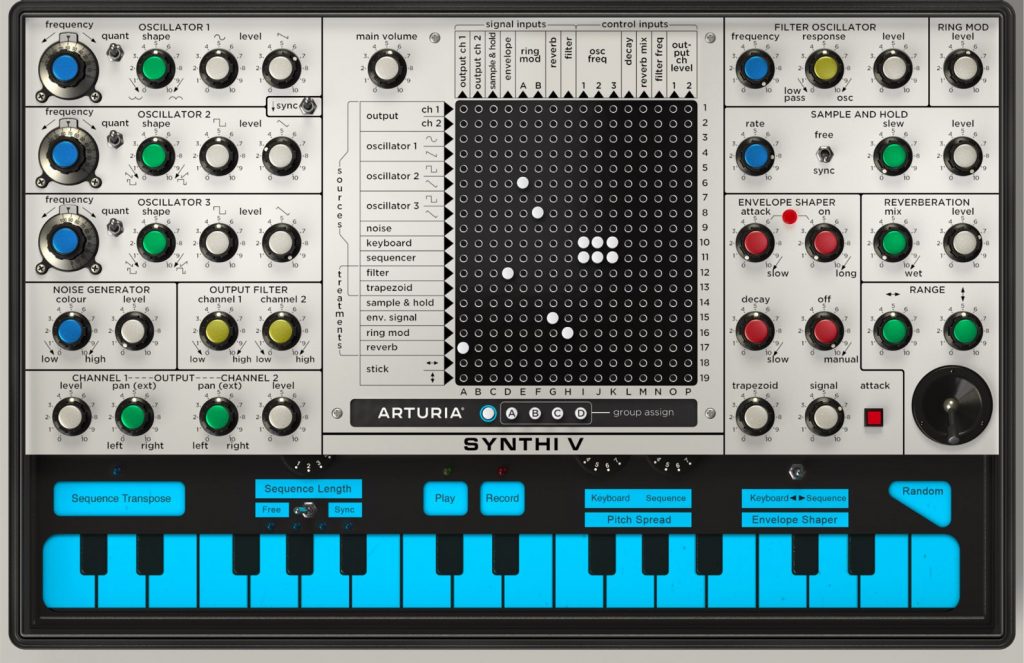
Synthi V emulates the legendary Synthi AKS vintage synthesizer, released in 1972.
V Collection uses Arturia's TAE (True Analog Emulation) technology to accurately emulate the original hardware.
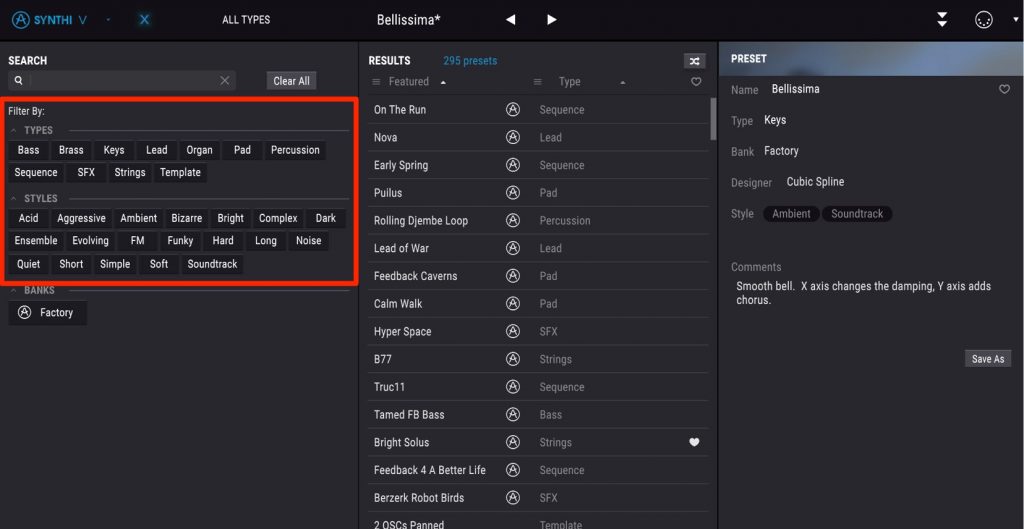
The presets are organized by category,
with an extensive selection of basses, leads, sound effects, sequences and more.
At the time of the original article, many hit songs featured analog synthesizer sounds prominently in their arrangements.
We felt that Synthi V was a particularly powerful tool for recreating these sounds.
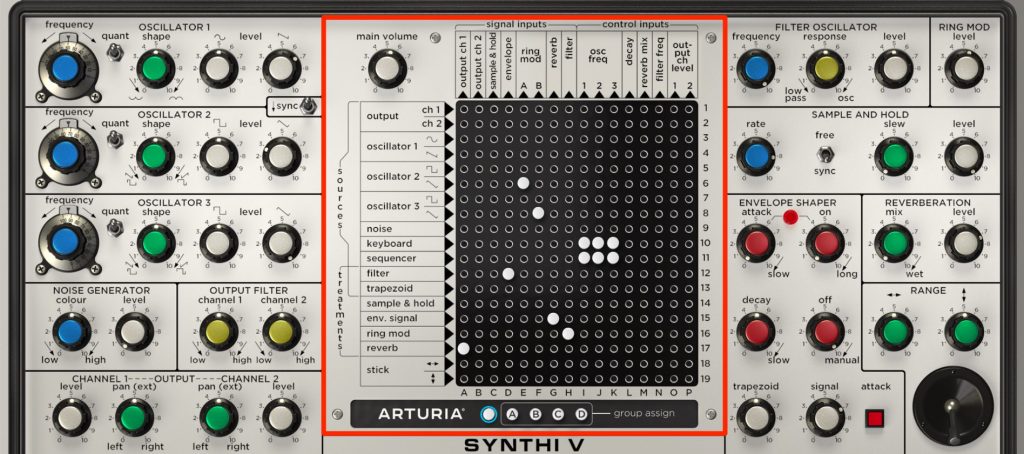
Synthi V's defining feature is the pin matrix in the center of the interface.
Many synthesizers of the era used patch cables to connect modules and create sounds, but this could make the wiring complicated.
Synthi V takes an innovative approach: inputs and outputs are arranged in a matrix, and you design sounds by inserting pins where you want to make connections.
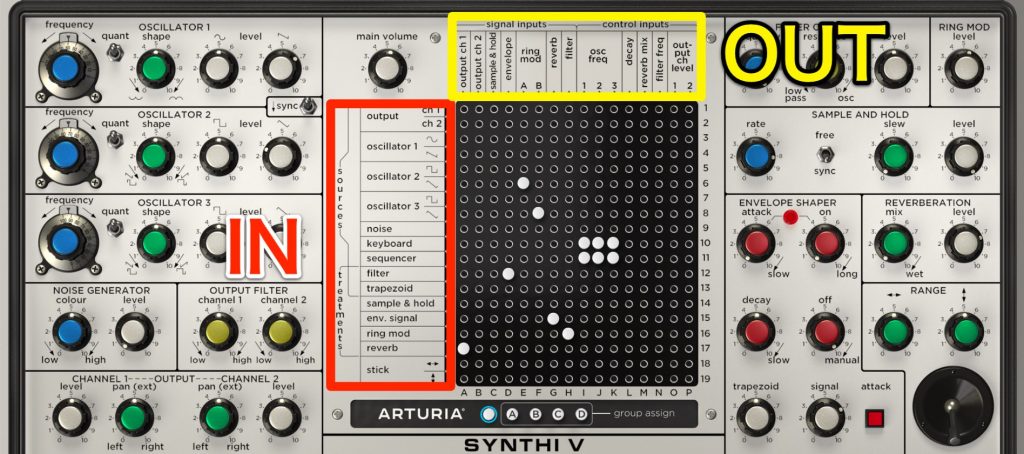
The outputs are listed along the vertical axis and the inputs along the horizontal axis.
Insert pins at their intersections to connect the corresponding sources and destinations.
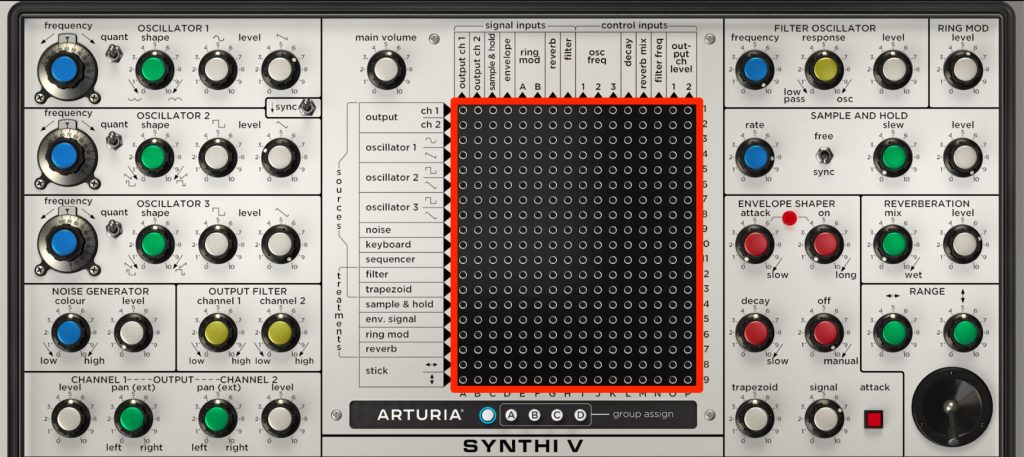
Click the desired position to insert a pin, or click an existing pin to remove it.
If you remove all the pins as shown here, no sound reaches the output.
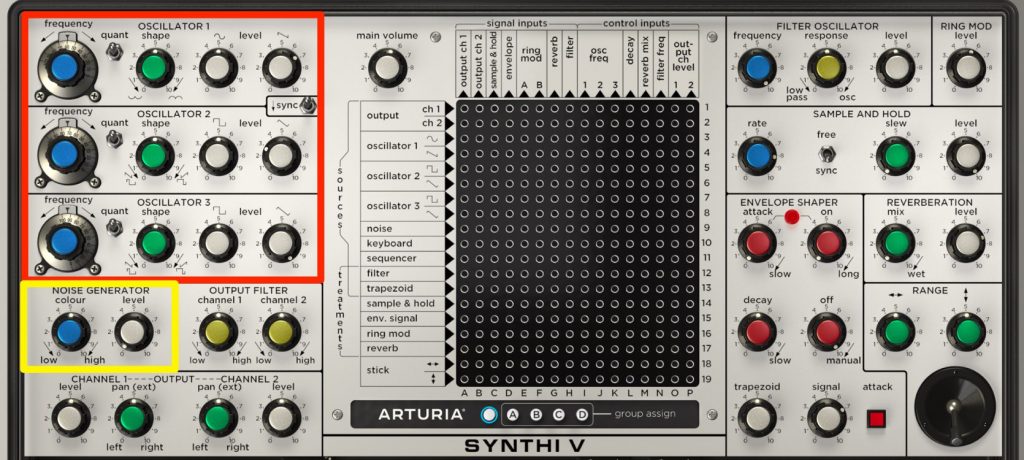
Synthi V has three oscillators and a noise generator.
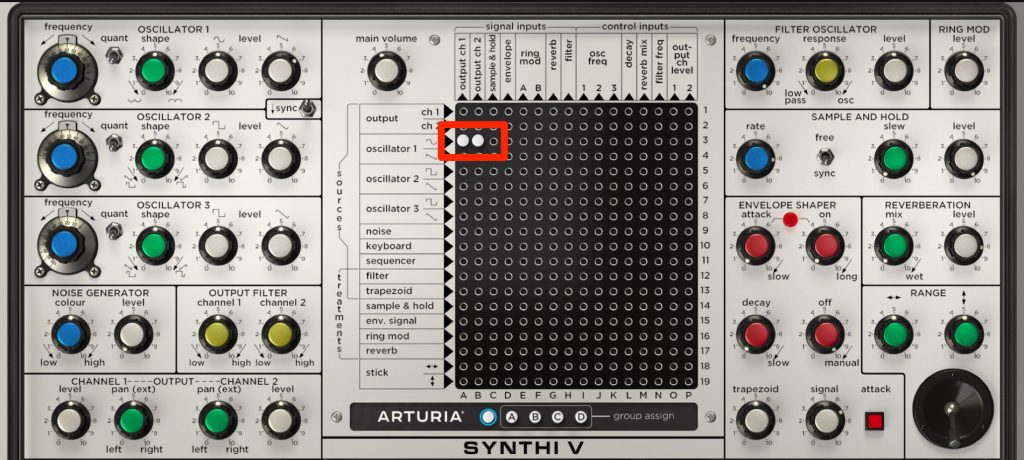
Routing an oscillator directly to an output produces sound.
In this state, however, the oscillator keeps sounding whether you press or release a key. The keyboard does not yet control its volume or pitch.
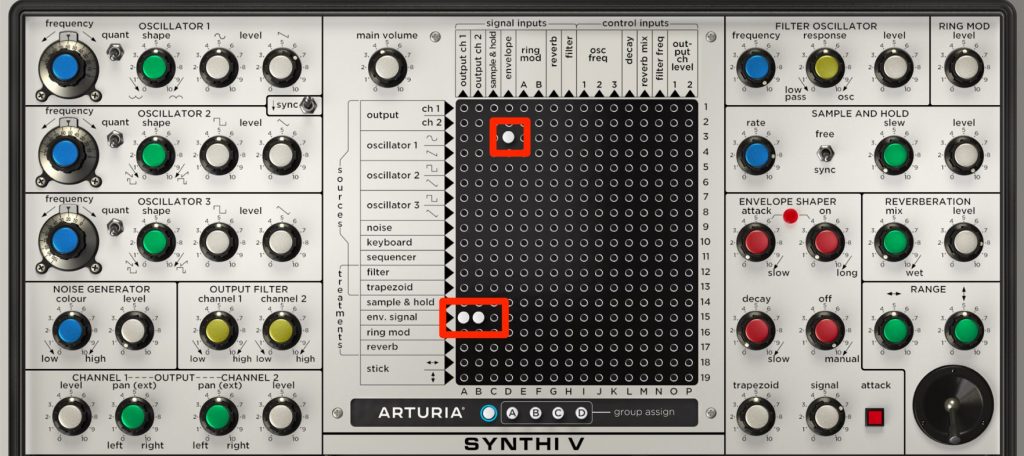
Instead of routing the oscillator directly to the output, route it through the envelope section, then route the envelope section's audio output to the output.
This allows keyboard playing to control the sound so that it no longer plays continuously.
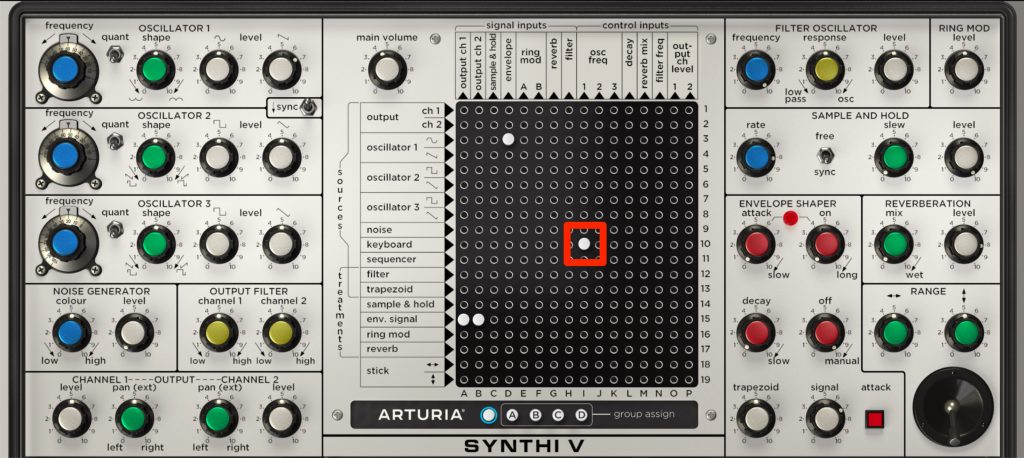
At this point, playing the keyboard still does not control pitch.
Add a pin so that the keyboard controls the oscillator's pitch.
You can now change the pitch by playing different keys.
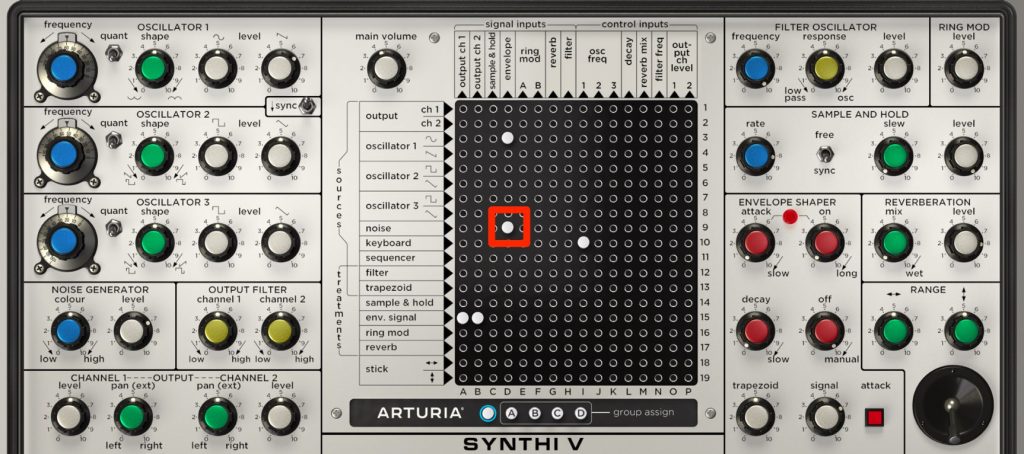
To mix in noise only when you play, route the noise through the envelope section first, rather than sending it directly to the output.
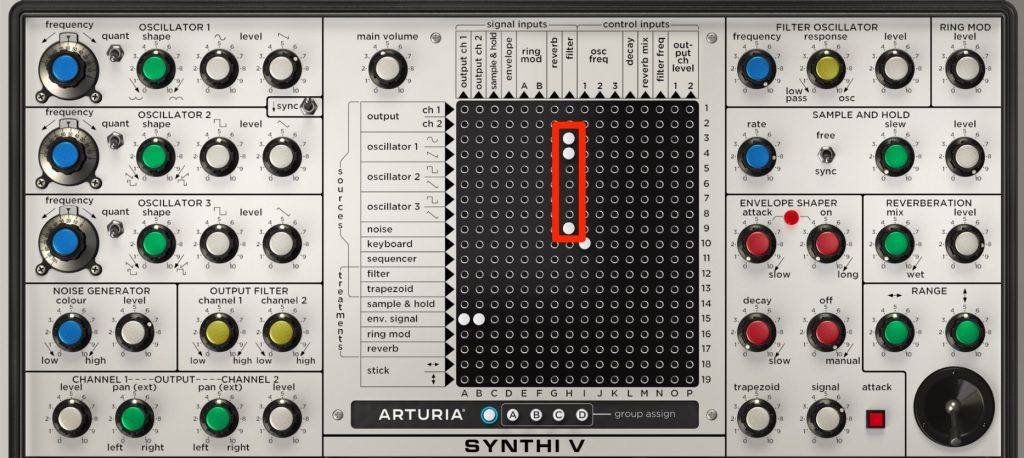
To apply a filter to the sound, add pins to route the oscillators and noise generator to the filter.
This alone does not produce sound, because the signal has not yet been routed out of the filter.
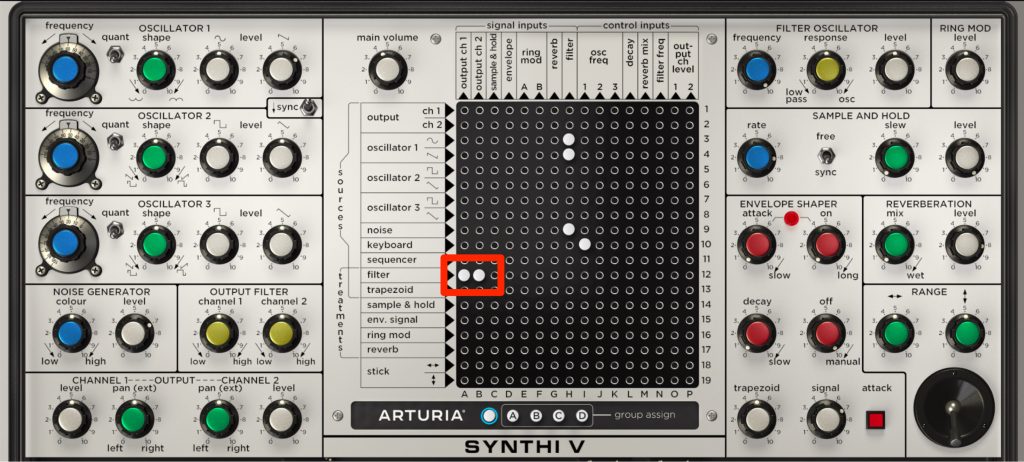
Route the filter onward to the output to hear the sound.
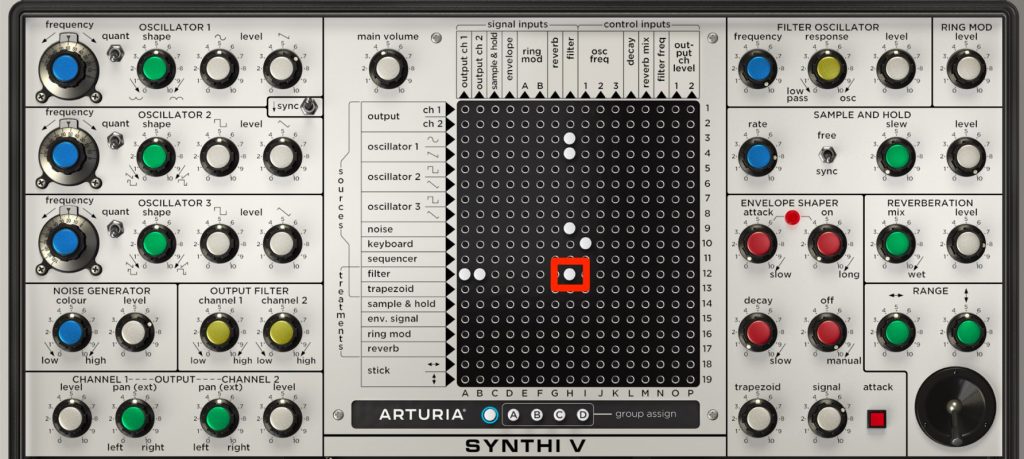
You can also use the pin matrix to feed the filter's output back into itself for a feedback effect.
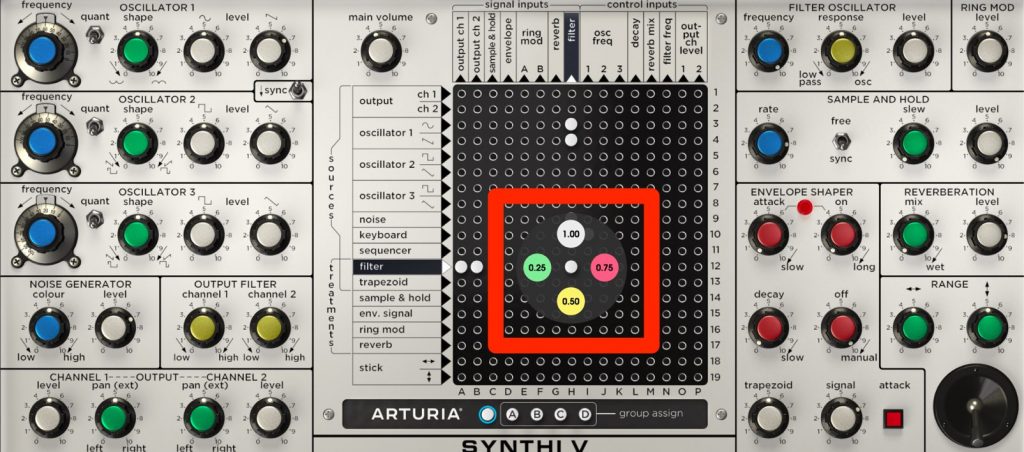
Click and hold a pin to open its adjustment panel. Changing the amount of signal fed back to the filter adjusts the feedback.
This gives you an extraordinary degree of freedom over the sound.
B-3 V2
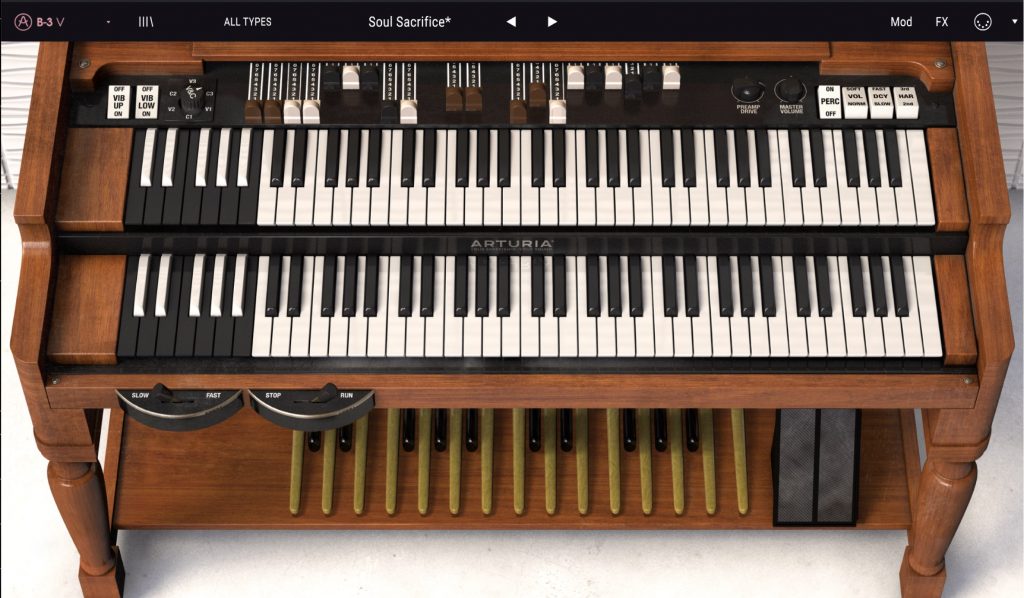
The interface has been redesigned, and the presets have been expanded with soul, church and other sounds.
It is a versatile, dependable instrument for a wide range of genres.
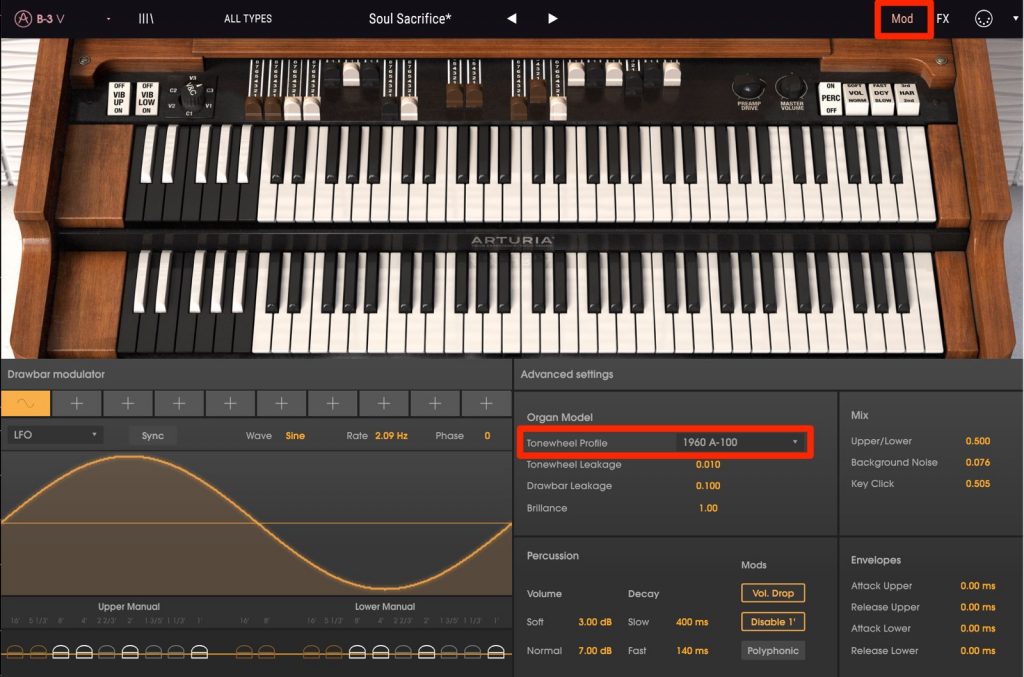
The modulation page also lets you choose the tonewheel model.
This ability to customize fine details is another feature of B-3 V2.
Analog Lab 4

Finally, let's look at the new features in Analog Lab 4.
Assigning MIDI Controllers
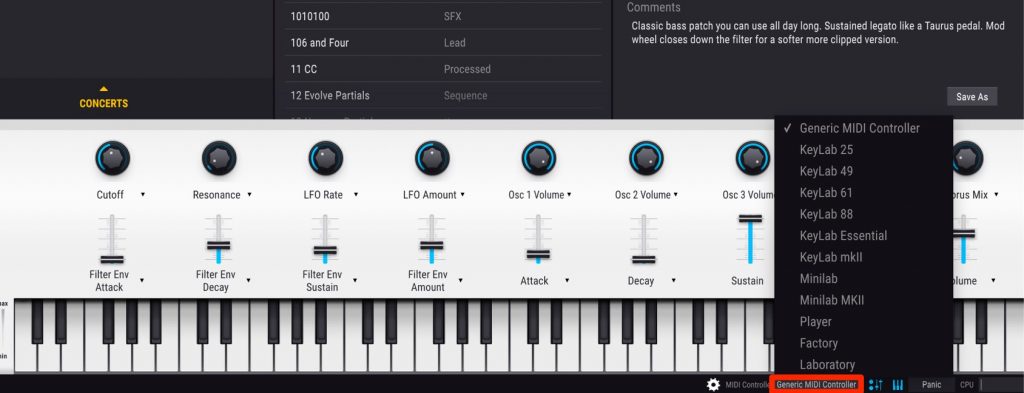
You can control Analog Lab from Arturia hardware keyboards.
You can also configure these controls when using a MIDI keyboard from another manufacturer.
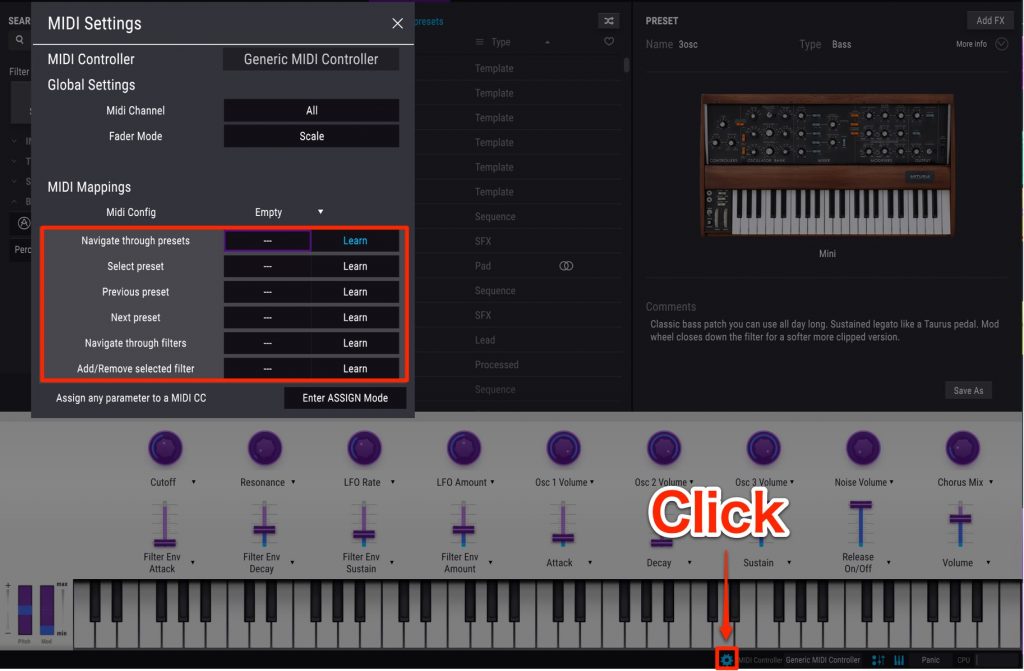
Click the settings icon to the right of MIDI Controller.
In the window that opens, click Learn for the parameter you want to control, then move a control on your MIDI device to assign it.
AI-Based Preset Search
This version introduces AI-based preset searching.
It suggests presets with characteristics similar to the selected sound.
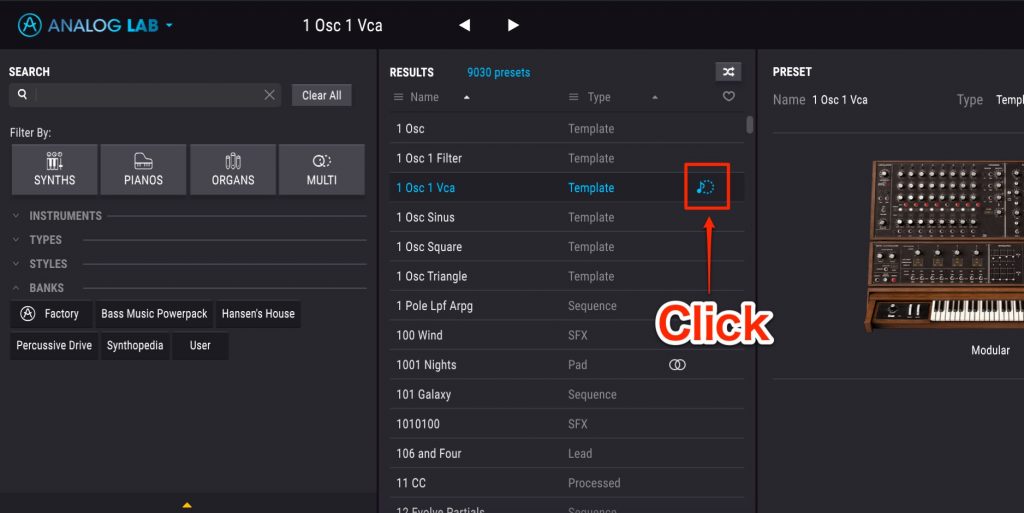
Click the AI icon to the right of a preset you like.
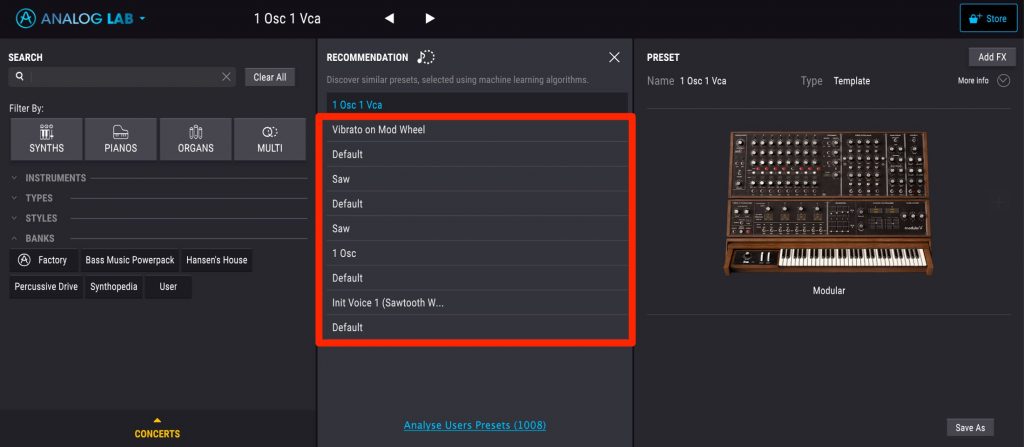
Suggested presets appear in a list, as shown here.
This is a very useful way to find the sound you want quickly.
Arturia Sound Store
The Sound Store lets you purchase presets created by sound designers around the world, as well as download free ones.
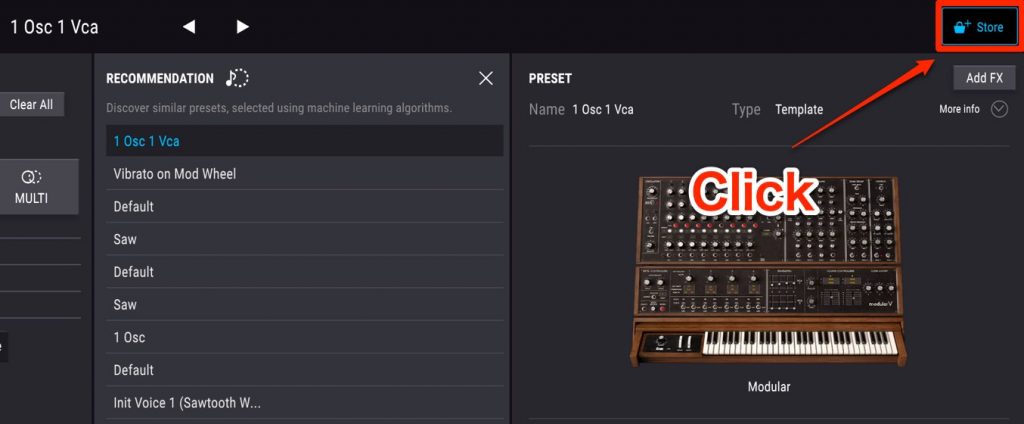
Click Store at the upper right.
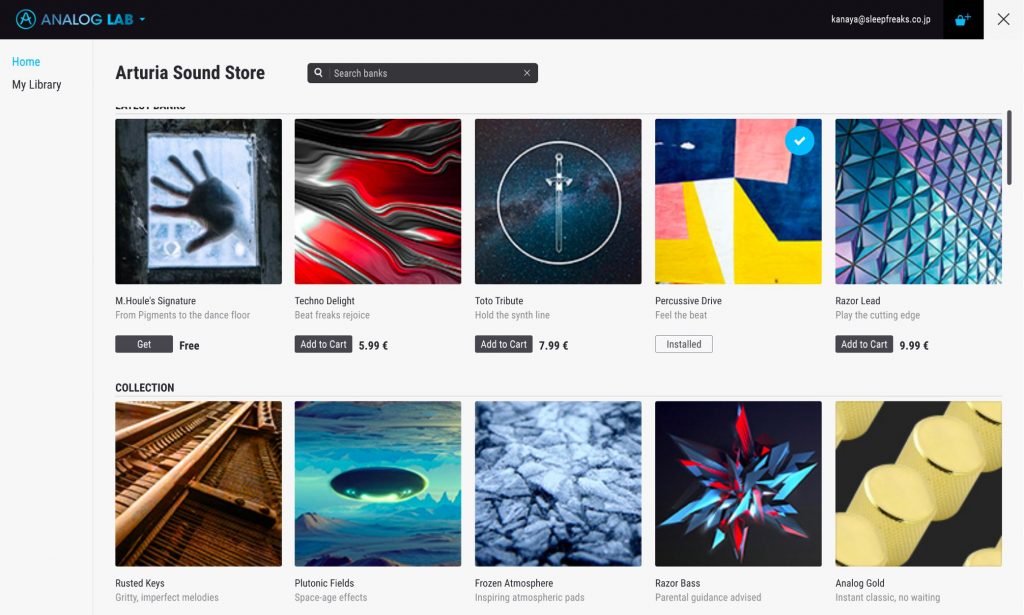
A range of preset packs appears. Click the pack you want.
Packs marked Free can be downloaded at no charge.
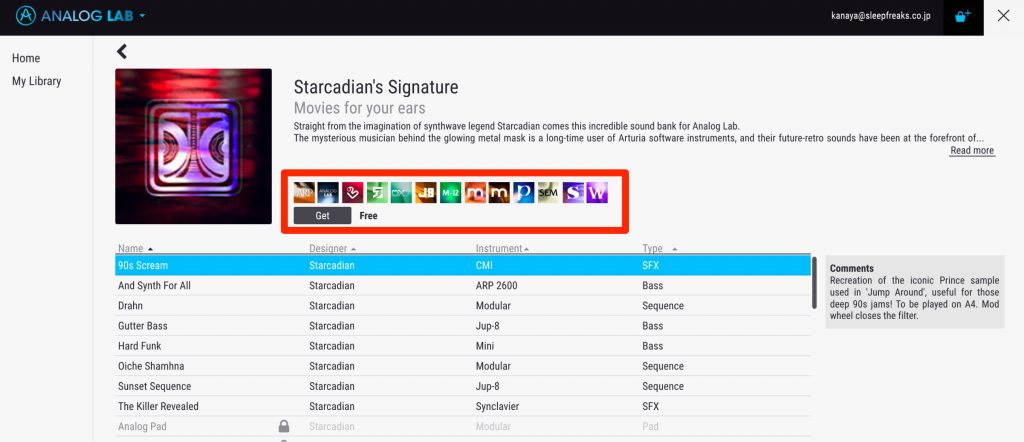
Within a pack, icons indicate the instruments used by its presets. Click Get to download and install the presets.
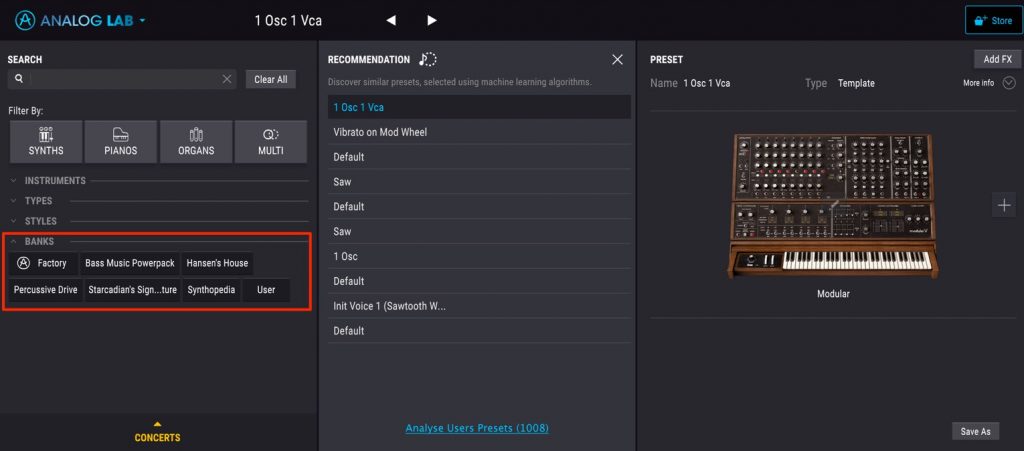
You can easily recall presets by pack from BANKS.
The Concert Feature
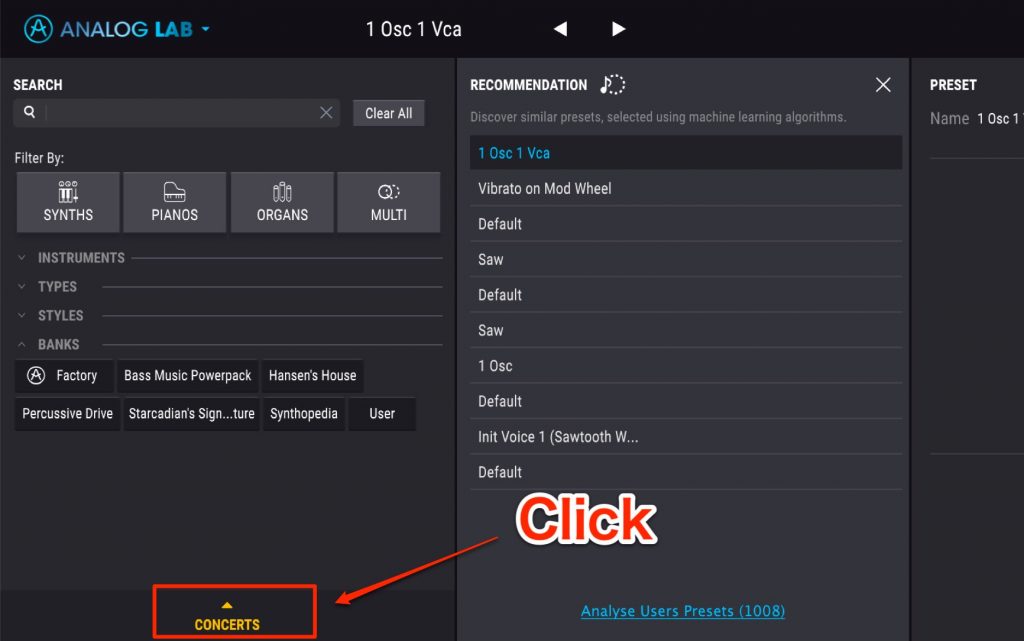
Concerts are designed for live performance, allowing you to organize and recall sets of presets.
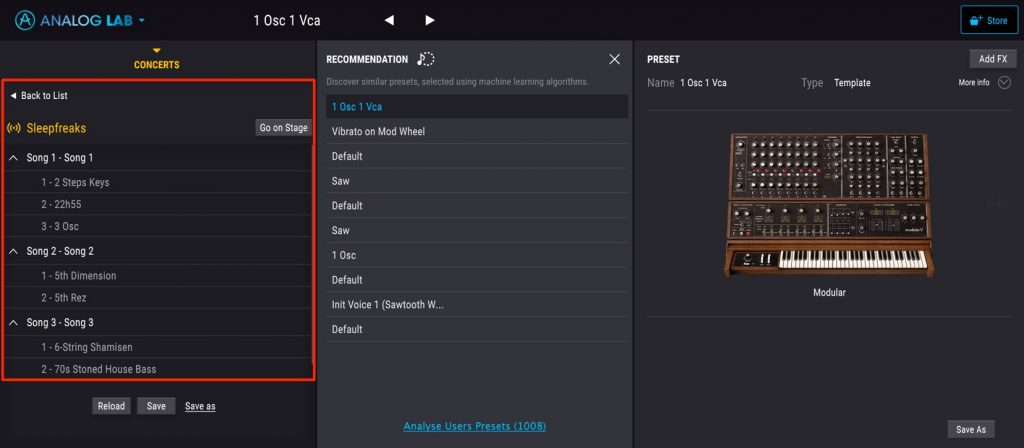
A Concert represents a live set, within which you add the songs you will perform.
Adding presets to each song lets you quickly recall the sounds you need for different sections of the performance.
Each song can store up to 128 presets.
That concludes our two-part introduction to V Collection 7.
What did you think?
The collection adds another legendary synthesizer and further refines its presets.
It is also great to have access to even more presets through Analog Lab 4.
At the time of the original article, existing V Collection 6 users could update B-3 V2 and Analog Lab 4 free of charge, and demo versions were available. Try incorporating these instruments into your music.
Product URL: https://bit.ly/2J7BPjU
Purchase here
Japan customer support listed in the original article: Korg / KID Customer Service — Tel: 0570-666-569
Part 2 of our V Collection 7 tutorial introduces Synthi V, a recreation of the vintage EMS Synthi AKS used on Pink Floyd's The Dark Side of the Moon, along with the enhanced B-3 V2 and Analog Lab 4!
🎥 YouTube: https://t.co/mxxqYtK1Vi📝 Article: https://t.co/fZwnchL7ch pic.twitter.com/3Tulim4xBH
— SLEEP FREAKS (@SLEEPFREAKS_DTM) July 28, 2019
Frequently Asked Questions
Q1. What is Synthi V's pin matrix?
The pin matrix replaces complicated vintage-synth patch-cable connections with an on-screen grid. Outputs are listed vertically and inputs horizontally. Inserting a pin at an intersection connects a source to a destination, making sound design intuitive.
Q2. How does Analog Lab 4's AI preset search work?
AI automatically suggests presets with characteristics similar to the selected sound. This helps you find the sound you want quickly among a large number of presets, making your workflow more efficient.
Q3. Can V Collection 6 users update V Collection 7 for free?
The free updates described in the original article apply specifically to B-3 V2 and Analog Lab 4 for existing users. Demo versions were also available to try before purchasing.
Q4. When is the Concert feature useful?
It is designed for live performance and real-time playing. You can register up to 128 presets in a single Concert and switch sounds instantly to follow the flow of a song.
NEW ARTICLES
Latest English Articles











