
In this article, you can learn about weak progressions and chord inversions, important concepts for chord progressions and voicings in music production. While reviewing the basics of the primary triads (the three chords), it explains how to use other chord variations. In particular, you'll understand that even with the same chord, changing the order of the notes (the voicing) greatly changes the impression of the whole song. Mastering this knowledge lets you create more refined chord progressions and improves your professional production skills.
Rules of chord progressions and chord voicings
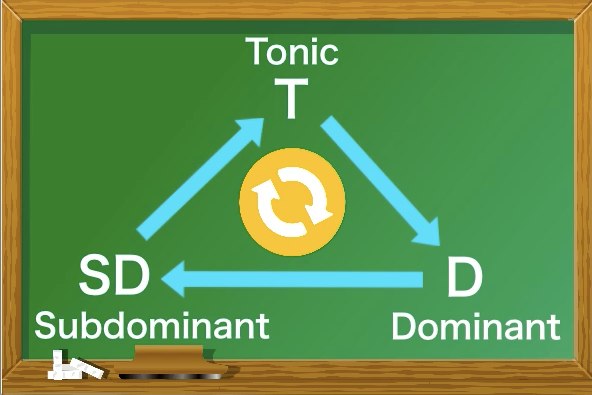
In the previous lesson, we used the primary triads (the three chords)
to add chords to the melody of "Tulip."
Here, as a review, we explain other chord variations,
and then the order of the chord's notes.
This order of notes (voicing) in particular greatly changes a song's impression even with the same chord,
so go ahead and experiment with it as much as you like.
Video explanation
Frequently asked questions
Q1. What is a weak progression? Can music production beginners understand it?
A weak progression is one category of chord progression, referring to movement with a weaker sense of direction, as opposed to a "strong progression" such as V→I. This course is for beginners, so basic knowledge of the primary triads is enough to understand it.
Q2. Does changing just the voicing really change the impression of a song?
Yes, greatly. Even with the same chord, changing the order of the notes changes the song's atmosphere, sense of tension, and flow, changing the emotional impact on the listener.
Q3. What should music production beginners keep in mind when learning chord inversions?
It's important to train your ears by actually playing different voicings in your DAW and comparing them. We recommend understanding the sonic changes from inversions intuitively through practice, not just theory.
NEW ARTICLES
Latest English Articles











