Interview with Motoi Murakami, Trumpeter of Zainichi Funk
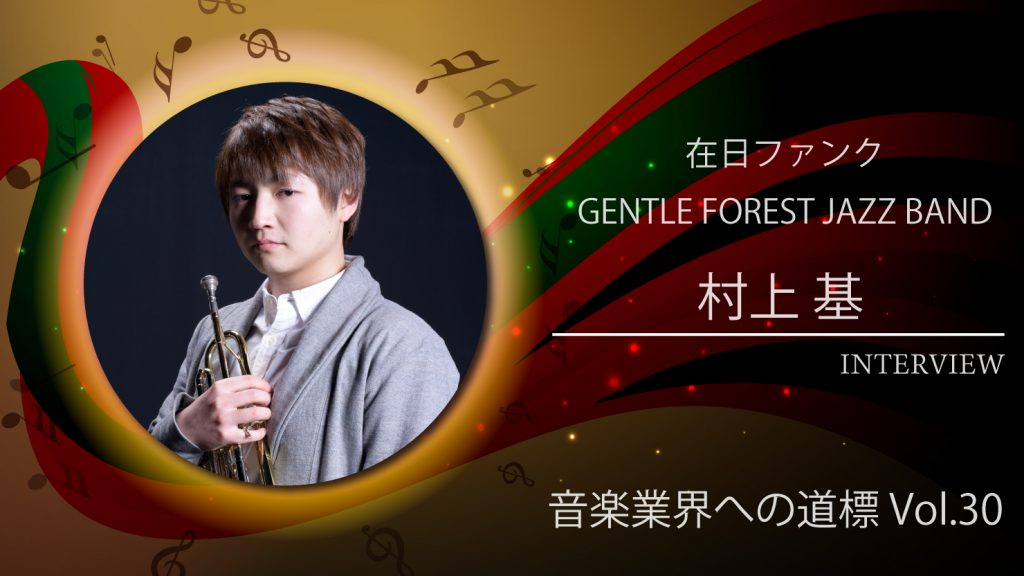
For the 30th installment of Pathways into the Music Industry, we spoke with Motoi Murakami, who composes, arranges and plays trumpet for bands such as Zainichi Funk and GENTLE FOREST JAZZ BAND.
We heard lots of interesting stories, including a look into the world of jazz that you rarely get to see and his unique way of composing, so please give it a read!
How to Compose Jazz
Q: Thank you for letting us interview you. First, please tell us about your current work.
Zainichi Funk and GENTLE FOREST JAZZ BAND are the main bands I play in. This year I also started playing in a band called Dirty Four Eyes.
I also do studio work as a trumpeter, and I play as live support for Lekishi and Gen Hoshino.
I also do jazz arrangements and compose and arrange music for commercials.
Q: You specialize in composing and arranging jazz and big band music. How do you write your songs?
First, I draw a blueprint of the song on paper. Lately I often use an iPad too.
Whether it's just an image or something concrete varies from time to time, but either way I make it from start to finish. I think about where it builds up, what the harmony is like and so on, and decide the BPM and the rough length of the song accordingly.
In modern jazz, songs over 10 minutes are common, but many projects have time constraints.
Older styles of jazz in particular were the popular music of their day, so I pay attention to song length.
Q: Jazz gives the impression that songs are built from improvisation.
Jazz actually has quite a few rules, and the premise is that there's a melody that serves as the theme. There are lots of songs known as "jazz standards," and in a session, for example, it's common to play the song's theme, pass the solos around, then return to the theme and end.
When I compose, I also create a main theme first and then think about how to develop it.
Q: When you actually build the song from there, how do you proceed?
I work on Windows, and I proceed while writing the score in Finale.
My method is to enter the main theme and then add to it while comparing it with the blueprint.

Q: Composing from a score seems like a rare approach these days.
I basically write assuming live performance, so the biggest advantage is that the score is complete as soon as I finish composing. Turning MIDI data into a score is a lot of work.
Quite a few people who arrange jazz and big band music work this way, and there's also a method where, instead of a blueprint, you draw waves on a graph of volume and time and work from there.
That kind of old-school composing method remains in me as a root, and adapting it to today's pace and demo deliveries has resulted in this approach.
Q: After entering the music in Finale, how do you proceed?
I bring it into Cubase and swap in sound sources. Native Instruments' Session Horns Pro is my favorite.
Finale is weak with things like drums, so I program those in Cubase using BFD3.
Q: So you make good use of both Finale and Cubase in your production.
Lots of people want songs in the genres I write in, but surprisingly few people can make them properly.
People from a jazz background can write scores but can't use a DAW, while people from programming or band backgrounds who don't know wind instruments write scores that are a mess.
Each instrument has its own sweet-spot range, the orchestration uses ranges and harmonies different from classical music, and there are many fingering constraints, so I think it's quite a difficult genre if you try to study it properly.
Q: If someone wants to write or study jazz or big band music, where should they start?
Going to see live shows to get an image of the sound is important, and transcribing and copying is an effective method too. At first you probably won't understand any of it (laughs), but surprisingly often it's built quite systematically.
Q: Is there any song people should definitely listen to?
Hmm... that's difficult. If I had to name something for big band, it would be Duke Ellington, Count Basie and the like.
Jazz has a completely different atmosphere and color from era to era. Big band has gone through many changes too, so I think the best thing is to follow the songs you like.
When you do, I also recommend looking up who played on the recording.
The jazz world is unusual: it's a genre with a lot of sessions, so musicians often work as individuals rather than as groups.
One musician might play in various bands under their own name or other people's names, so I think it's good to research along the lines of, "This person plays music I like. What other work have they played on?"
Zainichi Funk "Bakudan Kowai"
Mr. Murakami's Path So Far
Q: When did you start music?
I started the trumpet at around 10. I became interested after seeing an orchestra when I was little, and took lessons at a local music school.
I think I took lessons until around junior high.
Q: What did you do in high school?
I played in bands.
It was right in the middle of the ska boom, and just being able to play trumpet made me in demand with all kinds of bands. I also joined a university jazz club.
Q: What music were you listening to back then?
I liked listening to The Beatles, King Crimson, UK rock and prog. Around then I also discovered jazz and started listening to it a lot.
I kept playing in bands like that, and when it came time to think about my future, I realized, "I haven't done anything except play," so I went on to a jazz music college.
I hadn't played in a school wind band and couldn't really read music, so I remember struggling a lot.
Q: So you were already active as a band musician back then.
That's right. Even now I do a lot of studio work that leans toward being a band musician. Rather than the studio musician style of "how accurately can you do the job you're given," doing what I want to do and enjoying it seems to suit me better.
Q: What did you learn at music college?
Basic knowledge and composition methods, and otherwise endless sessions and improvisation.
I'd loved big bands since high school, so I wanted to be able not only to play but also to write, and I studied all sorts of things.
I learned the basics at college, but in the end it took a corresponding amount of time to be able to use them freely myself.
GENTLE FOREST JAZZ BAND "Thrilling the Band"
Making a Living in Bands
Q: When did the two bands you mainly play in form?
GENTLE FOREST JAZZ BAND formed when I was about 20, and Zainichi Funk about six months later. I've known Gentle Kubota and Hamaken (Kentaro Hamano) since the jazz club I went to in high school, so it feels like we're still doing it as club friends.
Q: It's amazing that you've kept going without stopping.
All the members play in multiple bands, and maybe it was actually a good thing that nobody clings to just one and everyone is free to do their own thing.
Of course, that makes scheduling tough.
Q: What do you think is important for keeping a band going?
It's different for everyone, of course, but for me it's probably not expecting too much from others. Bands don't make much money, and everyone's living situation is different, so schedules often don't line up.
That's why, rather than relying on the band or the members, I think I need to increase what I can do myself, like my instrumental technique and composing, and keep improving it.
Q: How did Zainichi Funk become well known?
Soon after we formed, Hamaken became a hot topic on Space Shower TV, and we played at a big live house in Osaka, where a huge crowd came. We got paid quite well too, so we thought, this is going to work! But when we played a show in Tokyo, only about 10 people came. That was the beginning of Zainichi Funk.
From there we kept at it steadily, made an album with the money we saved, and our income grew little by little. That's how we grew.
Q: That sounds like it could be a bit traumatic.
Every world is tough. Even in the jazz scene, it's common for there to be more band members than audience members.
Q: In your twenties, what was your mindset in your music career?
I thought I probably wouldn't be able to make a living (from music alone) for at least 10 years. But there was nothing else I could do, so I thought it would be fine if I could quit my part-time job by the time I turned 40.
I actually became able to live on music alone at around 29, when my schedule got really busy with live support and production work.
earth music&ecology Autumn 2018 "Let's Go Twice as Cheerful: 3 People" (composed and arranged)
Mr. Murakami's Future
Q: You've experienced both the major and indie worlds. Are there any big differences?
Basically, I don't think it changes that much. But if you move along with your whole management, differences come up in how things are done. That's simply a question of whether it suits you or not.
Q: What kinds of contracts do major-label bands have?
There are all kinds. In terms of management contracts, for example, "instead of a fixed salary, earn about this much each year," or "there's no fixed salary, but we'll pay you according to sales." Young bands sometimes seem to get development contracts.
Q: What kind of activities do you think people should pursue to make a living in the music industry from now on?
If you mean "making a living from music," I think you should have what you want to do while also developing the ability to handle what's around you. It would be a real waste to be able to play but not deliver data, for example. DTM products are getting cheaper, so people who can only play should actively take on the challenge.
Also, I think individuality will become even more important for instrumentalists. Perfect pitch and timing with no mistakes is wonderful and absolutely necessary, but a performance that's merely accurate can end up sounding close to programmed sound, so on top of high technique, it's good to have "expression only you can do."
Q: Thank you. Finally, please tell us about your future activities.
I probably won't ever be satisfied, but I want to keep leaving better and better work and absorb all kinds of knowledge.
As a trumpeter, I'd like us performers to keep communicating "the value of live performance." Rather than just going with the flow of each job, I want to think proactively and help create an era in which instrumentalists are properly valued.
Q: Thank you very much.
Zainichi Funk "Ne ni Motte Masu"
Interview and text: momo (Mamoru Tanoue)
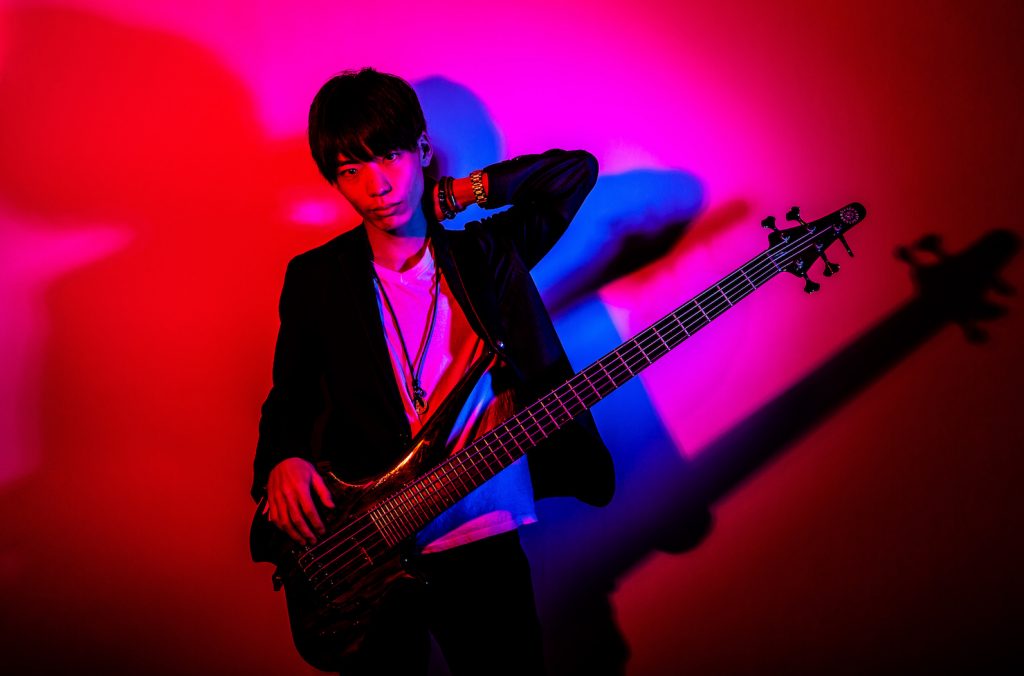
Profile: Born in 1995. A Digital Performer and Ableton Live user. After graduating from music school, he moved from Fukuoka to Tokyo as a composer.
Made his debut as a writer in August 2017, composing and arranging for Tsukicro's "STARDUST".
With the motto "songs that touch the heart", he is a multi-player who handles everything from lyrics and composition to arrangement and recording.
He is also active as the composer and arranger for the art unit "Shiro".
Website: Music Designer momo
Twitter ID: @momo_tanoue
NEW ARTICLES
Latest English Articles