Interview with Maurice of YOUR SONG IS GOOD
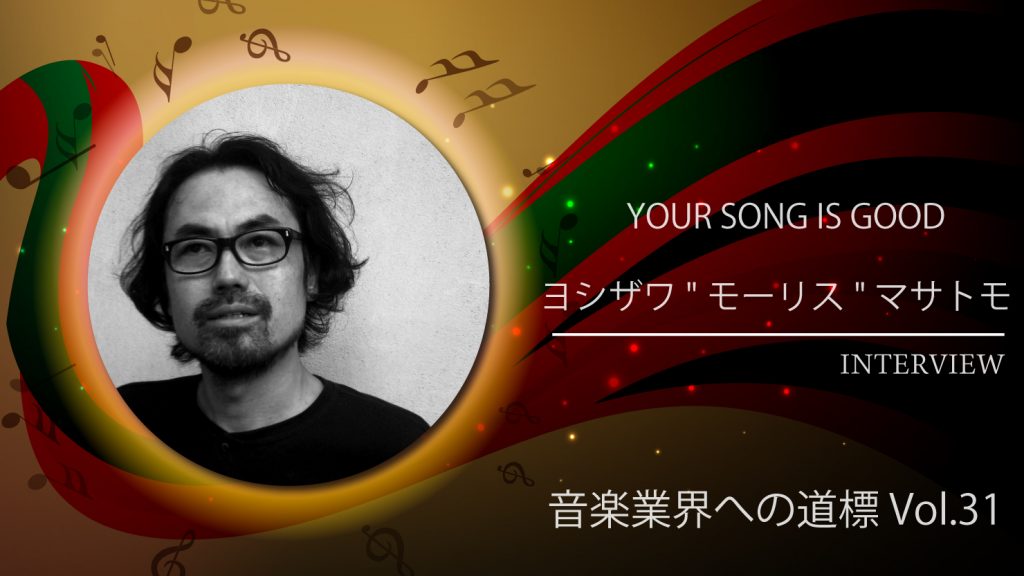
For the 31st installment of Pathways into the Music Industry, we spoke with Masatomo "Maurice" Yoshizawa, guitarist of the instrumental band "YOUR SONG IS GOOD".
A musician who also creates all kinds of illustrations and artwork, Maurice is a true "artist." Once again, we heard plenty of in-depth stories, from what drives him to keep going without stopping to the relationship between music and painting.
Q: Thank you for letting us interview you. First, please tell us about your current activities.
I'm the guitarist of YOUR SONG IS GOOD, a band celebrating its 20th anniversary this year.
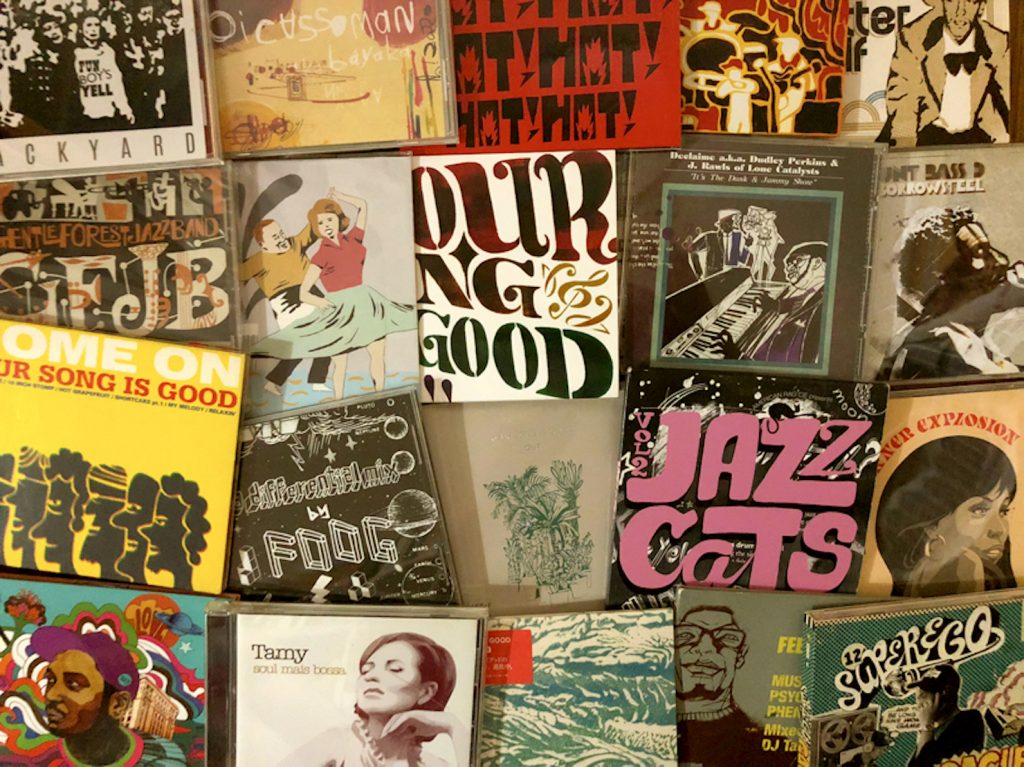
I also work as an illustrator, drawing CD jackets for various bands and designing merchandise such as T-shirts.
Q: It's rare for someone to do both music and illustration.
That may be true. I've loved both since I was little, and I wanted to make one of them my job.
But when it came to music, I gave up once in high school.
Q: Was there something that triggered that?
I originally loved punk music, and in junior high I started a band thinking, "I could do this myself." It was the height of the band boom, with bands like THE BLUE HEARTS, and lots of my friends started bands too. As I kept at it, I came to feel, "I want to make a living from music."
But in high school, my music teacher said something like, "Some of you may want to pursue music. But to get into a music college, piano skills are essential, and on top of that..." I felt like I'd been warned off, and I thought, I can only play guitar, so making a living in music is probably impossible.
The people I saw and heard about around me had all paid their dues, and I felt that even a ticket to properly study music was out of my reach.
Looking back now, I think my view wasn't very broad back then.
Q: So that's where you gave up for a while.
Yes. So, thinking "if not this, then that!", I set my sights on the world of design and went on to an art college.
And that's where I met Jun "JxJx" Saito, who's now a member of the band.
Q: So you met your current bandmate at the end of the path you chose after giving up on music.
That's right. I sometimes wonder what would have happened if I'd aimed for music college back then, but in the end it was a good choice.
YOUR SONG IS GOOD "Double Sider"
Q: As an aside, what do you learn at an art college?
I was in the design department, and it really covers all sorts of things. Every day, I just kept giving shape to whatever ideas welled up in me.
The Story of YOUR SONG IS GOOD
Q: When did YOUR SONG IS GOOD form?
Around my third year of university.
Jun joined a band I'd originally formed just for fun, and we became the predecessor band, "SCHOOL JACKETS."
In about a year, we made around 40 songs, but they were all short, like fragments of ideas.
After trying all sorts of things, we decided to make proper songs, so we renamed the band "YOUR SONG IS GOOD" and started over.
I'd moved around between parts, including vocals, drums and trombone, but after the fresh start I finally settled into the guitar position.
Q: So you got organized in order to work toward going pro?
No, at that point we were still just having fun as friends.
I think it was because we had a good cycle going: working part-time jobs, doing illustration work and enjoying the band.
But as we approached our mid-twenties, we had a discussion within the band about whether we were really OK carrying on like this. I think there was also a sense of crisis that, having come this far with music, if we kept going like a sandlot baseball team, our passion for music might fade away someday.
Q: Specifically, what direction did you decide to take?
When deciding on our musical direction, The Specials came up as a guiding light.
We all had "loving ska" in our background, and we set our direction by aiming for that kind of coolness that gets everyone going, no questions asked.
Q: So that's when you changed your mindset.
Our activities didn't change all at once, but the way we met people changed.
Kakubarhythm, a newly launched label, released our CDs, and we began getting invitations to play live from artists in all kinds of fields.
Kakubarhythm started when Wataru Kakubari, who had originally been running a punk label, decided it didn't make sense for us to sign to that, and launched a new one.
We focused on music, while he worked on the management side and pushed us forward in all sorts of ways.
When we first met, he said, maybe half jokingly, "I'll take you to Fuji Rock," and when we actually got to play there later, I was really happy.
Even before that, we did a headline show at Shimokitazawa SHELTER, then Shibuya CLUB QUATTRO, and so on. Playing the live houses we used to go to as fans and admired, and stepping up gradually, was really moving.
Q: I imagine an instrumental band faced many difficulties compared with vocal bands, such as drawing audiences.
It's a bit different from a "big hit everyone can sing along to!" But we had lots of friends' bands, and as we got invitations from bands we wanted to play with, our audience grew little by little.
When we were enjoying ourselves and doing what we found interesting, things around us flowed the same way, and lots of good encounters came about.
Q: YOUR SONG IS GOOD has also experienced being on a major label.
Around the time we released an album in 2004, we were invited by Universal Music and were on a major for several years.
Q: Did anything change significantly when you were on a major?
In our case, the label was still Kakubarhythm and only the distribution was major, so I don't think things changed much.
But thanks to the scale of that distribution, we gained new fans and were able to tour more widely.
Q: From your perspective, how do you think the relationship between majors and indies has changed?
It used to be that "major = people who are selling" and "indie = people working on a small scale," but I think that gap is disappearing.
I also think the idea that "on a major, you have to make major-sounding music" is changing.
As the way music is consumed changes, I think the creative freedom on the major scene has actually increased.
YOUR SONG IS GOOD "The Cosmos"
Q: So it's not a question of one being good and the other bad.
I think you can just choose whichever suits your style of working.
Q: By the way, what are the band's main sources of income?
This also varies by artist, but in our case, since we don't release music very often, it's live shows and merchandise.
Maurice's Future
Q: How does YOUR SONG IS GOOD write songs?
We often loop one idea endlessly and expand it little by little. It's like a session, I guess.
Sometimes we also build songs by blending the unique pleasure of programmed music with the physicality of a band.
Q: Please tell us about your gear.
My main guitar is a Fender Coronado.
For pedals, I love my KLON Centaur overdrive, which I inherited from Takeo Matsumura, the first bassist of YOUR SONG IS GOOD.
Q: For you, what is the relationship between "music" and "illustration"?
For example, I sometimes take ideas from forms of expression unique to music, like dub in reggae, and use them in illustration, and conversely, I sometimes turn illustration into music.
I'm often asked to design CD jackets and merchandise, and in those cases too, I value the inspiration I get from the band's songs.
Past Works
Q: Is there anything you're mindful of as input in daily life?
Thinking about things like "the relationship between a creator and their work" is very stimulating.
Sometimes a delicate-seeming person creates delicate work, and sometimes they create something far bolder than you'd imagine from their appearance.
There are immeasurably complex relationships there, and I think I'm always learning about them and thinking about them.
I think this applies to anything, but if either input or output expands, the other naturally expands too. I've been doing music for more than 20 years, but I don't think I'm anyone special at all. I'm still looking for new music, and I think it's precisely because there's so much I can't do yet that I'm still active like this.
Q: Thank you. Finally, please tell us about your future activities and goals.
No matter how long a band has lasted, if it rests on its laurels, there's every chance it could break up. There's no meaning in carrying on with the attitude of "we've come this far, so it would be a waste to break up."
I want to keep taking on new music and keep growing while enjoying it.
Q: Thank you very much.
Interview and text: momo (Mamoru Tanoue)

Profile: Born in 1995. A Digital Performer and Ableton Live user. After graduating from music school, he moved from Fukuoka to Tokyo as a composer.
Made his debut as a writer in August 2017, composing and arranging for Tsukicro's "STARDUST".
With the motto "songs that touch the heart", he is a multi-player who handles everything from lyrics and composition to arrangement and recording.
He is also active as the composer and arranger for the art unit "Shiro".
Website: Music Designer momo
Twitter ID: @momo_tanoue
NEW ARTICLES
Latest English Articles