Interview with Professional Drummer Masanao Matsushita
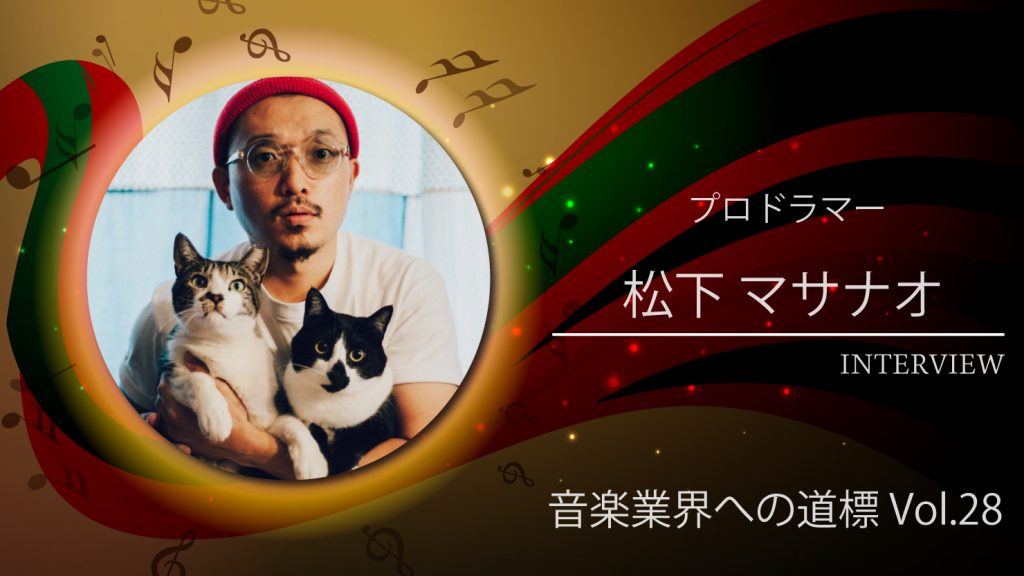
For the 28th installment of Pathways into the Music Industry, we interviewed drummer Masanao Matsushita, who is active in a variety of scenes, including Yasei Collective.
Once again we went deep, hearing about his path so far and how hard it is to make a living as a professional drummer. A must-read whether you're a drummer or not.
Q: Thank you for letting us interview you. First, please tell us about your current activities.
I play in Yasei Collective, which I lead, as well as GENTLE FOREST JAZZ BAND, which I've been in for about 10 years, and ZA FEEDO.
I also play in a unit called HH&MM with bassist Hinatch (Hidekazu Hinata) at session-style events.
Beyond that, I do session and support work, recordings and so on.
Q: You're involved in many different things. Is jazz basically at the center?
No, not really. It's more like one of my roots.
I'm not a jazz drummer as such, so for me, I play every genre in roughly equal proportion.
That said, I often check out jazz bands and drummers as material I want to take in.
Q: What do you focus on when you listen to music?
I focus on "what role the drums play in that music." Of course I pay attention to the drum sound too, but bands with really great drummers tend to become technique-focused.
I'm very careful about that myself: I do want to get better at my instrument, but I take care not to let it become a place for showing off technique.
I use technique in a way that fits the music, or conversely, I think, "I want to play this kind of music, so I need this kind of technique."
Q: So you think of it as "the drums within the whole."
Within that, I'm conscious of bringing out the reason the drums are there and my own particular quirks. Whatever song I play, I absolutely need the drums to be cool, so it really is a tightrope walk with that egotistical side.
If you lean too far one way, it can fail, but sometimes going all out works brilliantly.
For example, "for just one part of the song, how hard can I hit without thinking about the music at all," or "here I really want to feature the guitar cutting, so the drums will just keep time." Having that kind of core in a song can create moments where everything really tightens up.
Q: How does Yasei Collective write songs?
Often Takuro Saito [Gt, Vocoder, Synth] brings in a fully worked-out demo, and we copy it. Recently, we also sometimes do it the other way around: each of us takes home patterns we made together and reworks them.
In any case, we try as much as possible not to do the "usual" thing.
Q: Is there a Yasei Collective song you particularly like?
There's a song called "Trad" on the album we recently recorded in New York and released, and I really like it.
There's also a song called "radiotooth" on an earlier album, and I really like that one too.
Buy "Trad" here
Yasei Collective "radiotooth"
Q: Since when have you made a living from music alone as a professional drummer?
Since I passed 30, I think. Until then, I was working a normal part-time job, about twice a week.
Around the time I started writing articles regularly for Drum Magazine, my drumming work gradually increased.
Q: Is it really hard to make a living as a drummer?
I think it's hard. Now the line between professional and amateur has become extremely blurry, and it's not like the '90s, when jobs came one after another. On top of that, more musicians than back then are competing for that work, so my impression is that the seats are pretty much filled.
Q: The same seems true of other players and creators.
There's a technical element, but this industry basically runs on relationships. Unless those break down, people keep calling the same person, so the next seat rarely opens up. That's why I think breaking in is really hard.
I also try, as much as possible, to prioritize and clear my schedule for gigs where people tell me, "It has to be Masanao," whether it's a band or not. It's a tough balance, though.
Q: What kind of activities should people who want to become drummers pursue?
Unlike in our day, there's now YouTube, Twitter, Instagram and so on, and it's an era in which musicians are less and less deified.
So I think it's important to ride that wave and keep putting out whatever you can show right now.
In the past, many people with talent ended up going unnoticed, but now all kinds of people and agencies are always watching. If you keep putting out something interesting that strikes a chord, I think it'll catch on somewhere.
Of course, even for us, there are times when we release a song thinking "this one will definitely hit!" and it doesn't at all, so I think all you can do is keep trying.
The Road So Far
Q: When did you start music?
My father loved music, so I listened to music from a young age, but I actually decided to play around my second year of high school. At first it was guitar. I loved THE YELLOW MONKEY and tried to copy lots of their songs, but I couldn't do it at all. I quit after two or three days. (laughs)
After that, I was given a drum kit by a friend of an older cousin and started drumming. I've never stopped since. I've kept playing so much it's almost ridiculous.
Q: Did you have a place to play at home?
I grew up in the countryside in Nagano Prefecture, and I played under a mysterious rule that it was "OK during the daytime."
But the definition of "daytime" gradually got looser, and I was playing until about 7 p.m. You know, 7 p.m. in the countryside is pretty much night. I still remember getting yelled at a lot and getting silent phone calls. (laughs)
Q: There aren't many places where drummers can practice... What kind of music were you playing back then?
For Japanese music, I played THE YELLOW MONKEY, LUNA SEA, Hi-STANDARD and so on.
For Western music, Rage Against the Machine, Red Hot Chili Peppers and others.
Q: When did you decide to make a living in music?
I'd decided by my third year of high school. I wanted to go to a music vocational school in Tokyo, but my parents were against it. In the end I went to university, and that's where I met my current bandmates and the members of Zainichi Funk.
Q: So you had a lot of fateful encounters.
That's right. I'm glad I didn't go to vocational school back then.
At the time, I thought, "I can't go pro unless I go to a music vocational school." Of course, everyone's different.
Q: What path did you take after graduating from university?
I saved money and studied in Los Angeles for a year. That was the first time I went to a music school.
Q: Going to America must have taken a lot of courage.
Yes. There's the language barrier, too. But there was nobody in Japan I wanted to learn from, and after a lot of research, I decided to study abroad.
Every chance I've grabbed has come precisely because I went to America, or has branched off from that, so I'm really glad I went.
It's scary to think what would have happened if I'd made a different choice back then. I think I'd be living a completely different life.
Q: So what you did in America was more useful than the fact that you went?
Hmm... that's a really difficult question, but I'd say both.
Plenty of Japanese people go to that school every year besides me, but maybe because they want to feel safe, they end up sticking together. I felt that would be no different from taking English lessons at a school by the station back home, so I pushed myself to talk with non-Japanese people as much as possible. Thanks to that, I was able to learn real-life things and culture that you don't get in class.
Q: What was life at the school like?
Classes started at 9 a.m., we'd project scores on a screen and do things like pad practice together, and after classes I went to see live shows every day.
I'd go home, take a short nap, go back to school around 2 a.m. and practice... Those were my days, over and over. Looking back now, I'm amazed I kept it up.
Q: Was the one thing driving you back then the desire to get better?
All I could think about was taking home everything I could get there and not wasting any of it. I didn't have money either, and I practiced with an almost crazy level of focus.
Q: By the way, as a drummer, is there any practice you're glad you did?
One thing I'm glad I copied is the intro drum solo of Tower of Power's "Squib Cakes." I think copying it note for note showed me a lot. Quite a few people still do it, and I recommend it in my drum lessons.
I also copied the drum pattern, the swing feel and the fine details of the sound in The Meters' "Cissy Strut," and I'm still glad I did that one too.
Q: When did you come back to Japan?
When I was about 26. I came back to Tokyo and spent my days staying at various people's places and working part-time.
Q: Were you anxious about what to do next?
Extremely. The so-called anxiety about the future. I felt I had to do something every day and searched for all kinds of jobs online, but it was no good at all.
Now I'm working as a professional drummer, but I still have anxieties of a different kind.
I think anxiety will surely never go away, but I see it as something you feel precisely because you're thinking hard and trying to move forward.
Q: Was there an event that became a turning point?
For a while, I kept thinking bitter thoughts like "Why me..." Why wasn't I getting noticed while musicians my age were taking off?
Around then, Toshimitsu of Shirai Music in Toyohashi found a video of me playing. He thought, "It's strange that this person isn't known yet," and pitched me to Drum Magazine.
They put together a feature on me, and for a whole year after that I appeared in Drum Magazine in all sorts of ways. That's how lots of people got to know me. It was a major turning point for me.
Q: And you finally made the cover of the September 2018 issue.
I was really happy. One of my dreams came true.
GENTLE FOREST JAZZ BAND "Tsuki Miru Doll"
Masanao Matsushita's Future
Q: What drives you this far?
As absolute self-expression, I always have a picture of "the kind of drummer I want to be," and I play live and train to make that real. And to keep that image of a drummer, I keep myself balanced by climbing mountains, watching movies and playing with my cats.
Q: What kind of drummer are you aiming to be?
Technique aside, the basis is to treat every single note with care so that people think, "With this person, we're in good hands." On top of that, I want to be a drummer who can connect people with each other.
For example, when technique-oriented people, rock-oriented people and jazz-oriented people are together, I want to be the glue, both technically and personally.
These days I often play with Hinatch, and he's really good at bringing people together. Through him I've been able to connect with all kinds of people, and I really respect him as a person. His way of thinking and acting has influenced me a lot.
In the past, for me, the most important thing was to express what I wanted to do without thinking. Like, I'd never lose to anyone.
But that's something you can keep in your heart and express through your sound.
Now I think about how my being there can make things flow even a little better.
Q: So your way of thinking changed through your many encounters.
I've said and done a lot of rude things, and there are many people I think I might have become friends with if we'd met differently.
Of course I feel sorry about it, and I've gotten plenty of payback, but who I am now is built on all of that, so I don't intend to deny my younger self.
ZA FEEDO "Datoshitara"
Q: Thank you. Finally, please tell us about your future activities.
When it comes to drumming, I'm at a stage where I really want to broaden my musical range, and I have various specific goals, so I want to work toward them.
Being able to make a living doing what you love is very lucky, and of course everyone, me included, has done a lot to get there, but I think enjoying it is the most important thing.
Until now, my activities have been like charging ahead and clearing a path where there was none, but I think there's also a lot to be gained in open spaces, so I want to keep taking on new directions and meet all kinds of people.
Q: Thank you very much.
Yasei Collective "Splash"
Live Appearances
Information on Yasei Collective Live Tour 2018 "stateSment" is here
Interview and text: momo (Mamoru Tanoue)
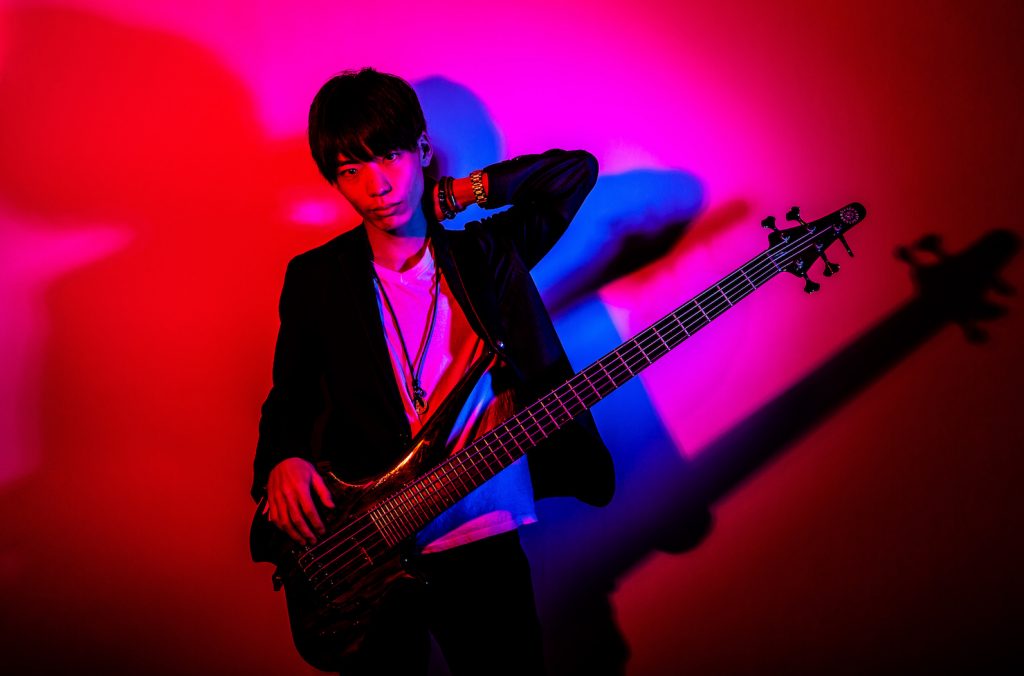
Profile: Born in 1995. A Digital Performer and Ableton Live user. After graduating from music school, he moved from Fukuoka to Tokyo as a composer.
Made his debut as a writer in August 2017, composing and arranging for Tsukicro's "STARDUST".
With the motto "songs that touch the heart", he is a multi-player who handles everything from lyrics and composition to arrangement and recording.
He is also active as the composer and arranger for the art unit "Shiro".
Website: Music Designer momo
Twitter ID: @momo_tanoue
NEW ARTICLES
Latest English Articles