An interview with J-pop DJ, DJ Kazu
For the 20th installment of Pathways into the Music Industry, we interviewed DJ Kazu, who performs at all kinds of events and festivals and has released many CDs as a J-pop DJ.
Once again we heard all sorts of stories, from the world of DJing and how to practice to future ambitions, so please give it a read.
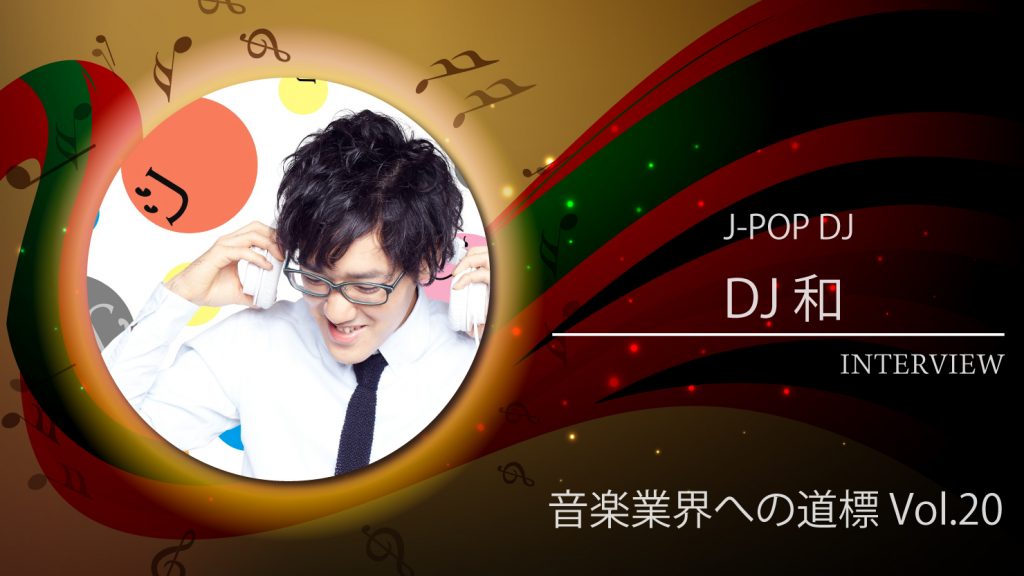
DJ Kazu | Profile
Made a major debut in 2008 as Sony Music's very first J-pop DJ.
Works a double role at Sony Music Associated Records, as a DJ and as an A&R.
While centering DJ sets on Japanese-language music only, has served as the venue DJ for NHK's "Shibuya no Oto" (formerly MUSIC JAPAN) for over eight years, and has appeared at large festivals and many events across genres, including ROCK IN JAPAN FESTIVAL and ANIMAX MUSIX.
Also continues to actively perform at overseas events, appearing in more than 10 countries including Los Angeles, Germany, Italy and Singapore, drawing attention by whipping dance floors into a frenzy with selections devoted entirely to Japanese-language songs.
Representative works include "J-Popper Densetsu," "A GIRL↑↑" and "J-Anison Kamikyoku Matsuri." The latest release, "Love to Pop ~There's a Song That Reminds Me of Someone I Loved~ mixed by DJ Kazu," released on August 9, 2017, reached No. 1 on the Oricon daily album ranking* (Oricon, as of September 18, 2017), won Concept Album of the Year at the 32nd Japan Gold Disc Award, a first for a J-pop compilation mix CD, and has already sold over 300,000 CDs, the biggest hit to date. Cumulative sales of the 24-title series have exceeded 1.45 million.
Thank you for this interview. First, could you tell us again what kind of work you're doing now?
I perform as a DJ at club events, festivals and so on. DJ is short for disc jockey and refers to people who select songs to suit the venue and event and play all kinds of music while mixing it together.
Besides DJing, I also do work like a director at Sony Music Labels on a contract basis. It's like wearing two hats: I do office work and DJ on weekends.
Do you also compose music yourself?
No, I don't. Many world-famous DJs DJ as a way to perform music they've composed themselves, but in my case I started DJing because I wanted to "share" the music I love "with everyone," so for now I work only as a performer.
Boys' school × hip-hop
How did you first come into contact with music?
I grew up in a really ordinary family. It's not like there was music everywhere or lots of records from when I was little. In elementary and junior high school, I just listened to music that played on TV.
By the way, the first CD I bought was the solo debut CD of Hiroko Shimabukuro (hiro) of SPEED.
How did you go from there to devoting yourself to music?
My high school was a boys' school, and for some reason lots of people around me loved hip-hop. There were break dancers, DJs and rappers, and under their influence I started listening to Western music.
It seems a bit unusual that hip-hop was popular rather than a pop or rock band club.
Of course there were people in bands too, but at my high school I think hip-hop was just as popular.
As I listened to Western music, I came to admire the atmosphere and fashion overseas, and dressed in baggy clothes top and bottom, pure white Air Force 1s, a buzz cut and a New Era cap worn sideways.
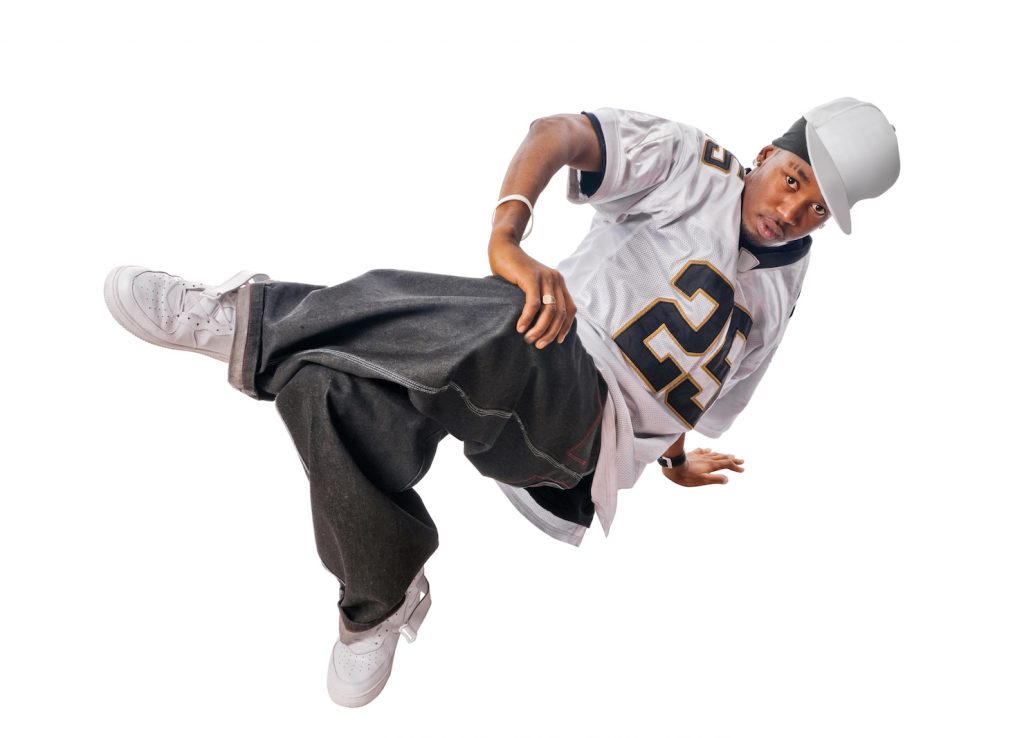
(Image for illustration only)
You had a buzz cut! (laughs)
A lot of people overseas have buzz cuts, dreads or short hair. I think I even had lines shaved in. To an ordinary eye I just looked like a country delinquent, though. (laughs)
Around my second year of high school, someone who sat near me DJed, and after we became friends I went over to that friend's house.
The friend's older brother had lots of records and turntables at home. That looked so cool that I thought, "I want some too," bought them and started DJing.
From around then I started seeking out and listening to music on my own. Many of the shops are gone now, but I remember often going to Udagawa in Shibuya to look for records.
The world of DJing
You started DJing in high school. Were you already appearing at events back then?
In high school I never once played in front of people. If I did, it was in front of a few friends or my family. Basically I practiced alone the whole time.
What does "DJ practice" involve?
In my case, rather than flashy playing like scratching, I mostly practiced the basics my friend taught me.
The basic of DJing is matching the tempo of the songs before and after the mix. In hip-hop there are lots of songs with similar tempos, so I quietly worked on the truly basic part, "matching and mixing," alone in my room.
So your DJing is built on those fundamentals. When did you actually start appearing at events?
After I went on to university.
From high school, my older sister would take me along to events she often went to, so after entering university I started showing up at all kinds of events on my own.
As I did that, I got to know more and more people, and invitations came like, "Why not play at our event too?" That's how it went.
Are there any requirements for DJing at an event?
I think as long as you can do the basics, you're fine for now. Rather than being booked based on skill, at first I mostly played at events through people I knew.
I often took flyers around to all kinds of event venues to promote.
So you were very active while attending university.
The first time I DJed, there were only about ten people on the floor, but I remember being so nervous I couldn't look up.
Also, when you first start playing events, you're often assigned slots when there are few people, which was tough.
Club events usually run from around 10 p.m. until dawn, but most people come on the last train, so the first slots after opening are usually sparse.
The usual practice is for newcomers to DJ during those times and for veterans and famous DJs to play around 2 or 3 a.m., when it's most lively.
Playing so many events must cost money too.
Yes. But in my case, I spent more money on records than on events.
These days you can get all kinds of music online instantly, but back then whether you had a record or not made a huge difference. I often saw people with rare premium records and thought, "I'm so jealous!"
The road to debut
While appearing at events like that, how old were you when you made your CD debut?
It was 2008, about ten years ago now, so... I think I was around my fourth year of university.
That's a very early debut. How did it come about?
I ended up playing as a J-pop DJ, a kind of novelty act, at an event in Nishi-Azabu where they were blasting pretty deep techno in the main room.
I was DJing not in the main room but in something like a lounge, but it was 4 a.m. and everyone was pretty drunk, so it got incredibly lively.
At a techno event, and in the lounge at that. (laughs)
The audience were all cracking up, like, "This DJ is playing crazy stuff! And actually mixing it!?" (laughs)
Then there was a customer who kept requesting, "Play this," and I DJed while taking those requests.
After the event I went over to say hello, and it turned out that person was from Sony. That's my current producer.
What! What a coincidence.
Some time later, I got in touch with that producer and said, "I want to release a CD. It'll definitely sell!" and with various things lining up, my CD debut was decided.
It's amazing that you were able to build on a connection born by chance.
At that first event, along with exchanging business cards, I also handed over a few J-pop mix CDs I'd made myself, and I heard later that they'd become a talking point within Sony Music.
Until then there were hardly any J-pop mix CDs, and the few there were leaned toward kayokyoku or toward club music.
The CDs I made collected songs that truly everyone knows, so I think they saw something new in that.
You originally DJed with Western music. Was there a turning point that led you to play J-pop?
About two or three years after I started playing events, I began to feel I had to differentiate myself from others and wanted to go up another level.
Right around when I was thinking that, a club staff member who loved hip-hop decided to hold a J-pop event, half as a joke. It was kind of a gag event, playing J-pop in a place that normally only played hip-hop, but when I went, I was blown away.
They kept a hip-hop beat while mixing all kinds of songs with scratching and so on, and everyone was singing along and jumping.
These days there are more events in all kinds of genres, but back then music that topped the Oricon charts tended to be shunned in the underground world. Even at events, there was something like an unspoken rule that "you can only play Western music."
But I thought deliberately bringing J-pop into that was really interesting.
From around the third edition, I started DJing at that event. That changed my life.
As I gradually worked J-pop into my sets, I got invited to events more and more as a novelty act. People really laughed a lot.
And while doing that I met the person from Sony... which brings us back to the story I told earlier.
DJ Kazu "Fes, Sono Mae ni" 15-second commercial
Opening up a new path yourself
How are J-pop mix CDs made?
We've released over 20 now, so some things have changed... but to talk about the first CD, I started by picking out the songs I wanted to include.
We include about 30 songs, and I pick out three or four times that many.
Then I rank the songs I want to include by priority and get permission to use them from the rights holders.
Getting permission sounds tough too.
Especially at first, since "nobody had done it before," I had to start by explaining what a DJ mix even is, so it was hard.
On top of that, we only included one chorus, and since it's DJing I wanted to change the BPM too, so getting people to understand that was a very difficult task.
I think it takes a lot of courage to carry out something nobody has done, with the conviction that "this will work!"
Now it's become quite widespread and permission is easier to get, which makes me happy.
After getting permission, I think about the track order.
Rather than song by song, I think about the flow of the whole album and put importance on "how you'll feel after you finish listening."
That's something every artist thinks about, not just for mix CDs.
Of course people may stop listening partway through, but it's still "one work."
When deciding the track order, I listen to the whole album, rearrange it, listen to the whole thing again and so on, so it takes a very long time.
You listen all the way through to check!?
Yes. We'd often start checking with a few people in the evening and before we knew it, it was morning.
Mixing the songs is also a struggle, because J-pop is so varied. At first it was constant trial and error, figuring out how to mix cleanly without changing the BPM and so on.
It really is hard work... What drives you to make CDs to that extent?
I wanted to make CDs that even people who've never been to a club could easily listen to.
The club world is inevitably a world only a limited number of people go to, not something very familiar. I also felt a sense of crisis that if things stayed as they were, it would keep declining.
So I've always wanted to make it a friendly place anyone can come to. In that sense, J-pop is a good entry point, and I thought that by bringing in that culture, a much wider range of people could enjoy it.
I strongly felt that if CDs like this spread, they might have some good effect on the club world too.
I imagine you had many hardships opening up a field that was originally shunned.
Of course when making the CDs, and at events too, sometimes it didn't go over.
There were times when everyone left the moment I played J-pop, and at one festival someone even threw a beer bottle at me.
But from the moment I decided to live as a J-pop DJ, I knew it would be divisive, and by continuing through trial and error, the club scene has gradually changed. Everyone's also kinder than before when we make CDs.
"Love to Pop mixed by DJ Kazu" commercial, long version
For those who want to try DJing
Please tell us about the gear you currently use for DJing.
The main gear I use is Technics SL-1200MK5 turntables, a Pioneer DJM-900NXS2 DJ mixer and Serato DJ Pro DJ software.
Basically I use a system called "DVS," where analog turntables act as controllers while working with DJ software linked to the music files on the computer.
Is there gear you'd recommend for those who want to start DJing?
Pioneer DJ's DDJ-400 just came out the other day. It's affordable, and it's a sure bet for anyone who wants to move on to "CDJs," the standard club gear, in the future.
These days you can also do simple things on a smartphone or iPad, so I think it's become really easy to get started.
When starting to DJ, the best thing is to go to all kinds of events and make connections. Every DJ has their own personality, with all kinds of styles, from how they mix songs and hype the crowd to how they carry themselves and even how they wear headphones, so I think you'll learn a lot.
That said, some people may be scared to just show up, so DJing in front of friends first is a completely fine way to go too.
In closing
When do you feel the greatest joy while DJing?
Sometimes there's a moment when I, the audience and everyone in the venue become one, and I love that moment the most.
At an artist's solo concert only people who love that artist gather, but at a DJ event everyone's favorite songs and artists are all different, right?
In that situation, a space where the DJ's "fun" and the audience's "fun" collide and resonate until everyone shares a single feeling is the most fun of all.
That's wonderful. Finally, please tell us your goals going forward.
It hasn't changed since the beginning: I want to grow the number of people who enjoy DJing more and more.
There are lots of music lovers, but the culture of enjoying music through DJing hasn't taken root yet.
I think it's something people of every generation, even older people, can enjoy like karaoke, and in fact I think it's even more fun than karaoke.
Of course there's a lot I can't do on my own, but I hope to keep working steadily and make DJing something closer to people.
Interview and text: momo (Mamoru Tanoue)
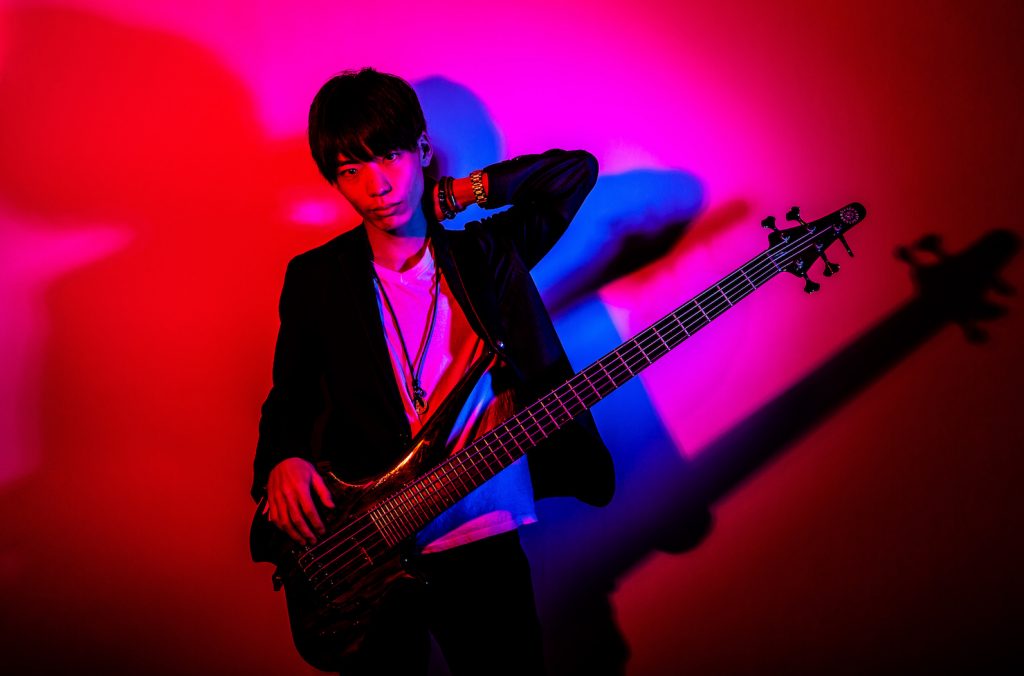
Profile: Born in 1995. A Digital Performer and Ableton Live user. After graduating from music school, moved from Fukuoka to Tokyo as a composer.
Made a debut as a writer in August 2017, composing and arranging for Tsukicro's "STARDUST".
With the motto "songs that touch the heart", a multi-player who handles everything from lyrics and composition to arrangement and recording.
Also active as the composer and arranger for the art unit "Shiro".
Website: Music Designer momo
Twitter ID: @momo_tanoue
NEW ARTICLES
Latest English Articles