
Reverse is a staple DTM technique that plays a waveform backward to create unique sound effects that do not exist in nature. The reverse cymbal in particular is used in many songs, and in Studio One you can apply it easily by choosing "Reverse Audio" from the menu bar. Beyond cymbals, it can be applied to all kinds of tracks, such as guitar, vocals, and rhythm, making it an essential skill for producers who want to add depth and character to their arrangements.
Reverse: A Staple Technique for Every Genre
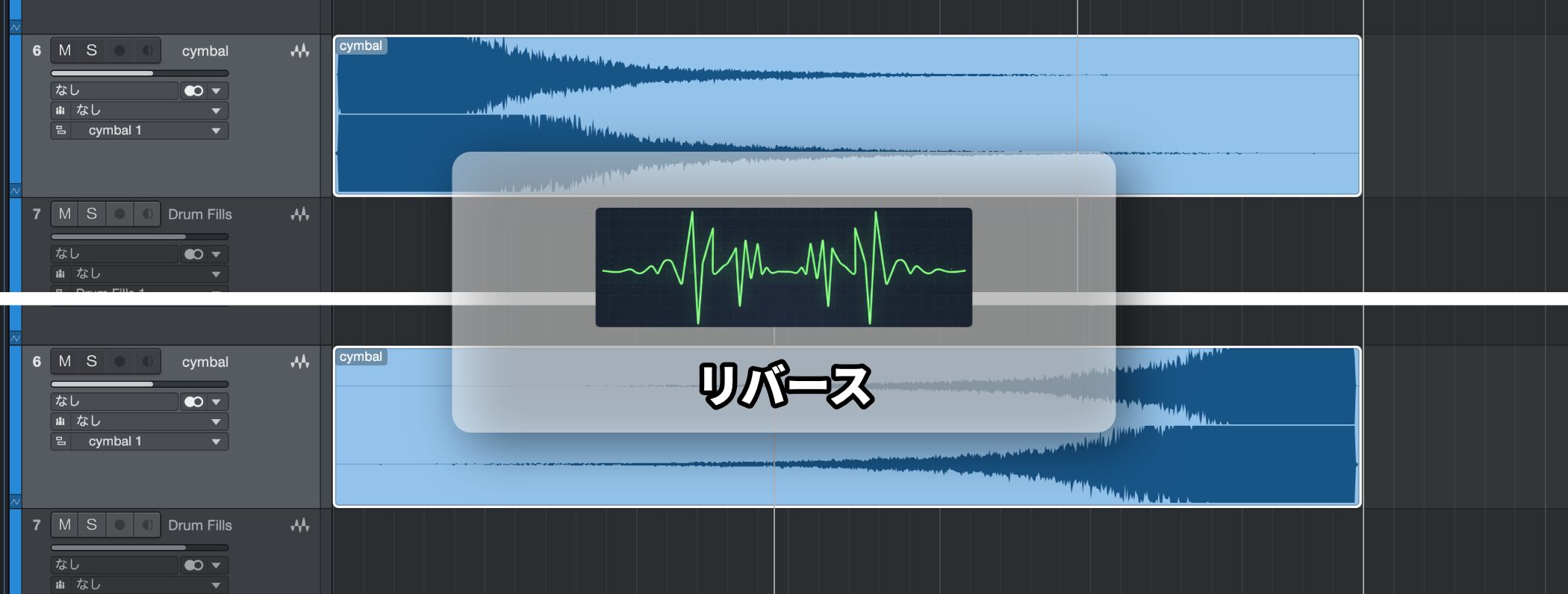
"Reverse" is a function that plays a waveform backward to create mysterious sound effects that do not exist in nature.
A well-known example is the "reverse cymbal," a cymbal sound played backward.
This time, we will show you how to create a reverse cymbal.
It sounds like this.
Sound before reversing
Sound after reversing
Arrangement Techniques Using Reverse
How to Apply Reverse in Studio One
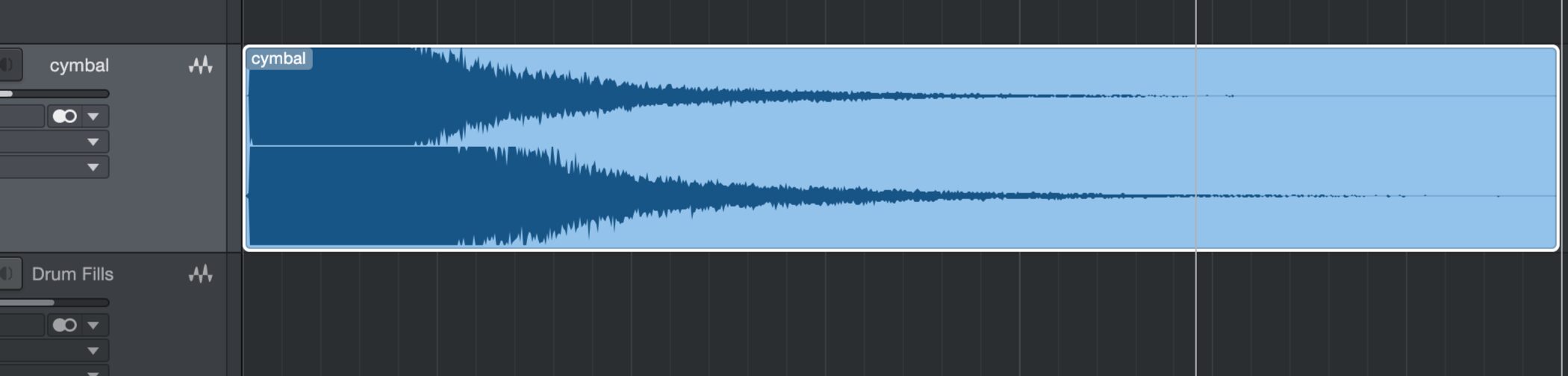
First, prepare the cymbal audio track you want to reverse.
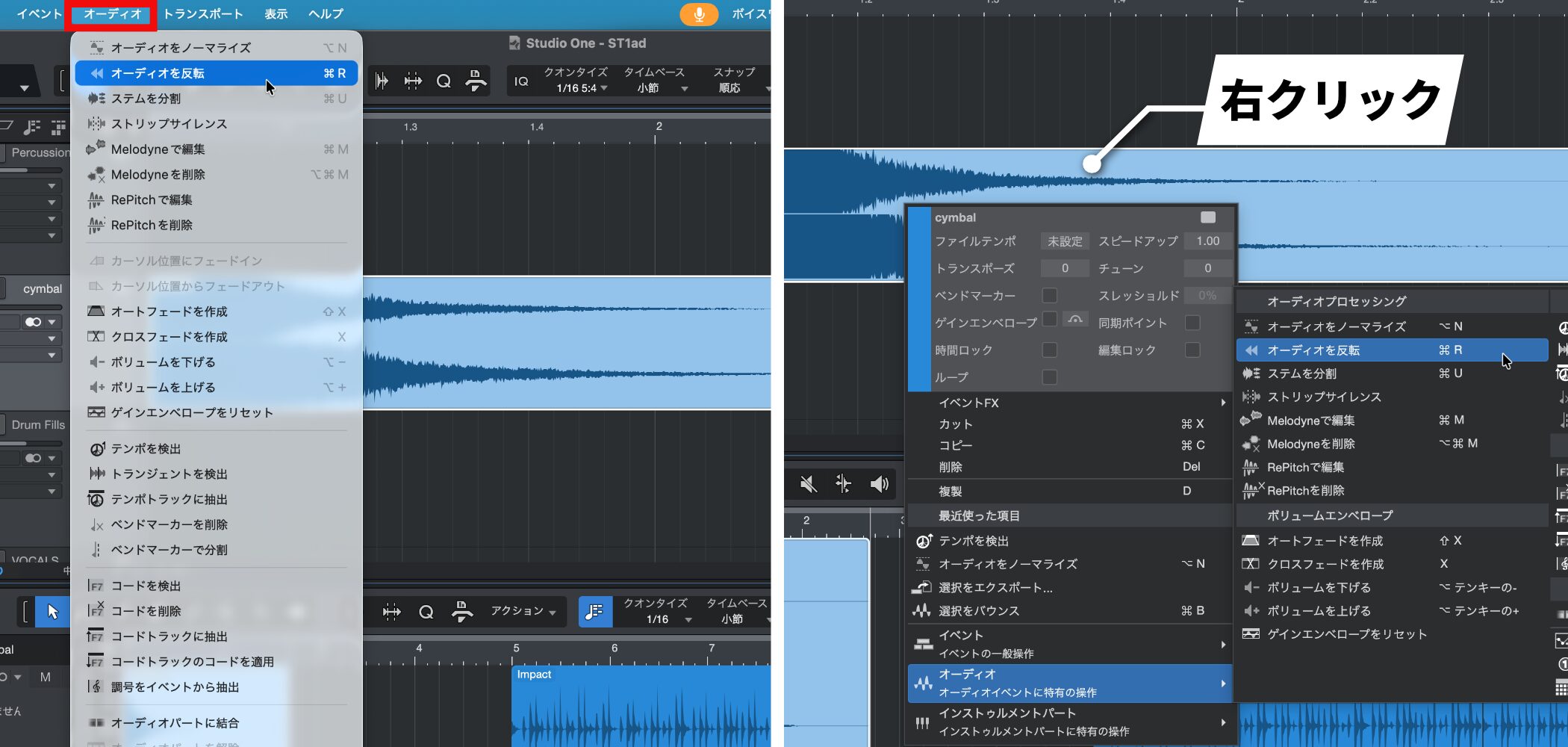
Next, with the event selected, click "Audio" in the menu bar and choose "Reverse Audio" from the menu.
Alternatively, right-click the selected event and choose "Audio" (audio event-specific actions) → "Reverse Audio" from the menu.
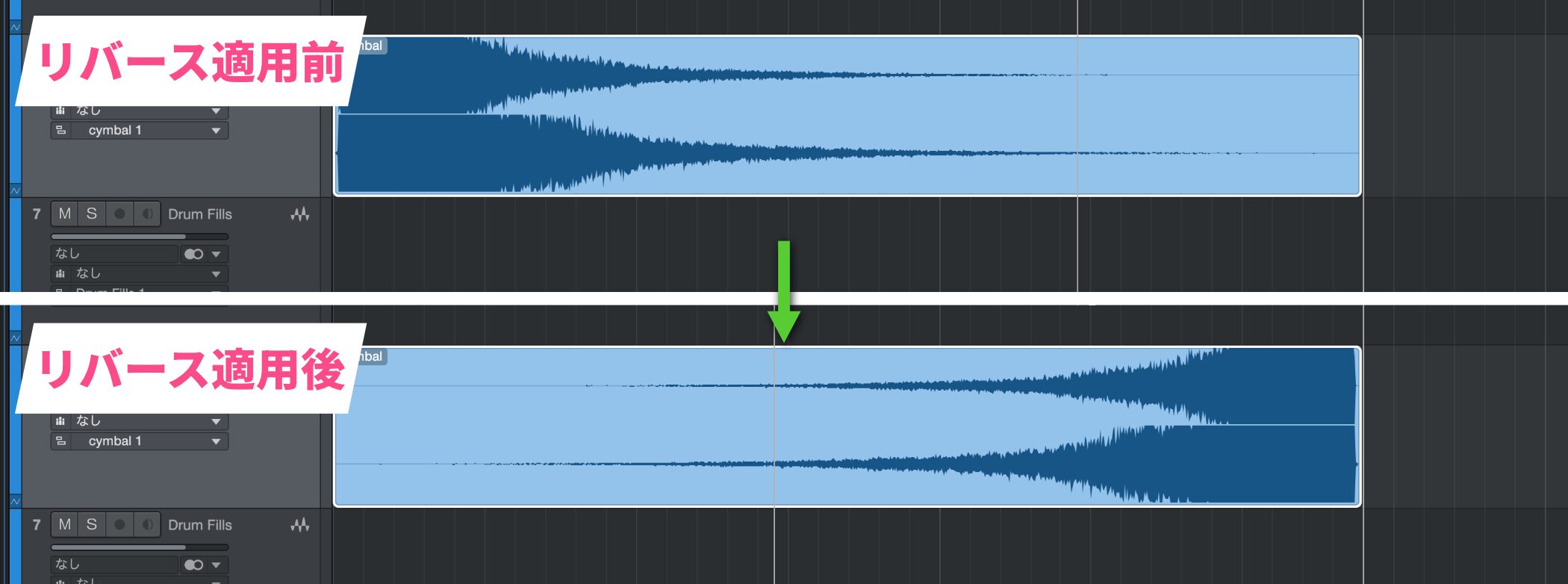
The waveform is now reversed.
We used a cymbal as the example this time, but the reverse function can be used on all kinds of tracks, such as guitar, rhythm, and vocals. Try it on various material.

Frequently asked questions
Q1. How does the sound change when I use reverse?
Playing the waveform backward creates mysterious, unique sound effects that do not exist in nature. On a cymbal in particular, the sound that would normally fade out instead swells up gradually, giving the distinctive reverse cymbal effect.
Q2. How do I apply reverse in Studio One?
Select the event you want to reverse on the audio track, then choose "Audio" → "Reverse Audio" from the menu bar. You can also apply it from the right-click menu with "Audio" (audio event-specific actions) → "Reverse Audio."
Q3. What else besides cymbals can reverse be used on?
It can be used on all kinds of tracks, such as guitar, rhythm, and vocals. Trying it on different instruments and material adds depth to your arrangement and lets you express your own unique world.
NEW ARTICLES
Latest English Articles











