
Cubase's invert function is an important editing feature that flips an audio waveform upside down, correcting phase offsets between multiple tracks and improving the texture of the sound. It is especially useful for solving the inverted-waveform problem that occurs when recording a snare drum with two mics: matching the batter-head and snare-side waveforms clears up the image and brings the snare forward. It can also be applied to sound design when using multiple mics on guitar, bass, and more, and it is easy to apply by choosing "Audio" → "Process" → "Invert Phase" from the menu, for a professional improvement in sound quality.
Flip the Waveform! Cubase's Invert Function
If you zoom in on a sound,
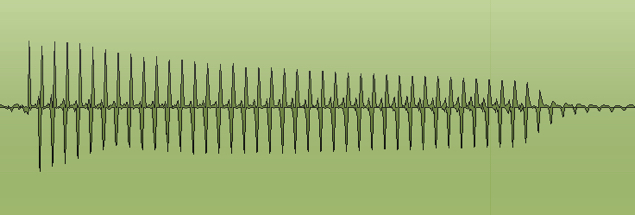
↑ it always looks like a wave like this.
The invert function flips this wave upside down.
This flip is meaningless when the track plays on its own
; it takes effect when the track plays together with other tracks.
Invert Explained
We explain the effect of inverting using a drum sound as an example.
This process alone can change the texture of the sound.
Extracting a Vocal Track Using Phase Inversion
This is a technique that cancels out waveforms by inverting them to extract only the vocals.
M/S processing is based on a similar principle.
An Example of Inverting
A well-known example is the snare drum.
The snare, the center of the rhythm, is often recorded
with two microphones.
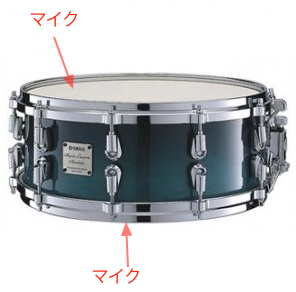
↑ The mics are placed on the top (batter head) and the bottom (snares) of the drum,
but in the recorded result, the waveforms are inverted relative to each other.
As a result, the core of the sound becomes blurred.
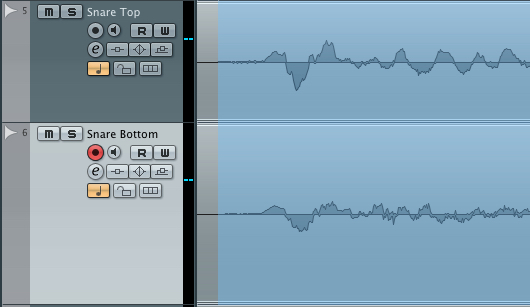
After recording the drums, let's look at the snare waveforms.
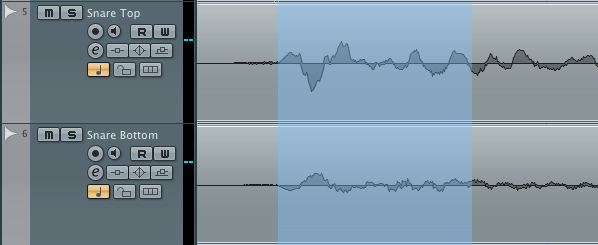
↑ The top is the batter-head waveform and the bottom is the snare-side waveform.
The peaks of the waveforms are completely opposite.
This makes the sound image blurry.
This is where we use invert.
Invert the snare-side waveform to line it up with the batter-head waveform.
How to Apply Invert
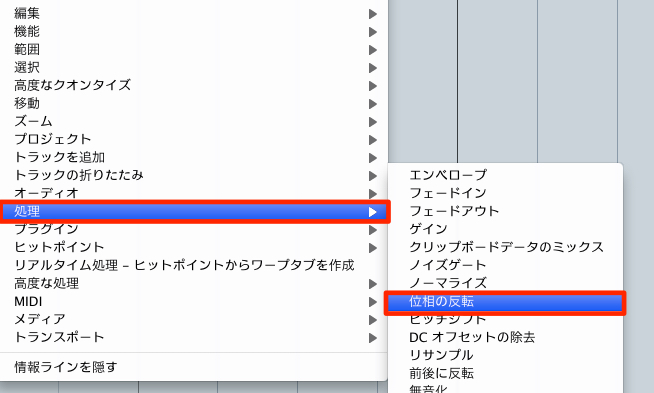
↑ Select the waveform you want to invert,
then choose "Audio" → "Process" → "Invert Phase" from the menu bar.
↑ The waveform is inverted, and its peaks now line up with the batter head.
Let's check the sound.
Before inverting
After inverting
You should hear the snare become clearer and come forward.
You can improve the sound this quickly and easily.
There's no reason not to use it.
It Also Works for Programmed Drums and Other Instruments
Beyond this, instruments recorded with multiple mics,
such as guitar, bass, and other drum mics,
can also benefit from the invert function in active sound design.
Frequently asked questions
Q1. What is the difference between Cubase's invert function and reverse function?
The invert function flips the waveform upside down to correct phase offsets, while the reverse function plays the waveform backward in time. Use invert when you need phase correction and reverse when you want special effects from backward playback.
Q2. What are the benefits of using invert on a snare drum?
It corrects the inverted waveforms that occur when recording with two mics (top and bottom) and prevents the image from blurring. As a result, the snare becomes cleaner and comes forward, strengthening the core of the whole drum sound.
Q3. Does inverting have any effect on a single track?
There is no noticeable effect when a track plays on its own. It takes effect only when correcting the phase between different tracks that play together.
NEW ARTICLES
Latest English Articles











