The YAMAHA "MSP3A" is the latest model of DTM monitor speaker, released in February 2021 as the first successor in 20 years. Evolved from the previous MSP3, this product adopts a "Twisted Flare Port" that greatly improves low-frequency reproduction and clarity, and high-frequency playback has also been improved. It is 800 g lighter and the power supply has changed to an adapter, so it has evolved in both convenience and sound quality. At an affordable price of 15,800 yen (excluding tax), it lets you set up a serious sound monitoring environment, so it is a product we can recommend to a wide range of users, from DTM beginners to professionals.
20 years after the MSP3's release, a new model finally arrives in 2021
The successor to YAMAHA's popular "MSP3" monitor speaker, the "MSP3A", has been released.
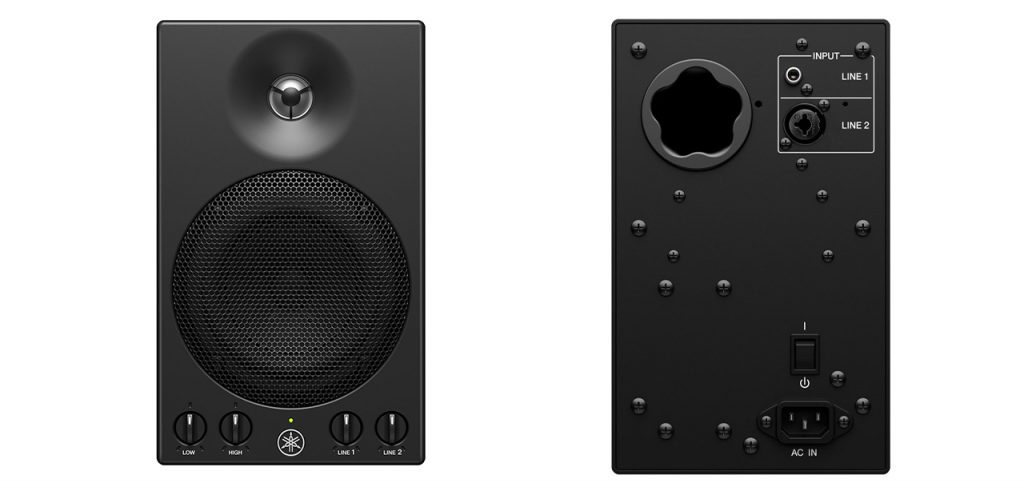
It goes on sale today, February 19, 2021.
The previous "MSP3" model is a hugely popular DTM staple that took first place in the speaker ranking of the DTM survey we conducted last year.
This time we were able to borrow the new "MSP3A" in advance, so we review it while comparing its sound and features with the previous "MSP3".
"MSP3A" first review video
Product URL: https://yamaha.io/3tKOETJ
Comparing the sound of the MSP3 and MSP3A
Many of you are probably most curious about the sound, so let's check it right away.
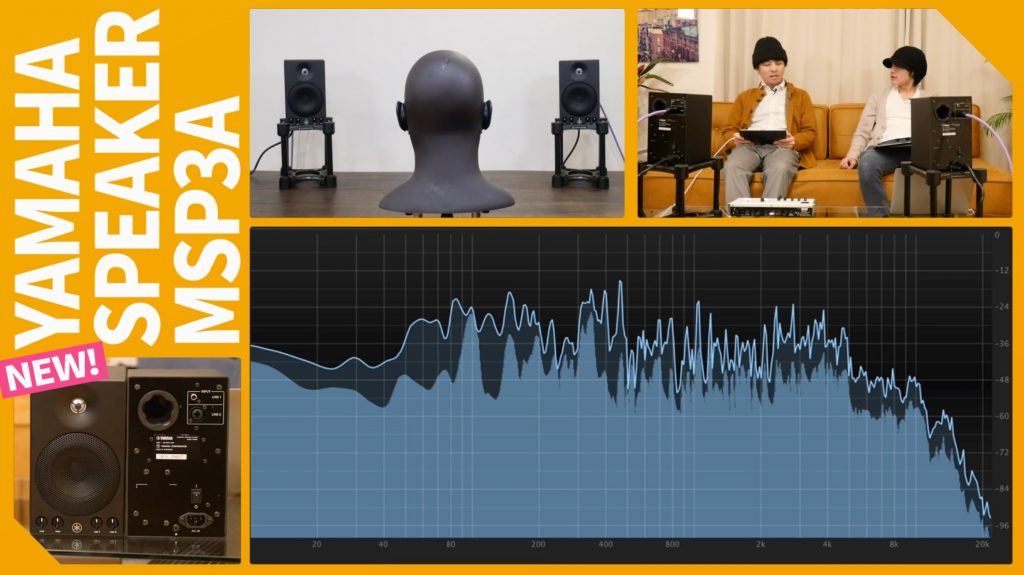
Here you can listen to sound recorded with a dummy head.
Southern Acoustics SAMREC 2700Pro: http://www.s-acoust.jp/15349129885340
The audio quality is "WAV 48 kHz 24-bit".
MSP3 (old)
- TRAP POP
- J-POP
MSP3A (new)
- TRAP POP
- J-POP
Details are given below, but you can clearly feel the low-frequency reproduction, dynamic range and depth, and it gives the impression of being a completely different product from the old MSP3.
Its sound character is also very different from the company's "NS-10M" and "HS Series".
MSP3A specifications and comparison with the MSP3
The previous "MSP3" was released in 2001, exactly 20 years ago.
The "MSP3A" is optimized for accurate monitoring of modern music.
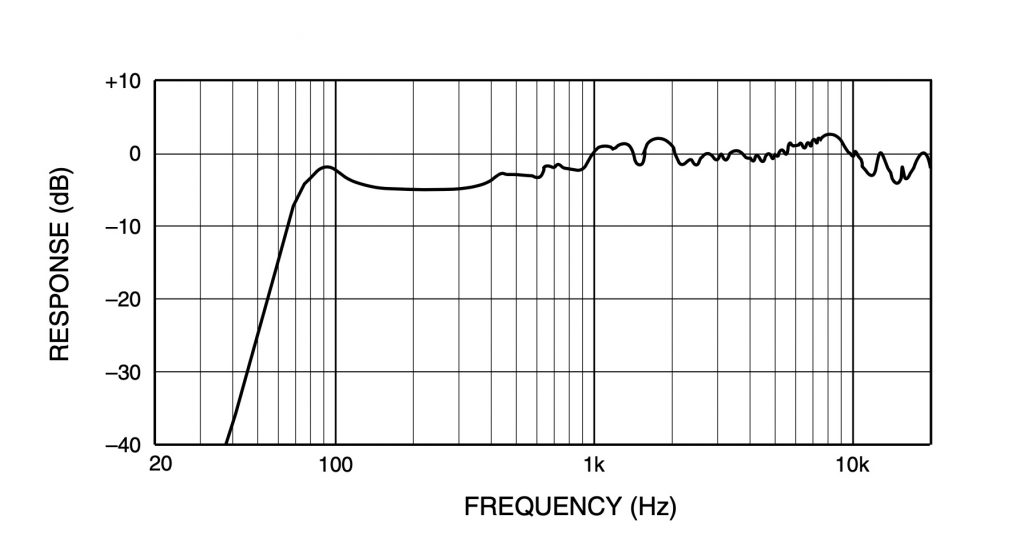
Frequency response
- MSP3 (old) frequency range 65 Hz–22 kHz
- MSP3A (new) frequency range 67 Hz–22 kHz
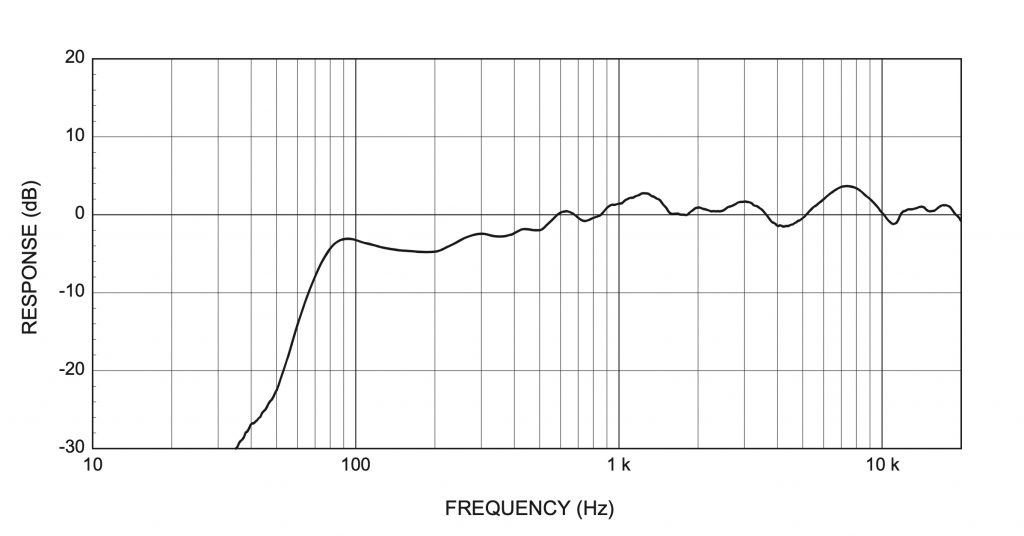

High frequencies in particular are reproduced more smoothly, improving the clarity of the sound.
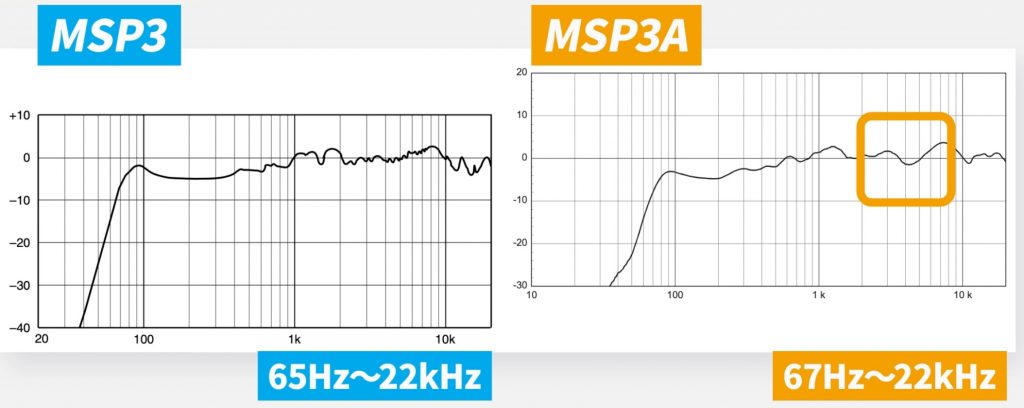
Harsh sounds around 4000 Hz are reduced.
The bass reflex port has moved and uses a "Twisted Flare Port"
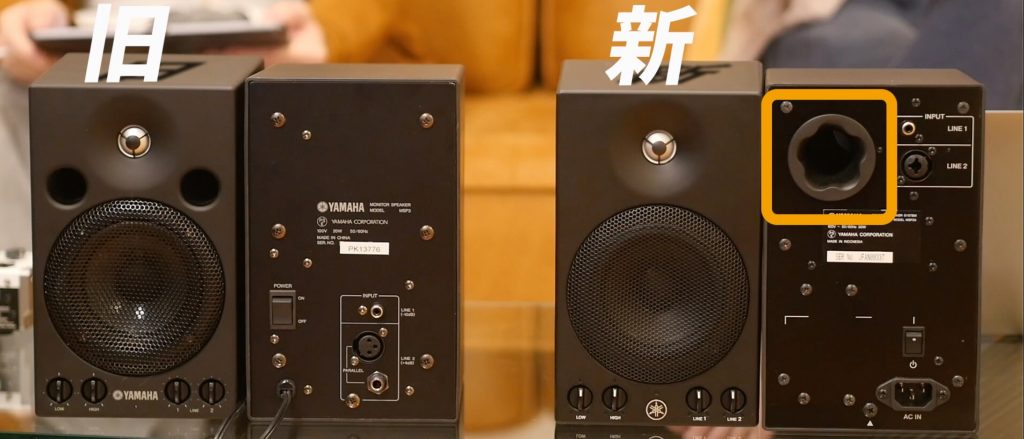
The bass reflex port has moved to the back.
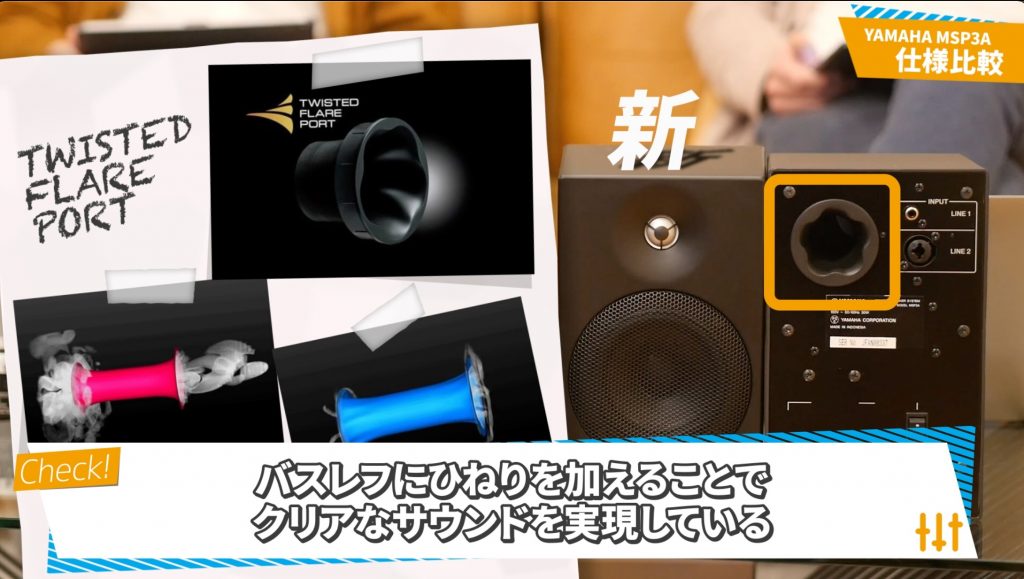
The bass reflex port uses a technology called "Twisted Flare Port".
By changing how the sound spreads from the entrance to the exit and adding a "twist", it suppresses air turbulence, achieving clear low-frequency reproduction.
Audio input and output specifications
There are no changes to the audio input and output specifications.
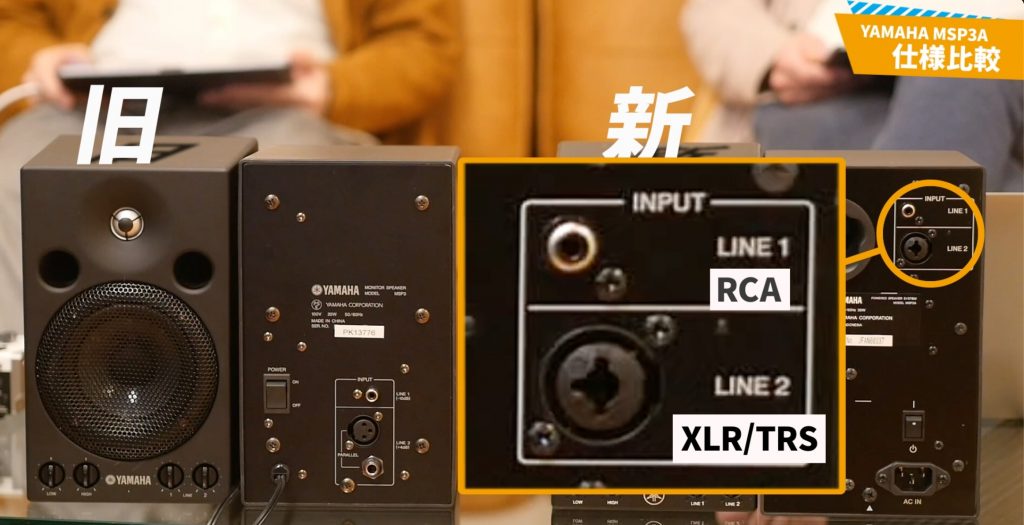
The audio input can directly accept "+4 dB" outputs, and the "XLR/TRS phone jack" is a combined connector.
There is also an "RCA jack", which is suitable for connecting audio equipment.

The "tone control", popular on the previous model, has been carried over, letting you quickly adjust the sound to suit your monitoring environment.
Size and weight
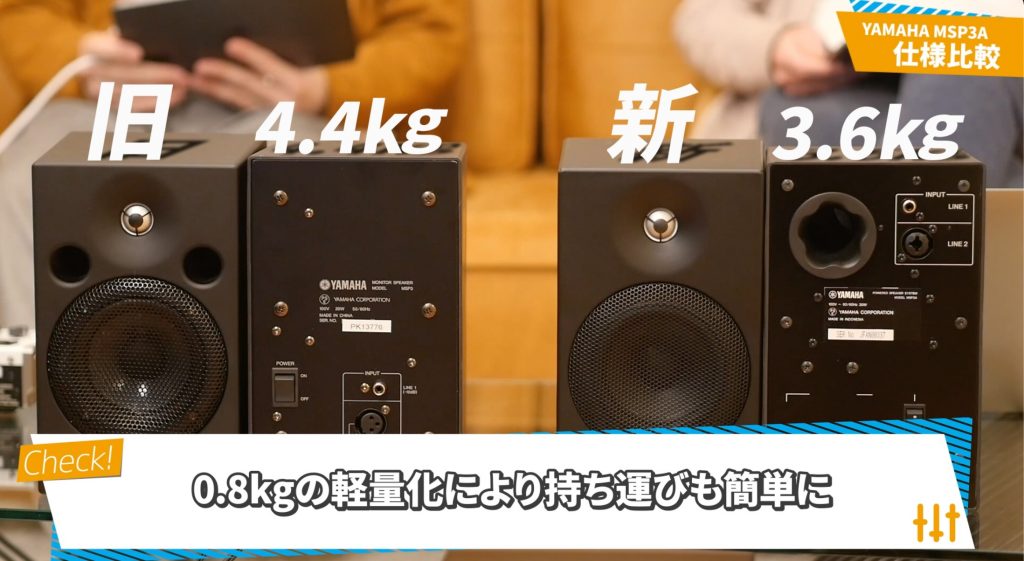
The size is almost unchanged, but the weight has been greatly reduced, from 4.4 kg to 3.6 kg.
This is due to the adoption of the "Twisted Flare Port" bass reflex described above.
When we actually picked up the products, we could clearly feel the difference in weight.
Screw holes on the bottom
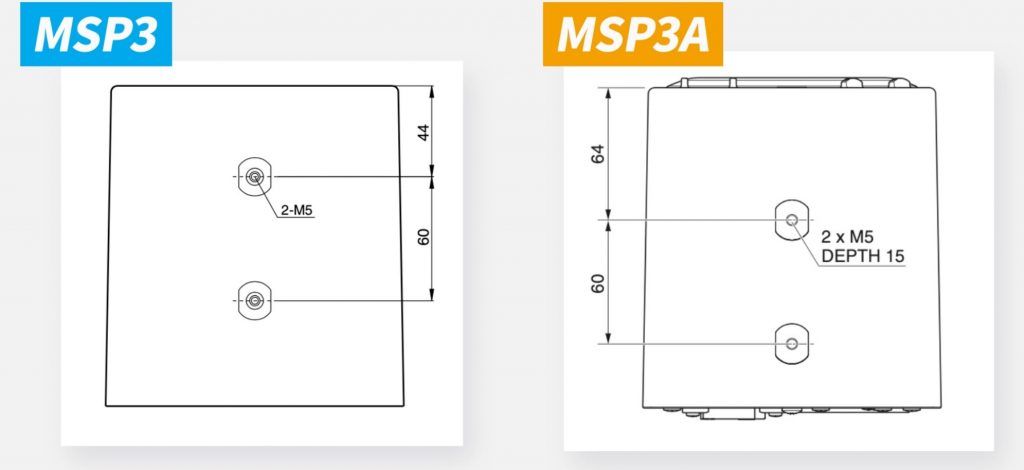
As with the previous model, there are M5 screw holes (60 mm pitch) on the bottom.
The location of the screw holes has changed, so be sure to check it if you are switching from the old product.

You can use these screw holes to mount or connect it to a mic stand or dedicated hardware.
Power adapter
The power supply has changed from built-in to an adapter.
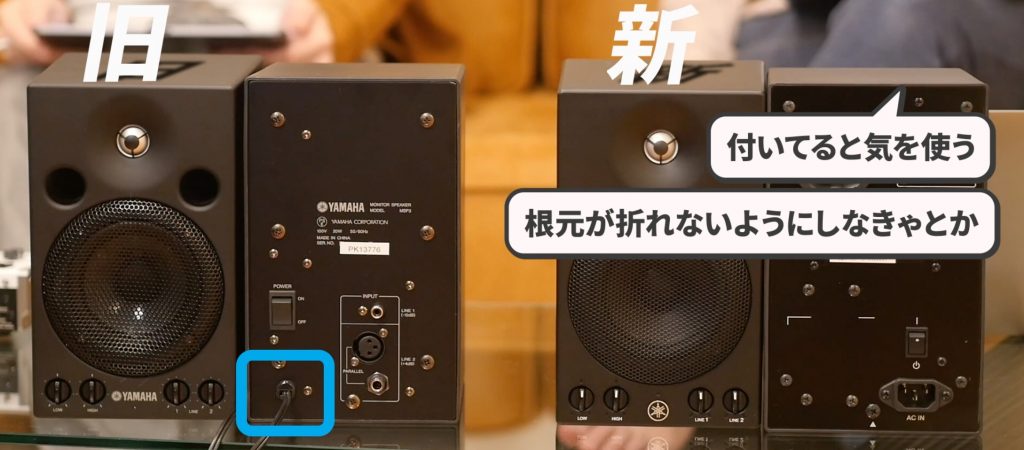
This should also be convenient when carrying or storing the product.
The power amp output has increased from 20 W to 22 W, and power consumption has changed from 20 W to 30 W.
There was no major difference in electricity cost. (About 0.15–0.16 yen per hour per speaker)
How was that?
A product with this level of sound reproduction costs 15,800 yen (excluding tax) per speaker.
Its sound, clearly evolved from the previous MSP3, is sure to be useful in many situations.
We felt it is a product we can fully recommend to people who want to start DTM or set up a monitoring environment, so if you want serious sound monitoring at an affordable price, be sure to check it out!
[New] The "MSP3A", a new model of the popular "MSP3" monitor speaker, has been released‼️
This time, we review it while comparing the sound and features of the new and old models✨[YAMAHA "MSP3A" vs "MSP3": comparing the sound of the new and old models]
Details here: https://t.co/bth1a8i3FY#DTM #DAW #speakers pic.twitter.com/v66Eu7f3dO— SLEEP FREAKS (@SLEEPFREAKS_DTM) February 19, 2021
Frequently Asked Questions
Q1. What are the main differences between the MSP3A and MSP3?
The biggest difference is the bass reflex port design: the MSP3A adopts a "Twisted Flare Port", improving low-frequency clarity. The high end of the frequency response is also smoother, the weight has been reduced to 3.6 kg, and the power supply has changed to an adapter.
Q2. What is the MSP3A's frequency range?
The MSP3A's frequency range is 67 Hz–22 kHz. It is almost the same as the old MSP3's 65 Hz–22 kHz, but high frequencies are reproduced more smoothly.
Q3. Is the MSP3A suitable for DTM beginners?
Yes. At an affordable price of 15,800 yen (excluding tax), it allows serious sound monitoring, so it is a product we can fully recommend to DTM beginners setting up a monitoring environment. It also has a tone control function.
Q4. What are the benefits of the MSP3A's switch to a power adapter?
It is more convenient when carrying or storing the product. Power consumption has changed to 30 W, but the electricity cost is about 0.15–0.16 yen per hour per speaker, so there is no significant increase in burden.
Q5. Is there anything to watch out for when installing it in place of an MSP3?
The position of the M5 screw holes on the bottom has changed, so when mounting it on a mic stand or similar, be sure to check the new hole positions before installing it.
NEW ARTICLES
Latest English Articles