In DTM production, the built-in mics of laptops and smartphones tend to pick up noise, so to achieve professional-quality vocal recordings, a dynamic or condenser mic is essential. Dynamic mics are sturdy and inexpensive, while condenser mics can capture delicate sounds but are vulnerable to humidity and vibration and require phantom power. This article introduces five mics suitable for everyone from beginners to advanced users, from standards such as the SHURE SM58 and TELEFUNKEN M80 to great-value models such as the Audio-Technica AT2020, giving you the knowledge to choose a mic that suits your production style.
The benefits of getting a dedicated recording mic
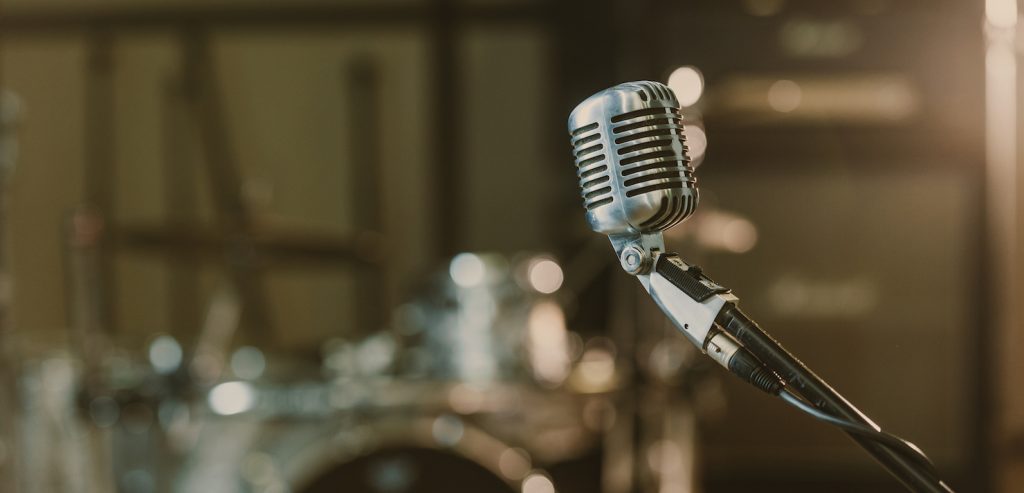
Recently, more and more people are making scratch vocals and songs using the mic on their laptop or smartphone.
It's very convenient because you can use it casually, but noise inevitably creeps in and spoils the overall impression of the song; we see this happen a lot.
To prevent this and record with high-quality sound, you need a dynamic or condenser mic.
This time we'll introduce five mics suited to vocal recording.
Before we get to the mics, let's check the difference between dynamic and condenser, an important point when choosing a mic.
Characteristics of dynamic mics

The first characteristic of dynamic mics is that they're sturdy.
Given the nature of these mics, they're designed to be held in the hand, so many are of a rugged type.
However, dynamic mics generally tend to have low sensitivity.
In other words, when using a dynamic mic, you need to sing with your mouth as close to the mic as possible.
Compared with condenser mics, they're relatively inexpensive, so the hurdle to buying one is lower.
Characteristics of condenser mics

One characteristic of condenser mics is that they can capture delicate sounds.
Because of that, condenser mics are often the main mics used in professional settings.
However, condenser mics are vulnerable to vibration and humidity, and if you don't store them in a dry place after use, they can rust and become a source of noise.
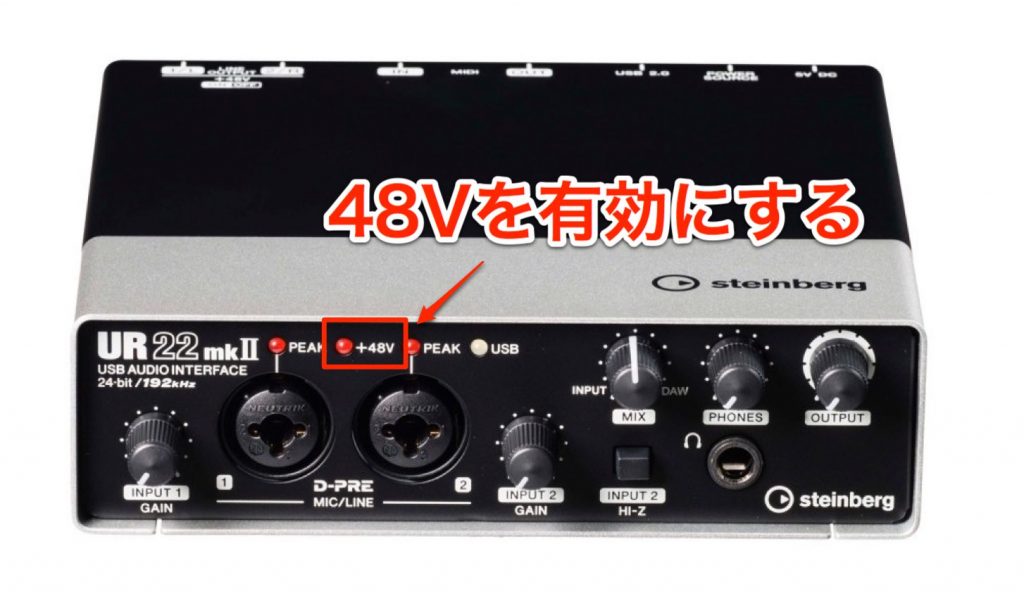
Also, to use one, you need a power supply called phantom power, and when using it with an audio interface, be careful: the mic won't work properly unless this is turned ON.
Many recent audio interfaces have phantom power labeled "48V," but depending on the price range, some models don't, so before buying, please check the audio interface you have and then make your decision.
We've made a video on things to watch out for when choosing an audio interface, so we hope you find it useful.
About choosing an audio interface
Selected questions and answers from the YouTube video

My PC only has USB 3.0. Can I use the UR12? A review on Sound House says to be careful because it's USB 2.0 only. What do you think?

We didn't have a UR12 on hand so we couldn't test it, but the "UR22," of the same type, worked without problems with a USB 3 computer. It costs a little more, but there's also the UR22-C, which fully supports USB 3.0, so if it fits your budget, please consider it. https://www.soundhouse.co.jp/products/detail/item/268678/
I don't know much, but can a Roland VT-3 and a TASCAM US-42 be used together? The manuals have lots of technical terms and I don't understand them. I'm planning to stream...
A computer can recognize multiple interfaces at the same time. The key point is whether your streaming software lets you select multiple interfaces (input and output separately).
First time here (*ˊ˘ˋ*)♪ What is DTM?
It's an acronym for "DeskTop Music" and refers to making music on a computer. We also have an article on it, so please give it a read. https://sleepfreaks-dtm.com/start-dtm/about-dtm/
Can I use any random headphones I bought with an audio interface?
On many audio interfaces, the headphone jack is the slightly thicker kind (stereo phone plug). If yours is the thin kind often seen on earphones (stereo mini plug), you'll need to convert it to this size. Please check before buying a product.
I'm considering buying the Behringer UMC22! My mic is the CM5S, a dynamic mic. I think the UMC22 doesn't have loopback. Does that mean I can't stream or do live commentary on YouTube? I'm stuck!!
We're very sorry. For questions about specific gear, it's best to contact the manufacturer directly. If you want to do live commentary and the like, we recommend buying gear recommended by people who already do commentary or streaming (it's covered online and on YouTube too), in a price range you can afford.
I'm still new to DTM, so I always watch your videos intently for reference. I'm very sorry for such a beginner question, but it's about sound quality: is there a big difference in sound quality between using a studio and finishing everything with home recording alone? Also, what exactly do you do when using a studio? For example, do you re-record a song made at home in a studio? I've been googling for information on the concrete process of combining home recording and studio work (which parts to do at home and which at the studio), but I just couldn't find it, so I'm asking, sorry. Sorry for the long message. You're truly my textbook, so I look forward to more. Thank you.
It depends on what instruments you're recording, but generally speaking, commercial studios have better facilities and gear than private homes, and the sound is better too. On the other hand, they charge by the hour, so it's best to prepare thoroughly before recording. The good thing about home recording is its convenience and the efficiency of moving straight into editing and mixing. For making pre-production and demos, a home recording setup is plenty. Of course, many people upgrade their home gear and facilities and complete everything with home recording. It also depends on whether the song is centered on a live band or on programming. Why not first try things like doing pre-production at home and then recording the final takes in a studio, and see how big the difference is and whether you'd rather spend money on studio fees or on improving your home recording environment?
With a budget of up to about 100,000 yen, I'm thinking of buying Cubase Pro 8 and either Komplete 10 or an audio interface. Of the latter two, which should I prioritize...? By the way, I'd only use the interface to plug in headphones and listen; I have no plans to use it for input for now.
Ideally you'd have both, but if you want to quickly master programming with the instruments in Komplete first, we recommend buying Komplete. It depends on the price range, but even for headphone monitoring, an audio I/F generally sounds better, so it's best to get one by the time you reach the detailed finishing stages such as effects and mixing.


Also, when using a condenser mic, please note that phantom power can't be sent to the mic unless you use the type of cable called an XLR (cannon) cable.
Condenser mics are harder to handle and relatively more expensive than dynamic mics, but their sound is exceptional, and they let you achieve a vocal sound like the commercial songs you usually listen to.
Now let's get to the five mics.
SHURE SM58
The first mic we'll introduce is SHURE's dynamic mic, the "SM58."

This mic is commonly called the "Goppa" in Japan, and it's a standard mic you'll find at almost every studio and live house.
A version with a switch, handy for events and the like, is also sold.

It's loved by many people, from pros to amateurs,
and the reasons are that it's resistant to feedback and has little handling noise.
This is mainly an advantage at live houses: being resistant to feedback is essential for raising the quality of the show itself.
Also, not having to worry about noise or feedback simply leads to better performances from vocalists.
In recording settings too, it's valued because it emphasizes the low mids, making it easy to adjust the sound after recording vocals.
It's a mic you'll come across often as you work in music, so some may think there's no need to get one specially.
However, by getting used to this mic's sound and how to adjust it, you'll be able to perform consistently in many settings.
The link below is for the switch version.
TELEFUNKEN M80
Next is TELEFUNKEN's dynamic mic, the "M80."

It comes in a variety of colors, so there's the fun of choosing the one you like.
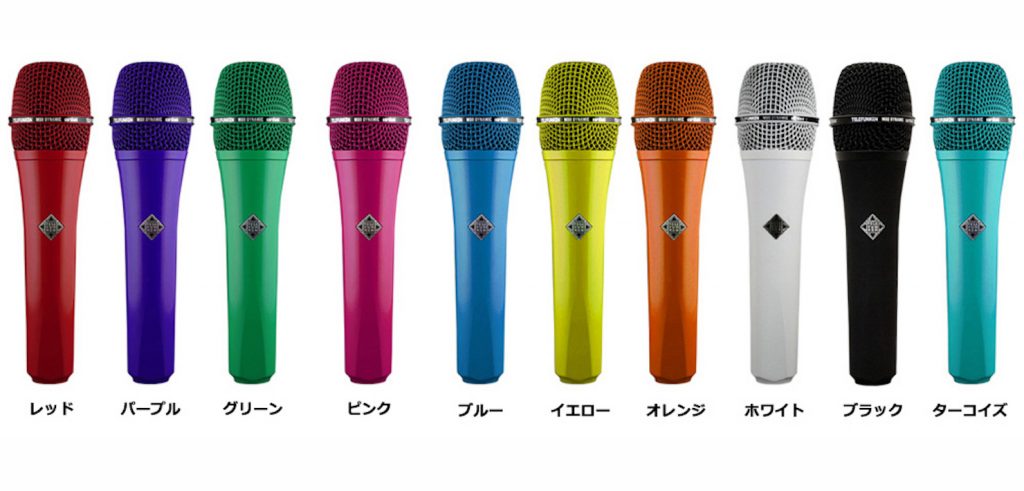
There's even a version with a wooden handle.

The case is also unique: a tube shape reminiscent of a tennis ball can.

The M80 gives a very pop impression, but in terms of sound, it captures sound so cleanly you might think it's a condenser mic.
A key structural feature is that it has an ultra-thin diaphragm inside the mic.
By using this ultra-thin diaphragm, it achieves a more delicate, high-quality sound.
It brings out the low mids, of course, and also captures the highs cleanly, which makes it a very attractive product.
Even when recording, it's an excellent dynamic mic that can be used like a condenser mic.
It's a mic we recommend if you want to properly capture the dynamics and nuances of a ballad, or if you'd like a condenser mic but want something you can also use live.
Audio-Technica AT2020
Next is a condenser mic from Audio-Technica called the "AT2020."

This condenser mic is an entry-level model, yet it excels at recording vocals cleanly.
Its main feature is that it's great value for money.
For this price, it has relatively little noise and little coloration, so you can record an honest, natural sound.
That makes it easy to adjust the sound after recording, too.
It's a mic we recommend for anyone who wants to try a condenser mic or wants high-quality recordings while keeping costs down.
Blue Bluebird SL
Next is Blue's condenser mic, the "Bluebird SL."

This condenser mic is popular with people of all genders thanks to its great design.
Its characteristic is a punchy sound with solid low mids.
When recording, it captures each word clearly, making it well suited to rap and up-tempo songs.
The product also has a high-pass filter and an attenuation pad switch, so it can be used with confidence not only for vocals but also for recording instruments.
It comes with a shock mount holder, as well as a wooden case for storing the mic.

If you want a well-designed condenser mic or want to record each syllable cleanly, be sure to check it out.
ASTON ORIGIN
Finally, we introduce Aston's condenser mic, the "ORIGIN."

Since Roland became its distributor, it's been seen more often at music stores in Japan.
Its characteristic is that you don't need a pop filter or shock mount.
The mic has a built-in pop filter, so it's designed to keep out noise (sibilance) when recording "s" and "t" sounds, as well as breaths.
It also has a built-in shock mount mechanism, making it resistant to noise from vibration.

There's also a stand adapter built directly into the bottom of the body, so you can mount the mic body directly on a mic stand.

It's a condenser mic with many features, and of course the sound quality is high.
Its characteristic is that it brings out solid low mids, making it suited to recording vocals.
It also has a filter switch and an attenuation pad switch, so it can be used for recording instruments as well.
When using condenser mics, gear such as pop filters and shock mounts is essential.
This product, which builds them into the body, can be recommended to anyone, and I'd also like to recommend it to those who want a sturdy condenser mic.
Why you need a pop filter
For vocal recording, whether dynamic or condenser, we recommend using a pop filter.
The natural enemy of sound quality is the noise from breaths and from pronouncing "s" and "t" sounds.
If noise gets onto the best take you worked so hard to record, it spoils the atmosphere of the whole song, and above all, it's sad.
We really hope you'll prevent it before it happens.
Pop filters come in fabric and metal types.
Fabric pop filters

Fabric types are relatively cheap, but if you don't take proper care of them after use, they can retain odors and become hard to use for a long time.
Also, when you record through a fabric pop filter, the highs become a little muffled.
Metal pop filters

Metal pop filters are easy to care for after use, and the highs don't get muffled.
They cost more up front, but considering long-term use, we recommend getting a metal pop filter.
What did you think?
This time we introduced dynamic and condenser mics, focusing on vocal recording.
Recently, there are also mics with a dynamic-style design but condenser construction, and there are lots of attractive mics packed with manufacturers' ideas.
If possible, try out products at a music store when buying, and find the mic of your own that suits your purpose.
Let's buy a good mic and enjoy DTM life even more ♩
Vocal recording techniques are also explained in other articles, so please make use of them once you've bought a mic.
The Vocal Recording Handbook
Here we explain the basic knowledge and settings for recording vocals with high sound quality.
The Vocal Recording Handbook 2: Stepping Up
When you first start recording, the basic set should be enough for a while,
but once you've improved to some extent, you'll probably want to step up your gear. Here we explain an environment that further improves vocal quality.
See you in the next top five.
Stay tuned!
be-bee (Shun Ito)
Born in 1987. A Logic Pro X and Ableton Live user.
After returning from studying in the US, graduated from music school and made a debut as a composer.
Composes and arranges mainly EDM and pop, and also works as an engineer.
Twitter ID: @bebee330
Instagram ID: https://www.instagram.com/bu_e_bu/
YouTube channel: https://www.youtube.com/user/murmur330
Frequently asked questions
Q1. Should DTM beginners start with a dynamic mic or a condenser mic?
For beginners, we recommend starting with a dynamic mic, which is easy to handle and inexpensive. The SHURE SM58 is an industry standard, highly reliable and used in professional settings, so getting used to it lets you perform consistently in all kinds of environments.
Q2. What must I have when using a condenser mic?
An audio interface with phantom power (48V) and an XLR (cannon) cable are essential. Check in advance whether your audio interface supports phantom power.
Q3. Can a dynamic mic record with sound quality on par with a condenser mic?
A dynamic mic with an ultra-thin diaphragm, like the TELEFUNKEN M80, can achieve delicate, high-quality sound on par with a condenser mic. It's an ideal choice if you want something for both live use and recording.
Q4. What kind of creator is the AT2020 suited to?
It's ideal for those new to condenser mics or those who want high-quality recordings while keeping costs down. It has little noise and an uncolored sound, so even beginners find it easy to adjust the sound.
NEW ARTICLES
Latest English Articles