Native Instruments Massive is a synthesizer used by producers at many levels. Its thick sound makes it a popular choice for basses and leads. This guide covers oscillators, glide, FM, filters, envelopes, LFOs, macro controls and MIDI controller integration, providing practical starting points for sound design.
Massive: Thick Sounds for Bass and Leads
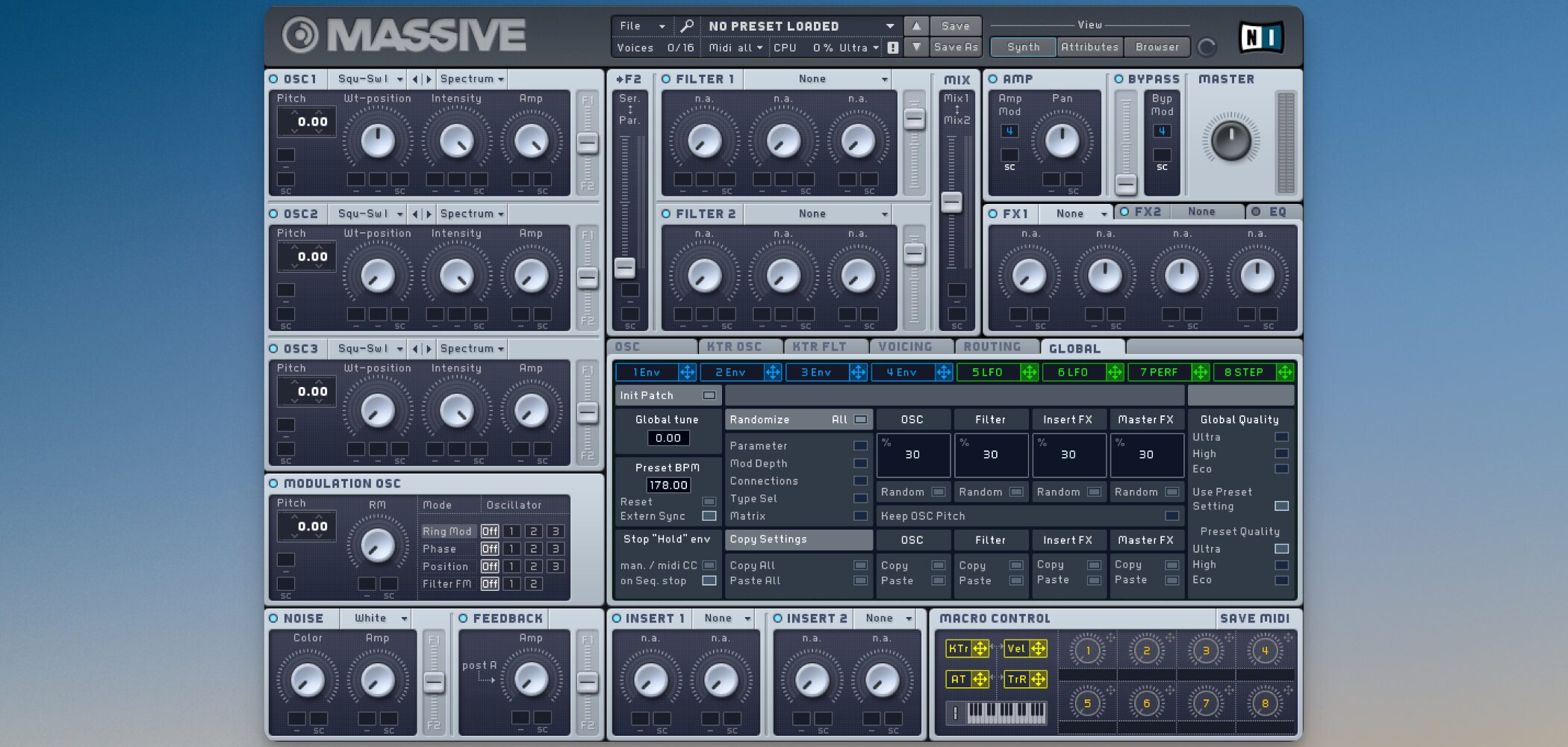
Massive is a synthesizer built around subtractive synthesis, a long-established approach. It also uses wavetable oscillators.
Its appeal lies in its powerful sound.
It combines a familiar approach with a distinctive character.
Its envelope and LFO controls are also easy to use, making it approachable for people new to synthesis.
Let’s start with the oscillators (OSC), a fundamental part of Massive.
Massive Video: Oscillators
Understanding the Oscillators
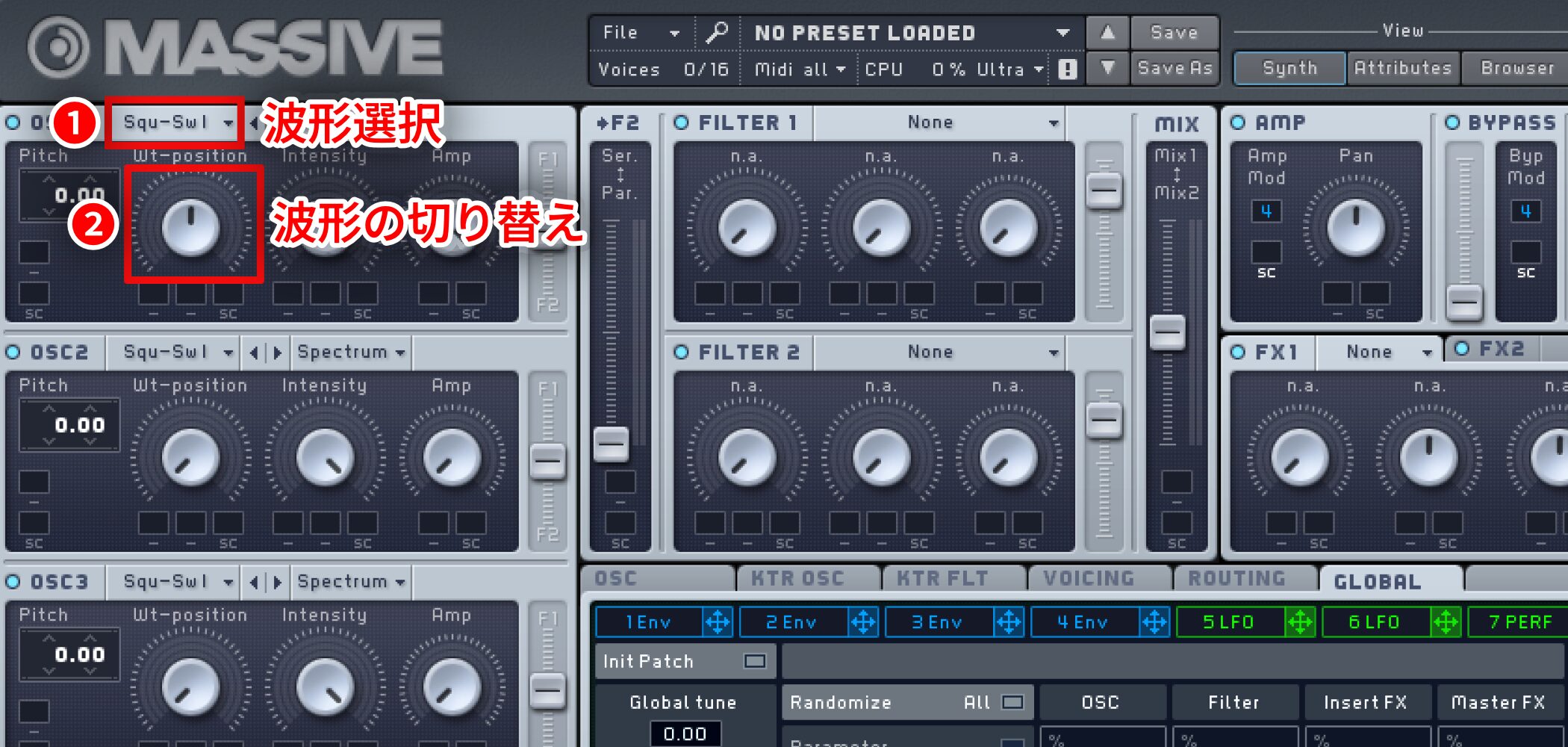
Massive’s oscillators have a distinctive feature: each wavetable contains multiple waveforms.
Select a wavetable at “1” and move between its waveforms at “2.”
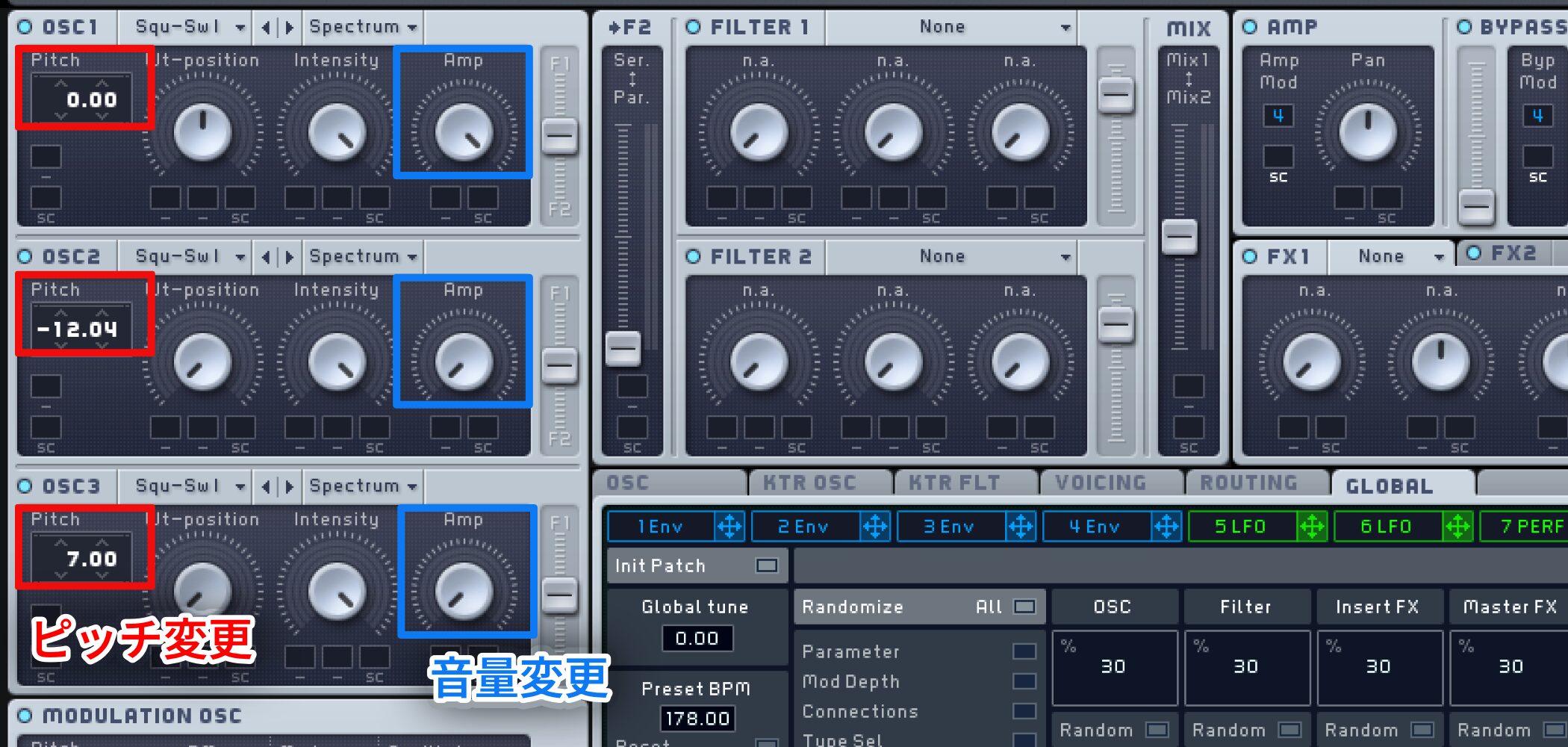
You can change the pitch of each of the three oscillators to add harmony or thickness.
The “AMP” control on the right adjusts each oscillator’s level.
The Voicing Tab
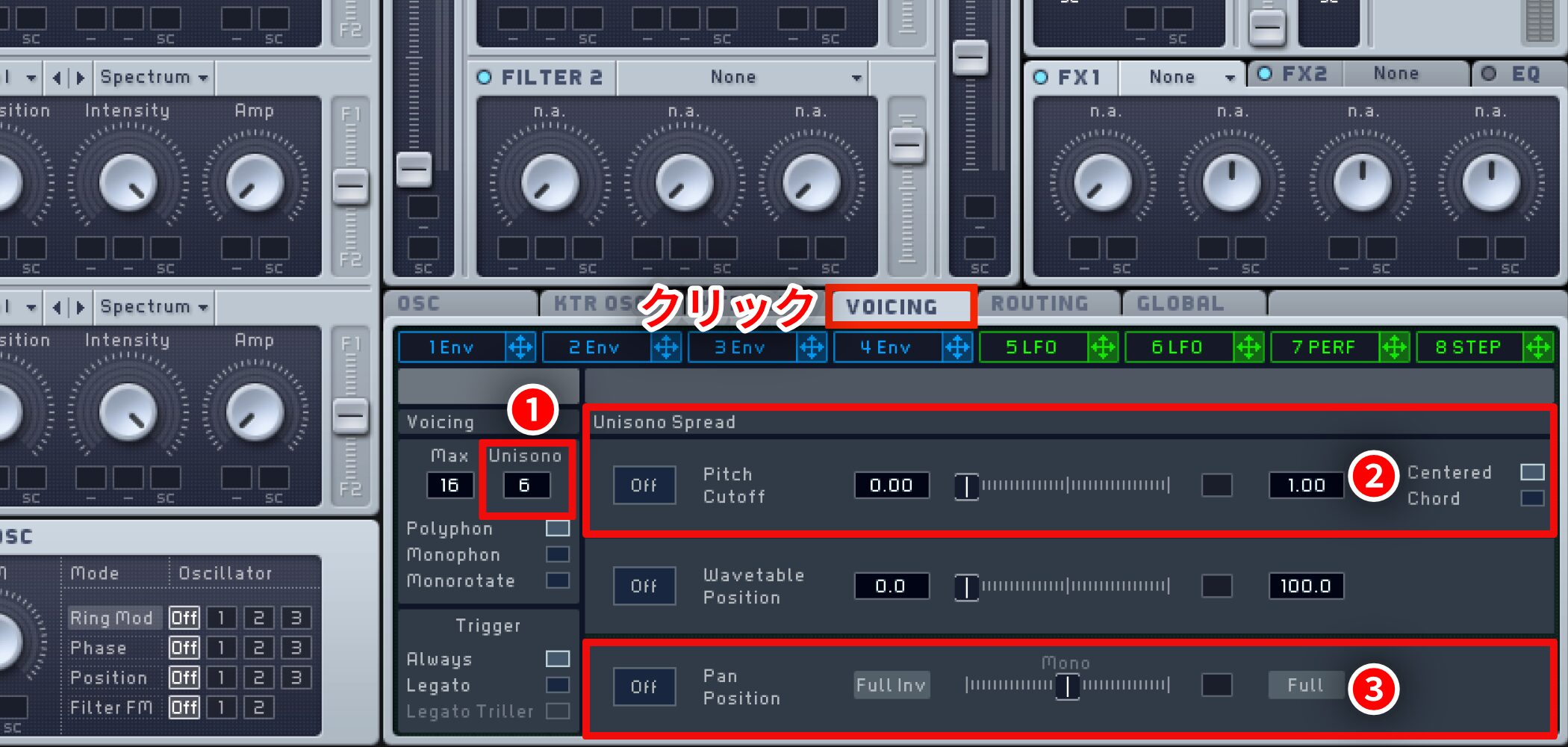
The Voicing tab provides several oscillator controls.
①Unisono: Layer voices to thicken the sound.
②Pitch: Detune the voices for a chorus-like effect.
③Pan: Spread the voices across the stereo field.
Add Expression with Glide and Shape the Tone with FM
The synthesizer’s glide feature
makes it easy to create the sliding pitch transitions often heard in dance and electronica.
FM can dramatically change the timbre and is useful for many kinds of sound design.
Massive Video: Glide and FM
Setting Up Glide
Glide makes the transition between pitches smooth.
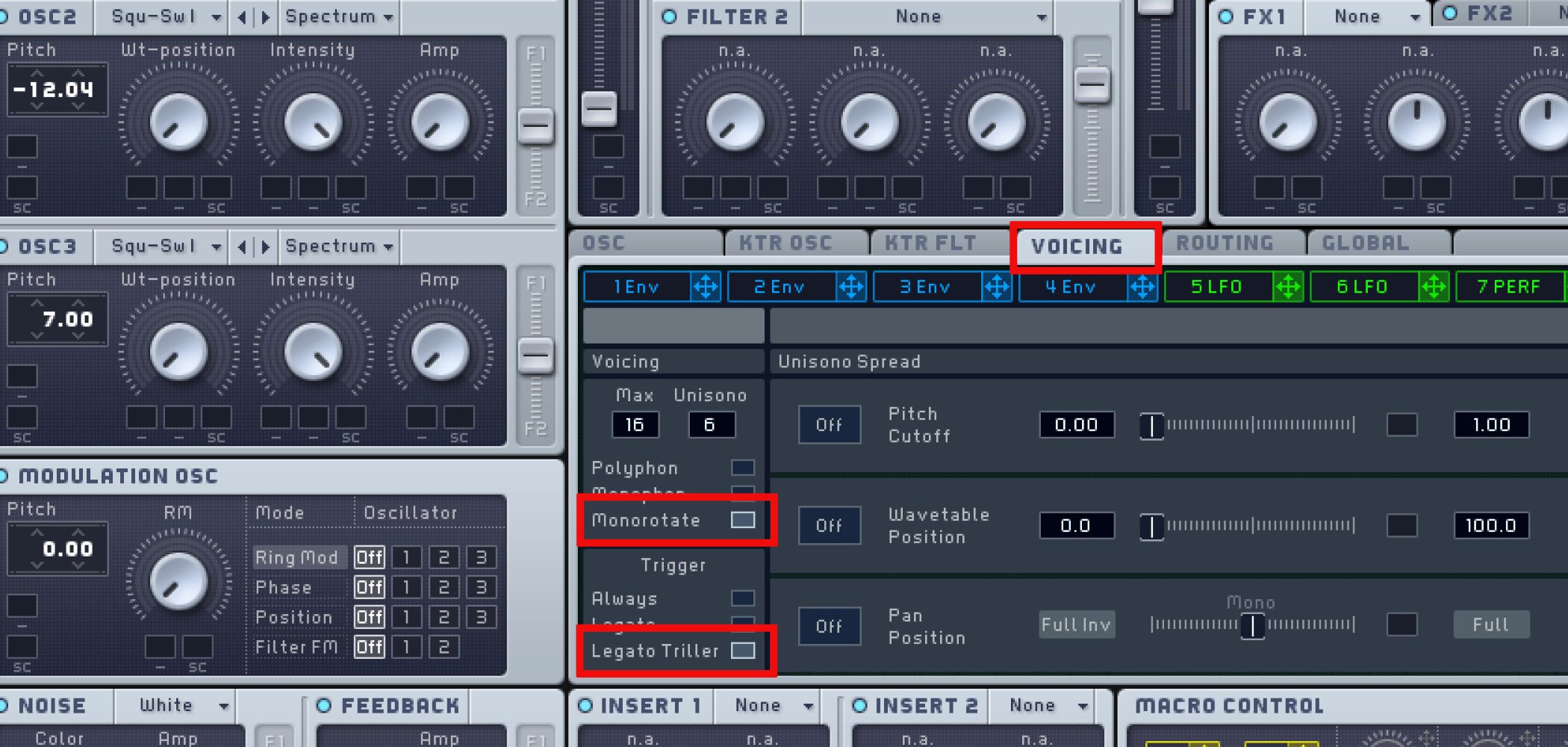
In the VOICING tab, select “Monorotate” and “LegatoTriller” as shown in the red box.
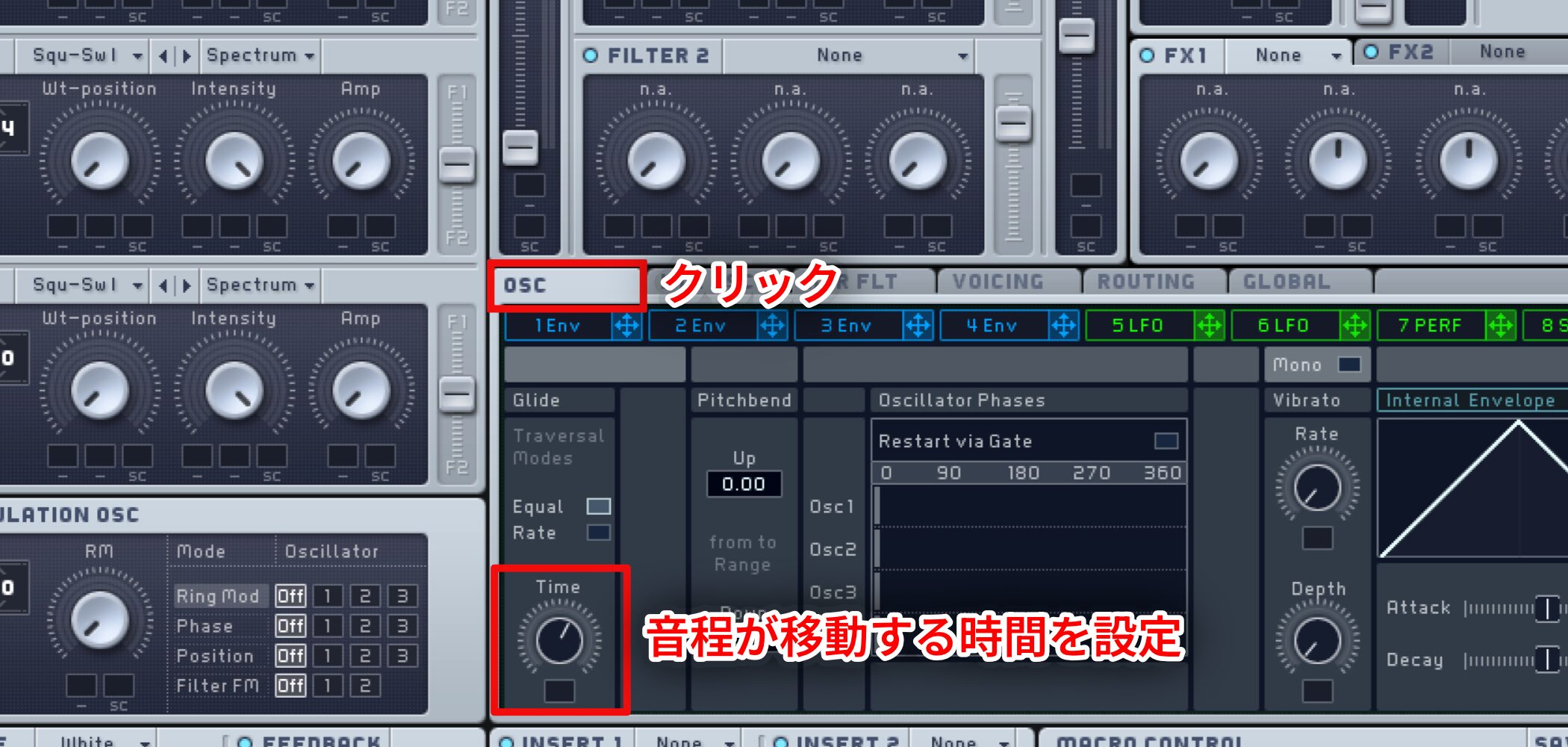
Set “Time” in the OSC tab.
This determines how long the pitch takes to move to the next note.
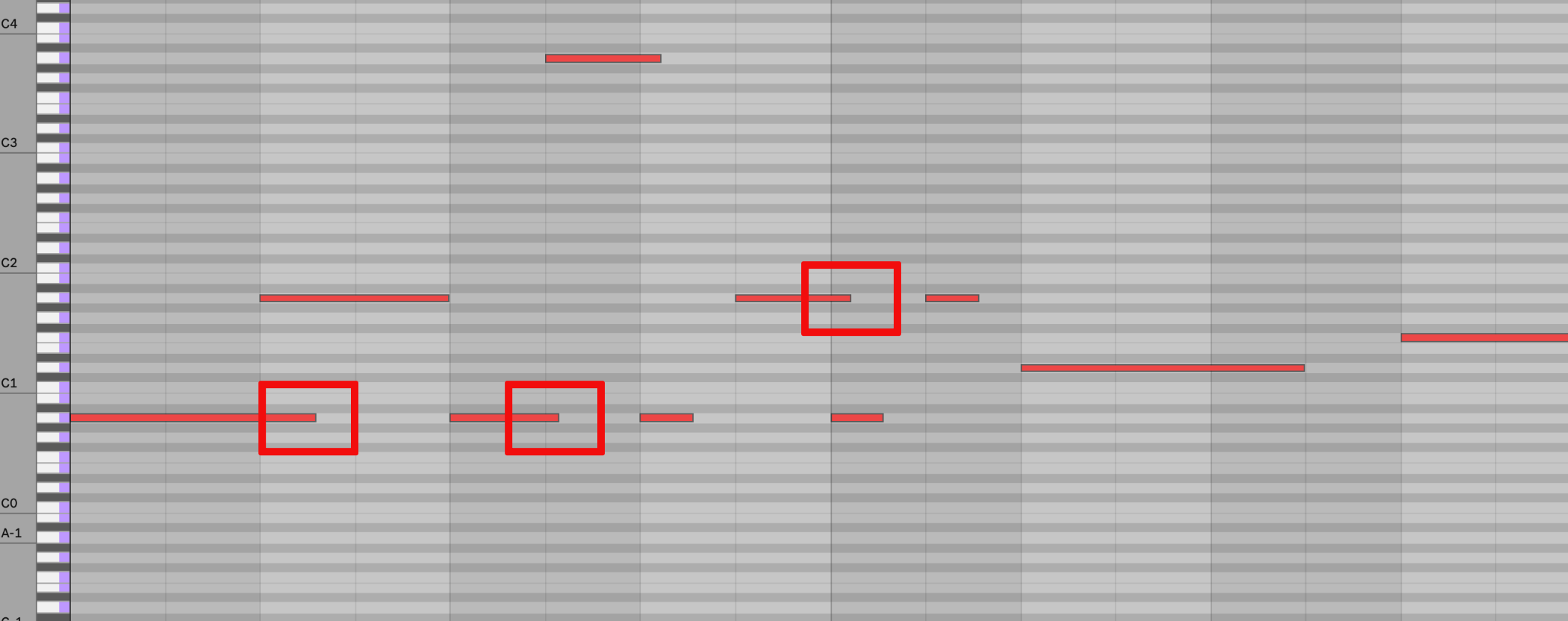
Program each note so that it overlaps the next.
Glide will now operate.
Setting Up FM
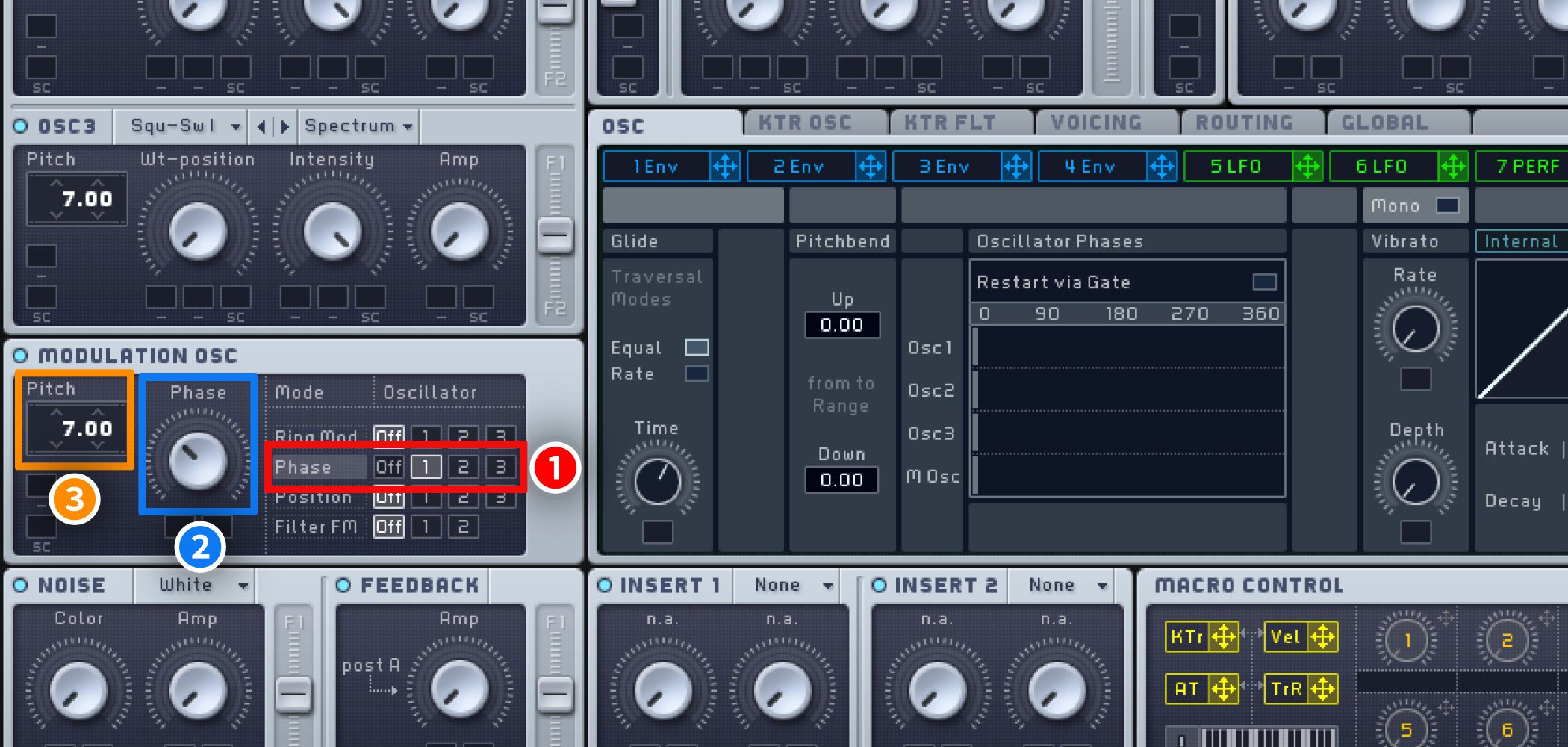
Adjust the settings in the MODULATION OSC tab.
①(Red): Use Phase to select oscillator 1, 2 or 3 as the FM target.
②(Blue): Adjust the FM intensity; turning right increases the effect.
③(Orange): Set the frequency. This can change the timbre dramatically.
For ③, intervals such as +7 or +12 semitones can produce a more harmonious result than an interval such as +1, much as in a chord.
Shape the Sound with Filters
Filters are a fundamental part of synthesizers.
There are different types; the low-pass filter is one of the most commonly used.
It can soften a mechanical sound so it sits more naturally in a track.
Massive Video: Filters and Effects
A Note on Using Filters
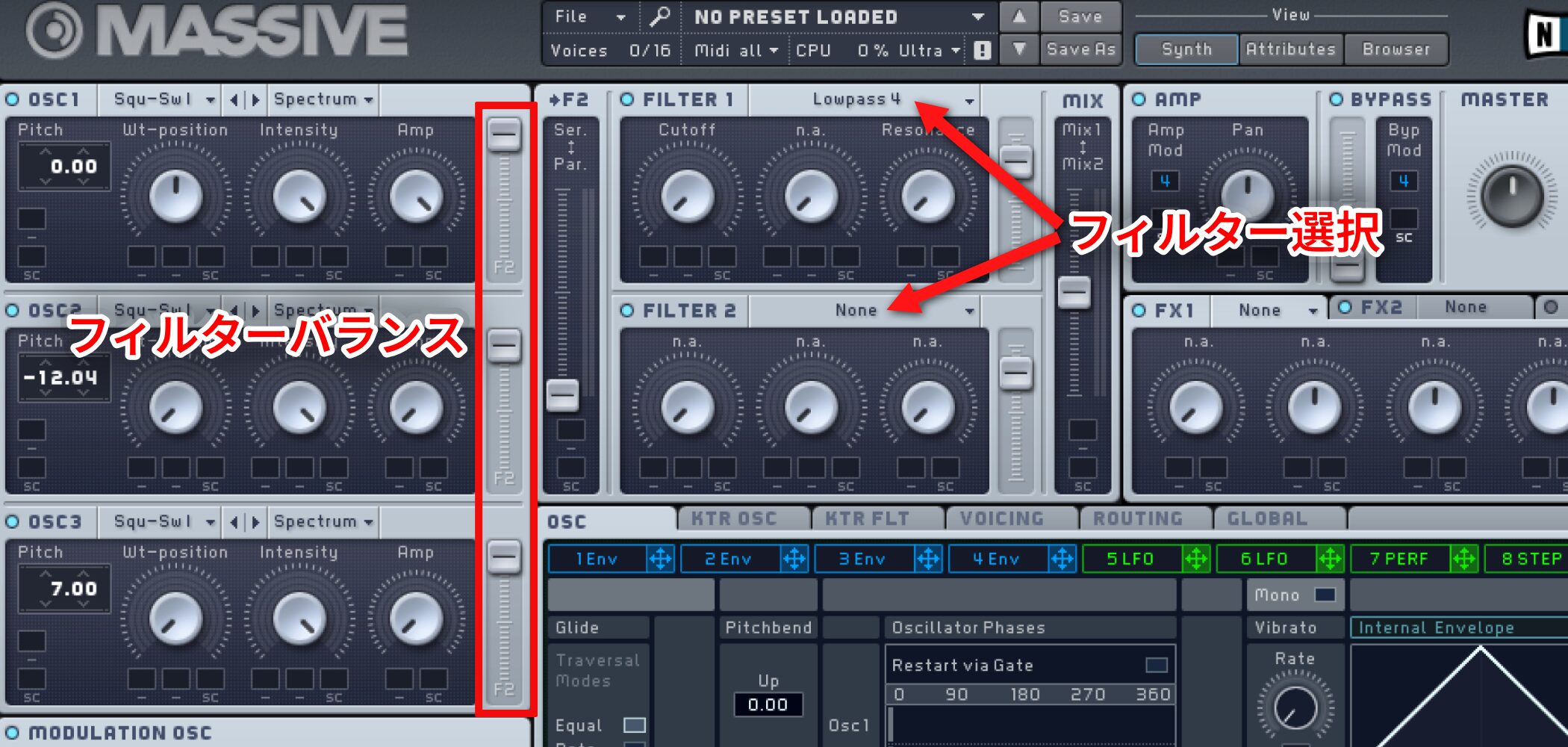
Massive has two filters.
If you use only one, turn the oscillator’s filter routing fully toward the filter you are using, F1 or F2.
Using Effects
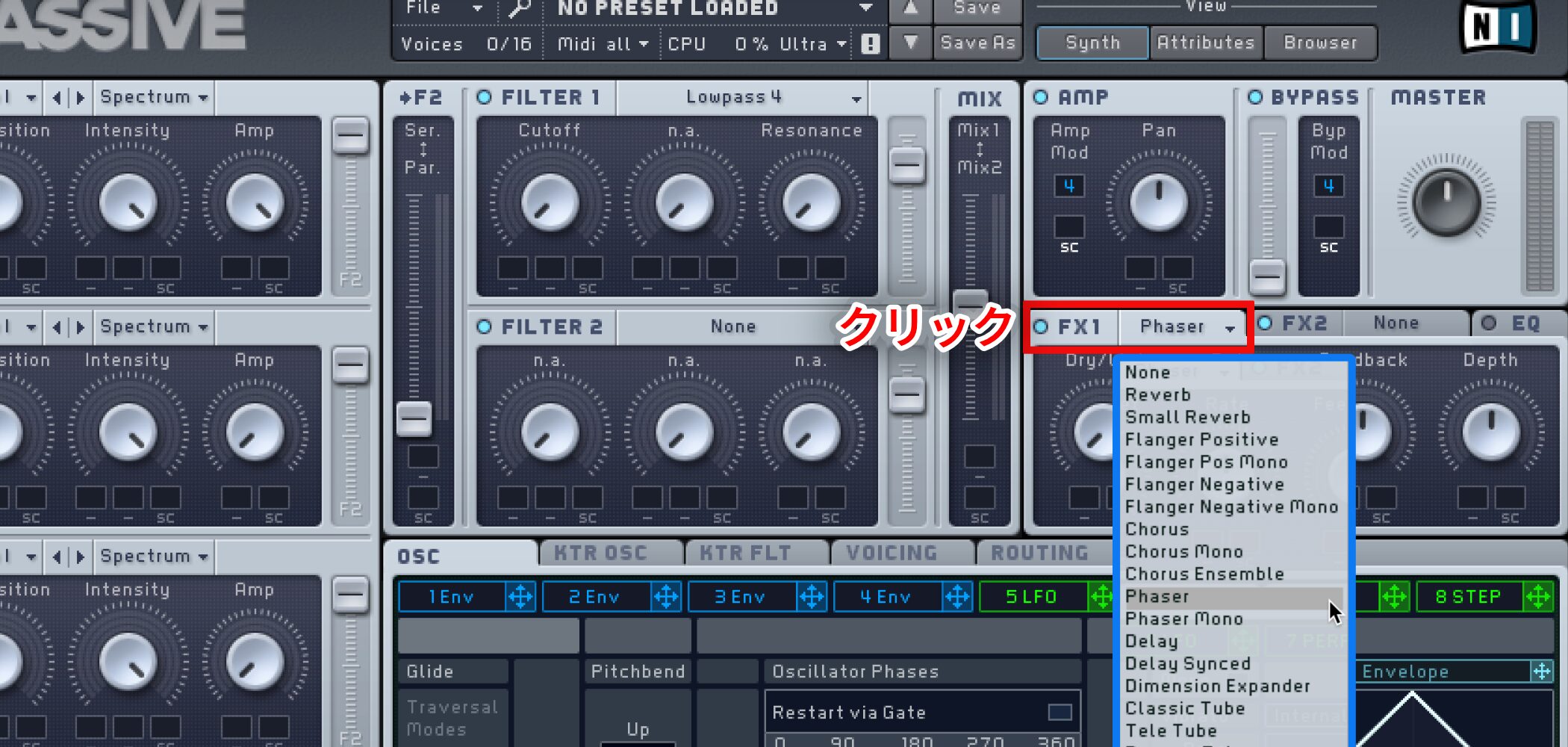
Click the area outlined in red to select an effect.
Click the illuminated indicator to bypass the effect.
Envelopes and LFOs: Essential Synth Controls
Envelopes and LFOs can add expression and movement to a sound.
They are essential to sound design, so take time to learn how they work.
Massive Video: Envelopes and LFOs
Applying Envelopes and LFOs
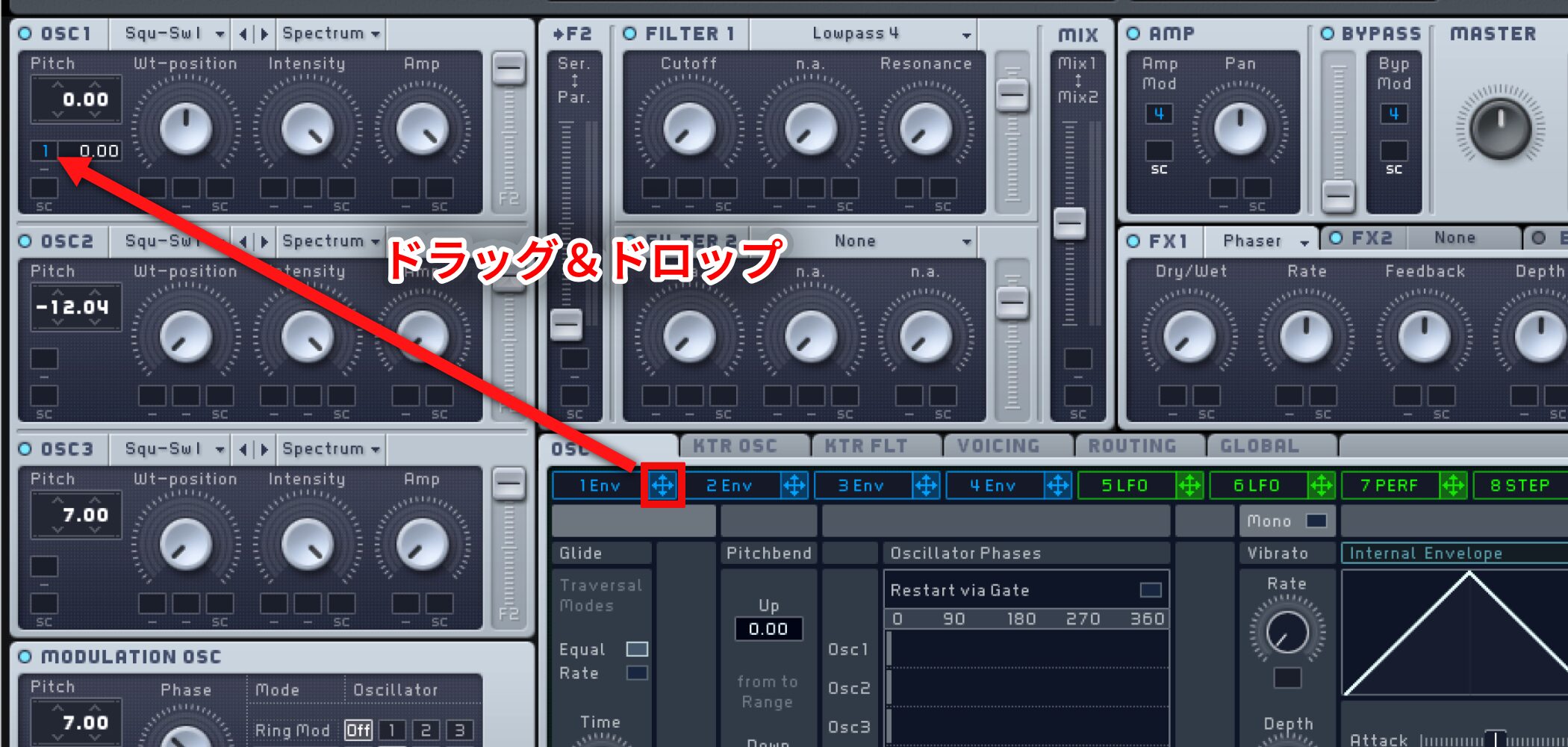
Drag and drop the icon in the red box onto the parameter you want to modulate.
To remove the assignment, right-click the assigned number and select “Off.”
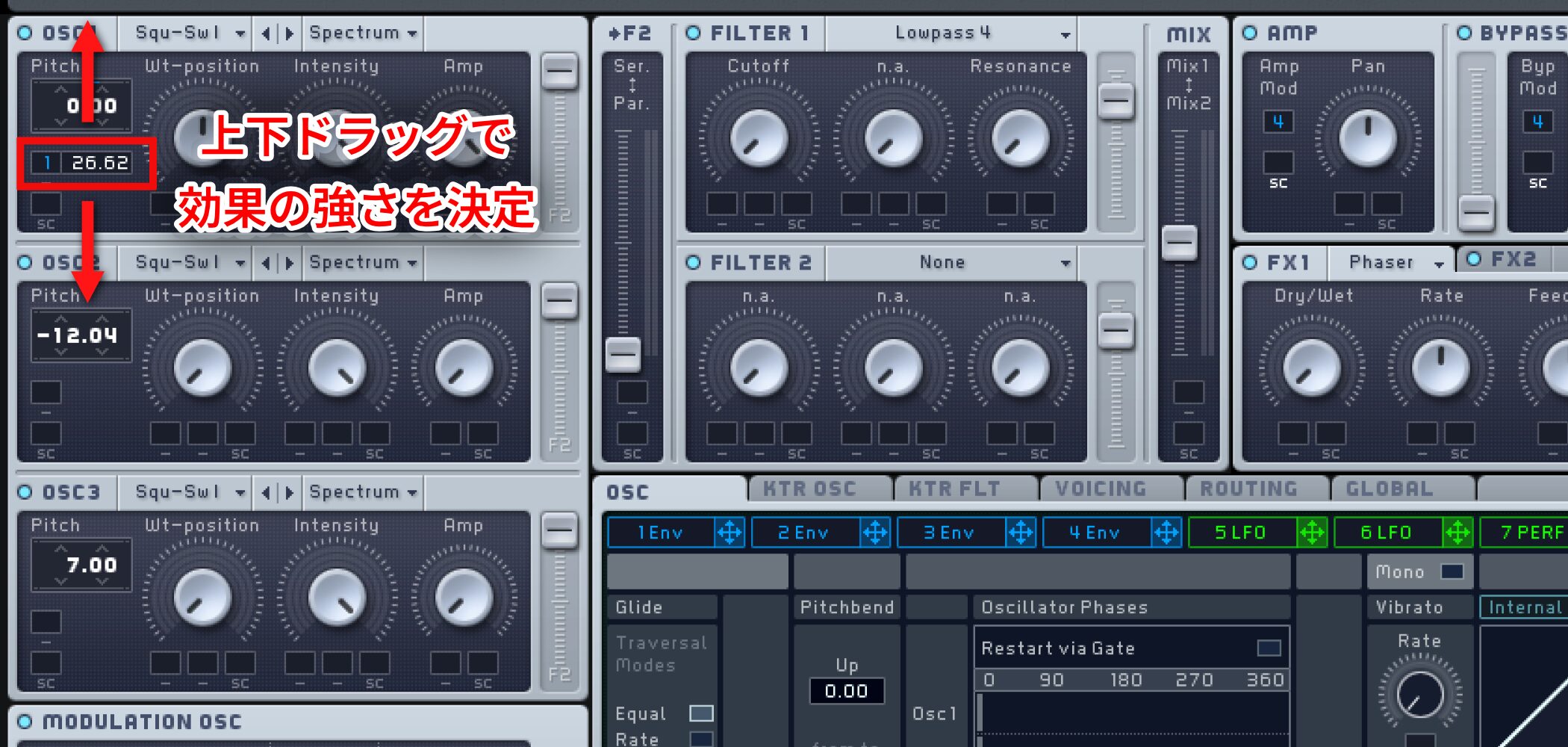
After assigning it, drag the value up or down to set the modulation strength.
On other synthesizers this is often called “amount.”
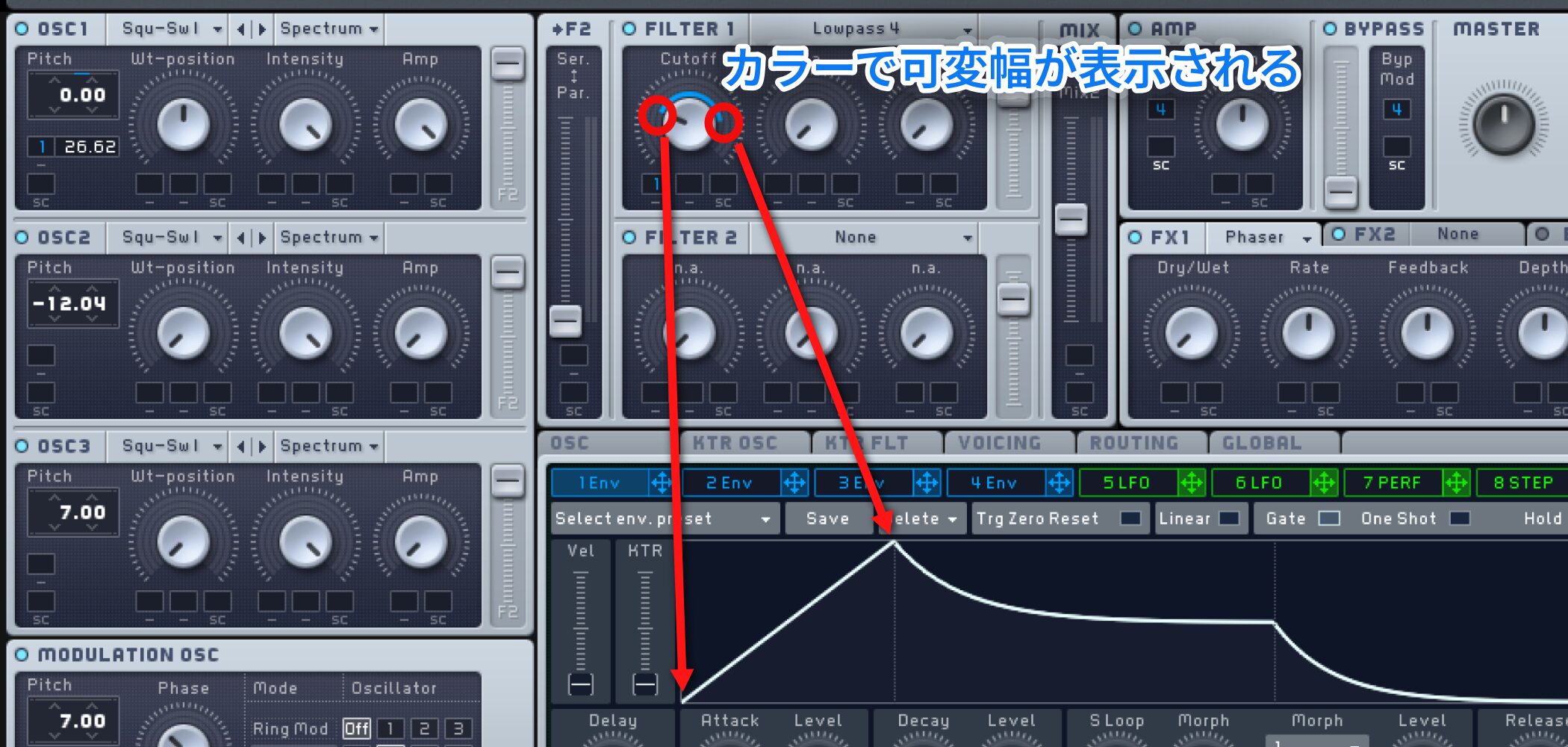
When assigned to a filter, the colored range shows how far the parameter will move as you drag.
Control Massive’s Knobs with a MIDI Controller
Use MACRO CONTROL to operate several assigned knobs together.
This is useful for creating dramatic sound changes.
Massive Video: Macro Control
Assigning a Macro Control
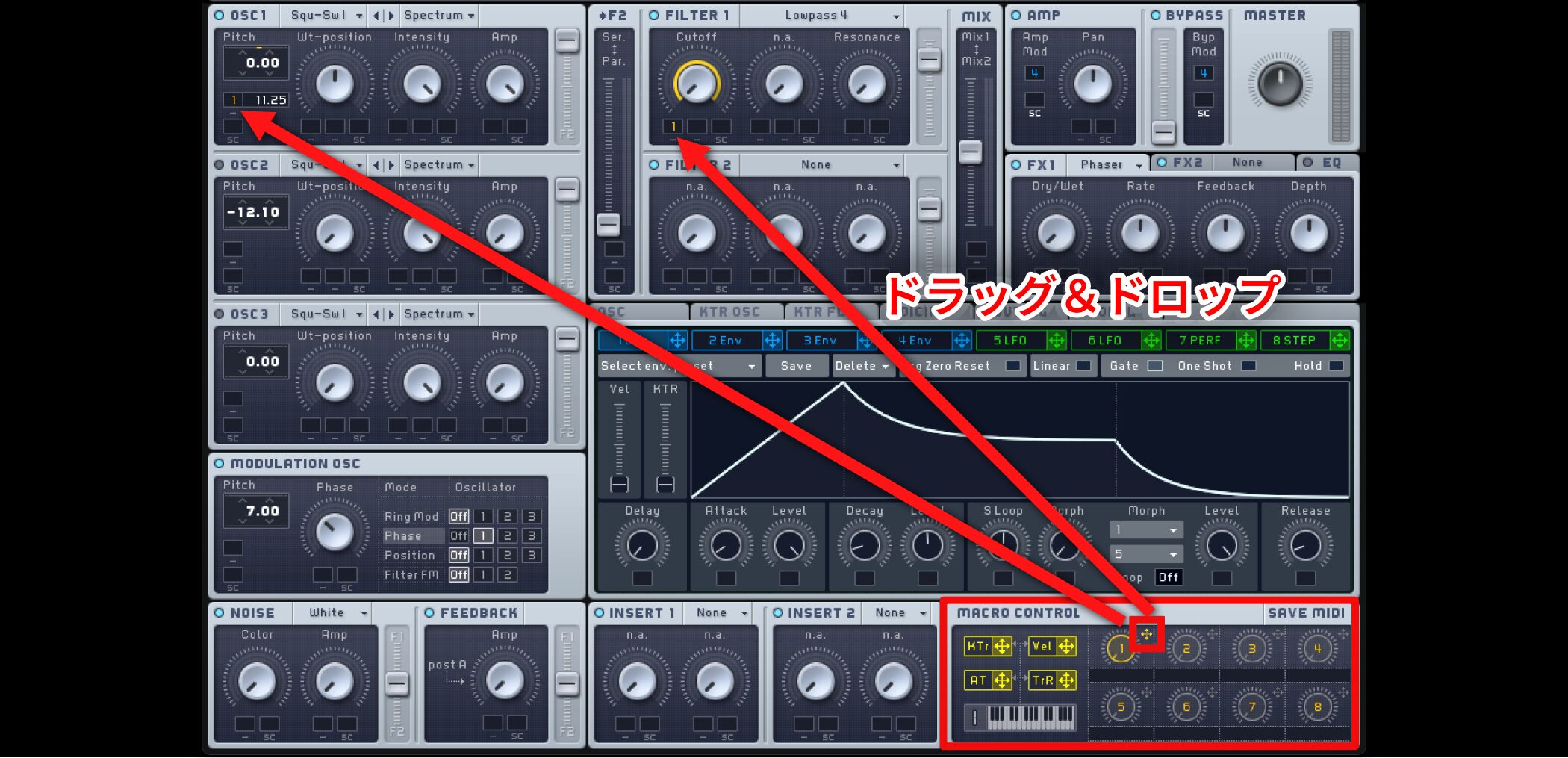
Assign it using the same procedure as for an envelope.
Drag and drop the crosshair beside a MACRO CONTROL onto the desired parameter.
You can assign it to multiple parameters.
Connecting Macro Control to MIDI
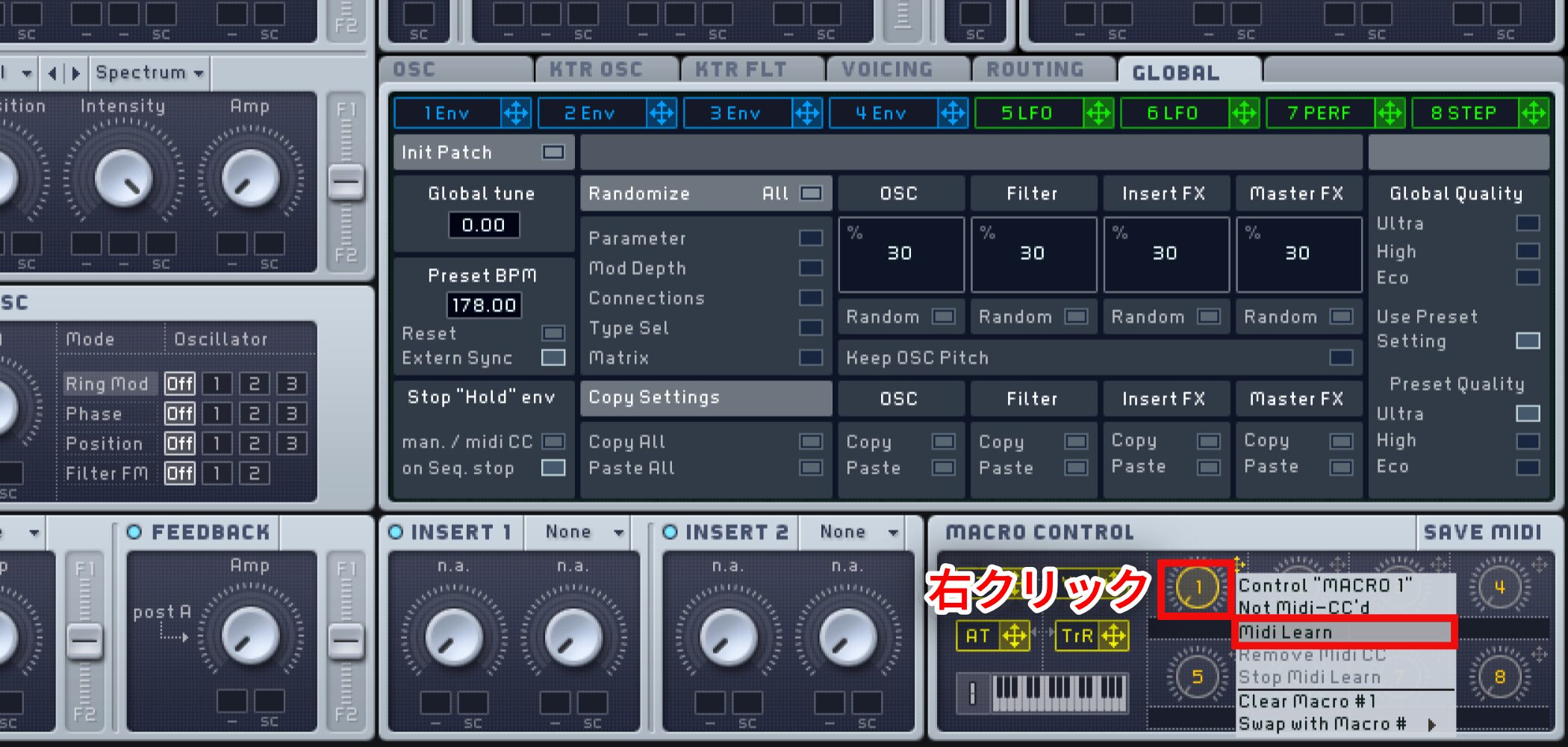
Right-click a knob and select “MIDI Learn.”
Move the knob on the hardware MIDI controller you want to assign.
The MIDI controller is now linked to that macro control.
Create Modern Sounds with Massive’s Stepper
Next, let’s look at a more specialized modulation source: Stepper.
Its defining feature is that values jump from one step to the next.
With no transition between the values, it is easy to create unusual, attention-grabbing sounds.
You can also assign Stepper to pitch and use it as an arpeggiator.
Massive Video: Stepper
Opening Stepper
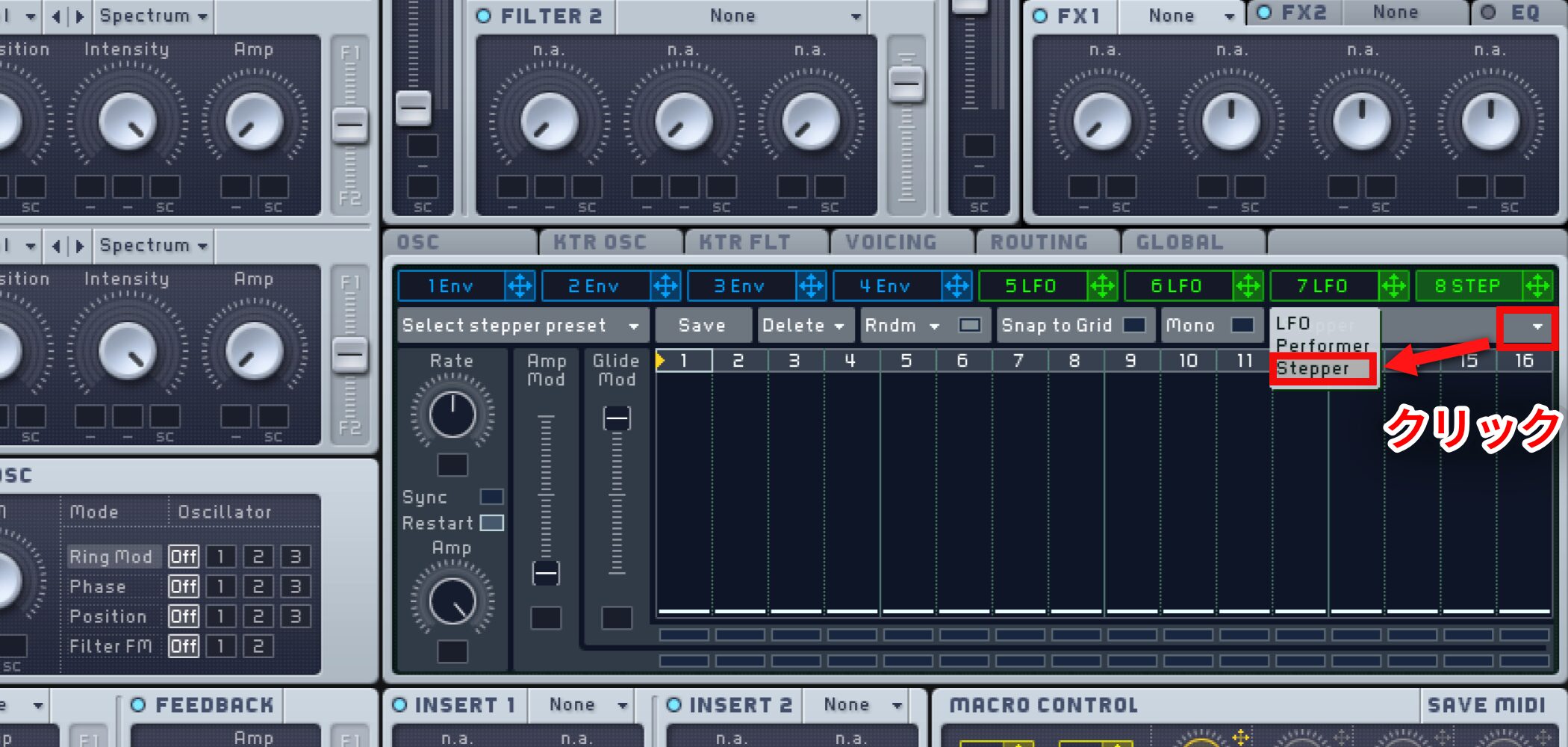
Select “Stepper” in the modulation section.
Applying Stepper
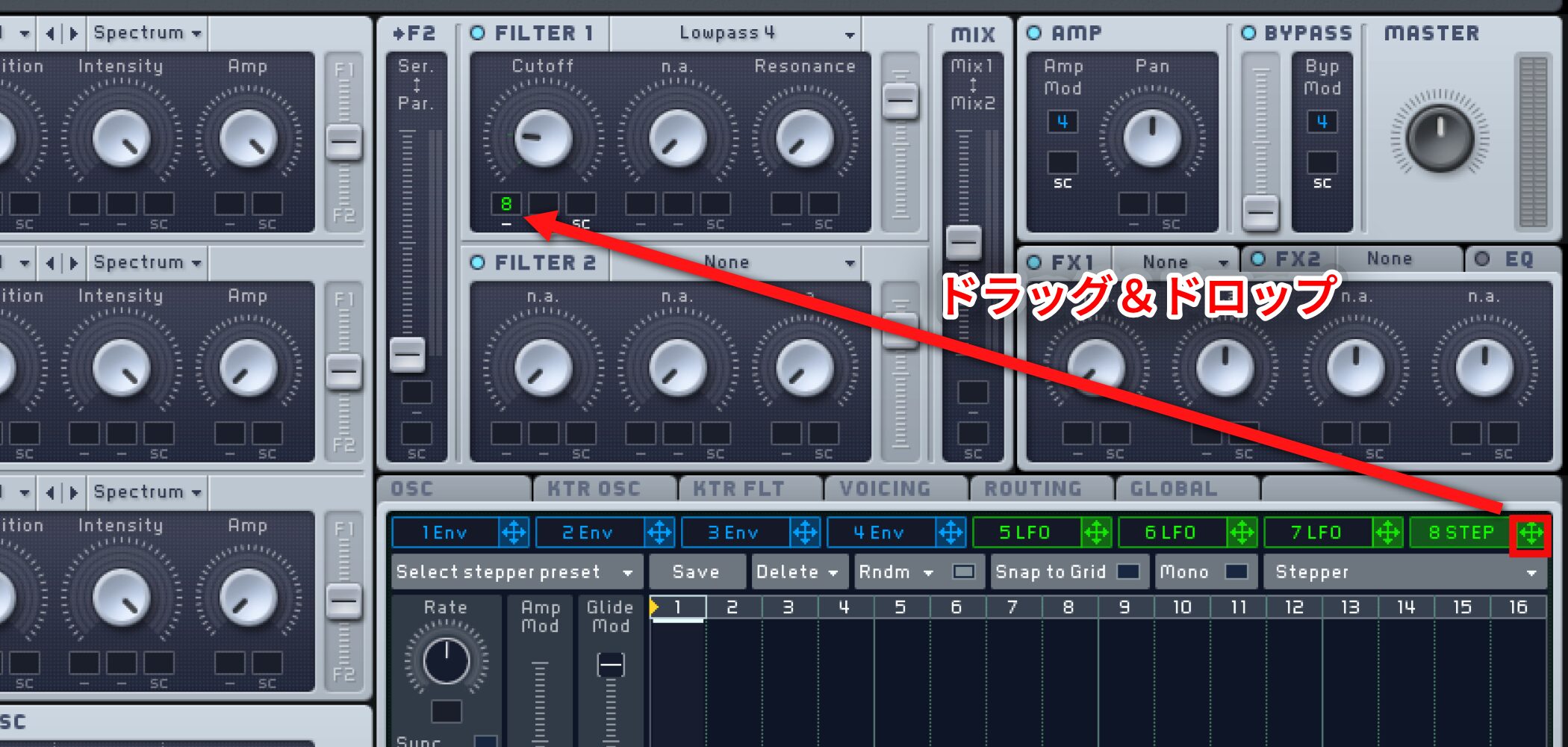
As with other modulation sources, drag and drop it onto the desired destination.
Here it is assigned to the filter.
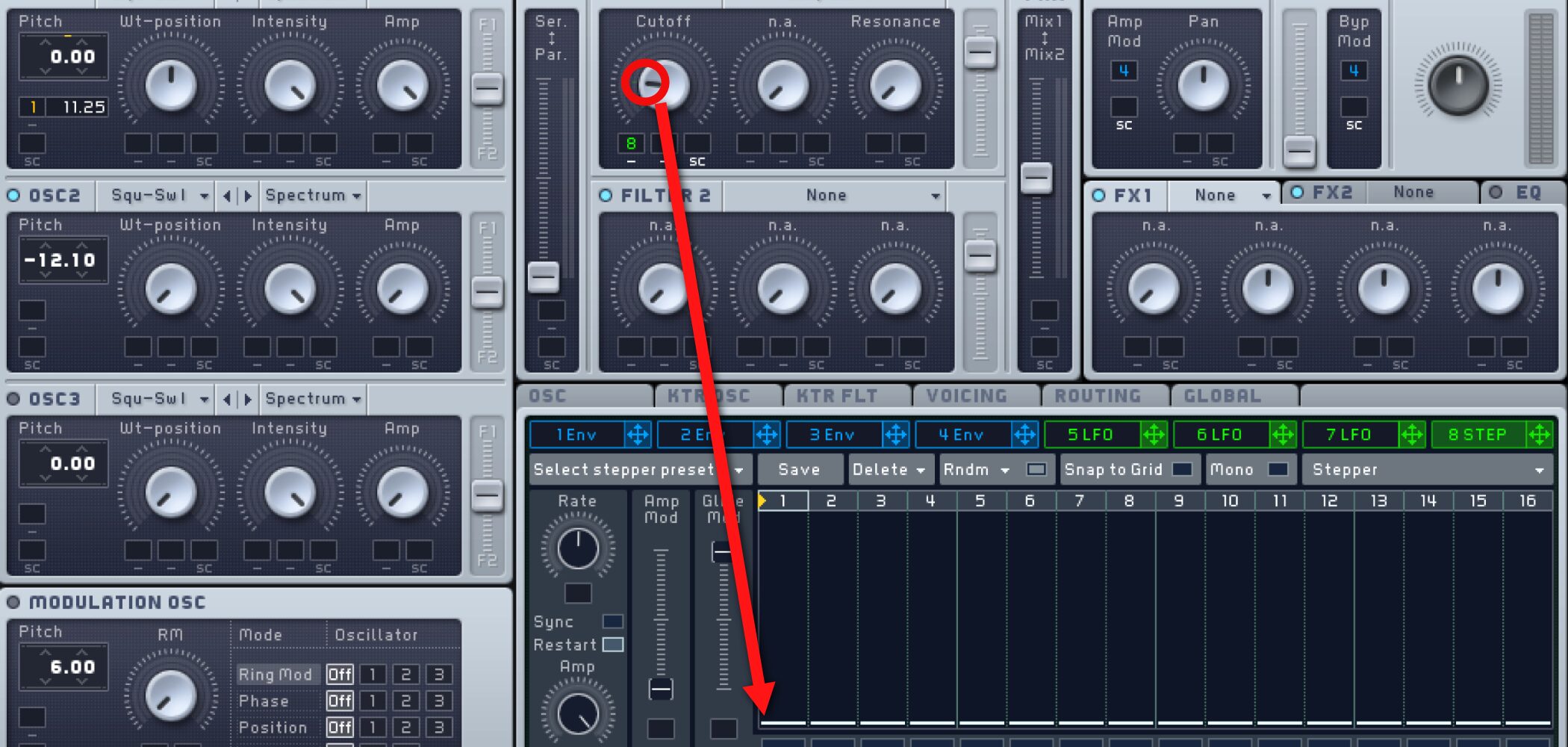
For the Stepper, its minimum corresponds to the current knob position.
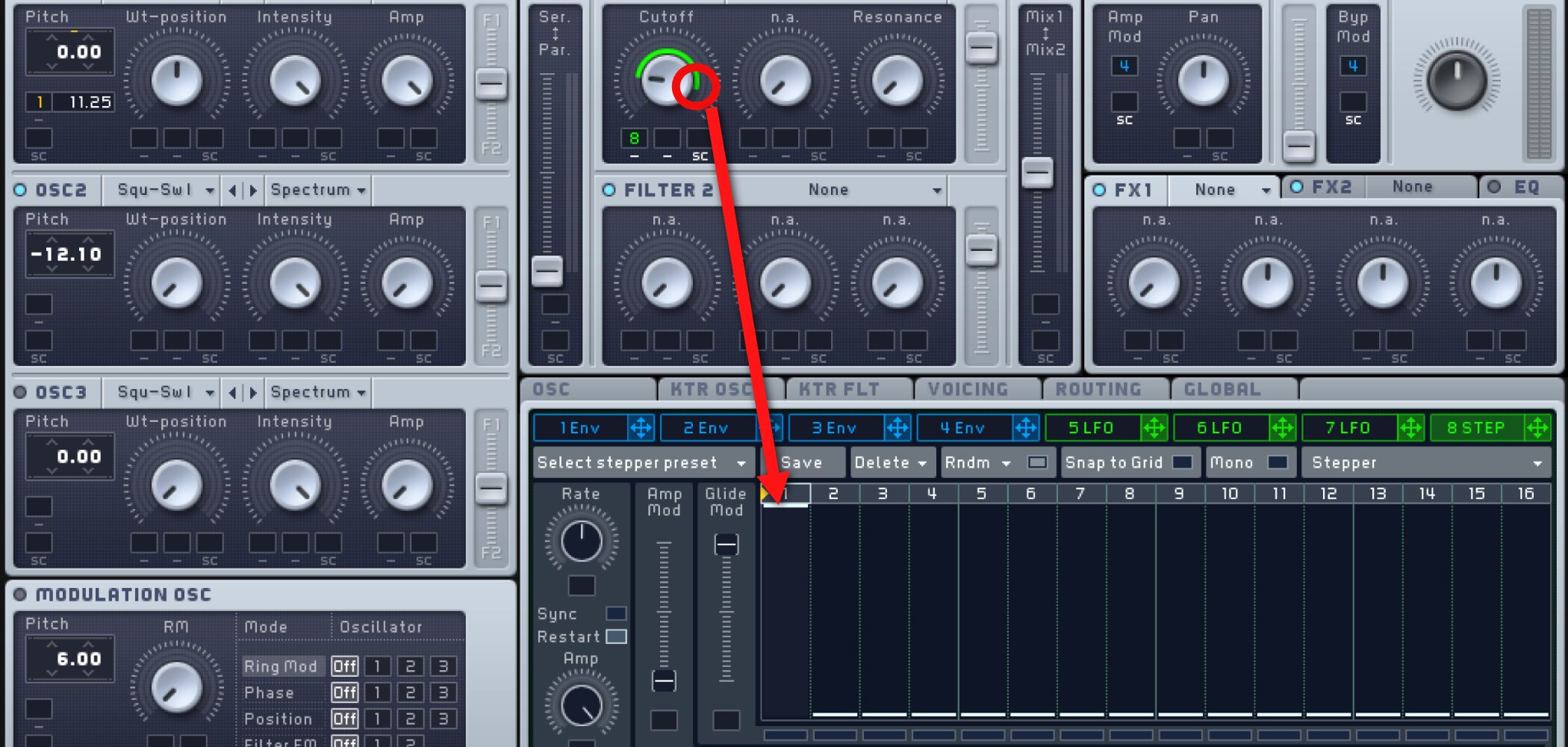
Its maximum corresponds to the modulation endpoint you set.
Keep these points in mind as you enter the step values.
Stepper Settings
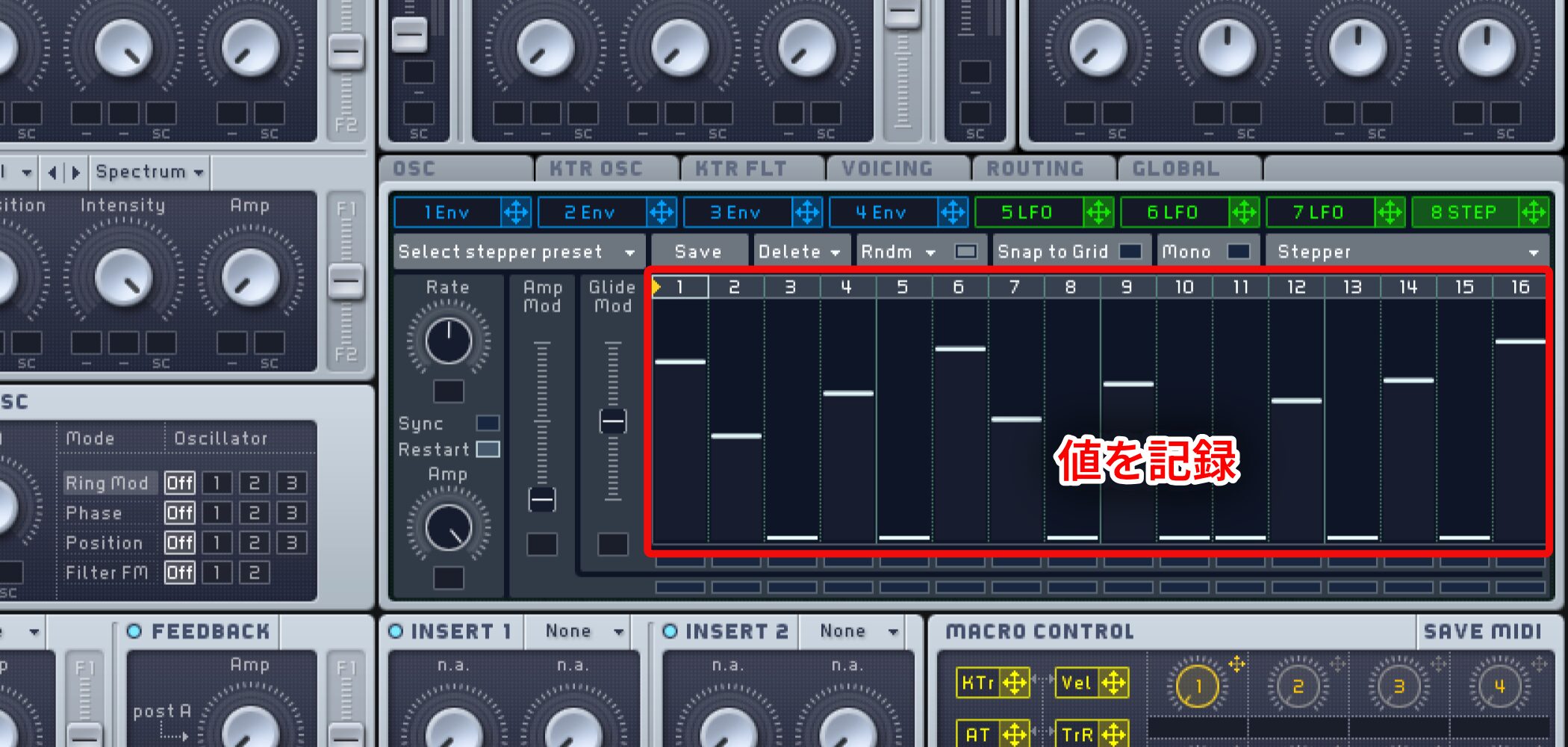
Click or drag in each cell to enter a value.
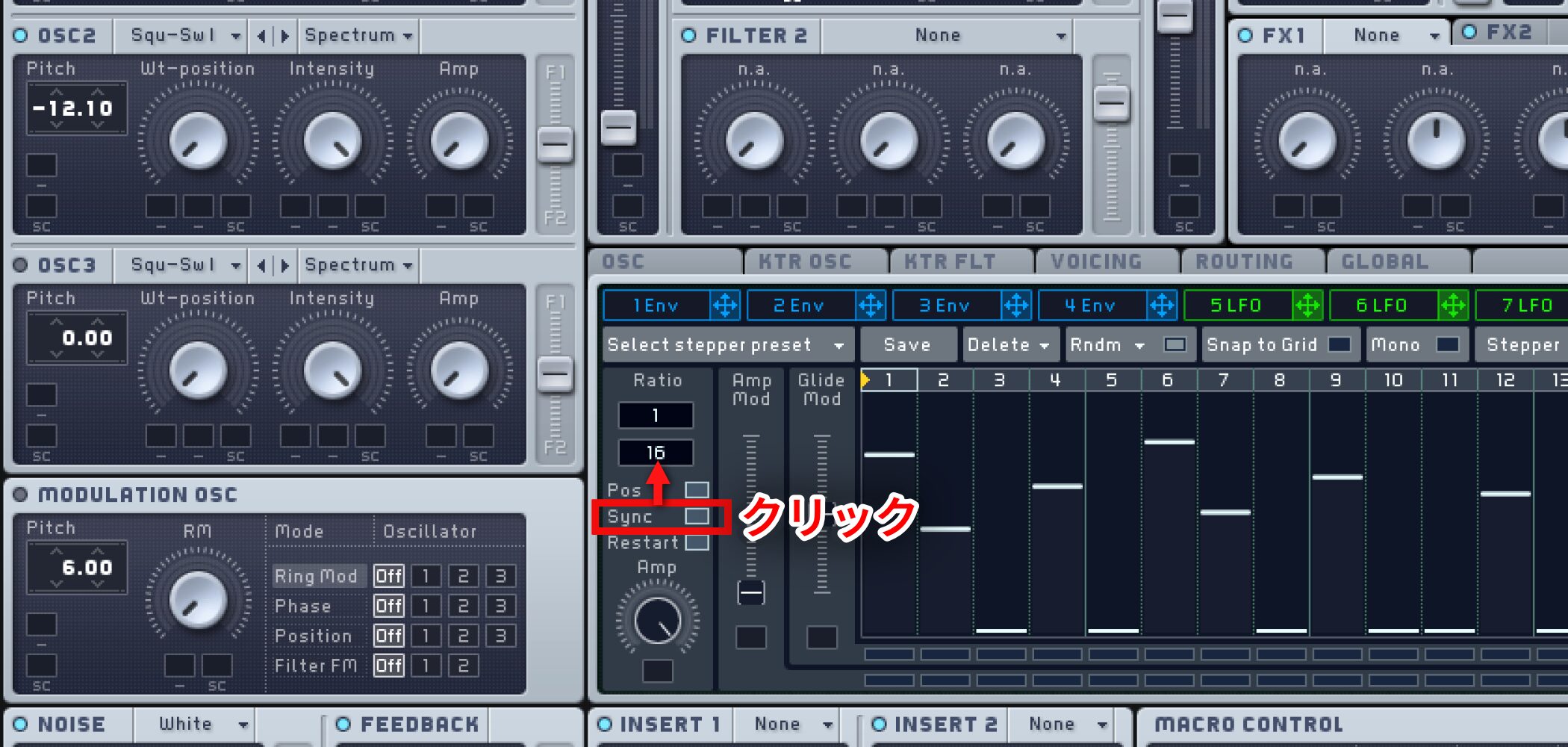
Press “Sync” to synchronize the step rate with the song tempo.
In the example, “16” means 16 steps per bar.
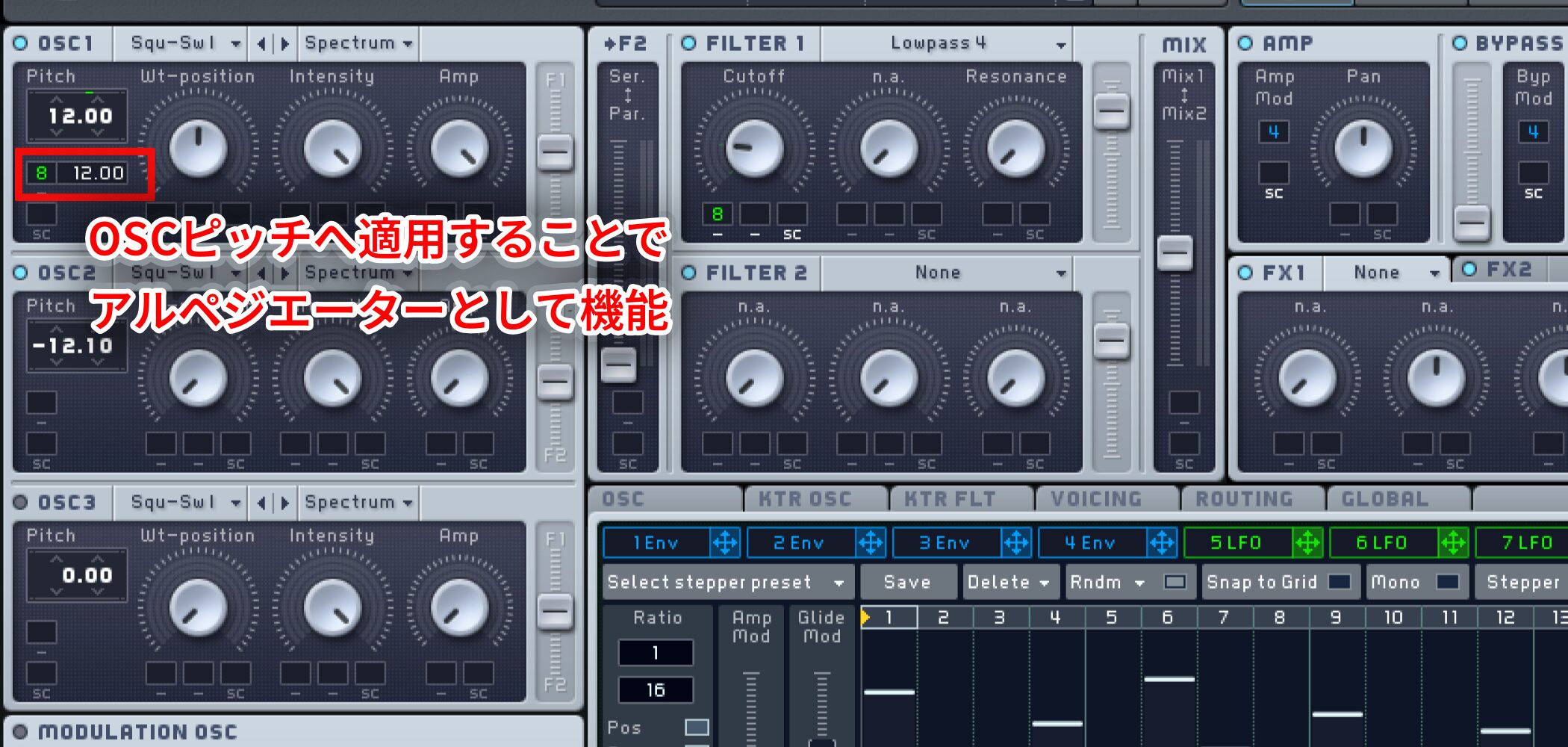
Assign Stepper to oscillator pitch to use it as an arpeggiator.
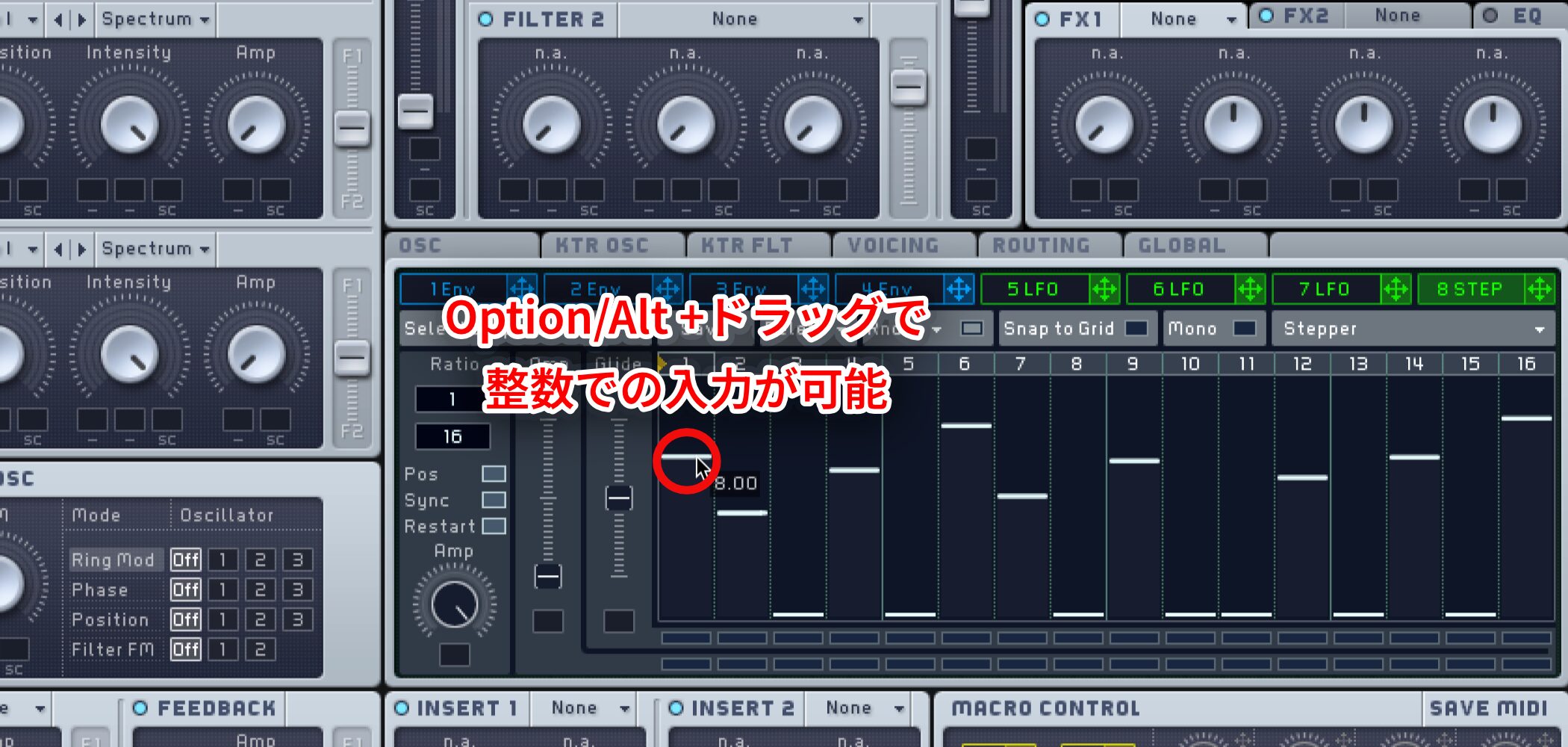
When entering values, hold
- Option and drag on Mac
- or Alt and drag on Windows
to enter convenient whole-number values.
Add Presets to Your Browser
You can download a wide variety of free and paid Massive presets online.
Next, let’s add downloaded presets to the Browser so they are easier to use.
Massive Video: Loading Presets
Update Massive to the Latest Version
Some presets cannot be loaded if your version of Massive is too old.
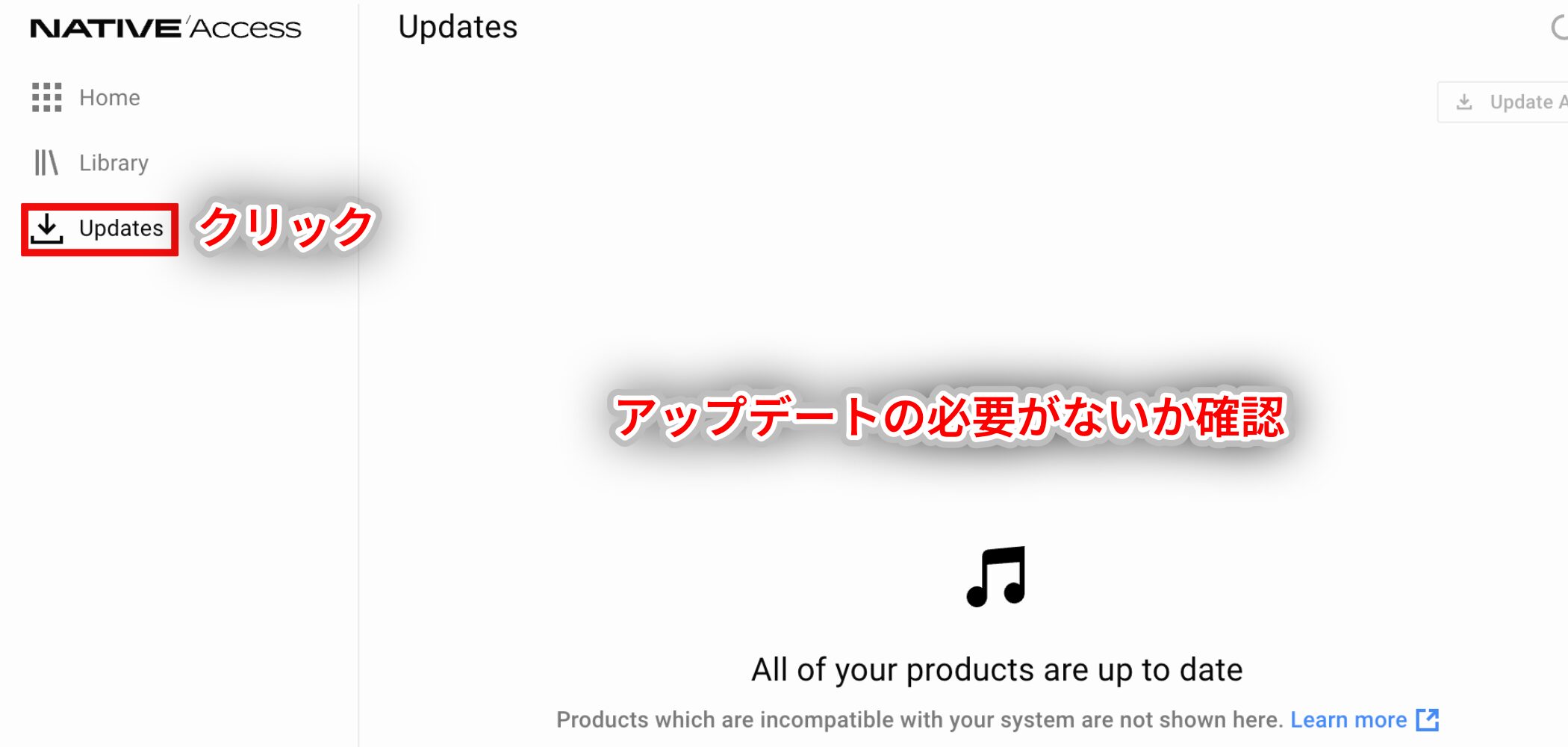
- Mac: Applications folder → Native Access → Updates
- Windows: Program Files → Native Access → Updates
Check for updates and bring Massive up to date. The Native Access interface may differ from this older tutorial.
Convert KSD Files
If a Massive preset has the “KSD” extension, it needs to be converted.
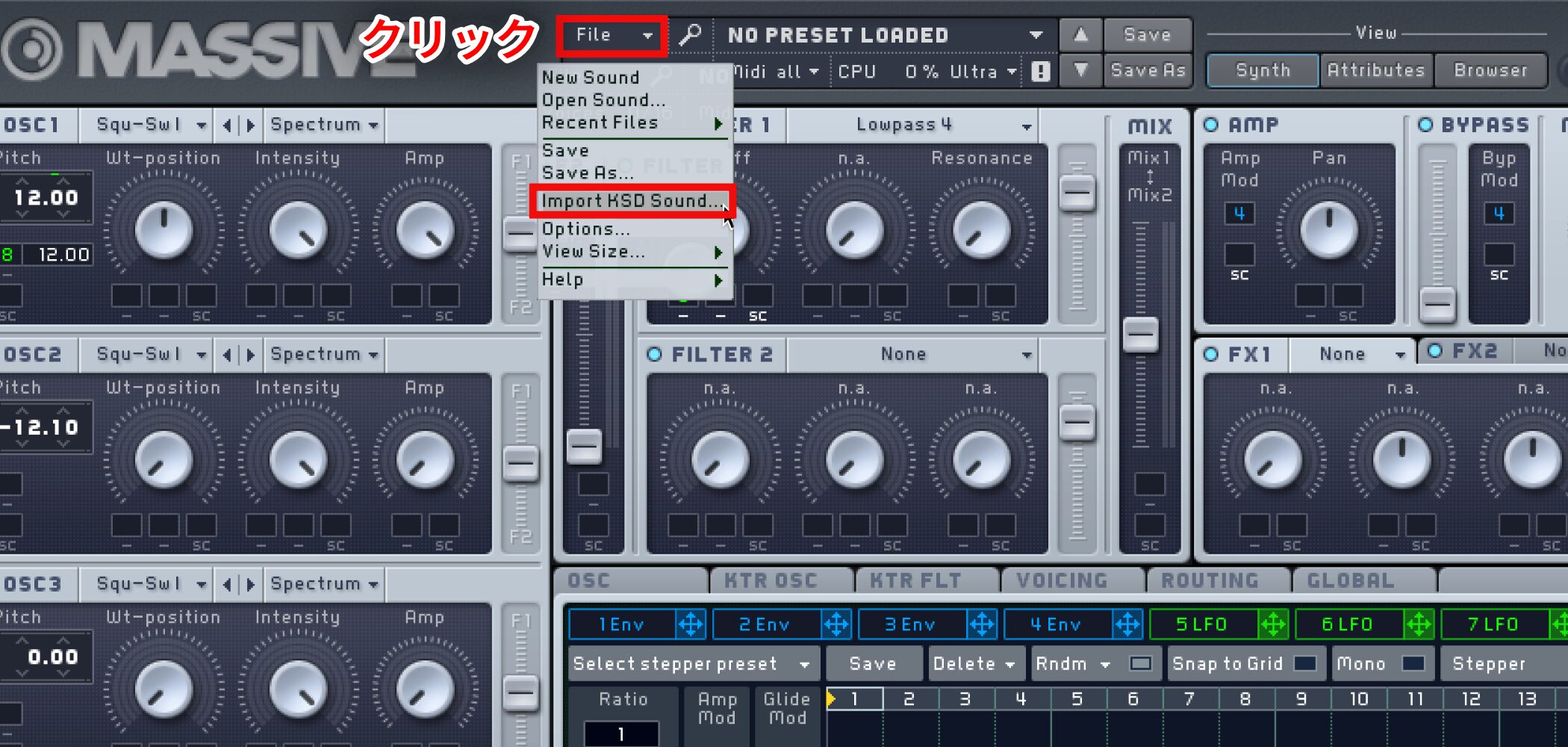
Choose “Import KSD Sound…” from “File” and select the preset folder to convert it.
Select a Preset Folder
Presets already using the “nmsv” extension can be used as they are.
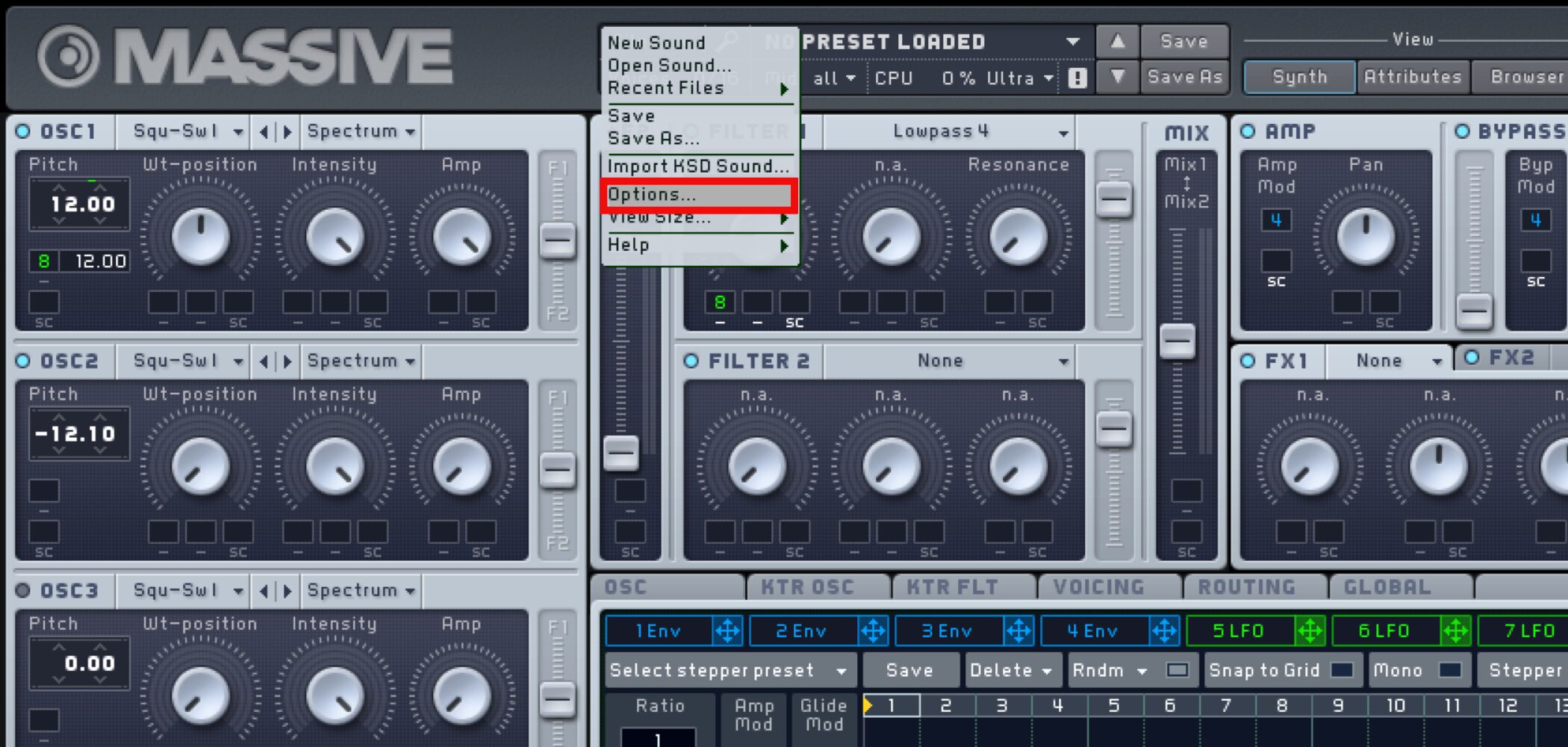
Select “File” → “Options…”
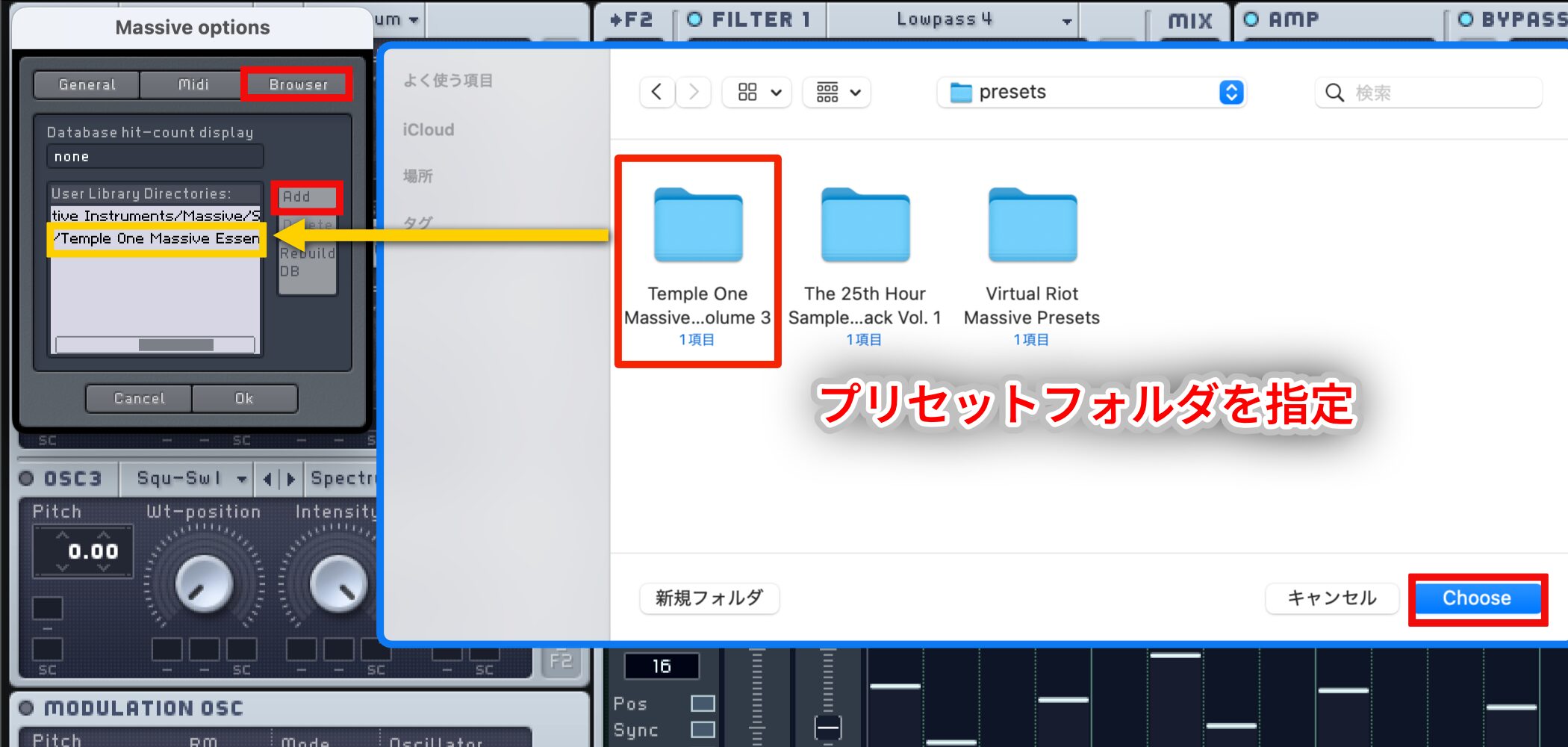
In the Browser tab, click “Add” and select the folder containing your presets.
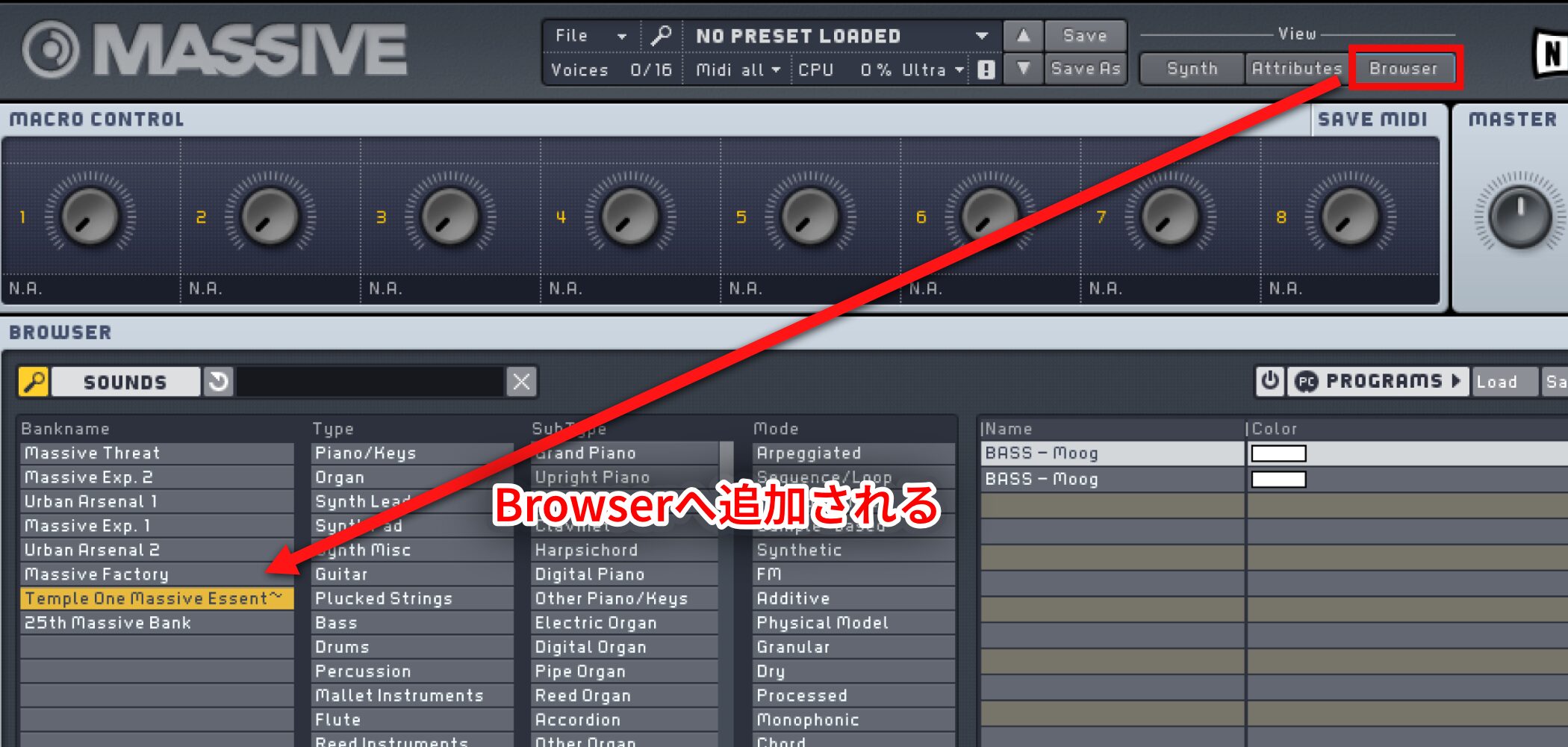
This adds them to the Browser.
Expand Your Sound with Multiple Modulation Sources
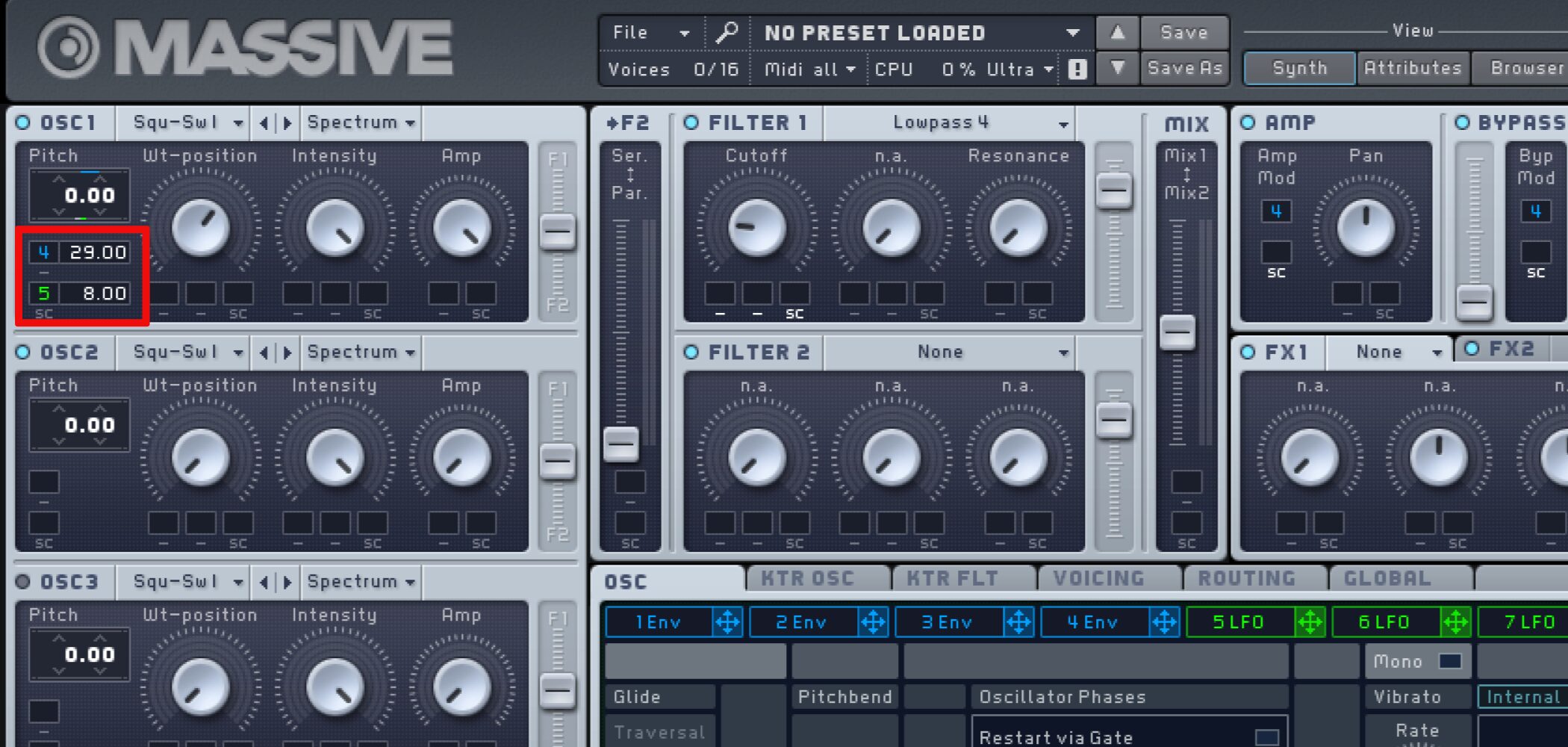
Many parameters in Massive can have two or more modulation sources assigned.
Let’s focus on what happens when those sources are combined.
Massive Video: Using Multiple Modulation Sources
The Effects Combine
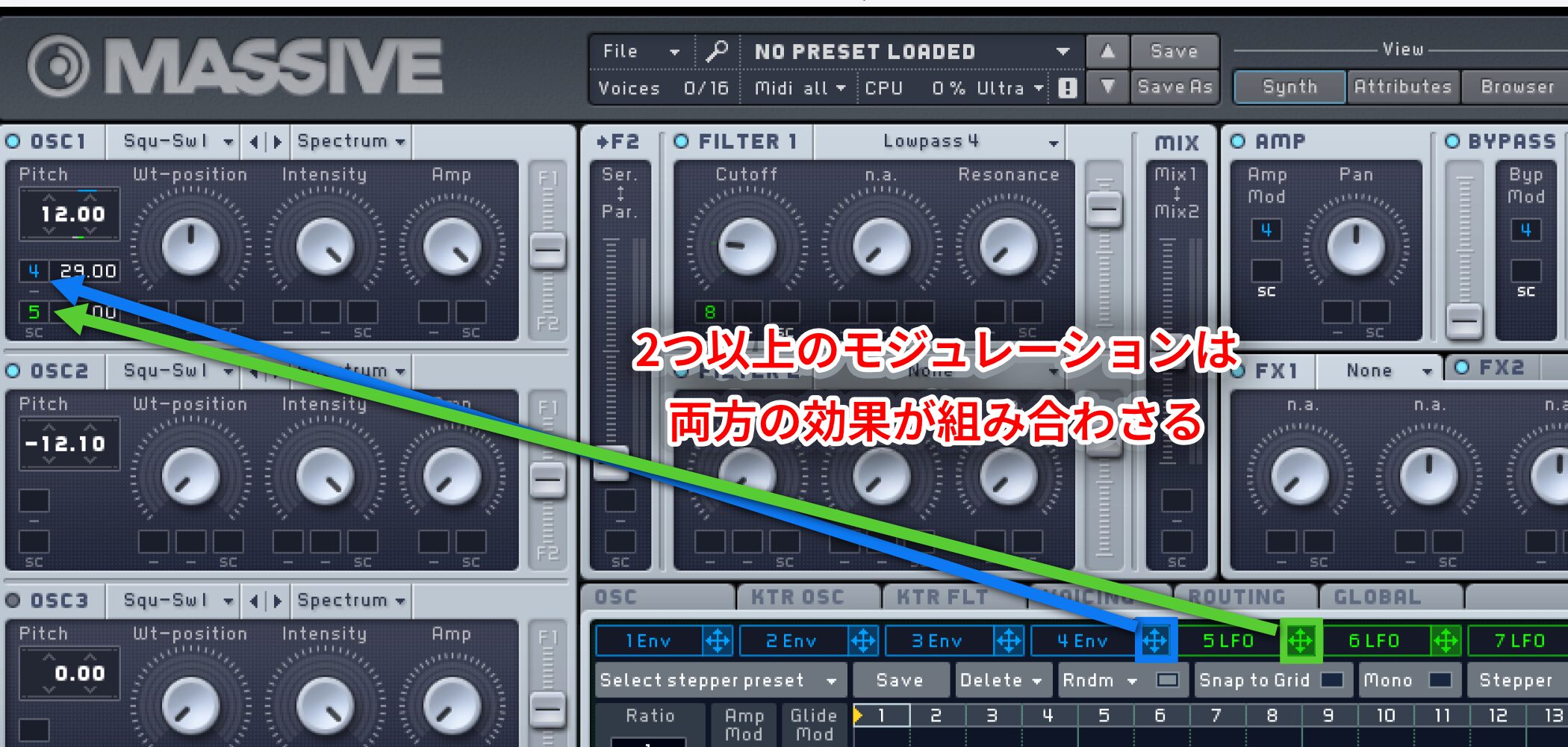
Here, an envelope and an LFO are assigned to pitch.
When two or more sources are applied in Massive, their effects combine.
In this example, the envelope raises the pitch while the LFO makes it fluctuate, so the pitch rises with a wobble.
Understanding this helps you create more complex, evolving sounds.
Try combining different sources.
Control Modulation Through Your Performance
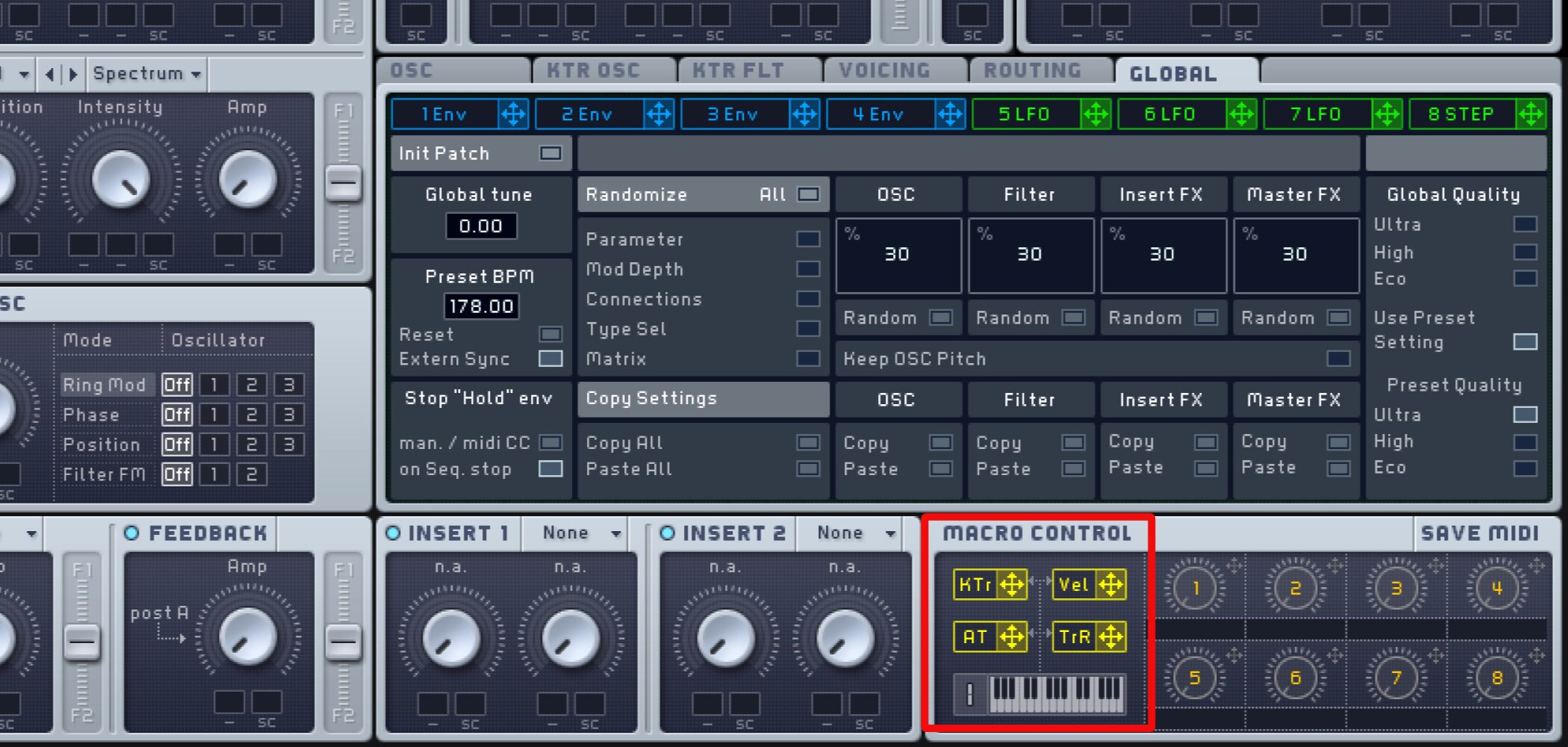
The Macro Control section has four modulation sources.
They let you vary modulation according to how you play, from subtle nuances to dramatic effects.
They are also useful when performing live with Massive.
Massive Video: Four Modulation Sources
Understanding the Four Types
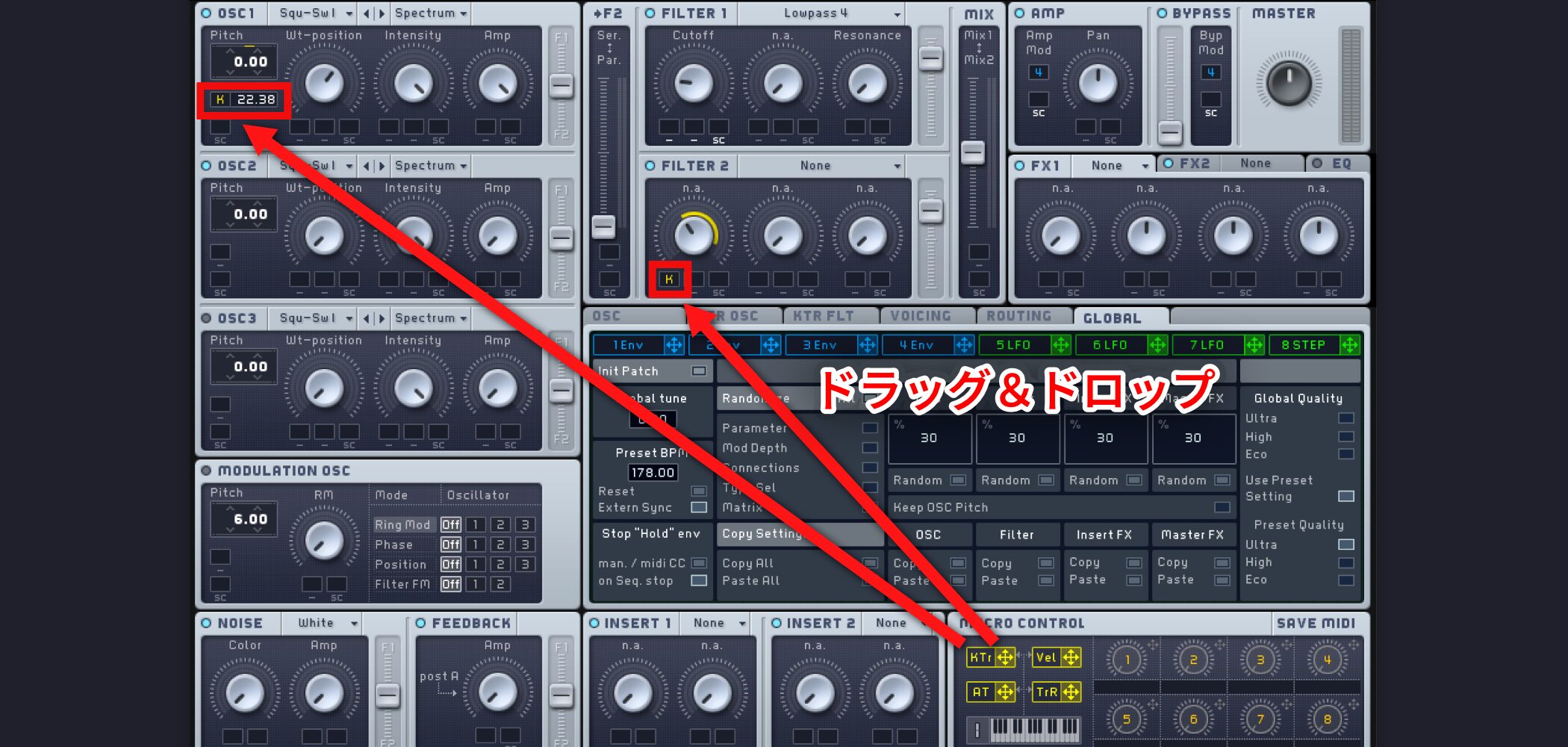
You can assign them in the same way as envelopes and LFOs.
- KTr — Key Tracking: The modulation amount changes with the note’s position on the keyboard.
- Vel — Velocity: The amount changes with how hard you play the key.
- AT — Aftertouch: Modulation is triggered by pressing a key further after the initial strike.
The amount changes with the pressure applied. - TrR — Trigger Random: The modulation amount changes randomly each time a note is played.
Switch Multiple Sounds in One Massive Instance to Reduce CPU Load
Massive’s sound design and controls are easy to use, so you may often open several instances in one song.
A powerful computer may handle this easily, but CPU load can be a concern on some systems.
Finally, let’s look at switching multiple sounds within a single Massive instance as one way to manage CPU load.
Massive Video: Switching Presets in One Instance
Setting Up Programs in Massive
First, create a sound you like and save it with “File” → “Save as.”
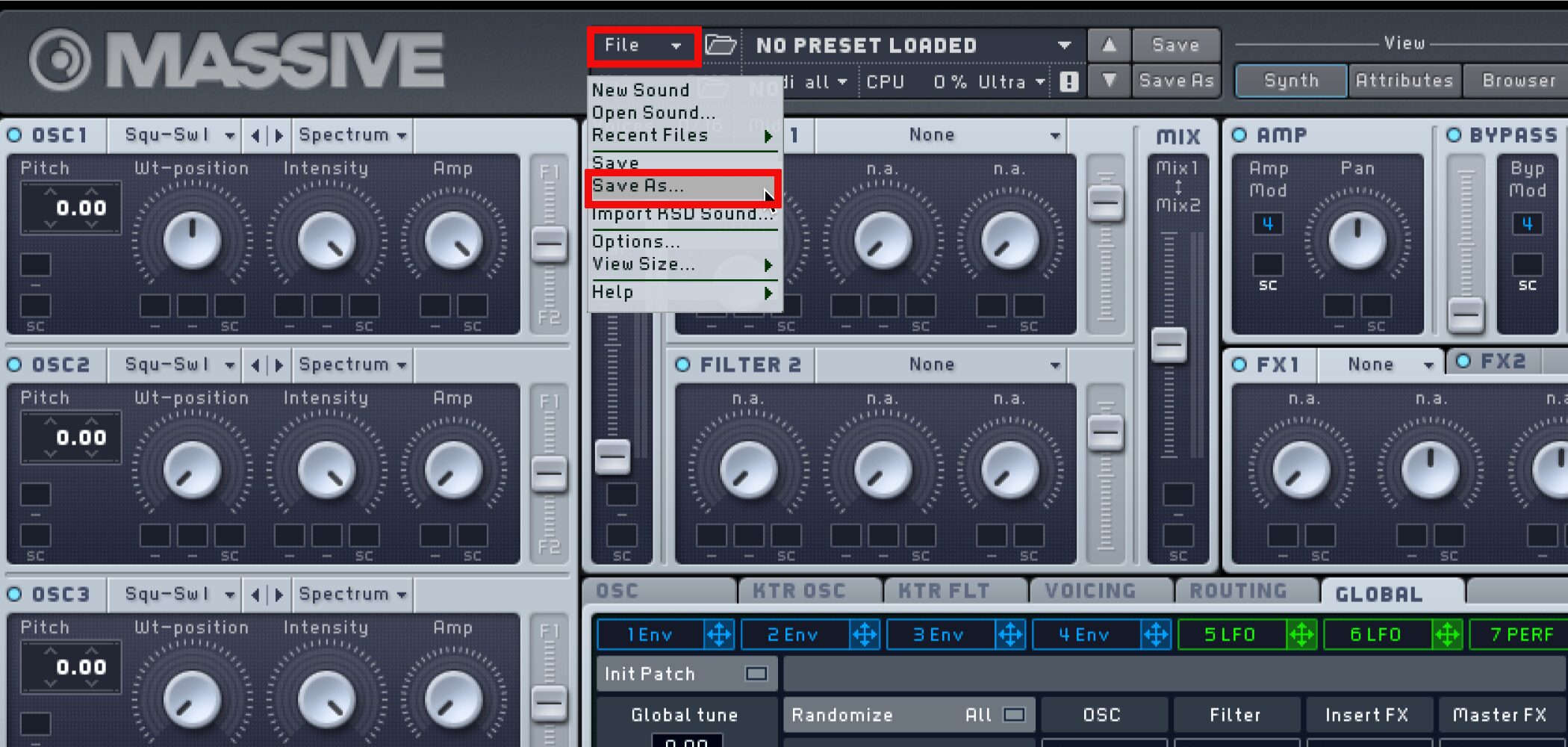
Here, the preset is saved to the desktop for clarity.
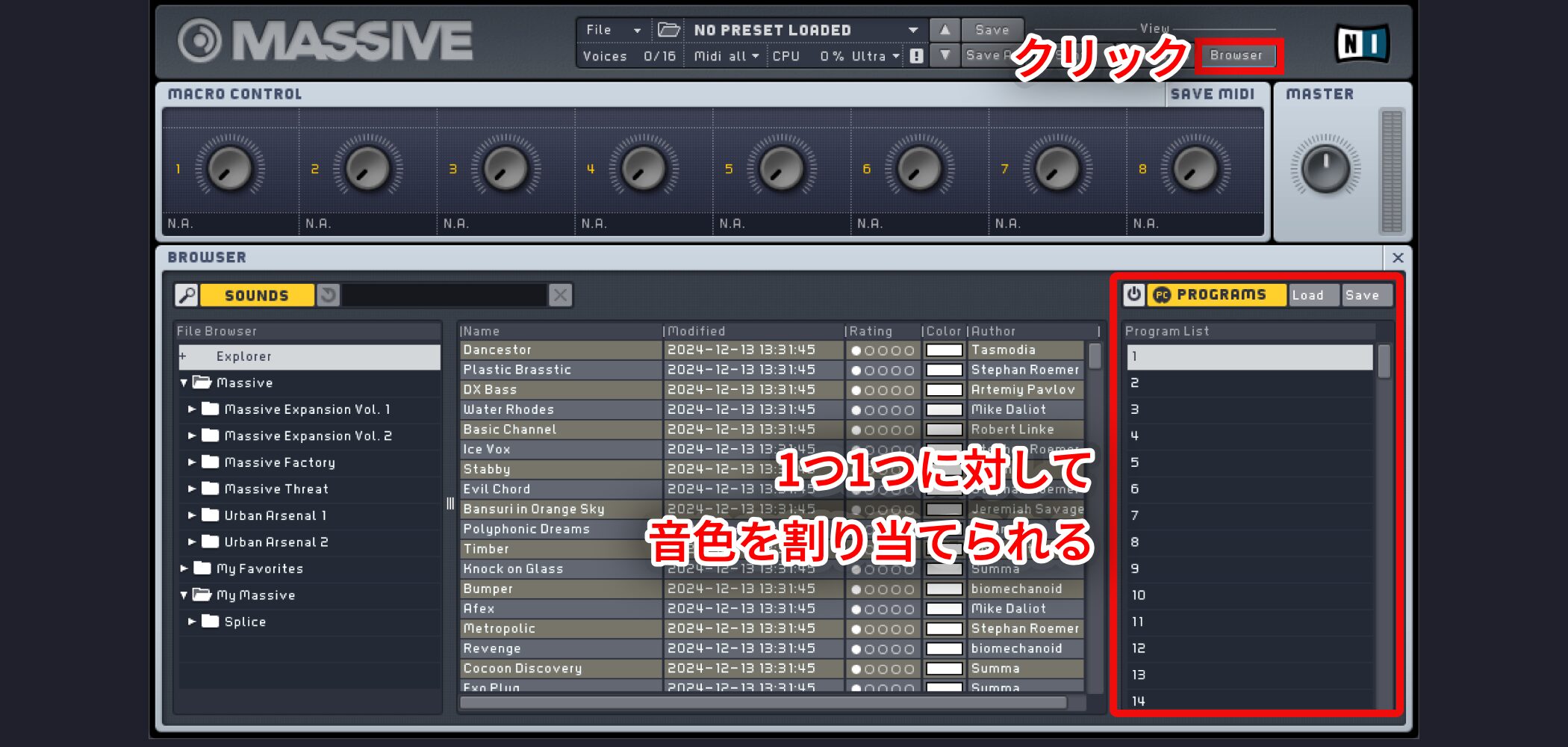
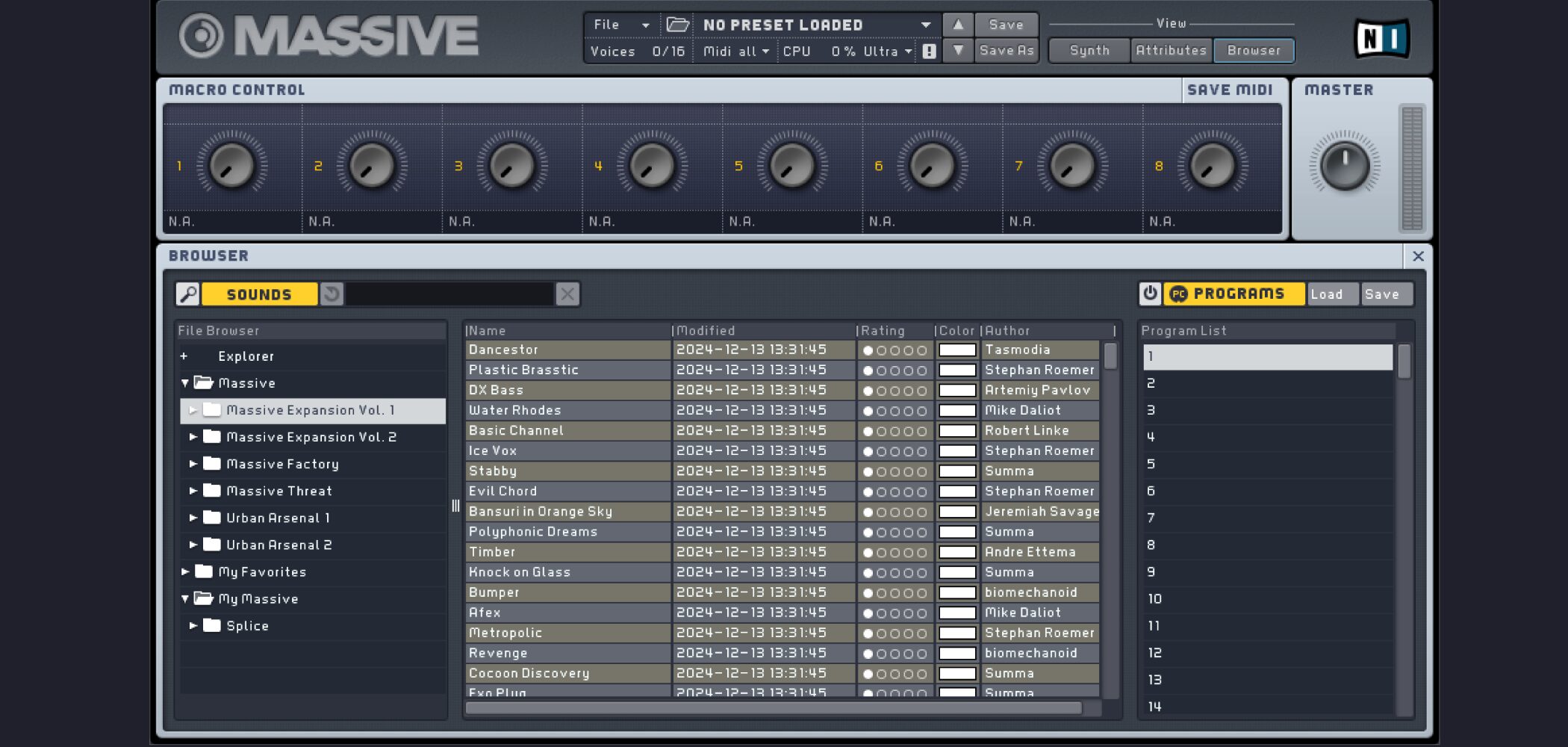
Next, open the Browser tab and select “PROGRAMS.”
The numbers 1–128 each represent a slot to which you can assign a sound.
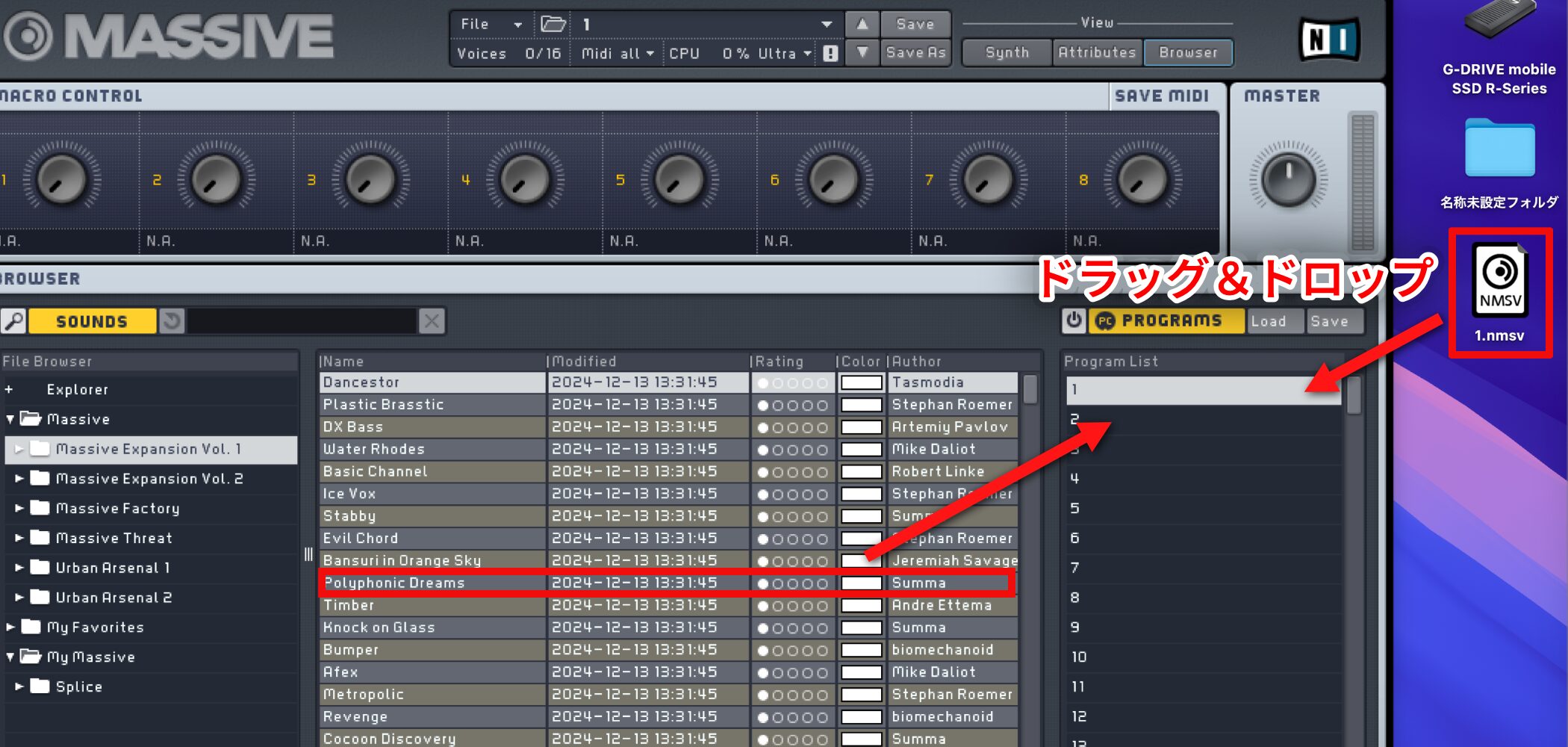
Drag and drop the sound saved on the desktop into a program slot.
You can also drag a preset from the list on the left.
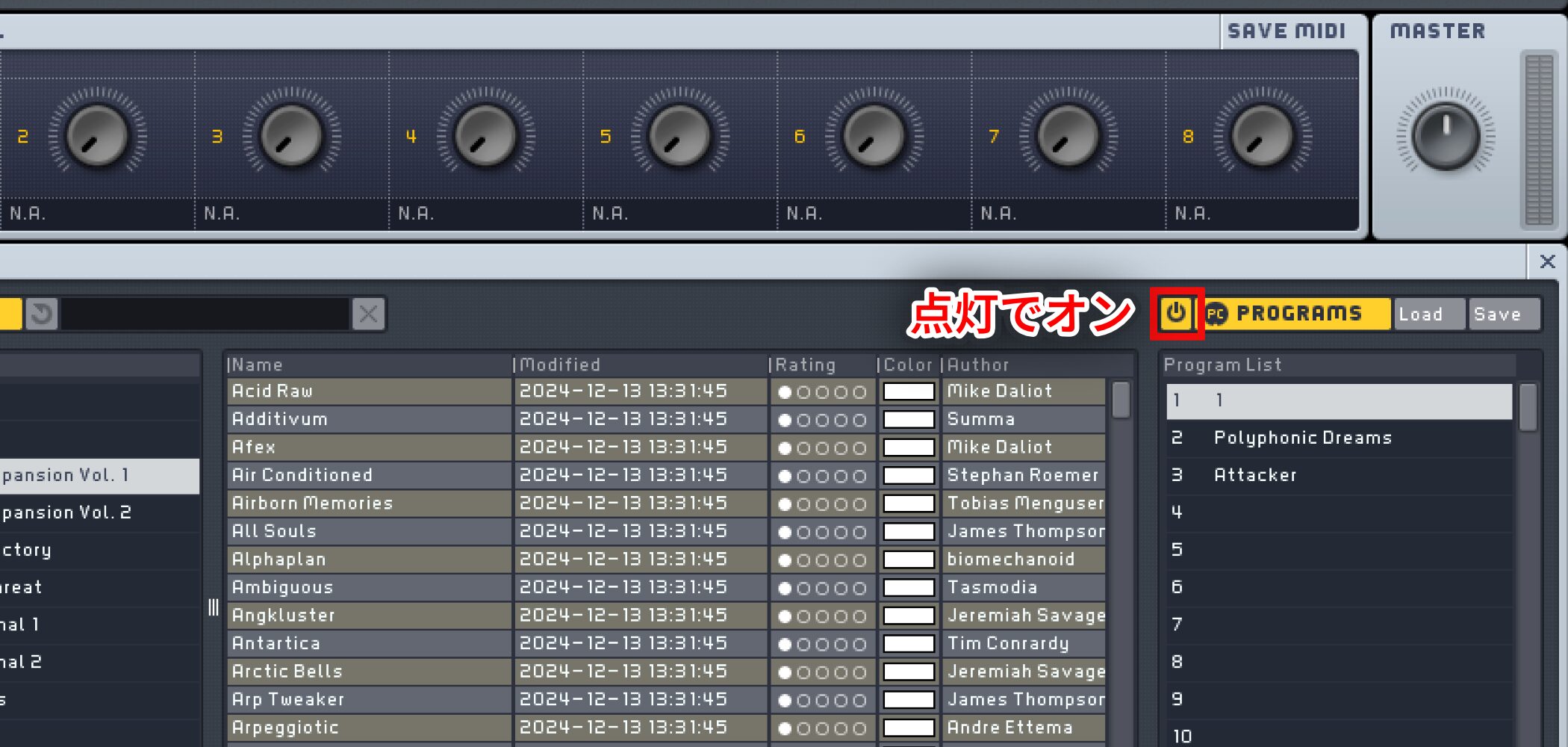
After placing the sounds, turn on the power switch to enable the programs.
Enter Program Changes in Your DAW
Next, enter program changes in the DAW.
The concept applies across DAWs; this example uses Cubase.
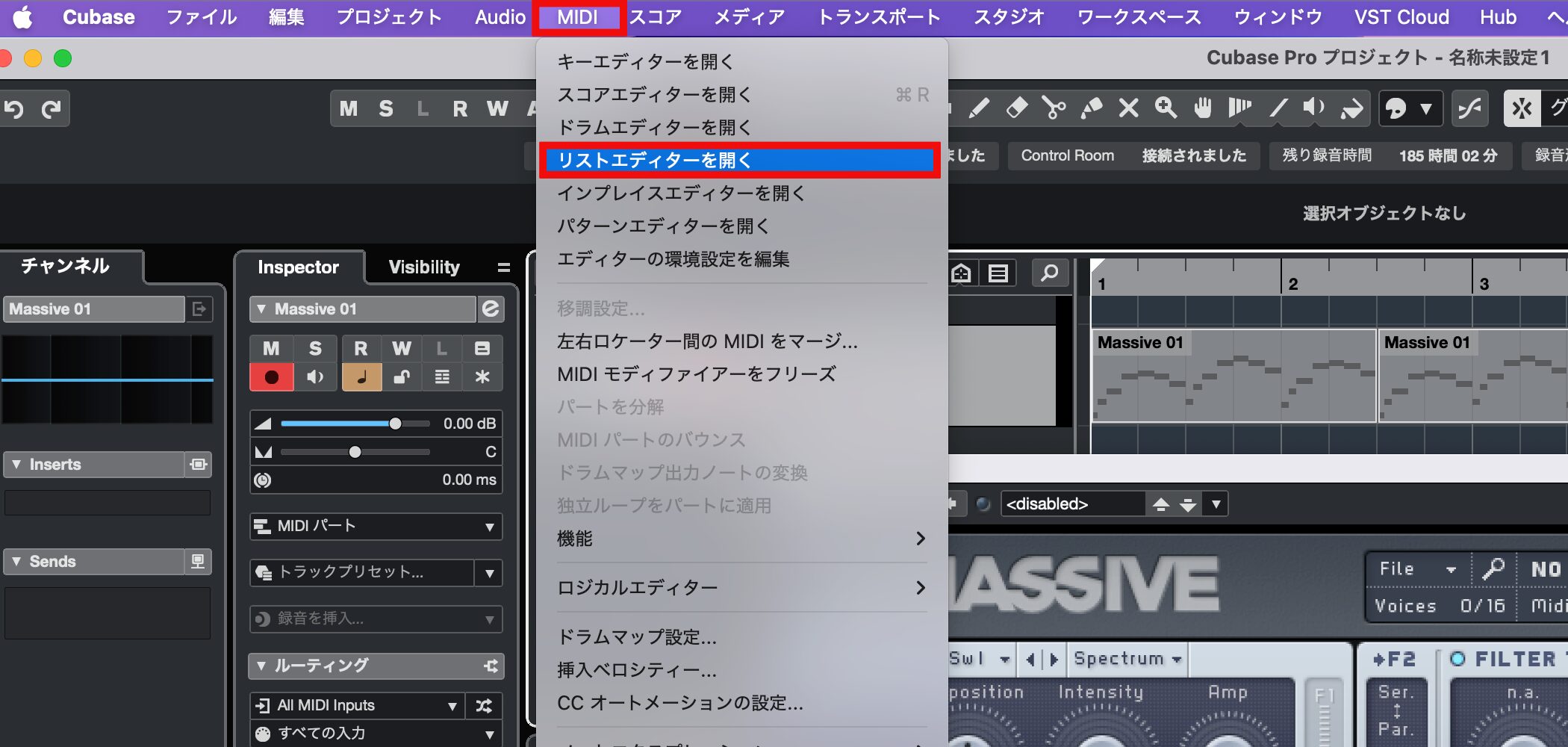
From “MIDI,” select “Open List Editor.”
Use the following steps in the window that appears:
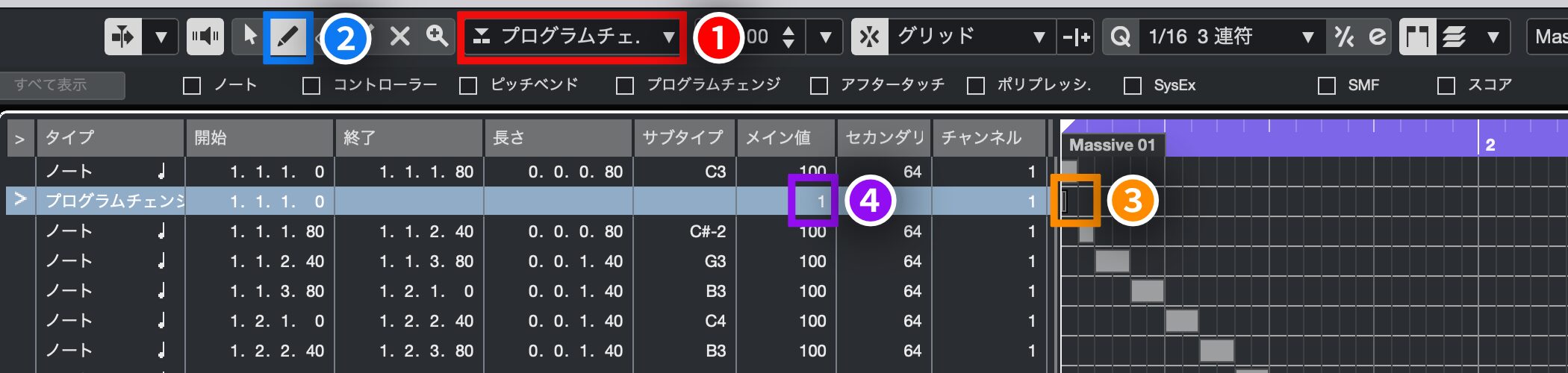
①(Red): Select Program Change.
②(Blue): Select the pencil tool.
③(Orange): Enter data at the point where you want the sound to change.
④(Purple): Specify the preset number corresponding to the Massive program slot above.
That completes the setup.
Massive switches sounds when playback reaches the specified point.
The article below covers MASSIVE X’s overview and operation for those who use it.

Frequently Asked Questions
Q1. What genres is Massive suited to?
Massive is especially well suited to dance music, electronica, house and techno. Glide and FM can help create the electronic, modern bass and lead sounds often used in these styles.
Q2. Can beginners learn to use Massive?
Yes. Its envelope and LFO controls are approachable. Work through the basic features in this article to build your sound-design skills step by step.
Q3. How should I use Massive’s filters?
Massive has two filters. The low-pass filter is commonly used to soften a sound and help it sit in a track. If you use only one filter, route the oscillator fully to that filter.
Q4. What are the benefits of macro controls?
Macro controls let you move multiple parameters together and make MIDI-controller operation more efficient. They are useful for dynamic sound design and live changes.
NEW ARTICLES
Latest English Articles