Interview with Yoshiki Mizuno of Ikimonogakari
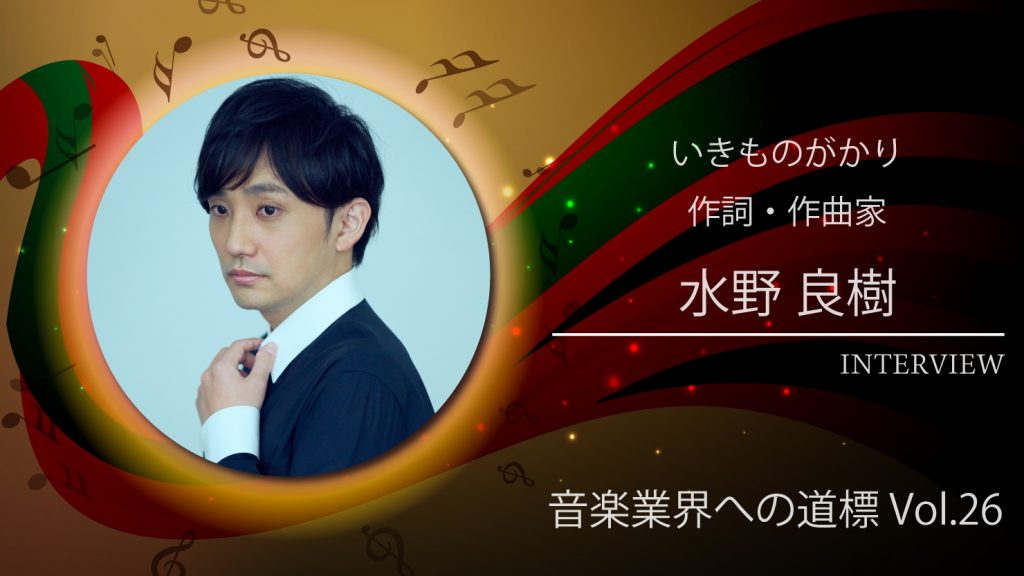
For the 26th installment of Pathways into the Music Industry, we interviewed Yoshiki Mizuno, well known from "Ikimonogakari."
From his current activities to his approach to writing lyrics and music, we heard many stories only a top musician could tell, so please give it a read!
Q: Thank you for letting us interview you. First, please tell us about your current activities.
As a member of Ikimonogakari, I write lyrics and music and play guitar.
Now that the group has paused its activities, which we call "letting ourselves out to pasture," I mainly write songs for other artists.
I also continue the radio show I've been doing since our group days.
Q: Did you write songs for other artists while you were active with Ikimonogakari?
No, not at all. I basically wrote songs only for the group.
Mizuno's Songwriting Method
Q: Please tell us about the gear you usually use.
I run Pro Tools on a Mac.
The instrument I use most is TOONTRACK's EZ KEYS. When I'm sketching ideas, I sometimes launch it in standalone mode.
Q: You've created many big hits. What process do you follow when composing?
I almost always write the music first, and since my field is so-called J-pop, centered on vocal songs, I start with the chorus, the tastiest part. My style is to open a piano sound and write while singing.
First I decide on a rough theme, and once I've made about 20 to 30 choruses, I hold an audition in my head and narrow them down to one.
Q: Do the choruses that weren't chosen ever come back in other songs?
I don't often bring them back later.
I do sometimes keep them in stock, but strangely, ones that were rejected once often aren't that good.
Q: When selecting choruses, what criteria do you use to judge good from bad?
There's a lot I can't put into words even myself, but what I value most is probably "clarity". I place a lot of importance on whether there's clear contrast in where it builds up and where it drops.
Also, since I write while singing, "how it comes alive when sung" is something I'm conscious of too.
Q: Once the chorus is set, you write the verse and pre-chorus. Are there times when it just won't develop?
All the time. (laughs)
But I basically don't change a chorus once it's decided, so I keep at it until I come up with something.
Recently, though, since I've started writing for others, I've been writing songs in more varied ways.
When someone else writes the lyrics, sometimes the lyrics come first, so the format I'd set for myself is breaking down a bit, but that's refreshing too.
His Approach to Lyrics
Q: How do you go about writing lyrics?
I don't have a fixed style for lyrics. Sometimes I write from the beginning, and sometimes I expand from a word that fit perfectly in the chorus.
Also, when I write lyrics, in the end I lay out all the lyrics on screen in the same font and size and compare them with my previous ones.
I write lyrics by hand too, but the size of the characters and the pressure of the pen can attach different images to them. For example, Japanese-style handwriting can make it sound like a Japanese-style song.
Q: I see, so you prepare something like a reference for lyrics too.
By setting a clear standard, you can grasp the image of the words themselves.
Based on that, I decide whether to write a word in kanji, hiragana or even katakana, and so on.
Q: What else do you value?
I place great importance on how the words fit.
Every word has its own natural intonation, and the impression changes completely depending on how it relates to the intonation of the melody.
When they clash, it can feel off, but sometimes that becomes a hook and works well.
Going one step further, words are mysterious: a seemingly ordinary line can conjure up a powerful image.
For example, changing "Kaeritaku natta" (I wanted to go home) to "Kaeritaku natta yo" (I wanted to go home, you know) instantly changes how the image expands. It lets people take it in all kinds of ways, thinking of the important people or places in their own lives.
Explaining it logically gets long-winded, but I try to choose words that expand the image as much as possible and allow for many interpretations.
Ikimonogakari "Kaeritaku Natta yo"
Q: So you aim for lyrics that can be interpreted in many ways.
Even Masahiko Kondo's phrase "Gingiragin ni Sarigenaku" conveys an image even if you don't know what it means, right? That's what's fun about words, and I'd love to make that kind of magic happen.
Q: Many of Ikimonogakari's songs seem to be loved by people of all ages.
With Ikimonogakari, we'd made it our destiny to sing for an unspecified general audience rather than a particular target, so I wrote lyrics conscious of how clear and easy to understand the words were.
Even with a love song, if people take it as "this person must have had this kind of romance," it becomes very narrow, so instead I try to make sure there's a hook for people of any age, wherever they are.
Q: So that's why difficult words rarely appear.
I want to skillfully create a "hollow" in the song. There's a "vessel," the song we put out, and I want listeners to fill the empty space with all kinds of their own feelings.
So it may be a feeling of "handing over something with nothing inside."
The Power of Music
Q: I think many artists express "what they want to say," but your stance is a little different.
In my case, I'm interested in what lies one step beyond the song, like "I want the world to be more like this" or "I want people to have values like this."
For example, Ikimonogakari's song "Arigato" is a truly hollow song with nothing written in it. But at a wedding, for example, when a daughter conveys her gratitude to her parents, she can put her precious feelings of thanks into the hollow part of that song and deliver them to her parents. That actually means it has a tremendous impact on the world.
Because she put her precious emotions into the song, it may have bound them together more strongly than ordinary spoken words, and they may be able to understand what each wants to say.
That's where I find my purpose in life and my happiness.
Of course, I think "delivering a message as is, like a letter" is a perfectly valid way of thinking and should be respected. But wanting to express yourself and convey something is just one methodology. I just happen to be interested in "how a song relates to the lives of the people it reaches and what influence it has," so I think that's why I write this way.
Ikimonogakari "Arigato"
Q: So you write with the intention of your songs becoming bridges connecting people.
Music has incredible power. For example, there's a song called "Furusato," but these days hardly anyone has ever chased a rabbit. (laughs)
Yet when you hear that song, you feel nostalgic, and even people born in the city feel a kind of nostalgia. It's influential enough that you could call it a kind of propaganda, and I think it's a song that plants an archetypal image of the Japanese landscape.
Maybe I'm interested in that potential of music, which is both dangerous and hopeful.
Q: Is there a song that's your goal, one where you'd think, "If I could write a song like this, I could quit music!"?
There are lots of songs I admire, but the influence and simplicity of "Ue o Muite Arukou" is my ideal. I hope I can leave behind even one song like that in my lifetime.
That said, I think I'd keep writing songs even then. (laughs)
The Road So Far
Q: When did you decide to make a living in music?
I'd longed for it since around junior high, and when I started playing in bands and began Ikimonogakari in high school, I came to think, "I want to make a living from this."
As graduation from university approached and job hunting was right in front of us, Hotaka Yamashita (Ikimonogakari's guitarist) and I talked about whether we should do it (Ikimonogakari) after all.
Luckily I had bandmates, so I think I was able to flip the switch and take it seriously.
Q: In all your years making music, when was the hardest time?
What comes to mind is the year before our debut. There was a kind of development period with the record company, and we got lots of harsh advice about songwriting. Until then we'd thought, "Our style is that we can write in any genre," but we realized that thinking was naive, and it was driven home that we didn't have that much value or ability to begin with.
But that let us accept where we stood, and it became an opportunity to think again about what we truly loved and where we could win.
I'm sure it was tough for all the members, but that year really paid off.
Ikimonogakari "SAKURA"
Q: After Ikimonogakari debuted, you wrote the lyrics and music for many works, but you rarely arranged. Why is that?
The arrangers we worked with after our debut were all so amazing that, watching them up close, I completely lost the will to do it myself. (laughs)
Actually, there's really very little the three of us can do. When we thought about how to survive, it may be a bit sly, but we chose to "entrust others with everything we can't do ourselves."
Q: That decision must have taken courage.
I think realizing it through your own ability is really the right way.
In our case, we happened to be blessed with good people around us, and we met all kinds of session musicians and producers and learned a lot.
What we gained was huge, and both in terms of writing songs and in terms of making a living from music, I've come to feel a kind of pride in what we do now.
We succeeded with the support of the people around us, so in the end I think it was the right choice.
Q: By the way, if you weren't making music, what do you think you'd be doing?
I'd probably have avoided getting a job, gone to graduate school or something, and become a good-for-nothing living a half-NEET life. (laughs)
The Music Industry Going Forward
Q: What kind of activities should new artists aiming for the music industry pursue?
It really depends on the artist, but I feel it's a very difficult era for artists who haven't built an audience.
In our case, we happened to catch the tail end of the era when CDs sold, so we gained many fans then, and now we're doing new things on top of that.
Precisely because the internet keeps developing, I think it's easy to end up in a situation where "nobody sees you at all," and it's a real waste if, trying to stand out, you aim for publicity through controversy or run in a direction that isn't creative.
Q: As activity shifts online, more young people only listen to music on YouTube. What do you think about that?
There are negative opinions, but I think it's a good thing that there are more places to discover music.
Today's young people listen to every era and genre on an equal footing; they think of it all seamlessly, and thanks to that, new talent keeps emerging.
But in business terms, everyone knows the reality is harsh, so I think things need to change with the times.
Q: In all your years making music, what do you think is especially important?
Thinking about what you should prioritize in your life, I think.
Whether or not to make music your livelihood is surprisingly a crossroads, I think. Either is completely fine, but you need to identify what you truly want to do.
For example, do you want to create hits and earn an income, or do you want to drive a social movement with message-driven music? Even within the same music career, I think your activities change completely depending on your goal.
We've faced many situations where we had to set priorities.
Even if there are 10 things you want to take with you, you have to throw away about 8 of them. You can't take everything.
When we thought about what to keep, we chose things like "working as a trio" and "not doing this kind of music," and moved forward. Whether you can set priorities, accept them
and move forward is, I think, what leads to your own happiness.
If your only goal is to pursue your own musical expression, it might be better not to make it your job and to work on it after securing a stable livelihood. I still truly believe it's very important to keep asking yourself questions as you go.
Ikimonogakari "Aruite Ikou"
Q: Do you still ask yourself those questions?
Yes. I still sometimes think, "What am I doing this for?"
The further you go, the more people you meet, and you encounter people who love their instruments to an unbelievable degree, or absolute geniuses. Then there are lots of moments when I think, "I'm so hopeless. I thought I loved music, but I'm nowhere near this person."
Q: So even people at the top have moments like that...
Each time, you have to ask yourself again, "Who am I making music for?" or "What am I proud of?" or you can't keep going.
I think it's important to know what you truly value.
Q: Thank you. Finally, if you have any future goals, please tell us.
If my songs remain after I die, I think I can transcend the person I am.
I think the number of songs I can leave behind is the only thing I can give back to society, so I want to leave as many good songs as possible.
Q: Thank you very much.
Reader Giveaway
Thanks to Mr. Mizuno's kindness, we prepared a reader giveaway!
From among those who followed the official Sleepfreaks account on Twitter and tweeted with this series' hashtag (its Japanese title), one winner would be chosen by lottery to receive a copy of Mr. Mizuno's autobiographical nonfiction book "Ikimonogatari," signed by him!
The entry period was Sunday, September 23 to Saturday, September 29, and the winner was to be contacted by DM.
This giveaway has ended.
Thank you very much for all your entries.
Interview and text: momo (Mamoru Tanoue)
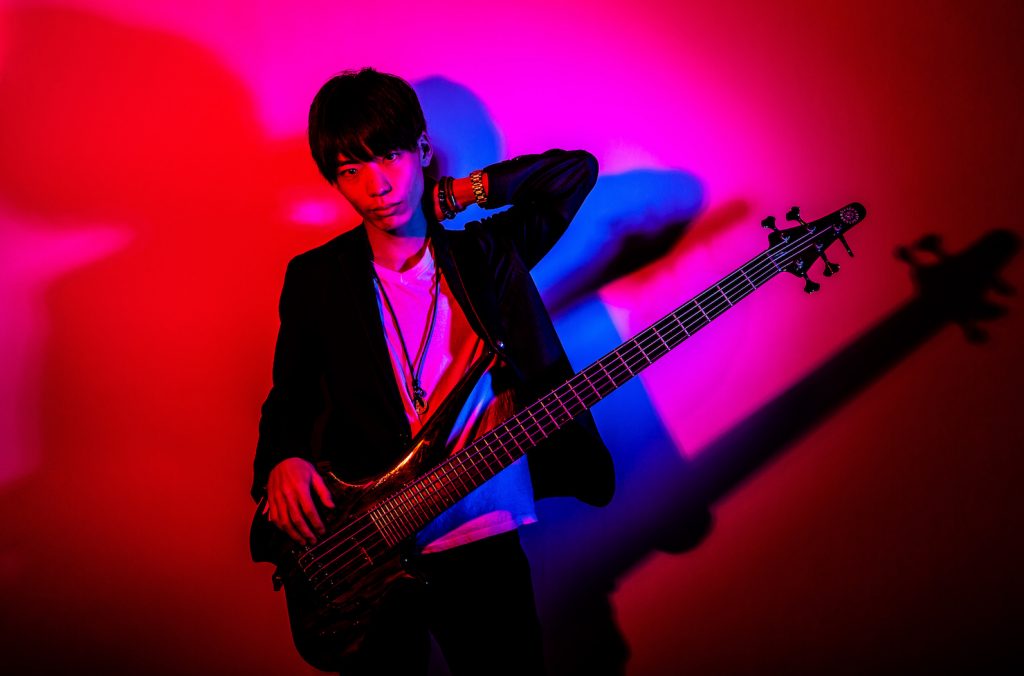
Profile: Born in 1995. A Digital Performer and Ableton Live user. After graduating from music school, he moved from Fukuoka to Tokyo as a composer.
Made his debut as a writer in August 2017, composing and arranging for Tsukicro's "STARDUST".
With the motto "songs that touch the heart", he is a multi-player who handles everything from lyrics and composition to arrangement and recording.
He is also active as the composer and arranger for the art unit "Shiro".
Website: Music Designer momo
Twitter ID: @momo_tanoue
NEW ARTICLES
Latest English Articles