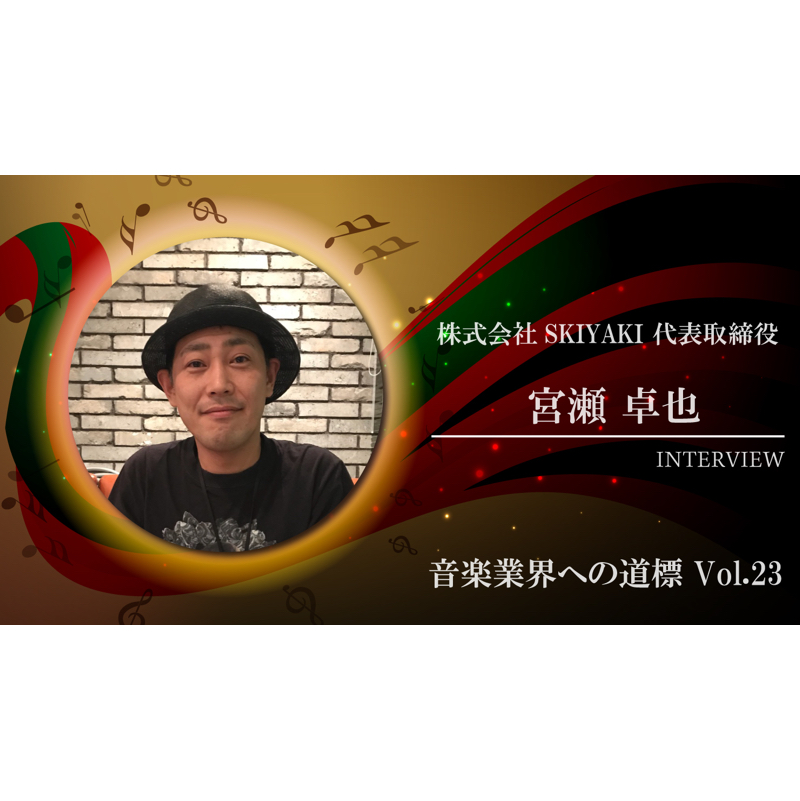
An interview with Takuya Miyase, CEO of SKIYAKI Inc.
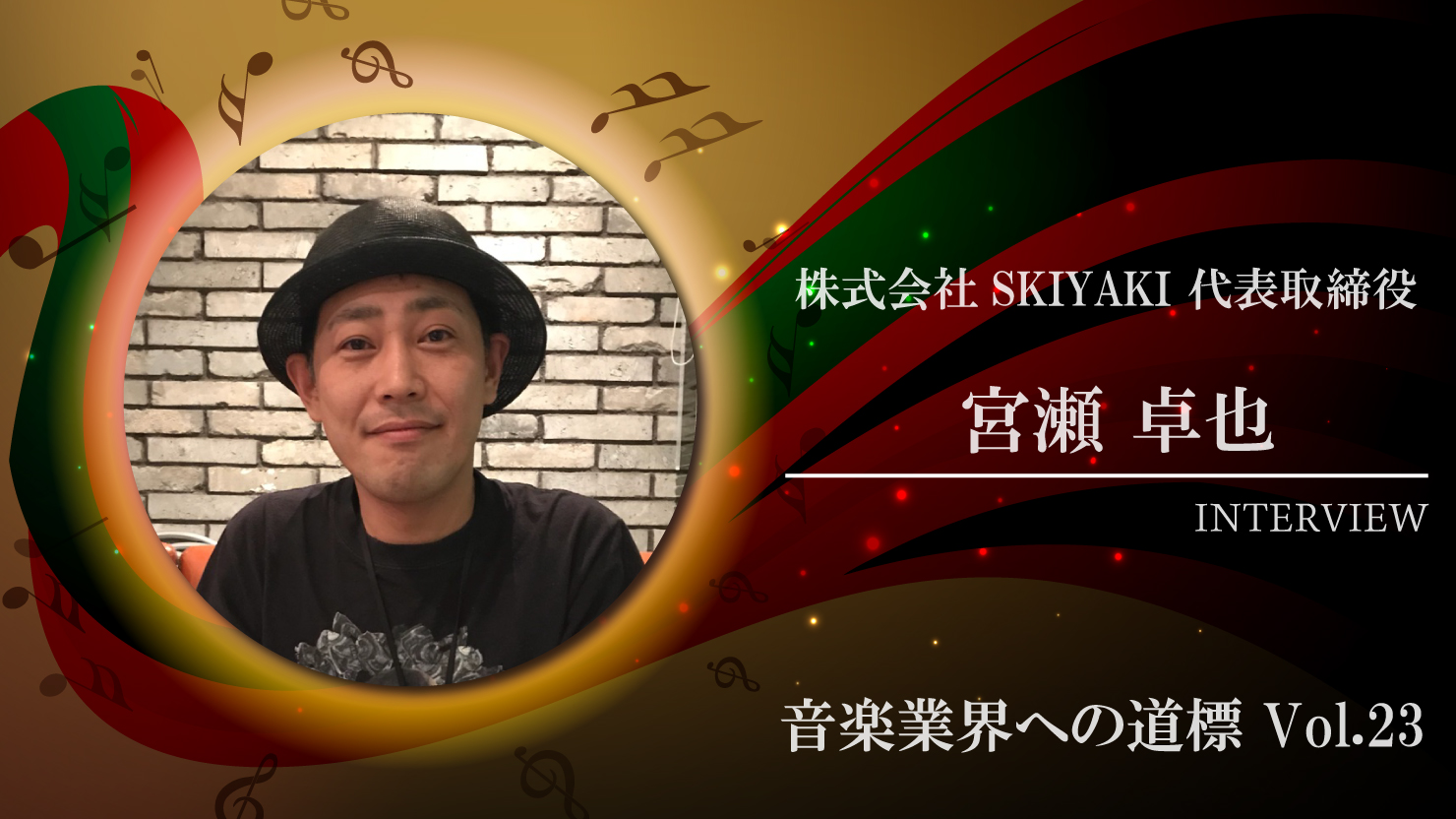
For the 23rd installment of Pathways into the Music Industry, we interviewed Takuya Miyase, CEO of SKIYAKI Inc..
SKIYAKI runs fan clubs and offers a wide range of services including live production and fan tours. We asked how the company sees the future of the music industry.
Please give it a read!
Thank you for this interview. What kind of work are you doing now?
I'm currently the CEO of SKIYAKI Inc.
What path have you followed so far?
After graduating from the School of Science and Engineering at Waseda University, I joined Sony Music.
I'd started playing keyboards around my third year of junior high and was doing DTM from around high school, so I'd vaguely decided, "If I get a job, it'll be in the music industry."
But once I actually joined, the work was a bit different from what I'd imagined, and I also wanted to be an artist, so I quit after 18 months.
After that I started working as a techno musician, but I only earned about 700,000 yen a year. Just when I was thinking I couldn't make a living like this, i-mode came out. For the first time, mobile phones had a browser, and you could even pay online.
So I thought, "If I build a monthly subscription service, this will work!" and founded my first company.
Using music, which I'd always loved, and IT, I created the first mobile artist fan club in Japan.
What were fan clubs like back then?
Most used an annual fee model, where you paid about 5,000 yen each year.
You couldn't pay online either, so it was basically analog, with payments made by postal transfer.
It must have been very hard when you first started an online fan club business.
Yes. At first it was hard because I had to start by explaining how the internet worked.
But as I kept selling like that and we gathered a certain number of clients, inquiries started coming in on their own. I guess everyone began to realize, "Mobile fan clubs make money."
The fan club business of the company I'd launched got on track, and just as I was preparing to aim for a listing on the stock exchange, my child was born. I wanted to focus on raising my child for a while, so I sold the company I'd founded.
After devoting myself to child-rearing for about two years, I founded my current company.
Why "fan clubs"?
How did the idea for the fan club business, both at your previous company and now, come about?
There was an IT boom around 2000, and I was convinced that the next device would definitely be mobile.
It's something you carry with you all the time, so I thought a service there would be a hit.
It seems there would be many other options for internet x music services.
I was struck by the words of Kevin Kelly, the founding executive editor of WIRED: "Anything that can be copied is destined to eventually become free." That stayed with me.
I think music is a history of copying, and as time went on its value kept falling. So I believed that whatever the product, anything that can be copied is ultimately fated to become free.
That's partly why I thought, "We have to change how we earn money," and the first thing I set my sights on was the fan club business.
True, a fan club can't be copied.
The others are live entertainment and merchandise. We call these the "three sacred treasures," and we started by properly building systems for them in the cloud for people in the music industry and artists to use.
At first, a subscription model is simpler and gives stable income, so we started with the fan club business. That's how it went.
So that's the intention behind offering various services today, not just running fan clubs.
Now we've broadened our thinking and run the business under a new, higher-level concept.
We treat the fan club as one channel and also do e-commerce, fan tours and live production. It's what's called an omnichannel strategy.
We then tally up how each fan supports which artist and how much money they've spent, and create a fan ranking. We built a system called bitfan, where top fans can receive perks such as ticket presales.
When Okazaki Taiiku adopted it before, it caused controversy over whether it was right to rank fans.
The concept of ranking fans didn't exist in the world, so from the start we expected criticism from some fans.
But we thought artists would support it, and inquiries have in fact increased considerably.
I believe that as it spreads more and more, it's a system that will definitely be accepted in the future.
And so that anyone can create their own fan club more easily, this July we released a service called bitfan CLUB. We plan to keep evolving it as well.
By registering with bitfan CLUB, artists can focus on making content, and I want to build a system where the fans get excited on their own from there.
At this point, it really feels like the line between major and indie is disappearing.
These days individuals can do everything themselves, from distributing music to getting information out.
The entertainment industry is the same: the model of actors and artists gathering and signing under a big talent agency became possible even for small companies, partly due to the indie boom after 2000.
And now it's an era where it can be done not by companies but by individuals, so we need to provide that kind of infrastructure. That's why we're building a platform where artists and fans gather.
So if people gather there, artists can monetize, and fans can receive perks according to their level of enthusiasm.
Times have changed so that you can be active even without income from recordings.
I think recordings are a promotional tool. If you release a hit song, everyone gets to know you, and fans want to know you more deeply.
To do that, they join the fan club, buy tickets and see live shows. That's where artists can monetize.
From the artist's point of view, are there effective ways to promote your music and get people to know it?
First of all, I'd say getting on stage.
Live houses, of course, but these days lots of festivals are held all over, and the hurdle to performing at them has gotten lower.
Today's music industry is built on live entertainment, so I think it's important to be seen by as many people as possible.
Ways of living and thinking
Listening to you, it seems you move very quickly from thinking of something new to putting it into action.
That's the interesting thing about a corporation: moving as an organization really is faster.
In the sense that you first invest money, hire people and recover the profit from what you create, there's leverage, so you can move projects at overwhelming speed.
Do you ever think about what you'd do if you failed?
There is fear, of course. But it's so much fun that it outweighs that.
Now we've gone beyond music and are handling entertainment in general, such as fan clubs for voice actors and characters, 2.5D stage productions and more.
Is there anything you always make a point of doing?
One is having meals with lots of people. Between the ages of 20 and 35, I had meals with about 3,000 people. Because of my position, it's even more now. I tried to broaden my world as much as possible.
The other is reading.
When I started my company, I was reading about 500 books a year, and when you do that, you gradually start to see patterns.
While reading everything piled up at the front of bookstores, I came to understand what I needed, so I narrowed down the genres and kept absorbing.
How do you think the music industry will change from here?
When AI and robots start doing business, human working hours will decrease and disposable time will keep increasing. Then there'll be no need to work, and I think what humans do will become "playing."
Humans have long chosen ideologies. Religion is an example.
Entertainment is exactly the same: everyone "chooses" the world of an anime or the ideas an artist puts out, and gets hooked.
I think there are many patterns for building a world or a philosophy, but having something like that which others don't have makes you the strongest.
Everyone feels uneasy unless they belong somewhere. I think entertainment becomes a source of reassurance as people search for where they belong, and I think that trend will keep accelerating.
Thank you. Finally, please tell us your vision for the future.
On a personal level, I'd like to work as an artist myself too.
It's something I've always wanted, and it lets me build services from the artist's point of view.
For the company, it's very simple: I want to create the world's first "infrastructure for play."
I want to build services where people who can play with total absorption benefit and make money.
Thank you very much.
Interview and text: momo (Mamoru Tanoue)
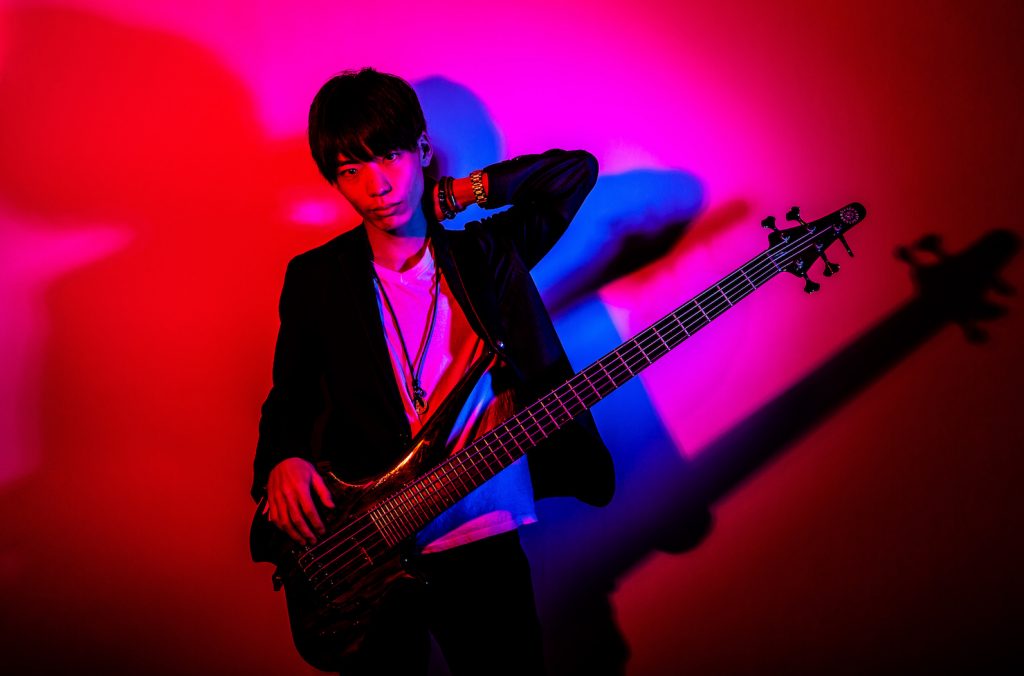
Profile: Born in 1995. A Digital Performer and Ableton Live user. After graduating from music school, moved from Fukuoka to Tokyo as a composer.
Made a debut as a writer in August 2017, composing and arranging for Tsukicro's "STARDUST".
With the motto "songs that touch the heart", a multi-player who handles everything from lyrics and composition to arrangement and recording.
Also active as the composer and arranger for the art unit "Shiro".
Website: Music Designer momo
Twitter ID: @momo_tanoue
NEW ARTICLES
Latest English Articles