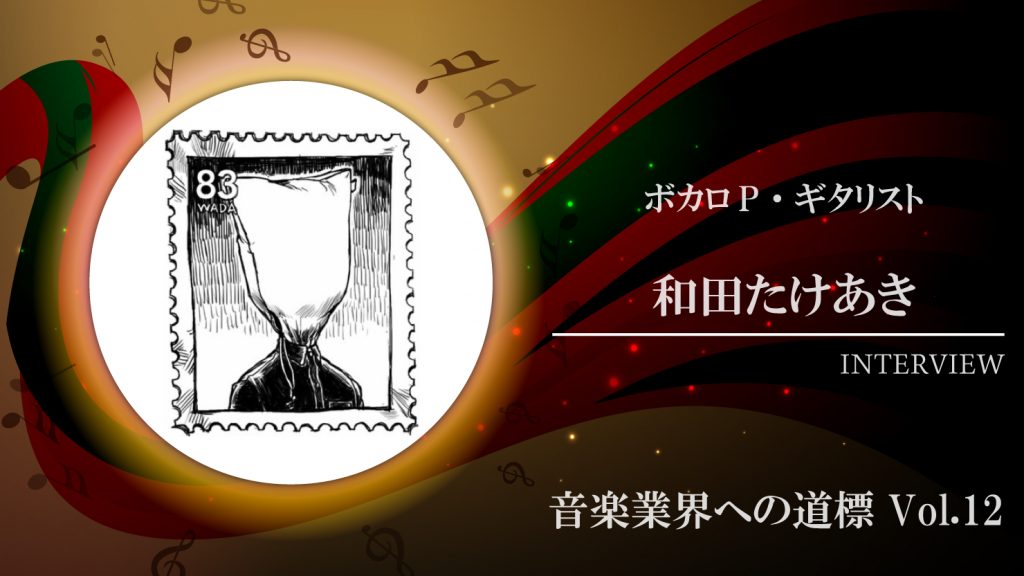
For the 12th installment of Pathways into the Music Industry, we talked with Takeaki Wada (KurageP), who is active as a Vocaloid producer and guitarist. This interview is packed with content, including the path so far and behind-the-scenes production stories of Wada, who keeps creating great, highly addictive songs. Please give it a read!
Takeaki Wada (KurageP) | Profile
Since posting the Vocaloid song "Kurage" using Hatsune Miku on niconico in April 2010, has kept releasing original songs online under the name "KurageP" without ever stopping.
"Chururira Chururira Daddadda!," released in February 2016 in the sixth year of activity, became a big hit. As of May 2018, the song had over 8 million views on YouTube. Besides this song, four others have topped a million views on niconico. One of the front-runners among new-era Vocaloid creators.
Also takes part in live shows and recordings for various artists as a guitarist, such as "Furukawa Honpo" and "Koeda."
First, could you tell us about your current activities?
My main activity is as a Vocaloid producer. Also, as a guitarist, I support artists such as Furukawa Honpo, work as a studio musician, and write songs for others, such as "Now Loading!!!!," the ending theme of the anime "NEW GAME!".
In your main work as a Vocaloid producer, you released your first major album, "Watashi no Miseinen Kansoku," this March.
Yes. When I got the offer, I wanted to release an album with a manga included, so we released it as a major-label album.
How do you feel about releasing on a major label?
Back around 2012, when Vocaloid was at its peak, I dreamed of the majors and tried to raise the quality by commissioning lots of people for the playing and videos, but I also felt the difficulty of working with a large team, given my style.
Now I strongly feel I'd like to keep the team as small as possible and work while controlling various things myself.
Partly for that reason, I currently do everything myself, including making the videos, except for the illustrations.
How songs and videos get made
Please tell us about the gear you use.
I'm on Windows with Cubase as my DAW, and I use different Vocaloid voices depending on the song. I record guitar at home: I play through an amp into a silent cabinet and record it with an AUDIX i5.
For bass, I often layer a synth bass sound made in Massive over a phrase recorded acoustically.
For drums, I mainly use Addictive Drums 2, layering SSD (Steven Slate Drums) on just the kick and snare.
So you often build your sound by stacking.
With live drums too, I often build the sound with triggers, so it's an application of that idea. I like the Addictive Drums sound too, but to bring out individuality I often build the sound by layering various things.
How do you go about composing?
First, I play and sing, and program just the melody into the DAW.
Next, I program the drums and other rhythm instruments almost to the finished level.
So at this point there are no chords yet?
Right. If at this stage I think "This will work!", I then program the Vocaloid. I take that almost to finished quality too.
Then I add guitar, bass and so on to build it up.
What about lyrics and videos?
Lyrics usually come to me while I'm making the song. The video is the same: I have some idea from the start, so I make it while conveying the image for each scene to the illustrator.
What software do you use for making videos?
Adobe After Effects.
What I keep in mind when producing
Your work has a unique kind of "poison": the songs are incredibly addictive, and the videos convey emotion directly precisely because they're simple. Is there anything you keep in mind when producing?
With the music, I focus on music the listener can enjoy rather than songs I like. With the videos too, I strongly want to strip away anything unnecessary and keep them simple.
So you produce strategically.
As I kept making Vocaloid songs, I used up all the music I personally liked, and when I thought "What should I do next?", I realized I'd never released a work made with the listener strongly in mind. That's how I made "Watashi no R" and "Chururira Chururira Daddadda!"
"Chururira Chururira Daddadda!" was your first song to pass a million views, wasn't it?
This song was a turning point in many ways, including as a Vocaloid producer. I thought a lot about how to get it heard by younger listeners, in addition to people who already liked Yuzuki Yukari.
This song is especially addictive.
During the Vocaloid boom there were lots of songs like this, but by the time I released it, they weren't popular. So I thought, "This seat's open," and deliberately made it in this style.
Some people resist the idea of "making work strategically." What do you think about that?
In my case, making things strategically stripped away the unnecessary parts and let me express what I really wanted to say. It was a new discovery that, rather than building up through "I like this kind of song, so I'll make it like this," getting rid of self-satisfaction and cutting things away by subtraction brought out the raw part of me.
What kind of image do you have in mind when making videos?
These days I don't think quality of "just the song" or "just the video" is enough, so I aim for a relationship where each properly reinforces the other.
For example, expressing in the video what I didn't put in the lyrics; I think it's completely fine for the video and music to be doing different things.
From band member to Vocaloid producer
When did you originally start music?
When I got an acoustic guitar in junior high. But I stumbled on the F chord and actually couldn't play it well for almost a year.
Then I heard "the string tension is lower on an electric," so I bought an electric guitar. That's when I really started playing.
After that, while also joining adult bands, in high school I joined a classmate's three-piece band as lead guitarist.
After I went to university, that band signed with a local agency, and I kept up band activities while attending university.
Were you very active back then?
Yes. We toured nationally and released CDs; back then we were aiming for a major debut.
Around that time, I bought a Zoom H4 handheld recorder to record our playing in the studio, and it came with Cubase LE. I started fiddling with it wondering "What's this?", and that's how I got into DTM.
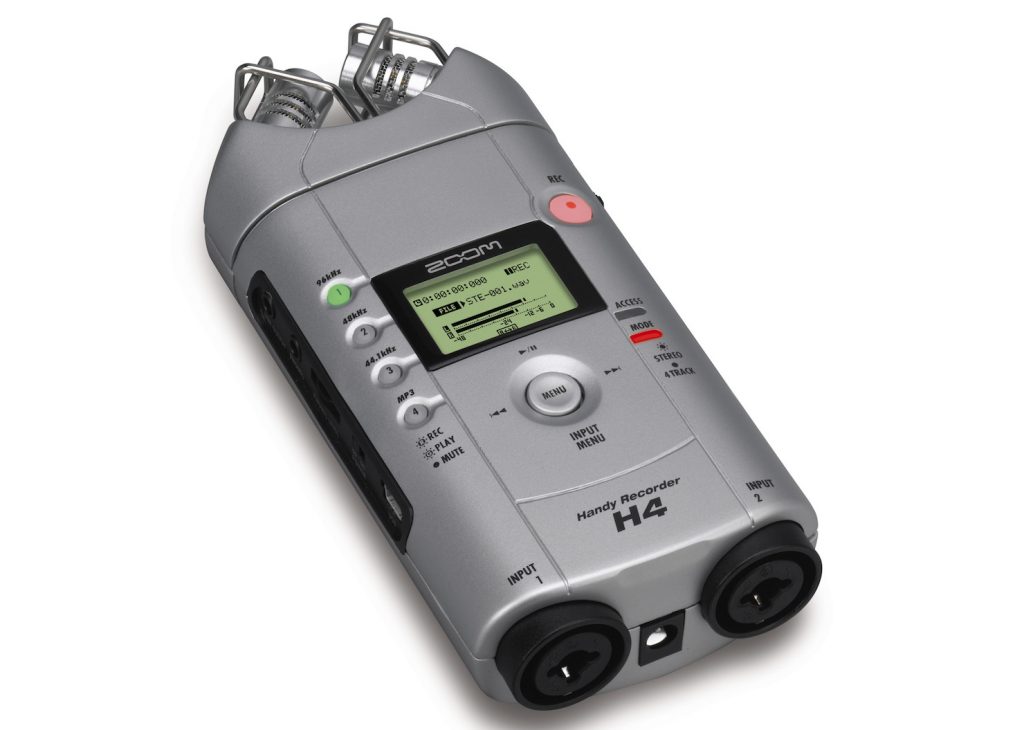
It was the transition period from MTRs to DAWs, so I'd re-record live drums recorded on an MTR into the H4 two channels at a time, bring them into Cubase and mix them with the included plug-ins, things like that.
That's a struggle unique to a transition period...
Right. Later, two of the band members chose to get jobs, and the vocalist and I moved from our hometown to Tokyo.
Weren't you anxious or hesitant?
Music is all I can do, and my desire to leave my hometown was stronger. I moved to Tokyo to keep making music.
After moving to Tokyo, did you do any music work besides the band?
I loved the guitarist Susumu Nishikawa, and when I found out Nishikawa was looking for a roadie, I applied and got to work at all kinds of jobs.
I also worked as a studio musician on guitar.
How did you become a studio musician?
We entered a contest a band member found back then and made it to the final selection. A judge took a liking to us, which led to me playing in the backing band for Natsu Kai, and from there work gradually increased. The experience I gained at Nishikawa's jobs came in handy too.
So that can happen. How did you encounter Vocaloid?
When I first moved to Tokyo, I really had no money and couldn't afford CDs. So the only place to discover new music was the internet. That's where I found Vocaloid music and came to love it.
I bought Vocaloid after that, but it was hard to operate and I gave up once.
I see.
But one day, one of Nishikawa's jobs happened to be the recording of supercell's "Kimi no Shiranai Monogatari." That's when I first met ryo too.
What a coincidence.
Two things I loved that had been in completely different directions suddenly connected. Right after that, I saw Nishikawa playing supercell's songs at "Miku Fes '09," and I thought, "I just have to do this."
I dug out the Vocaloid software I'd put away, arranged a song I'd written for the band as a Vocaloid song and released it. That was my first post, "Kurage," the song that gave me the name "KurageP."
Tips for keeping doing what you love
So "KurageP" was born from many encounters and coincidences piling up.
Yes. After that I released a song every two or three months, but the view counts just wouldn't grow, and it was a struggle.
From your first post in 2010 until now must not have been a short time.
Even when Vocaloid was at its peak, my view counts didn't grow much, and I did feel frustrated.
What let you keep going without breaking?
I think it's because I was doing all kinds of things besides Vocaloid. Even if my Vocaloid work failed, my music career itself wouldn't disappear, so I could keep going without getting too tense.
So it's because you had lots of weapons?
In my case I had the skills of "being able to play guitar" and "being able to write songs." There's surprisingly a lot you can do with those, right? By avoiding a situation where "if I lose this, everything's over," I think you can work in a relaxed way and keep going for a long time.
For those putting out their own work
What do you think is important when working in a "self-releasing" style like yours?
First, I think quality doesn't matter that much for this kind of thing. I think it's important to drop that kind of ego and then think about your style of activity and what kind of work to release.
And above all, "keep going".
Around me too, people who never stopped have succeeded in some way. For example, even if you want to be a composer, if all you do is keep entering competitions, then if you break at some point, you have nothing left.
To survive, you do all kinds of things within your capabilities and keep going. I think it's important to act while thinking about "how can I keep going."
Finally, please tell us your goals going forward.
I plan to do more and more live shows.
I think music will increasingly stop being a "product," and rather than works, it's "people who can make others love them as human beings" who will survive.
I want to do things that make people like the "person inside" more and more.
Thank you very much.
About the author
Interview and text: momo (Mamoru Tanoue)
Born in 1995. A Digital Performer and Ableton Live user. After graduating from music school, moved from Fukuoka to Tokyo as a composer.
Made a debut as a writer in August 2017, composing and arranging for Tsukicro's "STARDUST".
With the motto "songs that touch the heart", a multi-player who handles everything from lyrics and composition to arrangement and recording.
Also active as the composer and arranger for the art unit "Shiro".
Twitter ID: @momo_tanoue
Shiro: YouTube channel
NEW ARTICLES
Latest English Articles