An interview with VJ and filmmaker Routes
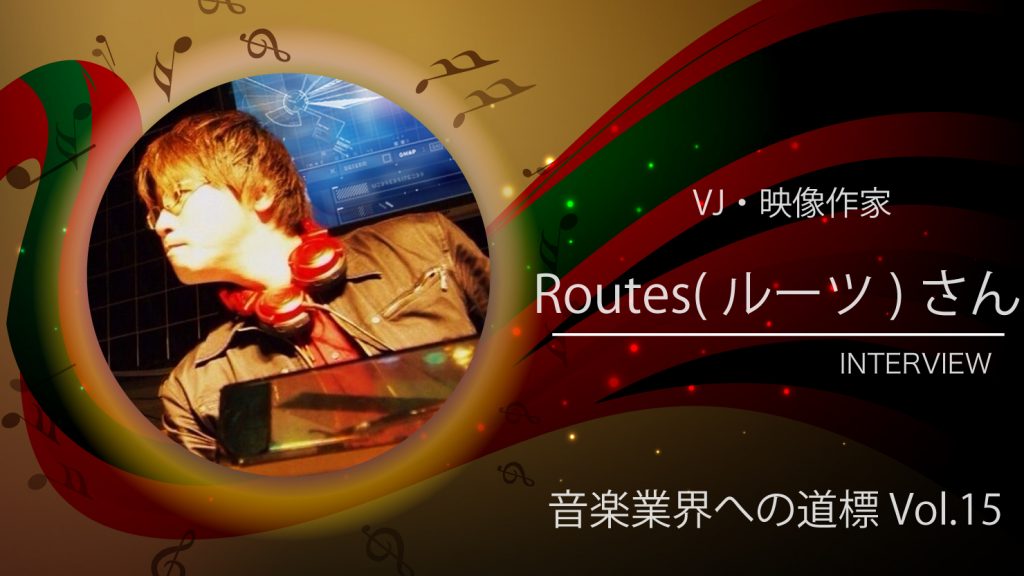
Routes | Profile
Born in 1973. Believes in a VJ style that brings in the sense of storytelling from the main job of filmmaking. In 1999, founded "WayWest Productions" in New York with filmmakers from various countries. Active as a visual creator and stage director regardless of format, film or digital.
Directed works have been screened in Japan and abroad, and organizes "Kinematronica Collection," a showcase of film and digital cinema.
Began VJing at the end of 2011. Besides playing at official anime events and rock festivals, also produces concert visuals, documentaries, music videos and more.
For the 15th installment of Pathways into the Music Industry, we interviewed Routes, who is active as a VJ at all kinds of venues, from live houses to Makuhari Messe!
Now that "visuals × music" is booming, we heard lots of stories from a perspective a little different from music creators, so please give it a read.
Routes and VJing
Thank you for taking the time to talk with us despite your busy schedule. You VJ at all kinds of events, but what exactly is a VJ?
VJ is short for "video jockey" and refers to people who create and play visuals to go with music.
Depending on the event, sometimes I deliver fully finished visuals, and sometimes I create visuals on the spot, adapting to the music the DJ plays.
What led you to get involved in VJing?
I'd originally focused on filmmaking, but a band member I knew told me about anime song club events, and that's how I got into the world of VJing.
It's interesting that it came from someone in a band.
After going to a few of those events for fun, at one event I was invited, "Would you like to try VJing?" When I actually tried it, I'd always liked anime, and I found it fun in a different way from filmmaking.
I still often team up and work with KITUNE, a senior VJ I met back then.
So you weren't aiming to be a VJ from the start.
No. I originally wanted to get into the film industry, so in 1994 I went to the US and entered Fort Lewis College in Colorado. There I studied screenwriting and theater, and then went on to the New York Film Academy.
So you studied filmmaking abroad. You're from Tokyo, so that must have been a decision that took a lot of courage.
Yes. But since I was a kid I'd loved watching American films, and among them I especially liked work by New York filmmakers.
When I actually went, New York really was a place that stimulates creative people, so just being in the city was fun.
Though if my favorite filmmakers had all been from Tokyo, I probably wouldn't have gone to the US.
So it was the result of following what you love.
At the New York Film Academy I studied with people in their 30s and 40s, older than me and of all kinds of nationalities, and I was fortunate enough to win an award at a local international film festival.
After that you returned to Japan, and now you're active as a VJ in all kinds of settings, from live houses to Makuhari Messe. How many events do you handle a month?
Including club events, about 10 a month, I'd say. On other days I'm usually making visuals at home.
I've worked at all kinds of anime-related events for companies such as Pony Canyon, Bandai Namco Amusement and Avex Entertainment.
From your perspective, how have anime songs changed compared with before?
I feel they've become a genre that goes beyond the frame of anime. Of course you can enjoy them together with the visuals, but listening to the songs alone also reveals new sides, so I think they can now be enjoyed from many angles.
So when I make visuals, besides cutting together anime footage, I sometimes create mood visuals with motion graphics and the like, focusing on "what images come to mind when you listen to the song on its own."
Maaya Uchida 2nd LIVE "Smiling Spiral" digest PV
(VJ)
What a VJ does and thinks about
Is there anything you keep in mind when VJing at events?
I'm always conscious of "what and who is the star."
It's different if it's my own film, but at an artist's event, for example, the artist themself is the star, right?
If the visuals stand out in a bad way or clash with the lighting, I sometimes rework finished visuals on the day.
I see. How do you go about making stage visuals?
I decide the overall image and direction in discussions with the producer, A&R and so on. After that they often leave it to me, so I make it while taking into account the lyrics and so on.
This is a little away from VJing, but do you make music videos the same way?
Here too, I discuss thoroughly what direction to take, including the artist's wishes.
Adding visuals fixes the image of the music to some extent, for better or worse. So I'm even more careful, and it varies: sometimes conveying it simply with live footage, sometimes deliberately making visuals with abstract imagery.
The other day I directed a music video for voice actor Hibiku Yamamura. Under the themes of "expressing Yamamura's many sides, including artist activities" and "expressing the space between work and daily life," I worked in all kinds of situations and put a lot of ingenuity into it.
"Love Magic ~The Magic That Makes the Me Who Can't Be Honest Super Cute~" MV
You handle all kinds of work. Where do you think your strengths lie?
There are probably lots of people better at making visuals than me. The reason I'm still able to get work is that I make a point of clearly understanding "my own characteristics."
In my case, my strength is "structuring": making visuals while making the most of the material and thinking with a wide view, and that's what I've been valued for in actual work too.
By clearly identifying what you're good at, developing it and turning it into a weapon, I think more people will come to know your appeal.
Fooling yourself well
Did you feel any resistance to moving from the world of film to the world of VJing?
As the Japanese film industry and visual expression itself were changing and diversifying at a dizzying pace, I encountered VJing as a new technique of expression.
Thanks to that, I had more opportunities to try forms of expression I'd never thought of, and I was able to make good use of what I'd built up studying film.
So there was new stimulation, or rather, discovery.
Everyone at the top of their field says this, but the most important thing really is to keep going, and more than that, "controlling yourself so you can keep going".
In film, for example, I think one method is to start from the outward form and fool yourself well, such as using a clapperboard (see image below) when shooting or buying the best gear you can.
Also, I mentioned earlier winning an award in New York, and just hearing "New York" somehow sounds impressive, right? Setting aside how impressive it actually is, it becomes a success experience for me, and it has impact externally, which can be effective.
I think this way of thinking "in order to keep going" is common to anyone doing creative work, whether visuals or music.
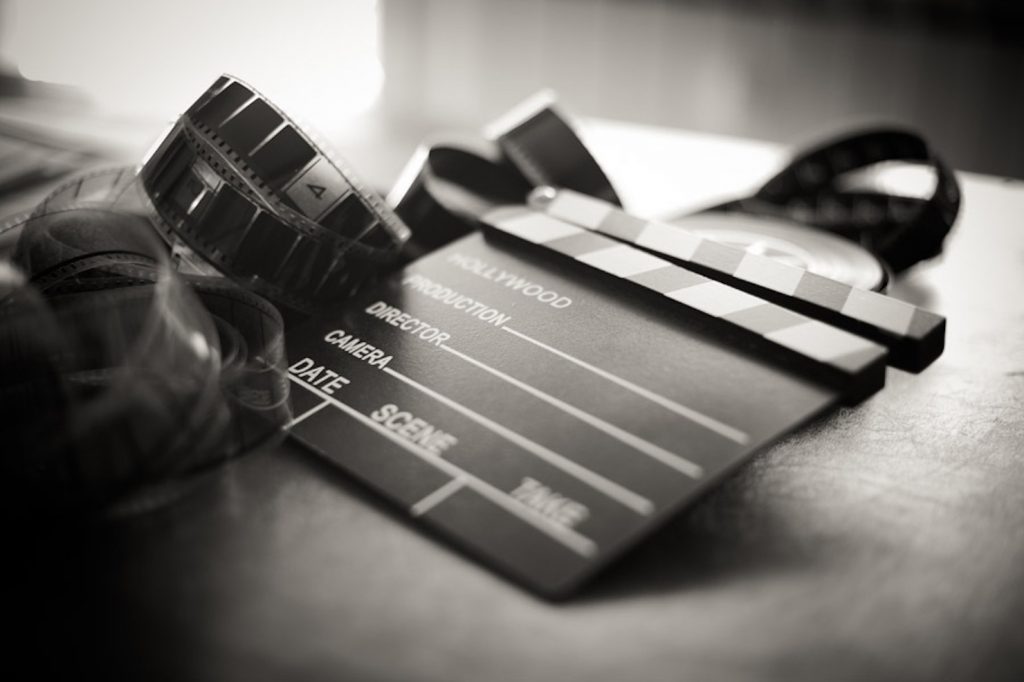
Controlling yourself is difficult, but that's exactly why it's important.
I think the people who do it well are the ones actually active now. Success is just one milestone, so it's good to focus on "how to maintain it."
You've been involved in filmmaking for a long time. Do you have any other "tips for keeping going"?
I try to always get stimulation. I always check out excellent work in my field, and I actively watch films and listen to music.
It's also important to try to absorb knowledge from a wide range of fields, not just what I do. That experience can come in handy in unexpected places.
So you value input.
A filmmaker I know said, "If you don't watch more than 300 films a year, you're not qualified to talk about film," and I was convinced; I could relate to it.
I think it's less "actually watch that many!" and more "watch with that kind of spirit," but I really think repeating input and output is the best way.
"Expressing" means "making some kind of impact on people," so that's exactly why we should always actively take in things that surprise us.
For those who want to try VJing
Most readers of this article are involved in music production, but if someone wanted to try VJing, what should they start with?
I think the best thing is to go to actual events first. It's probably good to try talking to the DJs and VJs there.
There are few VJs and they're often in short supply, so I think you'll be welcomed. Everyone should be really nice to you. (laughs)
What gear do you recommend starting with?
First, a computer with the highest specs you can get. Making visuals inevitably puts a heavy load on it...
As for software, I think many people use VIRTUAL DJ when syncing pre-made visuals precisely to the sound,
and Resolume or VDMX when mixing visual material in real time.
For VJing I use GrandVJ, and for making visuals I use Adobe's After Effects and Premiere.
Thank you. Finally, may I ask about your goals going forward?
"Music × visuals" is becoming more and more a given, so I want to pursue how far I can combine the "two" into "one" great thing.
I'd also like to work so that VJing as a profession becomes much more familiar to all kinds of people.
Thank you very much.
Interview and text: momo (Mamoru Tanoue)
Profile: Born in 1995. A Digital Performer and Ableton Live user. After graduating from music school, moved from Fukuoka to Tokyo as a composer.
Made a debut as a writer in August 2017, composing and arranging for Tsukicro's "STARDUST".
With the motto "songs that touch the heart", a multi-player who handles everything from lyrics and composition to arrangement and recording.
Also active as the composer and arranger for the art unit "Shiro".
Twitter ID: @momo_tanoue
Shiro: YouTube channel
NEW ARTICLES
Latest English Articles