An interview with Shunsuke Nakamura of Shikumi Design Inc.
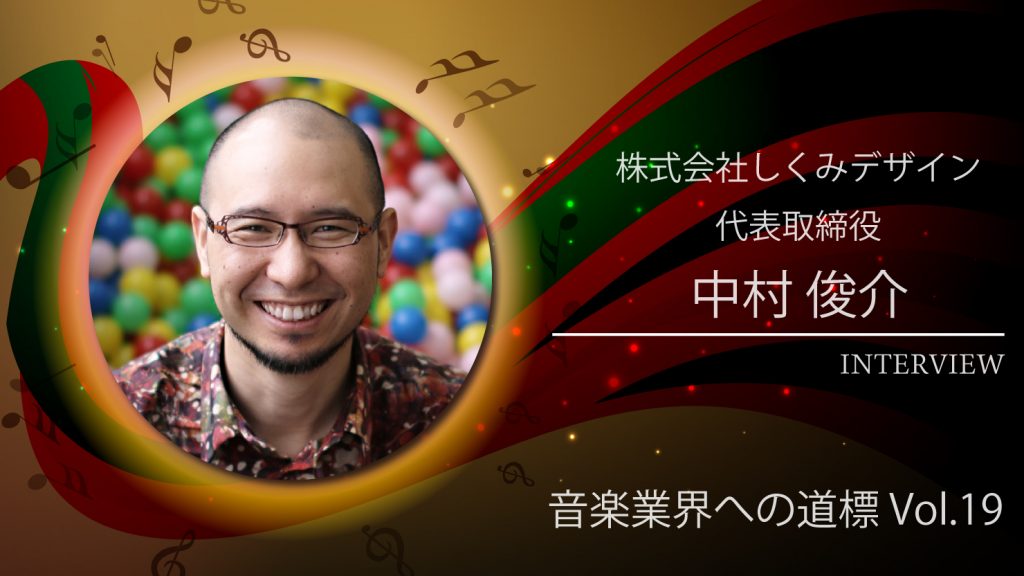
For the 19th installment of Pathways into the Music Industry, we talked with Shunsuke Nakamura of Shikumi Design Inc., which develops and designs "KAGURA," the new-generation instrument we introduced before. We heard lots of fascinating stories, including the behind-the-scenes story of the product's development and how music will change from here, so please give it a read!
I made it because I couldn't play an instrument
Thank you for taking the time today despite your busy schedule. What kind of work do you do at Shikumi Design Inc.?
I've been CEO since founding the company. In the early days after launching it, I also developed systems, but now we have excellent engineers, so I leave that to them.
What kinds of products have you released?
Starting with "KAGURA," an instrument app using AR technology that Sleepfreaks introduced before, we also develop "Springin'," a visual programming app that runs on iOS. With Springin', you can make the apps you want without writing code. Of course it can handle sound too, so you can also make simple instruments and artworks using sound.
It's been 13 years since Shikumi Design was founded, so we have several products of our own, but the largest part is B-to-B work: we take commissions to make advertising for clients, stage effects for artists' concerts, and provide spaces where people can play by creating visuals and sound in real time.
*What is B-to-B?*
Short for business-to-business: commercial transactions between companies, such as between manufacturers and wholesalers or between wholesalers and retailers.
So while releasing your own products, you use those products themselves to offer various services. How long has it been since you developed KAGURA?
The first version was something I made as a student, so it's been about 15 years now.
Back then KAGURA was different from now, more like media art. The foundation, processing images, projecting visuals and changing the sound to match movement, is the same as now, but at the time it was a system where people performed visuals and sounds prepared by the system.
So it's been in development that long. Did you originally play any instruments?
No, I can't play an instrument at all.
I had quite a complex about it. I even bought a guitar and practiced, but it was hopeless.
So I thought, "I'll make an instrument even I can play," and that's what started the development. For me, that was easier. Normally I think practicing is the right thing to do, though. (laughs)
That's not a shift in thinking many people could make... Did you study programming professionally as a student?
No, my specialty was design. When I was at university in Nagoya I studied architectural design, but I'd also been programming as a hobby since I was a kid. So as a student I also had a part-time job developing CAD software.
After graduating from university, I spent a year preparing to retake graduate school entrance exams, then entered the graduate school of Kyushu Institute of Design (now the Faculty of Design at Kyushu University), and from there I started making all sorts of things.
I see. That's why KAGURA is so visually refined, with such a polished design and interface.
To begin with, Shikumi Design didn't start as a systems development company. Rather than wanting to develop products, we use technology as "a means of creating new experiences", I'd say. But we needed technology to create the new experiences we wanted to realize, so we had engineers among our members from the start. And that engineer is still developing KAGURA today.
We always put entertainment value first.
What meaning is behind the name KAGURA?
Originally it was named "Kagura" in kanji.
This gets into Japanese mythology, but kagura originates from the boisterous festivities held to coax Amaterasu out of the heavenly rock cave. In Japanese mythology it's the very first song, dance and entertainment. I took the name from that, wanting to create a kagura of technology.
That's wonderful. When I first saw it, I thought it might be a name chosen with overseas expansion in mind.
When I first made it, I thought of it only as my own work, so I wasn't thinking about using it to go global.
When it was time to release the product, I agonized over whether to change the name. Searching for it turned up other things, and the system we'd been using in B-to-B work was also called "Kagura" in kanji.
But given the nature of this product, I thought it might be more popular overseas than in Japan, and in that case I wanted to convey that it came "from Japan." Toyota and Honda are also three syllables, and kagura itself has no strange meaning, so we decided to name it "KAGURA" and keep using it.
From art to tool
KAGURA has been in development since 15 years ago, but it was actually released as a product about two years ago. How did that come about?
When we started the company, we used KAGURA not as an instrument but as an interface, mainly built into B-to-B products as a system. Digital signage on the street with a camera attached, where moving your body in front of it triggers effects that match your movement, is common now, but Shikumi Design was the first to use that in advertising. And the system at its base is KAGURA.
The turning point was in 2014, when Intel announced a 3D camera called RealSense and told us they'd be holding a contest for applications using it. At the time it was still called PerC rather than RealSense.
When I developed KAGURA, it was just me, but now we have excellent engineers and designers. So I thought that if we kept the original concept and properly used the latest technology and trends, we could definitely make something good. So we rebuilt it and entered the contest.
And we won the grand prize. When it was first developed, people said, "It's interesting, but I don't really get it," but now it was being recognized like this, and we thought, "This will work." Then it would be a waste not to release it! So from there we continued developing it toward a product, received support through crowdfunding, and started selling the product version in March 2017.
Hearing that, I even get the impression that "the times caught up with KAGURA."
Around 2000, when KAGURA was developed, it was normal for PCs not to have built-in cameras, and webcams were low-performance. On top of that, the culture of selling software online hadn't taken root.
The field of "music × visuals" was developing rapidly at the time, so the big thing was feeling that we could do it now!
When redeveloping it as a new product, what did you focus on most?
Moving KAGURA from art to a tool.
KAGURA started as art when it was developed, so the system created everything from the sound sets to the visuals. But I felt the limits of performers just performing what had been prepared. I thought it was meaningless unless we turned it into a "tool" that let users, artists and players build and perform however they liked. No matter how hard I worked, it wouldn't spread. That's why, when I founded the company, I decided to stop being an artist.
That must have been a big decision.
If we create the ground from which artists using KAGURA emerge, amazing artists might be born somewhere we don't even know about. I realized that I wanted to do design, not art.
Still, rather than simply solving someone's problem, I continue to want new experiences to come out of the tool, and for ideas and art to come out of those. The company name "Shikumi Design" (shikumi means "mechanism") was chosen from that feeling.
That's why it changed into a system you can customize yourself. I've actually used it too, and I find the design very polished and easy to use.
There was no software to use as a reference, so the design was very hard. It took its current form thanks to people who could properly design and develop.
We make it in an organization that isn't very large, and over more than ten years of continuously making all kinds of works for clients, we've built up a sense of "if we make this kind of thing, this is the reaction we'll get," so we create while thinking about how to incorporate both business thinking and what we want to do.
How will KAGURA evolve from here?
Most recently, the July update greatly strengthened the visual elements. We also made updates from a creator's perspective, such as making it easier to work with external DAWs and changing the UI based on feedback from artists. We'll keep doing that.
And on a bigger scale, I want to make KAGURA a culture. Right now, when people see someone playing KAGURA, they think, "What is that person doing?" so you have to start by explaining, "KAGURA is this kind of instrument..." There's also a concern that if you play it too cleanly, people will think, "Isn't that just miming?"
I think we need to create a situation where KAGURA has spread much more and "using KAGURA is a given," so I want to make KAGURA an instrument everyone knows, as much as the piano or guitar.
What are you doing toward that?
First is making sure "professionals can properly use it." It was used at a Soutaiseiriron concert, and I think that when professional artists play cool performances with KAGURA, a next wave of people who admire that and start KAGURA will emerge.
To that end, we're currently focusing on its role as an extension of the DAW, such as integration with Ableton Live.
That's certainly something DAWs don't have.
DAWs are better at music production functions, so I'd like people to use them for that and use KAGURA to express the visual and performance elements DAWs don't have.
That really expands the possibilities for professional creators.
The other direction we're aiming for is to make KAGURA much more accessible.
It was originally made because "I can't play an instrument," so I want it to be a tool that lots of people can use to express themselves casually. Eventually I'd like to release a mobile version too.
We're developing it so that we can achieve both: packing in features for professionals, and making it easy enough that people who thought they could never perform can play it.
As DAW users, we're curious whether KAGURA will be released as a VST or AU.
There's no concrete project yet, but we are thinking about it.
But whether we make it "so plug-ins can be loaded into KAGURA" or "so KAGURA can be loaded as a plug-in" will depend on how KAGURA spreads from here.
We have to decide carefully what to do and when, so I think we'll decide while watching how things go.
From July to the end of August, the KAGURA Artist Development Project is starting. What is its aim?
We plan to keep having all kinds of artists use KAGURA, but when famous artists use it, attention inevitably goes to the artist. That's important too, of course, but I really want people to create expression that's only possible with KAGURA. It's quite a distinctive tool, so there must be expression that's only possible with it.
The possibilities are endless, like connecting KAGURAs so several people line up in front of computers and perform, or expressing yourself as a unit of a creator and a performer.
We decided to hold the contest hoping to produce artists who emerge from KAGURA that way.
The future of music and visuals
From your perspective, what kind of relationship will music and visuals have from now on?
They're really becoming inseparable. Artists have more and more to do, which I think is really tough. From here on, visual elements will definitely come into music too.
It's become normal to watch music as video on streaming services like YouTube and SHOWROOM, so I think music will no longer be something only to listen to.
Also, just as "sounds that can only be made digitally" appeared with synths, I think "sounds that can only be expressed together with visuals" will definitely appear too.
On its own it wouldn't move you at all, but seeing the visuals and hearing the sound at the same time would. I mean that as something different from film, not driven by a story but truly as visual information.
In VR and AR too, which will keep evolving, sound and visuals go together, so I think they'll increasingly blend into each other.
Are there any services or systems you're paying attention to now?
Actually, I'm not that keen on using cutting-edge technology for its own sake. Ideas are endless, but when trying to realize an idea, I think, "What can I do with what exists now?" If anything, technology follows afterward.
With KAGURA, for example, it started from "I can't play an instrument, so I'll make one," and the technology I could use to make that happen was cameras and image processing. Then webcam performance and PC specs evolved beyond comparison with when we started developing it, which made it possible to turn it into a product. In other words, KAGURA was able to shift from art to a tool.
Ideally I'd like KAGURA to merge with real space too, but that's not possible with current technology, so for now it stays inside the screen.
I see. So rather than using technology to generate ideas, the order is solving an existing idea with technology. Finally, please tell us your goals going forward.
Above all, I want to create a new culture.
It's probably the same with music, but when you make something, you make it thinking about someone being happy. But I think the person who has the most fun is me, thinking through all sorts of things while making it.
How can everyone experience that joy of making? I'm always thinking about how people who've never made a work before can become "makers."
In that sense the clearest example is KAGURA, but KAGURA still has parts that are hard to play unless you're someone who makes music seriously, so I'd like to evolve it so you can express yourself more easily, while still leaving some walls you can only get over with effort.
Thank you very much.
Interview and text: momo (Mamoru Tanoue)
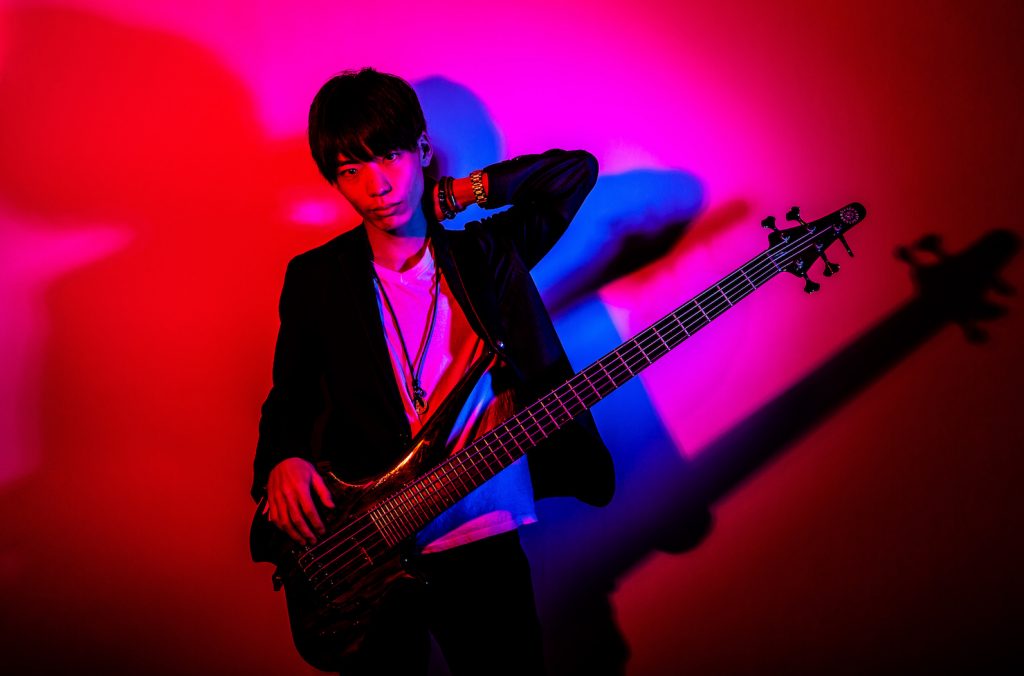
Profile: Born in 1995. A Digital Performer and Ableton Live user. After graduating from music school, moved from Fukuoka to Tokyo as a composer.
Made a debut as a writer in August 2017, composing and arranging for Tsukicro's "STARDUST".
With the motto "songs that touch the heart", a multi-player who handles everything from lyrics and composition to arrangement and recording.
Also active as the composer and arranger for the art unit "Shiro".
Website: Music Designer momo
Twitter ID: @momo_tanoue
NEW ARTICLES
Latest English Articles