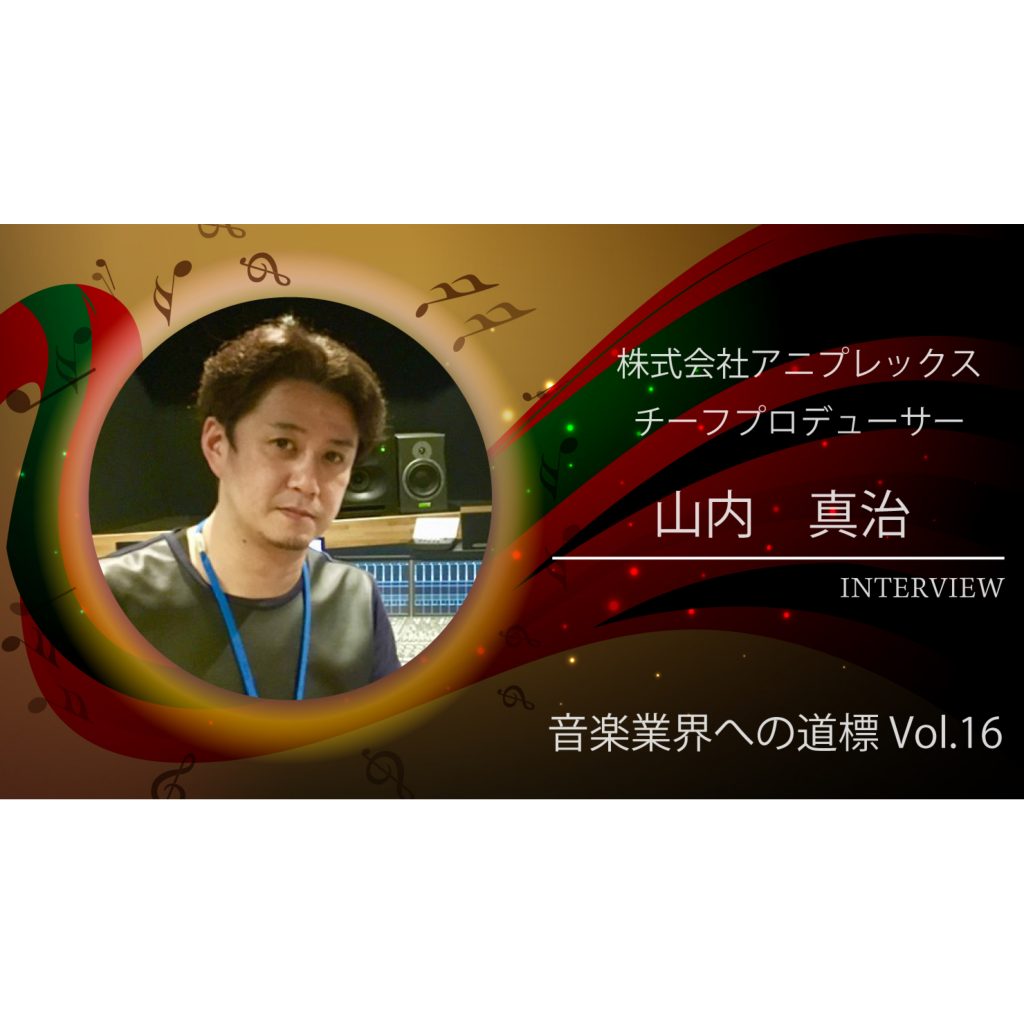
An interview with Masaharu Yamanouchi of Aniplex
For the 16th installment of Pathways into the Music Industry, we talked with Masaharu Yamanouchi, who has produced many works at Aniplex.
Yamanouchi has spent many years on the front lines of the Japanese music industry, especially anime songs. From how to develop artists to the current state of overseas expansion, this interview is packed with stories you can't hear anywhere else. Please give it a read!
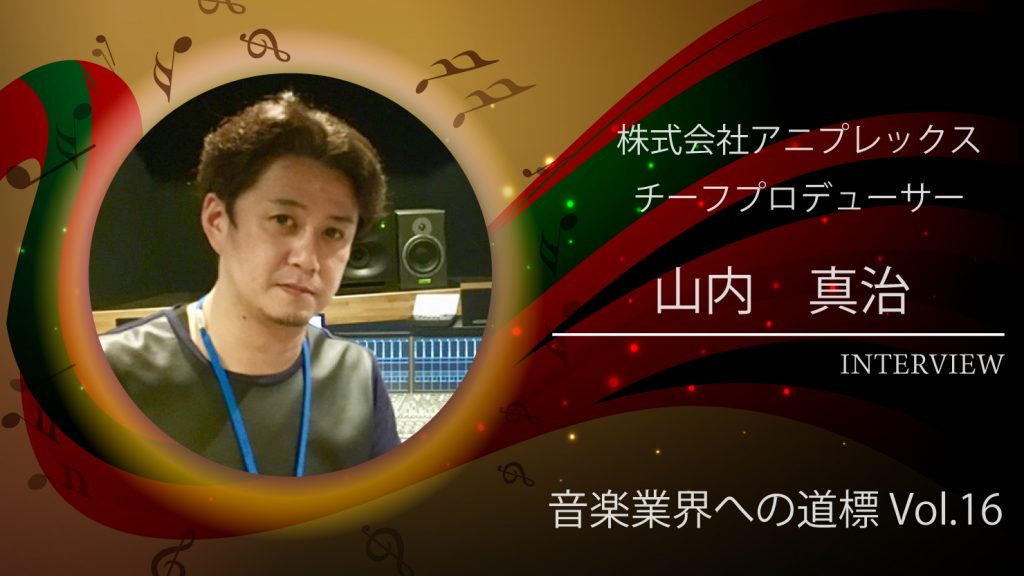
Thank you for agreeing to this interview despite your busy schedule. First, could you tell us about your current work?
At Aniplex Inc., I work as a music producer, producing anime and game music every day.
Our business is wide-ranging, with sections for anime and game production and promotion, operations, international and domestic licensing, merchandising, e-commerce and so on. I'm in charge of the music production section while also working hands-on.
We produce in-house and also work with companies that represent all kinds of creators, and we produce about 500 songs a year.
We do all the final quality checks at the output stage for the works produced that way.
How did you come to do your current work?
In 1993 I joined Sony Records at Sony Music Entertainment (SME below) straight out of university and did promotion work for about five years. After that I handled various artists as an A&R, and from 2010 I became fully involved in producing anime music at Aniplex.
What originally made you want to join SME?
As a student I was in an original band the whole time. Back then was the heyday of Ikaten (Yuji Miyake's Ikasu Band Tengoku), and roughly speaking, bands that didn't appear on it either had talent but refused on principle, or were just stuck going nowhere. Our band was the stuck kind. Even so, people from record labels came to see our shows, but once everyone got to university, their ways of thinking started to drift apart. We were aiming to go pro, but the disagreements among the members gradually wore away our passion for the band, and it more or less faded out of existence.
But I really wanted to be involved in making music, so I thought, "Is there a way to get to the other side of the booth?" and took the entrance exams for record labels and production companies. I got a job offer from a certain production company, but I couldn't graduate from university, so after another year of job hunting I got into SME and was able to join.
So you were originally in a band. You did promotion after joining SME. What do you start with?
I started out in charge of print media. The job was taking artists' song materials to mid-sized music magazines and school-grade magazines to promote them.
The next year I handled radio promotion, and after that I did area promotion in the Tohoku region, gaining all kinds of experience.
You joined wanting to "be involved in production," yet did promotion work for five years. Didn't you build up frustration that "this isn't what I want to do"?
It's true that I originally wanted to be a director, but if I'd become one from the start, I think I wouldn't have been able to do anything in the end. What I realized from doing promotion was this: "if I hadn't known this work, even if I'd made music, it would have been nothing but self-indulgence." That's what I learned.
Especially when I was doing promotion as an area promotion man, everyone in charge of any artist relied on me for my area, from booking media to promotional planning, so I felt I had to take responsibility for all artist promotion in that area and worked desperately.
Sony Records was a label with a very wide, diverse roster, so sometimes I could hear directly from people involved in production, and I got to be involved in some way with a truly large number of artists, from PRINCESS PRINCESS to enka singers, including people I'd admired and wanted to meet. That was a huge source of nourishment, and I think it broadened my network too.
So while experiencing all kinds of work, you could see how to put it to use in your future work.
Looking at the artists who were selling, promotion and production were working properly as two wheels of the same cart.
Back then, promotion and production often didn't get along, and in many workplaces you didn't really feel they were partners. Promotion knows instinctively what listeners want, and I was thinking that rather than only taking what comes down from production, promotion could propose music that would sell and feed that into production. That's when I learned the term A&R.
More about A&R here
Did the role of A&R not exist at all back then?
The word itself existed, but I thought of it as a system for Western record labels. In Japan, given the history of the entertainment industry, the production director was the most important. So at first I too joined because I admired production directors. But as I did promotion work my thinking changed, and later I learned what A&R really is from a book by Clive Davis that the SME president at the time handed out to employees, and I thought, "This is what I want to do!"
In an earlier interview, Ogawa also said that "A&R can be interpreted very broadly."
These days you can't do the job unless you properly understand marketing too, and in that sense it may have a strong sense of overseeing a project: someone skilled in marketing methods such as promotion acts as A&R and decides who to commission, including whether recordings are made externally or in-house.
Something like a casting coordinator and planner, perhaps.
After that, having been involved in A&R work such as the Tetsuro Oda project, I began my career as a production director by handling SIAM SHADE.
After SIAM SHADE broke up in 2002, I couldn't launch a hit artist for a long time, and there was a period when I felt like I was stealing my salary and got a little down.
I see.
I don't think it looked that way to the people around me, though. But as a production person, it's really painful not to have anything selling on your hands. Especially when someone on another team in the company has a hit, people and "good vibes" gather there. Meanwhile I'm getting gloomier and more depressed...
How did you switch gears from there?
Maybe it's in my nature, or maybe I'm just naturally thick-skinned, but at some moment I was able to flip a switch. Whatever the situation, there's still a role to play, so I shifted my thinking to: within that scope, it's fine to try new challenges.
Or rather, there were several times when I had to switch. (laughs)
So you switched to thinking "I have nothing, so I can do anything."
While going through trial and error like that and looking for new artists, I met ORANGE RANGE. When I was digging through indie band CDs at Tower Records in Shibuya, I found "Orange Ball," a mini album from their indie days. Their playing wasn't particularly good, but for some reason they really caught my attention. I asked the staff member in charge of discovering new talent in the Kyushu area at the time to film their live show, and when I watched the footage I felt something like conviction: "This will work!" So I persuaded my boss and went all the way to Okinawa to see them live. In the end I was later taken off as their point person, but what I built up then led to HIGH and MIGHTY COLOR, whom I handled later.
The secrets of discovering and developing artists
When discovering new artists, what do you pay attention to?
I haven't been involved in discovering new talent for years, and the pattern is different every time, so I can't generalize...
Some things change with the times, but I think the essential nature of music, ultimately "playing and singing in front of people," doesn't change, so going to see them live is an absolute must.
Also, thanks to advances in technology, these days even someone who's not good can be made to sound good, so with recordings I look very closely at the more fundamental parts: their sense for melody, lyrics, song structure and so on.
What do you pay attention to at live shows?
Aura, and core strength, I'd say. And vocal quality.
That's the first time I've heard about core strength.
People with a solid core don't waver in all kinds of ways, so they're very steady when they sing too. They stand well, and even when they move, they don't fall apart; they move properly. So I think that's the most basic of basics.
I think this is important not only for artists but as human beings too.
I see. Now that you mention it, that may well be true.
However, it's very rare for someone to have everything at the debut stage. So when I produce someone like that, I add the missing elements or fix things. It's close to the image of how to make an unopened flower bud bloom most beautifully.
But if you try to add something that was never there, it will never last and will only create resistance, so I'm careful about that. The trick is to steer things in that direction skillfully without the artist noticing, so that in the end the artist blossoms on their own initiative.
In the past I tried to do it head-on, clashed badly with an artist and was told, "Then you do it!"
So it's about guiding them skillfully?
Even if you try to guide them, they usually won't listen obediently (laughs), so it's more about making them feel they're moving forward by their own choice. It's a matter of how you say things, I suppose.
Anime songs, then and now
You then moved into anime-related music. How did that come about?
In the late 1990s, Sony Music's approach of tying music in with anime to create synergy really took off. Then in the 2000s, tie-in songs for works like Mobile Suit Gundam SEED, NARUTO, Gintama, BLEACH and D.Gray-man became big hits one after another. I'd loved anime and anime songs since I was a kid, and I especially loved Gundam from the very first series.
So I thought, "If I can work on Gundam, I absolutely want to!" and desperately tried every means possible. As a result, the debut single of HIGH and MIGHTY COLOR, whom I was handling, was chosen as the opening theme of Mobile Suit Gundam SEED DESTINY, and from there my involvement with anime music really deepened.
I was also a bit tired of J-pop, a genre where trends rise and fall very sharply, and I felt anew that anime music had great potential, including overseas demand.
After moving to Aniplex, I handled artists closely tied to anime such as LiSA and Kana Hanazawa while also working on character songs and soundtracks, and before I knew it I was in the position of an anime music producer.
From entering the music industry until now, are there any major changes you've seen?
There are many, but I do feel this world itself keeps getting smaller, including in terms of the number of people involved.
I think idols and anime songs are holding up relatively well, but package sales are still declining, and subscription music services haven't yet grown enough to replace packages.
The music industry used to have nearly three times the strength it has now, so I think there were lots of people involved. Honestly, there were even older guys who I couldn't really tell what they did. (laughs) But now I really feel it's becoming an era where "people who can make and sell music" survive and lead the way.
I think a kind of natural selection happened as a result, and the community of music makers suddenly became much smaller. When I think "I'd like to meet someone" for work, I'm sure to be connected through "a friend of a friend" or so.
Now there's the internet, starting with social media, so if you want to work with someone, you can contact them directly.
In the world of anime songs, how do you think things will shift from here?
First, I think a certain number of packages will remain. Compared with genres like J-pop and Western music, I think the rate will be overwhelmingly higher. As collectors' items, as expressions of love, as offerings... there are all kinds of meanings, but the good thing about packages is that they "don't easily deteriorate, disappear or get deleted by mistake," and you can add value with the jacket and booklet, so I think making packages will continue.
Also, anime music goes together with visuals, so to begin with it has a strong sense of secondary use. Partly because of that, I think not that many people currently listen to anime music on subscription services the same way as other genres.
Of course we always aim to make the music itself of a quality that won't lose to any genre, and as anime music, I take pride in making things at a level where hearing the song instantly brings the visuals to mind.
Still, my impression is that few people so far keep checking subscription anime channels just looking for new encounters with anime music.
But in the future, for example, as lots of curator-like people whose sensibilities match yours appear, I think there's a great possibility that anime music will spread in different ways from before. So I don't think it's incompatible with subscriptions.
The way people check J-pop and kayokyoku, we may start to see people checking new anime music releases and classics as a daily habit.
I've been curious about this for a while: what's the current state of anime songs expanding overseas?
There's a certain level of demand, so I think it's mostly a case of going when invited.
It's true that at overseas anime song festivals, crowds of 3,000 to 4,000 gather as a matter of course, and of course it gets lively, but honestly, it's still difficult to go there frequently and turn a profit every time.
In my experience, for LiSA for example, even in Taiwan, a pro-Japan country where there seem to be relatively many benchmarks, it took about four years including preparation to sell out a solo show at a 3,500-capacity hall.
Four years... What specific problems are there?
Not just in Taiwan, every country has many barriers.
For example, with differences in political situations and religion, one thing can be taken to mean something completely different. The hard part is balancing two important elements: keeping the originality while localizing.
Expanding overseas means pouring as much energy into each country as you would into seriously selling in Japan, or more, while continuing to run deficits, and having the resolve of a pioneer to keep going without being discouraged no matter how many unreasonable things happen.
That said, it's also true that there's a limit to growth in the domestic market alone, so I always think we really should commit and take on the challenge properly.
What's next for Yamanouchi
When do you feel the most fulfilled in your current work?
It really comes down to making good music and having it properly catch on in the world, and that's what I'm always aiming for. Also, I don't intend to make ordinary things like "the usual standard so-and-so." You have to be able to make those too, and sometimes I do, but if I'm allowed to, I want to do something weird, and when that goes viral, I'm really happy.
I feel joy when I do something almost like an experiment and see reactions like "This is addictive!"
Finally, please tell us your goals going forward and share a message for readers of this article.
I'd like to gradually increase the number of creators who can also do staff work.
For example, winning competitions sometimes takes more than just talent, and as the ones who organize competitions, there's a lot we can pass on, so I want to pick out talented people and develop them.
Nowadays it's a given that one person can do everything: lyrics, composition, arrangement and even mixing. Precisely because of that, I think people who can analyze themselves calmly while thinking flexibly will grow.
Networks are in place and the disadvantage of distance has disappeared, so in that sense it doesn't matter whether you live in Tokyo or in the regions.
If you keep putting your work out there, even while struggling and agonizing over all sorts of things, someone should come along and pick it up. As I said earlier, the community has gotten smaller, so wherever you're active, word like "this person's apparently amazing" gets around.
Then it's about building further on the connections you've made that way. If you keep doing that, I think some kind of chance will definitely come around. Surely the people who can do that are the very ones surviving in this world today.
Thank you very much.
Interview and text: momo (Mamoru Tanoue)
Profile: Born in 1995. A Digital Performer and Ableton Live user. After graduating from music school, moved from Fukuoka to Tokyo as a composer.
Made a debut as a writer in August 2017, composing and arranging for Tsukicro's "STARDUST".
With the motto "songs that touch the heart", a multi-player who handles everything from lyrics and composition to arrangement and recording.
Also active as the composer and arranger for the art unit "Shiro".
Website: Music Designer momo
Twitter ID: @momo_tanoue
NEW ARTICLES
Latest English Articles