An interview with singer-songwriter Koeda
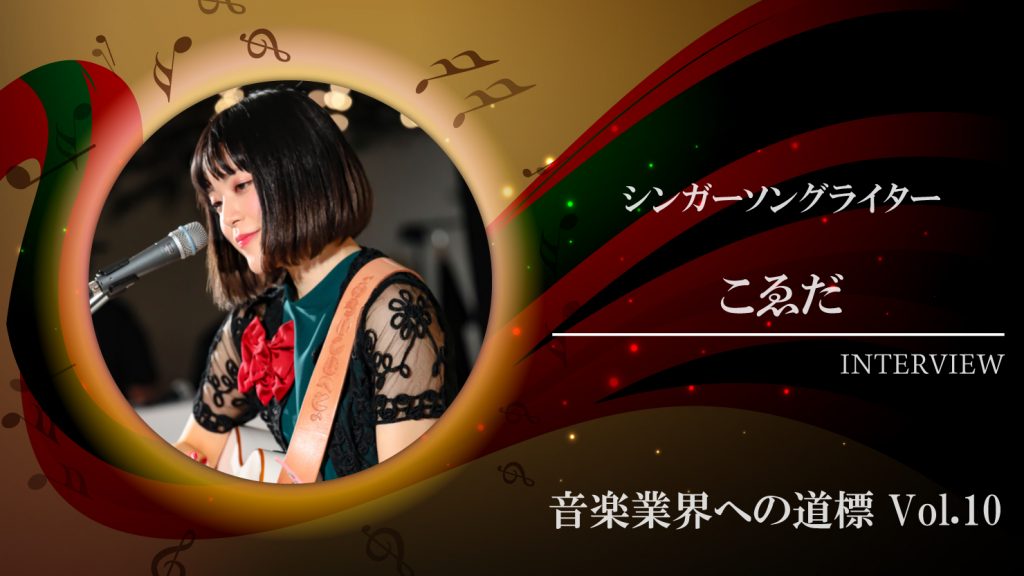
For the 10th installment of Pathways into the Music Industry, we talked with singer-songwriter Koeda (@Chokoeda). Koeda beat out more than 2,000 people in an audition and, at just 15, was picked as the vocalist of supercell. We heard lots of fascinating stories about how Koeda thinks about singing and current activities, so please give it a read!
Koeda | Profile
Born in 1996 in Fukuoka. After serving as a guest vocalist for supercell, made a solo debut in 2015.
Released the 1st mini album "Nice to meet you.," writing the lyrics and music for every song, with ryo (supercell) as sound producer.
The first release live show sold out instantly.
The same year, toured Tokyo, Nagoya and Osaka, and in 2016 held the "Happy 20th Birthday" tour to celebrate turning 20.
In 2017, released the long-awaited 2nd mini album "Monshirocho."
A singing debut at just 15
You were chosen as supercell's guest vocalist from more than 2,000 applicants. What originally got you started singing?
I've loved being in front of people since I was little, doing all sorts of things like reading picture books aloud, dancing and singing. Especially with singing, people around me often praised me, and I was so happy that I'd sing again... and that's how I came to love it more and more.
In fifth grade I got hooked on computers, and while getting to know all kinds of people there, I learned about niconico and started posting "utattemita" (song cover) videos in junior high.
It's unusual for an elementary school kid to get hooked on computers.
I have a lot of really niche hobbies. I love "push buttons," for example.
Push buttons. (laughs)
Yes. (laughs)
So I got hooked on typing and started using computers a lot. I can operate them to some extent, but it's not like I'm good with machines. When I was posting "utattemita" videos, I think I had a Yamaha MW8CX and a SHURE SM58, and I remember buying them on a store clerk's recommendation and using them without really understanding them.
I wasn't good at talking, but it was really fun that by posting my singing on niconico, an unspecified number of people could hear it.
How did you go from there to applying for auditions?
When I was 14, I let slip to someone I'd met on niconico that "I want to go pro." They asked, "Are you really confident you can make a living singing?" and I couldn't answer right away. That really frustrated me. As I thought about it in many ways, I came to the conclusion that I couldn't imagine anything but singing and wanted to make a living from music. That's when I started looking for auditions.
So the supercell guest vocalist audition was one of many you applied to?
No. Back then, auditions were mostly in the form of sending a cassette tape or CD, a so-called demo tape, but I didn't really know how to make one. For some reason it never even occurred to me to look it up.
In the middle of that, a friend recommended supercell's audition because "there's an audition where you send a video URL."
"I Love You I Need You" – KEI feat. Hatsune Miku
(Koeda applied with a cover video of Kei Hayashi's "I Love You I Need You." The original is here.)
And you passed.
Yes. The first-round pass notice came by email and the second round was in Tokyo, but I'd actually completely forgotten that I'd applied. I noticed the pass notification email only about three days before the second round.
Whaaat!
I was in junior high, so of course I didn't have money to go to Tokyo, and I had to learn the assigned song too, so I agonized over what to do.
On the Friday before the second round that weekend, I talked to a friend at school about it. And that friend pushed me forward: "You never know when a chance will come, right? If you let this go, you might never get another." So I made up my mind, explained the situation to my mother after school and decided to take it.
So you are who you are today because of that friend's push.
I'm truly grateful. By the way, there's a punchline: when I contacted the audition office saying, "I didn't notice the email and I'm late replying, but I'd like to take the second round," they pushed the date back a week. So I still think I'm really glad I didn't give up then.
Overcoming criticism
You then passed the second round too and debuted as supercell's vocalist in 2011. With your distinctive voice and all the buzz, the reaction must have been huge.
Around my debut, I read 2channel a lot. It's like a drug: once you're hooked, you keep worrying about it and can't get away. At first I was often compared with the previous guest vocalist, nagi yanagi, and with chelly of EGOIST, who debuted around the same time. Seeing critical opinions really got me down and made me cry, but I'd still look because I was worried... it was a cycle like that. Since I'd been praised a lot until then, the damage was big. There was even a period when I couldn't listen to the songs that had been criticized.
How did you get past that?
At first I struggled alone, but gradually the people around me seemed to notice I was down. As I got advice from various people, I started to think again about "who am I singing for?"
Until then, I'd only been thinking about "how can I get people who dislike me to like me," and I didn't have the room to think about the people who said they liked the "quirks" in my singing or who supported me.
But people who dislike my singing might end up thinking "I still don't like it" no matter how hard I try, and changing my singing or my activities to suit them didn't feel right.
I realized that the people I really need to cherish are those who enjoy listening to me, more than those who tear me apart. After that I wasn't affected by those opinions much anymore. Even when I see criticism, I can take it as "one point of view." On the other hand, when there are fewer negative opinions, it also means fewer people are hearing my singing, so I now think, "I need to work harder!"
supercell "Hakushu Kassai Utaawase -short ver.-"
The path after going solo
After releasing the album "ZIGAEXPERIENTIA" as supercell's vocalist, you made your solo debut in 2015. How did that come about?
After the album came out, ryo of supercell suggested, "Why not try going solo?" I'd been uploading songs I'd written to SoundCloud now and then, so I decided to go solo. I'd always liked writing essays and having others hear how I feel, and I also wanted to "sing my own songs."
In supercell, producer ryo handles everything from lyrics and music to arrangement, but on your solo debut mini album "Nice to meet you." you wrote the lyrics and music for every song, with ryo handling only sound production. It must have been very hard with so many firsts.
Yes. Until then, I "only had to sing," but for my solo debut I had to do all sorts of things, so I struggled a lot. Production took nearly two years.
Things didn't go smoothly because everyone's gears didn't mesh, and since I hadn't shown my face before, live shows and media appearances were all firsts, so I sometimes felt frustration, irritation and sadness.
Koeda 1st Mini Album "Nice to meet you." crossfade
The importance of "knowing"
In 2017 you released your second mini album, "Monshirocho," again about two years later.
I made it using the experience from releasing my first mini album, but there was still so much I didn't know, including promotion. Every time I got over one wall, there was another... I went back and forth a lot in the anxiety of time just slipping by, but I learned everything from production to release and what comes after, so now I think it was a good lesson in how the world works.
Jumping into the major-label world at 15 and then working on your own must have been harder than one can imagine.
I keenly realized how little I knew. So I researched and studied all sorts of things. I read lots of books and interviews with various people, and learned what the people around me were doing and through what process a CD gets released. Even if you rely on others, you first have to be properly independent yourself.
To keep going for a long time, I felt it's very important to picture concretely "what flow things follow and what to do by when."
Surrounded mostly by adults, there must have been gaps with your own thinking.
Yes. I often get down when people say various things, but at those times I take some time, think calmly and decide which opinions to take on and which parts "I won't give up." I also talk with friends and family I trust. Sometimes my thoughts come together while I'm talking.
Having people you can trust is important.
When I was in supercell, I wasn't allowed to show my face, and with a kind of fear of criticism too, I became really reclusive. For five years from junior high through high school I was like that and didn't interact with people much, and I was even scared of interacting itself. But when making my first mini album, I went through situations where I couldn't do anything unless someone found people to help me, and I truly felt anew "the importance of connections with people". It's not like I was doing anything wrong in the first place (laughs), and I realized nothing starts if you just shut everything out.
Don't wait for a Cinderella story; go out and grab it
Listening to you, your "now" seems to be the result of worrying and thinking a lot, from the audition to your current activities.
I think it's very important not to stop at making a work, but to think about "how to deliver it from there." Among people aiming to go pro, I think many imagine a Cinderella story where "someday someone will discover me." I thought that too when I was active on niconico for about a year. But if you're really confident in yourself and think you'll be discovered, it's a waste to just wait.
Rather than ending up never being discovered, I think it's definitely cooler to go out yourself and win it, take something you've honed and polished to a shine and say "Please look at this!!", and have everyone say they love it.
Even if you're discovered by chance, that's ultimately just a trigger. I think the most important thing is to think about and picture "what to do from there."
How I approach music, and what's next
You write the lyrics and music on your own albums. Do you often reflect your daily experiences in your songs?
Yes. My emotions swing very widely; it's fine when I'm positive, but when I'm negative I get really down. But for my artist brain, that's actually good sometimes, because I can write songs people relate to more easily at those times. As an ordinary girl, though, it's tough. (laughs)
Is there any other input you make a point of getting regularly?
I often get inspiration from live-action works like films and TV dramas. I also make a point of listening to music "consciously" on Apple Music and the like. Actually, I love singing, but in my case I don't really "listen to music naturally in daily life." But it's absolutely necessary for writing my own songs, so I try to absorb as much as I can.
How do you go about composing?
It varies: while playing acoustic guitar, or while playing piano, though I'm really clumsy at it. Sometimes I come up with melodies while playing rhythm loops. Lyrics often come to me at the same time, so it's like doing both in parallel.
Recently I've also been trying new things, like co-writing with Nodoka Kirishima.
Co-writing, which is a hot topic right now.
When I write both lyrics and music myself, I often take impulsive emotions or myself as the theme, but it was a new discovery that when I only write lyrics, I can write them with a calmer mind and a broader view.
What gear do you use for production?
My DAW is Cubase, my interface is a Fireface UC, and my mic is an Audio-Technica AT4040. So that I can convey the image of a song to some extent, I also bought a guitar, a bass, electronic drums and a synthesizer. Except for guitar I'm still hopeless at them and studying. (laughs)
Finally, please tell us about your activities going forward.
As I keep saying in my fan club newsletter, "Don't stop!!" comes first. In production, live shows and promotion alike, I want to keep moving toward my goals with everything I've got!
Thank you very much.
Koeda "Heath no Kakera" Music Video
About the author
Interview and text: momo (Mamoru Tanoue)
Born in 1995. A Digital Performer user. After graduating from music school, moved from Fukuoka to Tokyo as a composer.
Made a debut as a writer in August 2017, composing and arranging for Tsukicro's "STARDUST".
With the motto "songs that touch the heart", a multi-player who handles everything from lyrics and composition to arrangement and recording.
Also active as the composer and arranger for the art unit "Shiro".
Twitter ID: @momo_tanoue
"Shiro" website: https://www.shiro.space/
"Shiro" Twitter ID: @shiro_unit
NEW ARTICLES
Latest English Articles