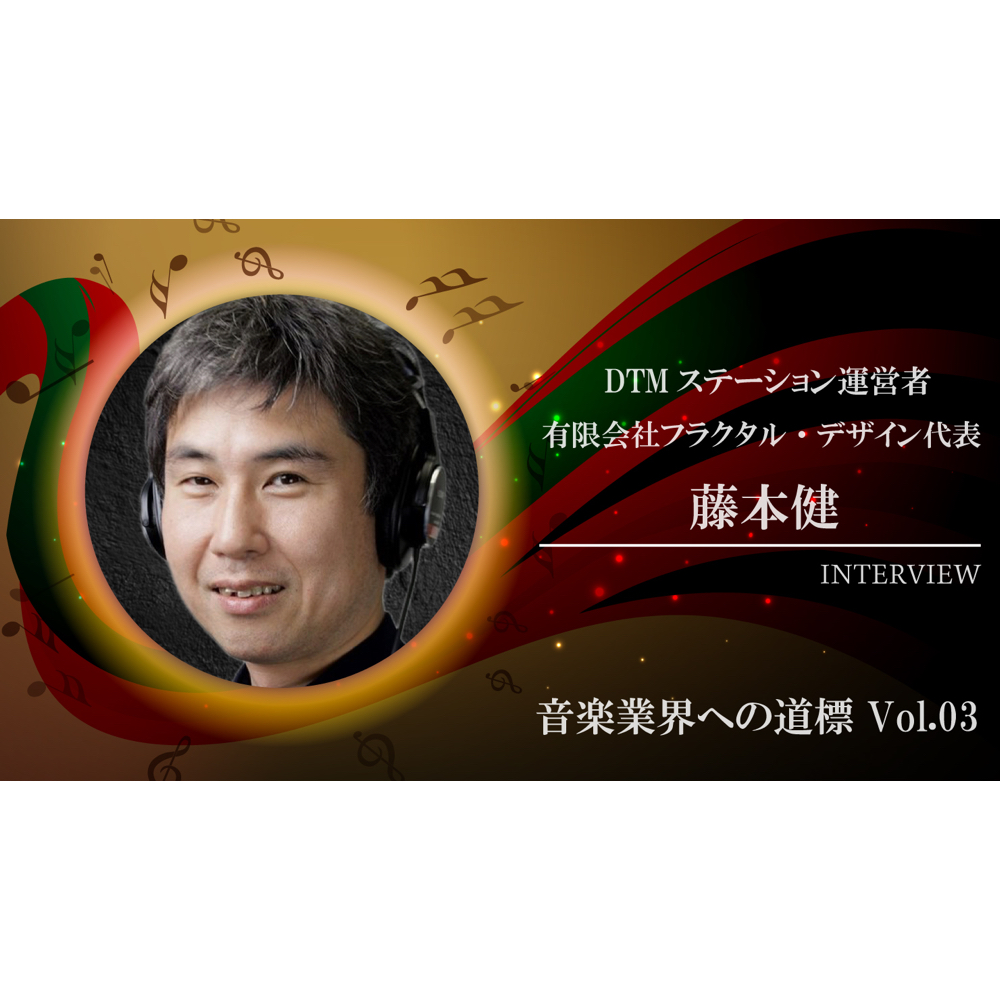
An interview with Ken Fujimoto of DTM Station
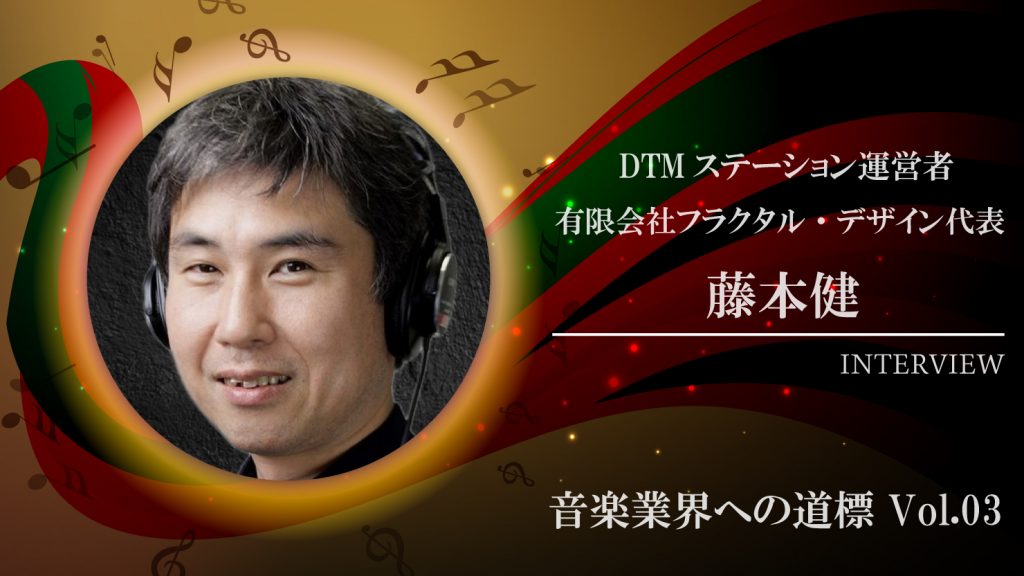
For the third installment of Pathways into the Music Industry, we interviewed freelance writer Ken Fujimoto, who runs "DTM Station," a website familiar to DTMers and music creators.
Fujimoto is active in many fields beyond music articles. We heard very rich stories, from Fujimoto's life story to the mindset freelancers need, that will be useful to students and working adults alike, so please read to the end.
Personally, I think of you as a rather mysterious person. What kind of work are you doing now?
Ken Fujimoto (Fujimoto: below) As of now, my blog "DTM Station" is the main thing. As an offshoot, I also do "DTM Station Plus!," on Niconico Live and Fresh!.
Besides that, there's writing the weekly "Digital Audio Laboratory" column on AV Watch.
DTM Station is a blog so famous that every music creator knows it. When did you start working in music?
Fujimoto: I'm 52 now, and in high school, right when "YMO (Yellow Magic Orchestra)" was popular, I got interested in synthesizers. But back then they were expensive and far beyond my reach. So in my first year of high school, I started building my own synthesizer.
In high school?
Fujimoto: I built it referring to circuit diagrams in books and magazines. But it wasn't just about building it: my goal back then was to play music on a microcomputer (the forerunner of the PC). It was hard to achieve, though, and I spent day after day in trial and error.
Then in the summer of my second year of high school, I built a circuit using an IC that could produce Famicom-style sound, connected it to a computer and got it to play. I thought "This is amazing," and made sales calls to all kinds of companies to pitch it. Every company I pitched said yes, so I chose the one I thought best, "HAL Laboratory (HAL Laboratory, Inc.)," and signed a contract.
HAL Laboratory back then was a small company with fewer than ten employees, and together with a new employee named "Iwata," the two of us brushed up the product and released it after the new year.
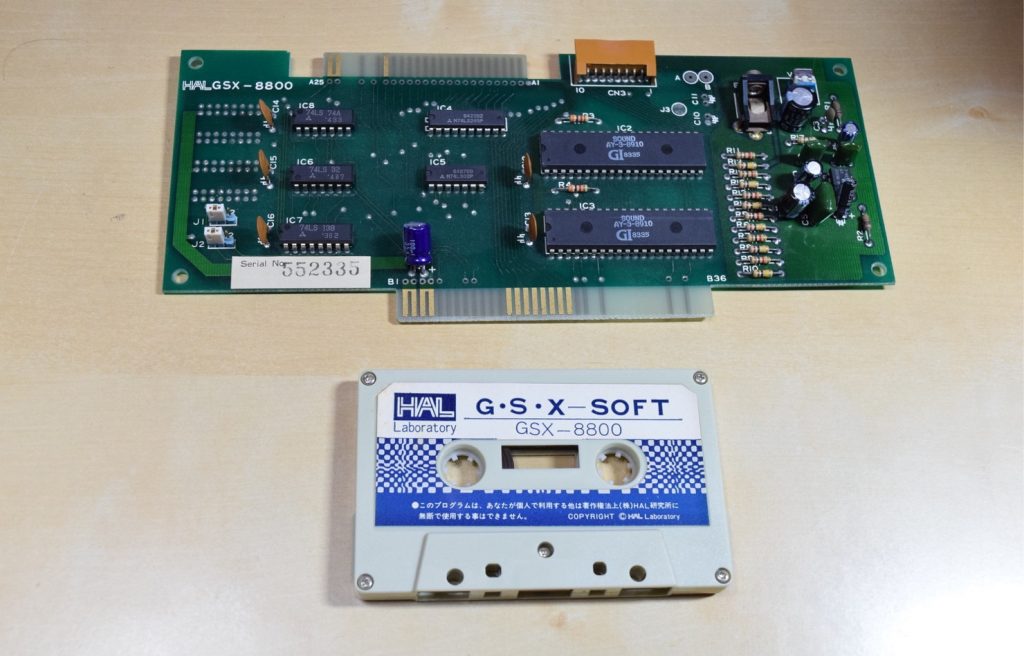
For details, see "this Weekly ASCII article."
So you were already earning money from music back then.
Fujimoto: Yes, with development fees and income from sales, it came to several hundred thousand yen. After that I kept teaming up with Iwata and developed various products as a kind of part-time job.
Didn't you think of becoming an engineer?
Fujimoto: Iwata, whom I worked with, was so incredible that I thought I couldn't do it. By the way, that Iwata is Satoru Iwata, the former president of Nintendo, who passed away two years ago.
Whaaat!? That Iwata...
Fujimoto: Even after I entered the engineering faculty at university, we kept developing products together for a while. Iwata had talent as a business leader too, of course, but the talent as an engineer was truly outstanding. I'd seen someone like that up close since high school and thought that was what an ordinary engineer was like, so I thought, "I mustn't go down that road..."
I see. When did you start working as a writer?
Fujimoto: In my first year of university, an acquaintance introduced me to "a job where you can earn quickly," and I started writing articles for computer magazines. Soon after, I started a serialized column too, and wrote while also working with HAL Laboratory. After graduating, I agonized over it and joined Recruit, where I edited magazines. The Recruit scandal broke when I received my job offer, so I went through some tough times.
So after joining the company, did you take a break from writing and music for a while?
Fujimoto: No, even after joining I kept writing on the side, and I continued music as a hobby. It was an era when side jobs weren't understood, and it took time to persuade my boss, but because it was Recruit, maybe I managed it. I did my Recruit work properly too, and I wasn't breaking any company rules, so I kept going.
After that I started writing for "Computer Music Magazine" (published by Dempa Publications) and "Sound & Recording Magazine" (published by Rittor Music), and my music-related writing gradually increased. I was employed, but in my own mind I felt like a freelancer. Recruit was my biggest "client," and I had lots of other clients too. I think I worked about three times as much as other people.
When did you leave Recruit?
Fujimoto: In 2004. There was an early retirement system, and I retired at 38. In effect, I saw it through to the end. But by then I had lots of other work as an individual, so I wasn't in any trouble. Recruit accounted for only about 40 to 50% of my income. After that I founded my own company, "Fractal Design Co., Ltd."
Now you mainly write online, starting with DTM Station. What led to that?
Fujimoto: It started in February 2001, before I left Recruit, when I began writing about DTM on "All About," a site with specialist articles in all kinds of fields. That was the era of the "dot-com bubble," right when the internet industry was growing rapidly. Later, just when I was thinking of expanding my online activities, Tabata, who'd worked under me at Recruit, invited me to write articles at livedoor, and I started writing there. That was the beginning of today's DTM Station. By the way, that Tabata is Shintaro Tabata, currently a senior executive officer at LINE Corporation since March 2018 head of the Communication Design Office at START TODAY Co., Ltd. The person in charge at launch was Shigeki Matsuura, who later became editor-in-chief of The Huffington Post and is now editor-in-chief of SmartNews.
I'm amazed by all the big names coming up. (laughs)
Fujimoto: Then, partly due to the livedoor scandal, livedoor was acquired by LINE, and in 2011 the monthly payments for writing articles ended. I considered selling DTM Station to another company, but the magazine industry's sales were also starting to decline, so in the end I decided to run it as an individual. After considering how to earn income, I shifted to an "advertising revenue" business model. Now I earn revenue from banner ads and the like.
I see. You work very flexibly. Have you ever had health problems?
Fujimoto: In January 2011, partly from fatigue from all the work I'd taken on and partly because I had a cold, I collapsed from anemia. I was on a station platform and accidentally fell onto the tracks, suffering a serious skull fracture. It was a severe injury, with surgery and a hospital stay. After that I changed my thinking a little and turned down all work except what I "want to do." I quit all my IT and consulting work and shifted to music work only. That's still how I make my living today.
So that happened. Not just in music, but making "advertising revenue" your main income, like bloggers and YouTubers, is a recent trend.
Fujimoto: In terms of "how" to monetize through various elements, not just affiliates, I think what I built up at Recruit made a big difference. For titling articles too, back at Recruit I'd check and study magazine covers and train hanging ads that caught my eye. A lot of that is still useful today, and in that sense, choosing to get a job meant a lot.
For people aiming to freelance or young people aiming for the music industry, "getting a job" must be a tough choice. What do you think about that?
Fujimoto: Freelancing, including as a musician, isn't a job everyone does, nor one everyone can do. The government encourages side jobs, but freelancing is unstable and the risks are quite large. It's not necessarily "a way of working that fits everyone."
What "necessary skills" do you think there are for living as a freelancer?
Fujimoto: I think you should know "how money moves," at both the micro and macro levels. Without that, you can't survive. Diversifying risk is also important. For example, if you rely entirely on one source of income, when it fails, no money comes in at all. But if you diversify your income, even if one fails, other work can cover it. In that sense, there's no job with better conditions than being a salaried employee.
So working freelance while employed is very much an option.
Fujimoto: In the end, it's just whether you do it or not. Even if you're employed, after work there's time until the next morning, right? The difference is between people who use that for drinking parties and people who devote it to their own time. People who succeed definitely put in that much effort.
I see. Finally, please tell us the keys to living as a freelancer.
Fujimoto: Effort is necessary, of course, and it's also important to diversify risk in case something happens. You'll fail a lot, too. But in the end, it's important to do what you find fun. Otherwise you won't keep it up.
Thank you very much.
What did you think? I think it was very interesting for those aiming to live as freelancers. It was an interview that offered a glimpse of a sincere attitude toward work and the effort hidden behind success.
We at Sleepfreaks hope to liven up the music industry together with DTM Station.
Thank you for reading this far. Please look forward to the next installment!
About the author

Interview and text: momo (Mamoru Tanoue)
Born in 1995. A Digital Performer user. After graduating from music school, moved from Fukuoka to Tokyo as a composer.
Made a debut as a writer in August 2017, composing and arranging for Tsukicro's "STARDUST".
With the motto "songs that touch the heart", a multi-player who handles everything from lyrics and composition to arrangement and recording.
Also active as the composer and arranger for the art unit "Shiro".
Twitter ID: @momo_tanoue
"Shiro" website: https://www.shiro.space/
"Shiro" Twitter ID: @shiro_unit
NEW ARTICLES
Latest English Articles