An interview with sound engineer Keisuke Fujimaki
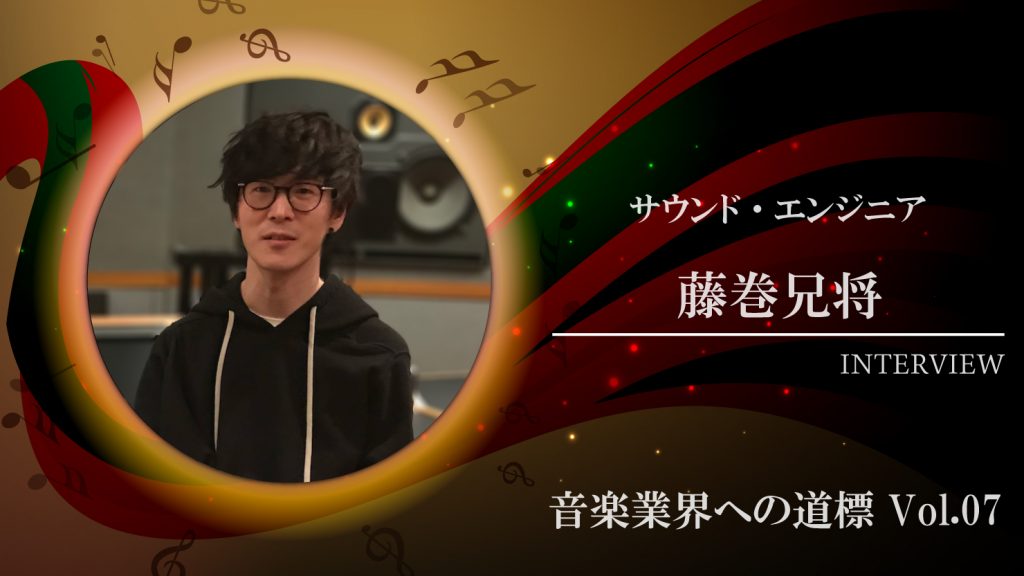
For the 7th installment of Pathways into the Music Industry, we talked with engineer Keisuke Fujimaki. Fujimaki has worked on releases by renowned top artists since a young age. How strict is the world of engineering, and how does Fujimaki approach each work and build its sound within it? A must-read for musicians.
I've known of you for a while since you often appear in Sound Designer and elsewhere. Which artists have you worked with specifically?
Keisuke Fujimaki (Fujimaki: below) I work freelance, so I work with a fairly wide range of artists. I've worked on EGOIST, Undergraph and AI, among others, and recently I often mix soundtrack works too.
You came to this interview straight after staying overnight at the studio working, so you must be very busy. Do you work across genres without particularly limiting yourself?
Fujimaki: I used to be in a band, so I'm fairly strong at rock. But I study all kinds of things regularly so I can handle any genre, so there's no genre I'm particularly weak at.
You're now in demand everywhere. How did you originally come to aim to be an engineer?
Fujimaki: I was in a band in high school, and from then I loved gear like effects pedals. Around when I entered university, the Cubase SX series and so on were out, and I started using a DAW then. As I researched all sorts of things, I learned about the profession of engineer and started aiming for it.
What made you choose engineering rather than performing or composing?
Fujimaki: As I studied engineering, I thought it was a profession that works behind the scenes yet allows all kinds of expression. Also, while there are many performers who are skilled from a young age, most engineers start touching a DAW in high school or university and get hooked from there, so everyone has the same starting line. Seeing an opportunity in that was a big reason too.
True, I've never heard of anyone who's "been an engineer since childhood."
Fujimaki: Once I decided "I'll aim to be an engineer," I acted pretty quickly: I was attending a university in Sapporo, but I quit partway and went to a vocational school in Tokyo. It was only a one-year school, but I remember studying desperately. In the meantime, a teacher at the school reached out to me, and I went straight to work at HeartBeat Studio, where that teacher was chief engineer.
About the world of engineering
After joining a studio, how do you build your skills?
Fujimaki: At recording sessions there's an engineer and an assistant, and you start by supporting the assistant. You arrive at the studio before anyone else to set up the gear and stay later than anyone else to clean up and prepare for the next recording, so it's pretty grueling.
You must have struggled a lot too.
Fujimaki: Of course it was really tough. Not going home was common, and while today almost everything is digital recording, back then we still sometimes recorded analog, so there was an enormous amount to learn. Once you've learned how to use all the gear, then you learn the flow of recording... and doing that, it really takes a while to become first-rate.
In such a harsh world, many must quit.
Fujimaki: A lot of people quit at the first stage. So I think most studios are short-staffed. (laughs) In my case, I'd come all the way from Sapporo to become an engineer, so "quitting" wasn't an option.
So that conviction is what got you through the hardships.
Fujimaki: People who have "quitting" as an option all give up and leave at some point. But I also think it's a world where, no matter how tough it gets, if you hang on, things work out.
After your ability as "assistant's support" is recognized, what's the next step?
Fujimaki: Next you work as "the engineer's assistant." The assistant plays an important role: supporting the engineer, operating the computer as the Pro Tools operator, setting up gear and so on. What matters is how quickly you can respond to requests, and you have to stay focused at all times to keep the recording running smoothly, so this is also really hard. Of course you mustn't miss instructions from the engineer or performers, and it's also important to anticipate, "They'll probably need this next."
So the assistant is key to keeping a recording running smoothly.
Fujimaki: I think "good timing" is within a single second, so the quickness and perceptiveness between getting an instruction and acting on it are very important. I made lots of mistakes at first and learned from them.
It seems hard to learn things like that, beyond knowledge and technique, at school.
Fujimaki: Yes. It's true you can learn gear knowledge and techniques at school, but you learn far more on actual jobs. So I'm actually glad it was a one-year vocational school. I could get into the studio sooner. Also, the timing of going from assistant to engineer is quite tricky, and a big part is not knowing when your chance will come, so in that sense too I'm glad I gained experience in the studio early.
So it's hard to become an engineer unless a chance comes around?
Fujimaki: There's no set period, like "do this much assisting and you become an engineer." It may be quite tough unless you're blessed with opportunities and people.
There was a time when the engineer collapsed on a job I was assisting, and I ended up engineering from the afternoon. By delivering results at times like that, you're gradually recognized... that's how it goes.
What was your first job as an engineer?
Fujimaki: My first job was a project Koichi Tsutaya was working on. We actually have a connection: we're from the same hometown and went to the same university. Back then Tsutaya brought me a project, saying, "I'm looking for a young engineer. How about this?" I was still an assistant, but I watched engineers work every day and was always studying Pro Tools session data, so I believed I could do it and took it on. I think I was about 23.
So it came pretty early.
Fujimaki: Looking back now, there's a lot I'd have done differently, but I remember putting everything I had into it at the time. After that I increasingly engineered recordings for in-house projects. During that period I focused on building my skills as an engineer rather than expanding my network.
You then went freelance. How did that come about?
Fujimaki: The company I belonged to at the time decided to let go of HeartBeat Studio, and I was made to leave too. I agonized over whether to go freelance or join another studio and start again as an assistant. I didn't have much of a network then, but after discussing it with senior engineers, I decided to go freelance. Thanks to introductions from engineers Taiji Okuda and Shunroku Hitani, I now leave just my management to a company (IXY music) and work that way.
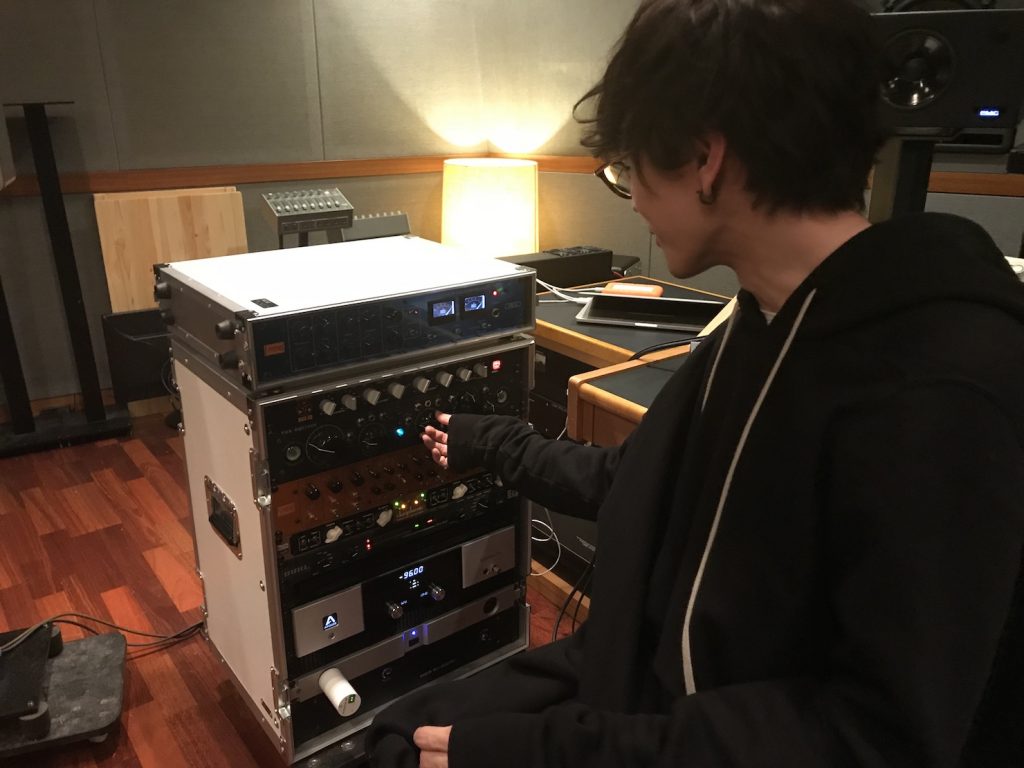
About mixing and mastering techniques
You work on a wide range of genres. How do you usually gather information and techniques?
Fujimaki: Of course I absorb a lot on the job and through people, and I also often refer to overseas sites. Their techniques really are better than Japan's in many ways, so I try to take in as much as I can. But I don't care much about how to use gear; I mostly learn ways of thinking about sound. Even with the same gear, the sound changes completely depending on who uses it. I think sites that explain things as carefully as "Mix With The Masters" can teach you a lot.
What do you think is the biggest difference between Japan and overseas?
Fujimaki: Monitoring environments, I'd say. The year before last I visited studios in Nashville and Los Angeles, and I was surprised at how well set up they were. Of course, there are various factors besides gear, like space.
What speakers do you actually use for monitoring?
Fujimaki: I've been using PMC monitor speakers for about three years. I often saw ATC or PMC speakers in American studios, so when I got back to Japan I compared various ones and bought them.
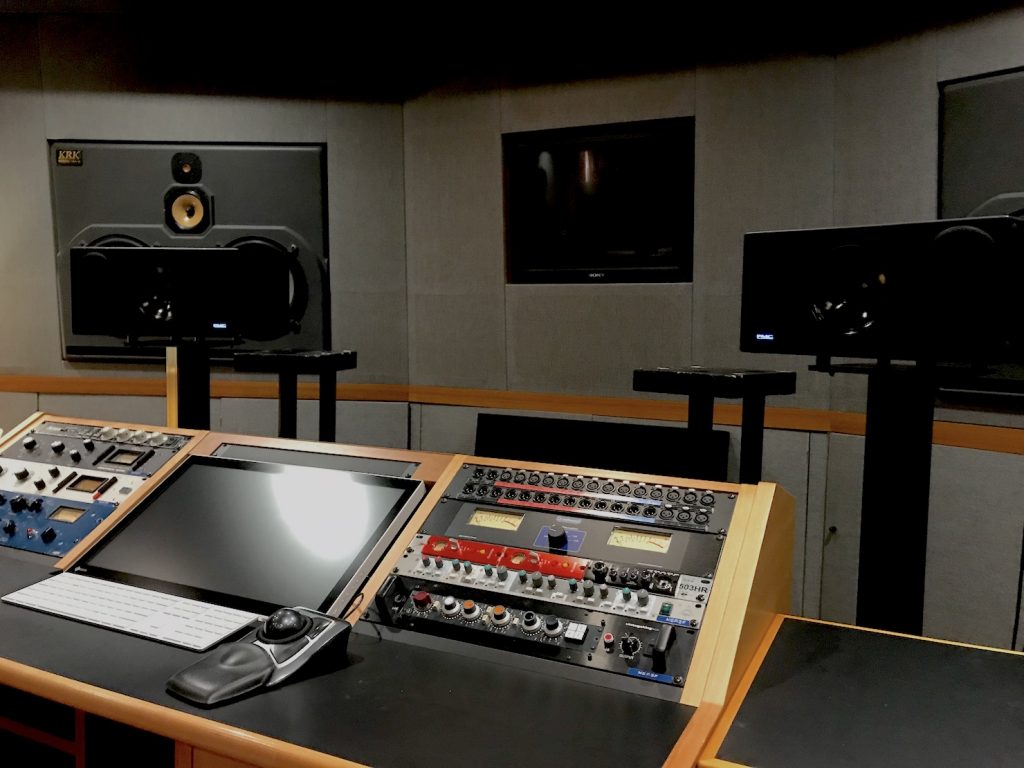
I hear you basically don't work at home and build your sound in the studio.
Fujimaki: When you mix in a small space, the parts you haven't fully shaped inevitably show when you play it in a large space. So I basically work in the studio while playing through speakers. According to a friend overseas, they go all-out on shaping the low end even from the arrangement stage, working at volumes that shake the room. But it's not that you should always work in a big room; there are also sounds you can only get in a small environment, so I'd like to control that well.
Like me, many people have no choice but to do all their work at home. What should they prioritize most?
Fujimaki: There are various factors like power and plug-ins, but it's really the monitoring environment. Some people can shape the sound properly even in a small space, and I think that's the first thing to sort out.
Do you have any recommended speakers?
Fujimaki: It depends on the size of the room, so I can't generalize, but for working in a small space, IK Multimedia's "iLoud" has a pretty good reputation around me. I also think GENELEC speakers with DSP correction are quite good.
How do you usually listen to music?
Fujimaki: I listen just to enjoy music normally, rather than with an engineer's ears. If a work catches my interest, I sometimes buy the CD to see who engineered it. I'd really love it if Apple Music and the like listed engineer credits too. (laughs)
Do you have any songs you use as references when mixing?
Fujimaki: I don't really have a song I've always used... I often use songs I've been listening to recently as references. But I always mix in the same studio with the same gear and know roughly what it'll sound like, so I don't compare that much.
Is there any music you've been listening to lately that you'd recommend?
Fujimaki: I listen very widely, so it's hard to narrow down... it's from a little while ago, but maybe Troye Sivan's album "Blue Neighbourhood." Renowned engineers worked on it, so it's very educational.
Troye Sivan – Blue Neighbourhood Trilogy (Director's Cut)
Are there engineers you respect?
Fujimaki: How Manny Marroquin and Tom Elmhirst build their sound is a great reference in many ways.
Originality for an engineer
As an engineer, how do you think about "originality"?
Fujimaki: People who hire me often say "It sounds like a Fujimaki sound," but I try not to think "This is my sound!" myself. These days you can get all kinds of information from Japan and abroad using the internet, and I'm always researching so I can make the sound suit the work.
So your "character" comes out as a result of researching sound with an open mind.
Fujimaki: The situation differs with each work. The artist's direction, of course, and what situation they're in now: are they about to have a hit, or is this the follow-up to a hit? Will it be broadcast on TV? I value what feelings and meaning are put into the project. It's like digesting the opinions and feelings of all kinds of people, from the artist themself to the director and the tie-in company, in my own way and interpreting them through sound. Of course, depending on the case, I sometimes choose to ignore all that and go with the sound I think is cool.
So rather than making sound, it's a way of thinking about "making the work together."
Fujimaki: I think engineering is a profession of design. Not just in music; people in graphics or fashion also create works taking all kinds of elements into account, right? In my case, the result of taking in and thinking about a huge number of elements shows up in things like the texture of the vocals and the volume balance of the instruments. Even when actually shaping the sound, it's not decided from the start that "it's this, so I'll do that"; it often changes and develops as I work, so I work with excitement.
Your sincere attitude toward the work really comes through.
Fujimaki: It's a work many people finish by joining forces, so rather than sticking to "this is my sound!", I want to make sound everyone wants to hear. That's why I gather all kinds of information and think about all kinds of things. To hold my own as an equal with people of conviction, I have to have something comparable myself, or I can't compete.
One more question about originality: recently, AI-powered plug-ins and mastering services have been gradually catching on. What do you think about them?
Fujimaki: Of course I've tried various ones. I can judge things like masked frequency ranges myself, so I don't use them often. But using them led to all sorts of discoveries, and my impression is they're very well made. I think they're products I can recommend for environments where the speakers aren't very accurate, or for beginners.
There will probably be many more AI-powered products, and some say that threatens the engineering profession.
Fujimaki: I don't really feel that way. Because the engineering profession isn't simply about "making sound." What we're dealing with is ultimately a "work" that people create together.
True, sometimes a stylish sound image is right and sometimes a cluttered sound is right; the sound required changes with each work.
Fujimaki: Long ago, when Waves first released its Artist Series, there were similar voices: "If this exists, we don't need engineers." But the reason that didn't happen is that they're tools for "shortening the work you usually do and pouring more time into the musical, creative parts." Shaping sound and finishing something musically require thinking with different parts of the brain, so I see them as tools that make switching between them smoother. So I see AI very positively too and hope more and more of it comes out.
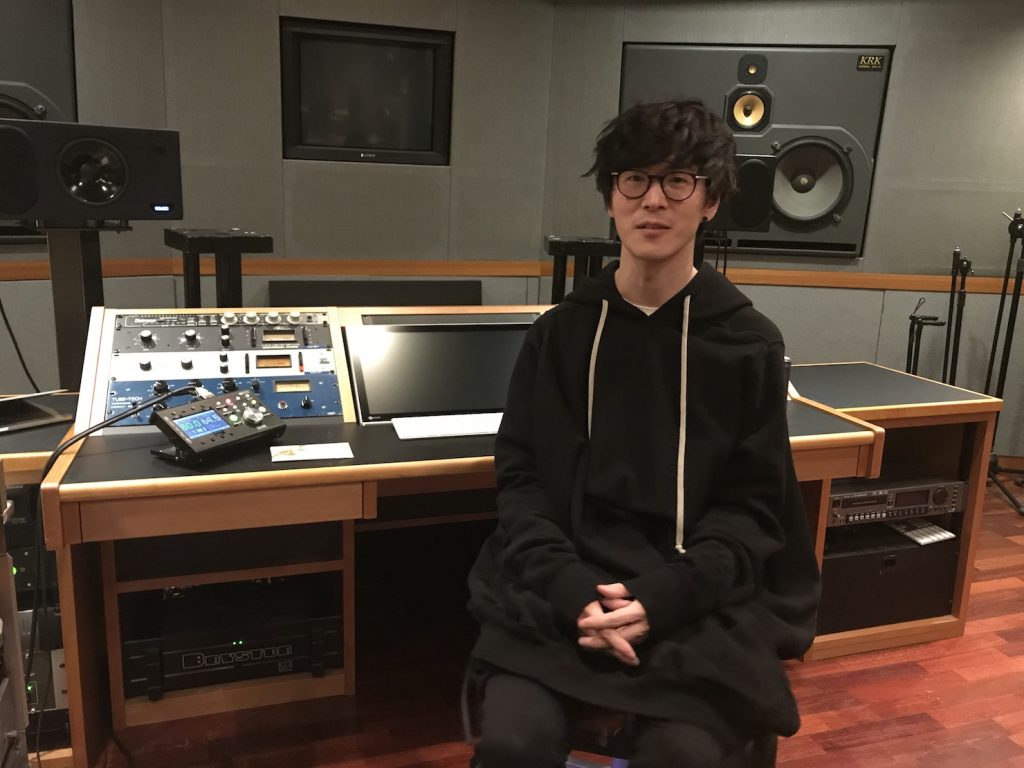
For those aiming to become engineers
What kind of profession is engineering to you?
Fujimaki: Honestly, I don't think it's a profession "anyone can do." But as I said earlier, what's a little different from other music jobs is that in engineering everyone has almost the same starting line. I didn't know left from right at first, but I think where I am now is the result of continuing to take on the challenge without giving up, with the firm resolve to "become an engineer."
What does an engineer need?
Fujimaki: "Human skills," I'd say. Knowledge of gear and technique are of course necessary, but more than that, communication skills and insight become very important.
So it's a profession that requires all kinds of abilities. Finally, a word for those aiming to become engineers.
Fujimaki: I think a big reason I've made it this far is that I didn't have "quitting" as an option. Many top engineers kept going without quitting no matter how much they were scolded or how many mistakes they made. It's a harsh world, but I think it's one you can take on as long as you have strong will. Things you did the easy way don't nourish you at all; growth and confidence are born precisely in difficulty. If you're aiming to be an engineer, I think it's good to actually work in a studio as early as possible.
Thank you very much.
About the author

Interview and text: momo (Mamoru Tanoue)
Born in 1995. A Digital Performer user. After graduating from music school, moved from Fukuoka to Tokyo as a composer.
Made a debut as a writer in August 2017, composing and arranging for Tsukicro's "STARDUST".
With the motto "songs that touch the heart", a multi-player who handles everything from lyrics and composition to arrangement and recording.
Also active as the composer and arranger for the art unit "Shiro".
Twitter ID: @momo_tanoue
"Shiro" website: https://www.shiro.space/
"Shiro" Twitter ID: @shiro_unit
NEW ARTICLES
Latest English Articles