Interview with Arranger Hideyuki "Daichi" Suzuki
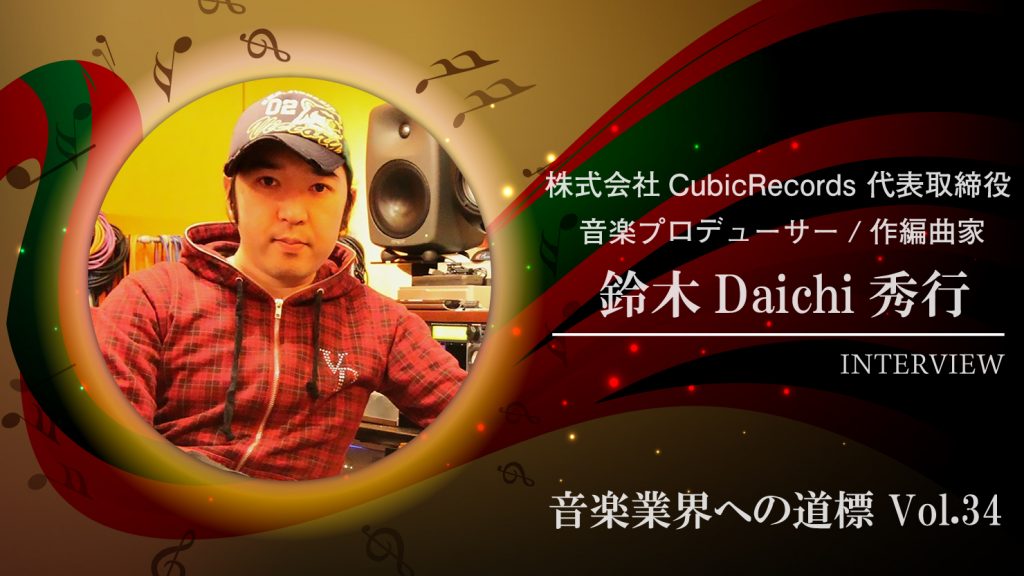
For the 34th installment of Pathways into the Music Industry, we interviewed Hideyuki "Daichi" Suzuki (@daichi307 ), who as an arranger has worked on many songs that represent J-POP, including songs for YUI and Ayaka.
Daichi works not only as a composer and arranger but also runs a label. This time we visited his home studio and heard many valuable stories.
Q: You've worked on a great many songs over more than 20 years. How did you first get into music?
It started when I formed a band with friends in junior high and began playing keyboards. Before that, I had no experience with instruments at all.
In the band we often covered groups like Seikima-II, and I remember programming with a YAMAHA QX5 around my second year of junior high.
Q: So you got into programmed music quite early.
I'd loved games and things like that since I was little, and my parents also liked new gadgets. But back then it was strictly a "hobby", and I wasn't thinking of making a living from music.
After that, partly because a guitar was easier to carry around than a keyboard (laughs), I started playing guitar in high school.
I was in the light music club too, but I also formed a band outside school with older people I knew, playing street gigs at the Harajuku pedestrian paradise and playing live houses at a pace of about four or five shows a month.
Q: You were very active.
We even shared a bill with Mr.Children when they had only just debuted.
When I was 18, we decided to change the band's musical direction and started playing live with programmed parts in sync, and that's when I really began using programming in earnest.
My stance hasn't changed much even now.
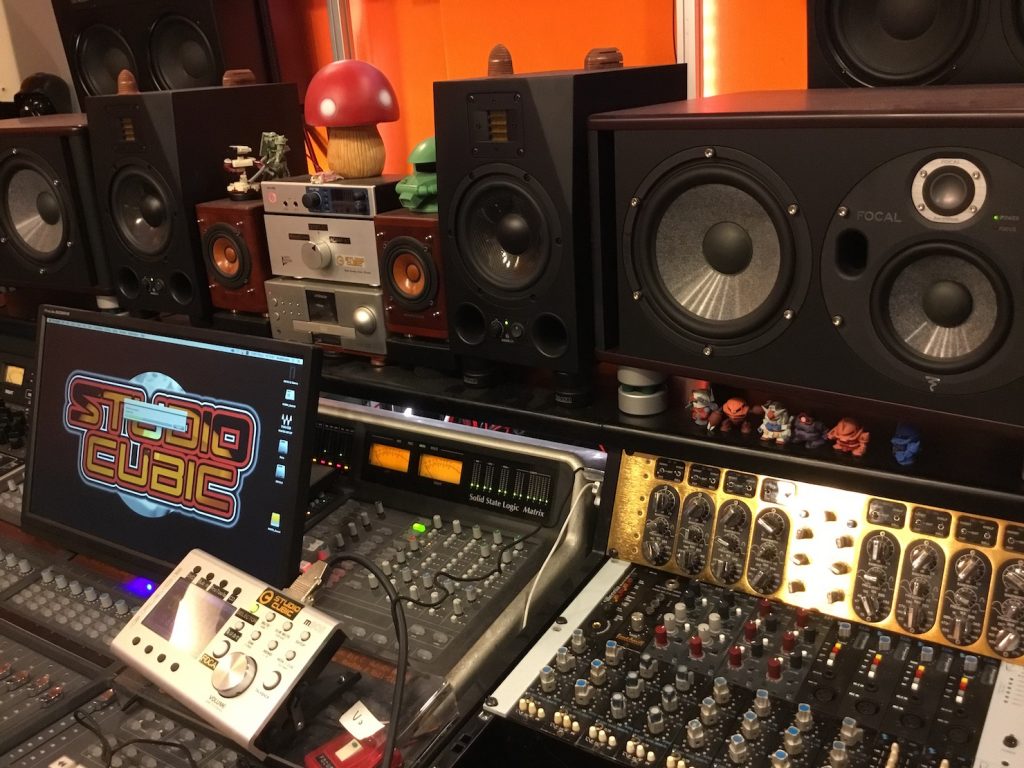
(Inside the studio 1)
Q: How did you start working as an arranger?
I debuted once with a band when I was about 20, but we broke up after one album.
Around the time I was thinking of doing a different band while working a part-time job, a director introduced me to someone, saying "there's a person called a manipulator who loads programmed sounds into a Mac and replaces them with better sounds."
That person was Nobuhito "UNA" Tanahashi, who works as a professional arranger, manipulator and engineer, and he said, "Rather than working a part-time job, why not work with me?" That's how I started this work.
As a live manipulator, I'd go to recording studios, transfer data from multitrack tapes into Cubase, line it up, and mix from there... that kind of thing.
The fact that I came to have my own studio and even do engineering owes a great deal to Mr. Tanahashi's influence.
Q: Was that also when you started using Cubase?
No, it was from around when the band debuted, so from about age 20. I think it was around Cubase 2.
It was an era when adding 4 MB of memory to a computer or sampler cost around 60,000 yen.
Ayaka "Mikazuki" (arrangement, sound production, guitar, bass)
Thoughts on Individuality
Q: You use a lot of gear. Do you have any criteria when buying?
I'm drawn to things that are a little quirky. There are lots of plug-ins out there now and many are convenient, but it's more interesting when something "can't do anything else, but this particular thing can only be done with this plug-in," don't you think?
In this line of work you're often compared with many other people, so I'm always thinking about how to bring out what makes me me. Using things that ordinary people don't have can be an advantage in some cases.
With hardware gear in particular, I like things with a "distinctive character".
Q: How do you think about your own individuality?
For example, even when going for a rock flavor, I bring in the essence of rock strictly "within the scope of pop". If you ask someone who specializes completely in that field, the music can sometimes end up hard to get into, so what I'm good at is extracting "the most important part of that music" and bringing it into pop.
People often talk about individuality and originality, but I think forcing yourself to do things you can't do just makes it painful and leads to giving up. In every field and every generation there are professionals of that kind, so among them, I think what matters is identifying what you "can do" and what is "in demand", and thinking about how to present yourself.
Q: While working as an arranger, do your client's wishes and your own preferences ever clash?
Of course they do, but since it's work, it's "something I'm making that isn't mine," so to speak. I think of it as something made to order.
Asserting yourself too much isn't good, but having none is boring. That balance is the hardest part, I think.
Q: Handling revision requests must also be difficult.
For example, even if they just say "rock", what the client has in mind could be loud rock or pop rock, it varies. It's quite hard to read all of that from the start, so rather than trying to avoid revisions, what matters is how well you can respond to them.
In my case, if the deadline is a week, for example, I make a demo of about 70 points in three days that at least shows the direction of the arrangement and have the client check it. Then I often work by refining it to the finished version over the remaining four days based on the revisions they send.
Q: So you don't aim for a perfect 100 from the start.
There are cases where you play them an arrangement with live instruments and they say, "Actually, let's go with programming." Revising something you worked hard on with the aim of scoring 120 points is painful and tough, and sometimes you can't revise it well.
Then the client thinks, "It hasn't changed much," so it may be important to be ready for either outcome.
That said, this only applies when the other party understands the quality of the end result. With a new client, for example, I sometimes put everything into it from the start as a kind of presentation.
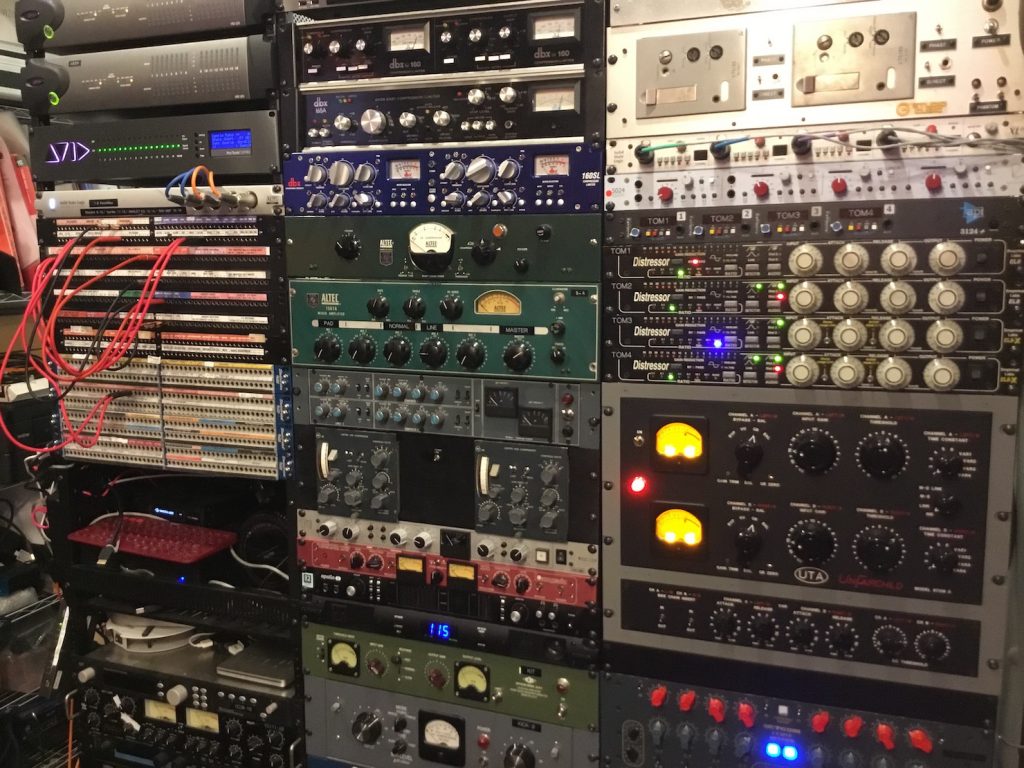
(Inside the studio 2)
Q: When arranging, you may sometimes work in genres you don't know well. In such cases, should you study in advance?
In my case, I often studied the genre desperately after the request came in. You never know what's coming when, so I think studying in advance is pretty difficult.
I learned by repeatedly experiencing how things I made sounded once they were replaced with live performances in recording.
Q: Is there anything you keep in mind for input in your daily life?
While listening to music of various genres, I make a conscious effort to think, "Where does the appeal of this song lie?"
Even with music I don't particularly like myself, there are people who find it wonderful. That way of thinking, "finding the parts people feel are good," is actually put to use in my work.
What It Takes to Make a Living in Music
Q: Among young creators, what's the difference between those who grow and those who don't?
People who can make things that stick out a little, things with an edge, even if they're not polished, often grow.It's fairly easy to round off something sharp, but making something round sharp is quite hard.
In today's era overflowing with all kinds of content, things that were once dismissed with "what is this?" or "this is no good" can one day become the right answer.
People who enter competitions in particular tend to make safe choices, thinking about "how to get selected," so I think one option is to keep a place where you can express your own tastes 100%.
Q: As the music industry changes, how do you think professional composers and arrangers will change their style?
When it comes to music, I think things are becoming more and more free. Until now there was a set flow of making songs, releasing CDs, playing live and so on, and conversely, as long as you rode that flow you felt secure.
As CDs stopped selling and that routine stopped working well, at the same time it has become very easy to do everything yourselves.
But there still aren't many successful model cases in that space. With that in mind, I started a label called Cubic Records.
I've been making music all along and can now do it as a matter of course, but I'd never really done the selling side, so I only understood "the actual part" through numbers.
Just shrinking what the major record companies have done and doing it as an indie rarely makes money, and artists all get older, so there's a time limit too.
Right now I'm trying various experimental things, exploring new paths, including monetization, that let artists keep making music.
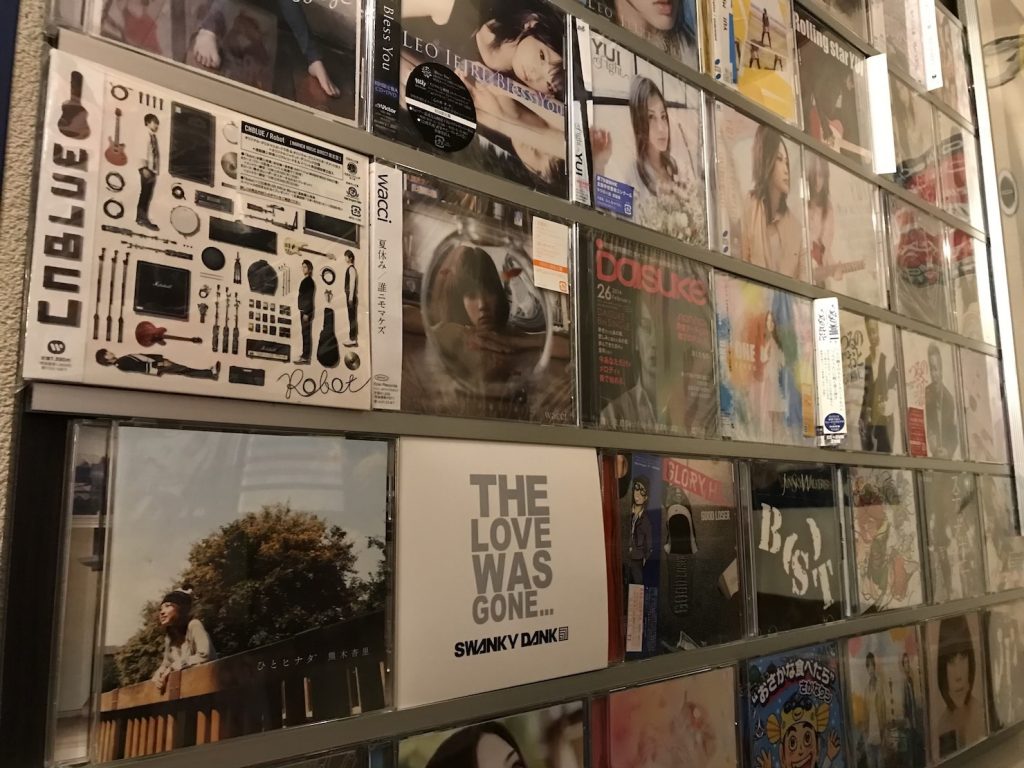
(The titles he has worked on line an entire wall.)
Q: What are some of your recent initiatives?
Non Stop Rabbit, a band I produce, is also active as YouTubers alongside their work as a band.
It's hard to draw people to live houses, and approaching it there doesn't mean much, right? They properly make cool music as artists, and on YouTube they go all out making content completely separate from their band activities. As of now (January 2019), their channel has over 160,000 subscribers, and this year they plan to hold a solo concert for about 1,700 people at Shinagawa Prince Stellar Ball in Tokyo on March 31. Their activity as YouTubers, which at first glance seems unrelated, creates a contrast because they're also seriously doing music, and the two reinforce each other.
Besides supporting them musically, we back up their activities as a label.
Non Stop Rabbit "Initiative"
Recently, we've also teamed up with cluster, a company that creates VR virtual event spaces, and are working on things like holding live shows in virtual space and bringing music in as a tool for communicating with fans.
In VR, you can easily build a live house or even the Budokan, and you can also create a space where singer-songwriters gather and anyone can freely do street performances.
"Sharing" and "experiencing" time is just as fun in the virtual world as in reality, and I have high hopes for event spaces where people can take part without being bound by physical distance or location.
What's possible is still largely unknown, but I think it's a field with lots of potential, so we're doing all sorts of interesting things actively and experimentally.
At this stage, we started by holding auditions on Twitter for a group called Virtual Idol (working title), and two VTubers have just gotten going. Through their activities, I want many people to discover how fun live shows in virtual event spaces can be.
Q: Thank you. Finally, please tell us about your future goals.
When it comes to "selling", people who make music tend to rely on riding on something, but now is an era when you can do everything yourself. However, at this point those paths still aren't really established, so I want to create places and methods where creators can work while properly earning money.
Q: Thank you very much.
Profile: Hideyuki "Daichi" Suzuki
Made his major-label debut in 1994 as a member of ConeyIslandJellyFish.
He then began working as a composer, arranger and producer.
In recent years, as a sound producer, he has drawn on a broad musical range covering bands, singer-songwriters and idols, while also focusing on discovering and developing new talent.
He also writes songs under the pen names "northa+" and "L.O.E".
Artists He Has Written For
He has worked with many well-known artists, including Ayaka, Ikimonogakari, Leo Ieiri, AKB48, Kou Shibasaki, SMAP, Daisuke, Ken Hirai, mihimaru GT, miwa, Morning Musume and YUI.
Studio Cubic

His base, Studio Cubic, is fully equipped with vintage outboard gear, high-end microphones, guitar amps and a drum kit.
It can even handle live full-band recording, allowing consistent music production from recording through mixing.
URL: http://www.cubicrecords.jp/studiocubic
Twitter: @daichi307
Interview and text: momo (Mamoru Tanoue)

Profile: Born in 1995. A Digital Performer and Ableton Live user. After graduating from music school, he moved from Fukuoka to Tokyo as a composer.
Made his debut as a writer in August 2017, composing and arranging for Tsukicro's "STARDUST".
With the motto "songs that touch the heart", he is a multi-player who handles everything from lyrics and composition to arrangement and recording.
He is also active as the composer and arranger for the art unit "Shiro".
Website: Music Designer momo
Twitter ID: @momo_tanoue
NEW ARTICLES
Latest English Articles