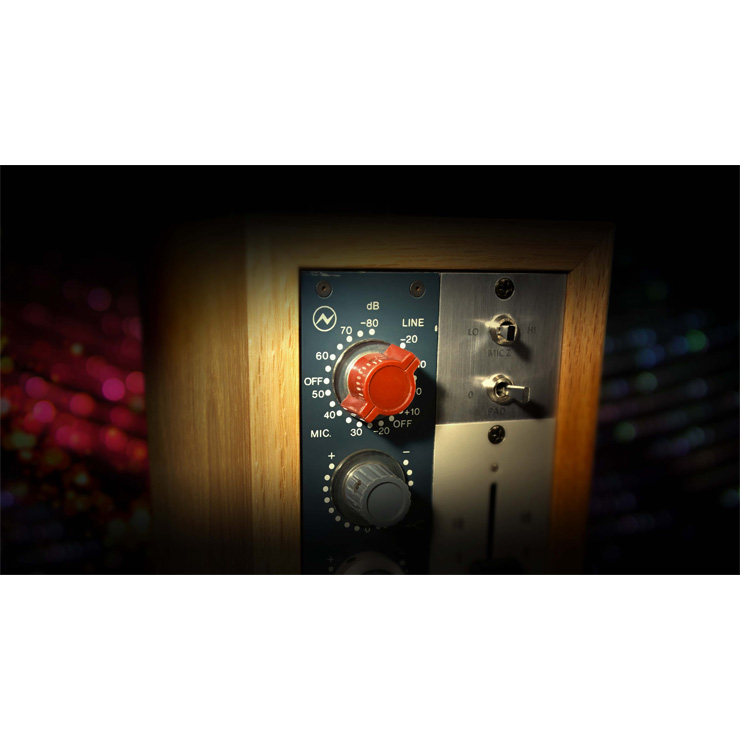
This article explains UAD's Neve 1073 Preamp & EQ Collection plug-in, essential for professional music production, from its historical background to practical use. You will learn why the Neve 1073, a classic piece of vintage gear designed in the 1970s, is still loved in today's DAW era, and about the outstanding accuracy of UAD's plug-in modeled with the latest technology. Through practical examples such as vocal processing, you will understand how to make use of the 1073's unique sound character, with its silky highs and rich low mids. It is must-read content for producers aiming for professional-quality recordings.
Neve's Iconic, Hugely Famous Channel Strip
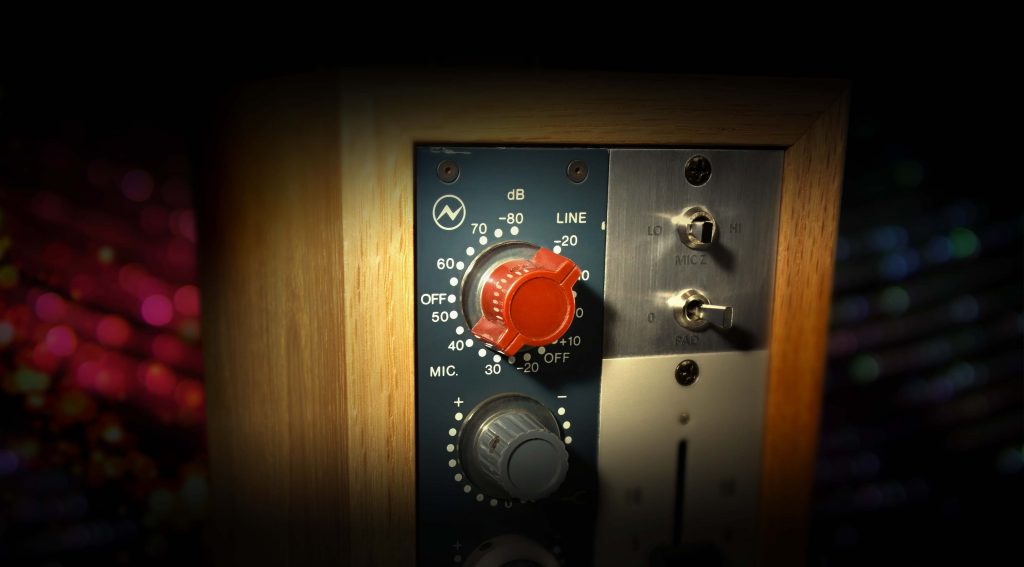
In the seventh installment of our series introducing outstanding UAD plug-ins, we cover the "Neve Preamp & EQ Collection."
Many companies have released emulation plug-ins of the Neve 1073, so it is probably a familiar name to music producers.
If you look up the price of the hardware, even reissues and replica models sell for several hundred thousand yen, and original vintage units sell for close to 1 million yen.
Why is the Neve 1073 loved by so many engineers, and why has its popularity not faded even today?
This time, while getting to the bottom of that secret, we will also review the sound of the UAD Neve 1073 Preamp & EQ Collection.
Product link: Neve 1073 Preamp & EQ Collection
Note that UAD plug-ins run on dedicated DSP accelerators (or Apollo series audio interfaces). For details, see this article.

The History and Characteristics of the Neve 1073
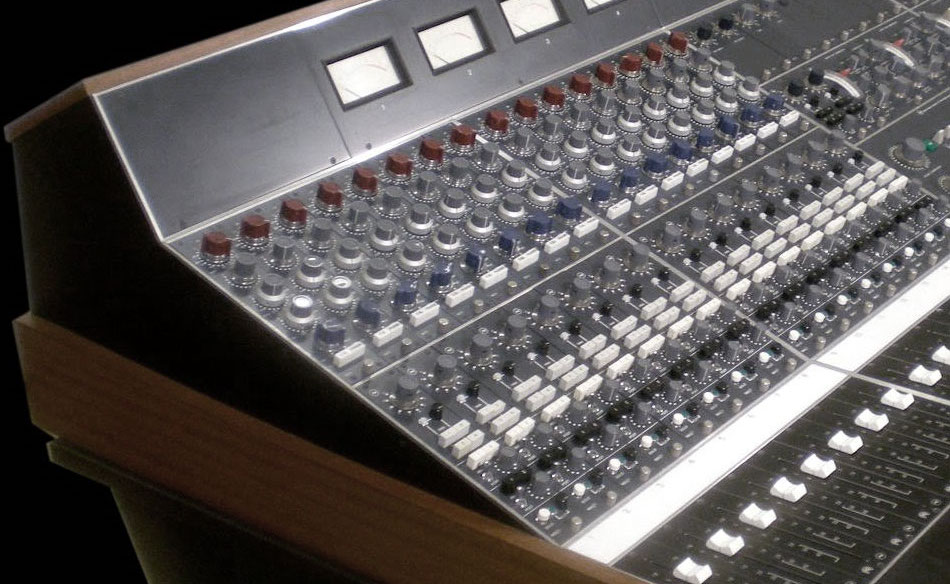
Neve was founded in 1961 by Rupert Neve. From the start, it designed and produced mixing consoles and modules for recording and broadcast studios, and in 1970 the Neve #1073 H/A-EQ was designed to fulfill an order from Wessex Studios. This became the origin of the Neve 1073 module, which still reigns as the king of vintage gear.
It has a discrete design with transistors as the main components and a Class A amplifier. What actually defines its sound is the transformers: they reportedly use transformers designed and ordered by Neve himself, who was originally a transformer design engineer.

Its sound character is often described as "silky," referring to highs that have a strong presence yet are smooth and pleasant to the ear. Run a vocal through it, and it will firmly establish the vocal as the star of the song. It is also well known for its rich low mids, and it is valued for adding thickness and warmth to kicks, bass and more.
The Neve 1073 was of course used to record countless hit songs and defined an era, but why did it not become a relic of the past as the times changed?
Because from the late 1990s, when multitrack recorders in recording studios began shifting from tape to DAWs, demand for outboard gear such as mic preamps and compressors rose again, and the value of classics such as the 1073 was rediscovered. It could be called a reaction against the flawless but, in a sense, "boring" sound of the DAW era.
Because production of Neve 1073 modules was limited, they came to trade at several times their original price. Their condition also varied greatly from unit to unit, making them risky to acquire, so pro audio makers around the world rushed to develop and sell replicas of this classic.

And of course, many emulation plug-ins modeled on the Neve 1073 were released after that.
UAD's Neve 1073 Preamp & EQ Collection is a plug-in that models rare, original 1970s vintage hardware with the latest technology. It reportedly captures all ten clipping points in the preamp and EQ circuits, giving it unrivaled precision among the many modeling plug-ins.
Main Parameters of the Neve 1073 Preamp & EQ Collection
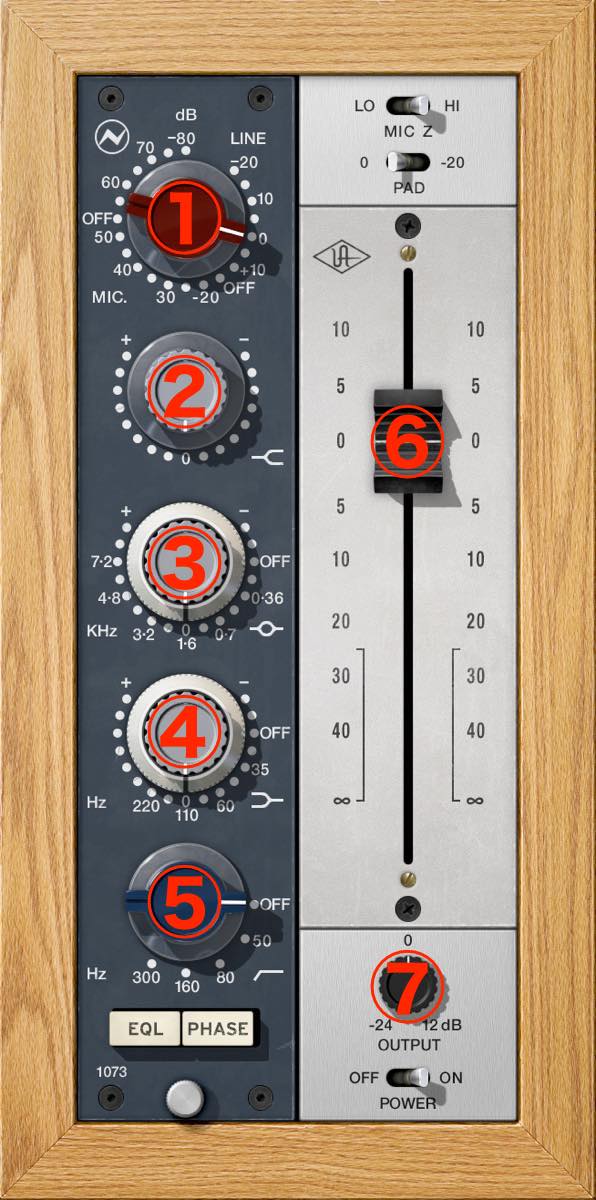
- (1) Input
Selects the input and adjusts the gain. Click the labels marked "MIC." and "LINE" to select the input type. With MIC input it adjusts over a 60 dB range clockwise, and with LINE input over a 30 dB range counterclockwise, both in 5 dB steps. Normally, select MIC when inserting it on an Apollo interface's preamp to record a microphone, and LINE otherwise. This is mainly where the 1073's unique coloration happens, but raising the input level also raises the volume, so adjust with the Level fader or the Output knob. - (2) High Shelf
A shelving EQ fixed at 12 kHz. Turn it clockwise to boost and counterclockwise to cut. The sheen you get from this high boost is also a hallmark of the 1073 sound. - (3) Midrange Band
A parametric EQ controlled with dual concentric knobs. Use the outer knob to select the frequency or off, and the inner knob to adjust the gain for the selected band. - (4) Low Band
A shelving EQ where you can choose off or one of four frequencies. Use the outer knob to select the frequency or off, and the inner knob to adjust the gain for the selected band. - (5) High-Pass
Applies a high-pass filter by selecting one of four fixed frequencies. Selecting off disables it. - (6) Level Fader
A level fader modeled on the original Neve console fader. It is used to adjust level in balance with the Input, and it also causes a slight change in tone. - (7) Output
Adjusts the plug-in's signal level without affecting the character of the signal. To give the sound strong coloration, set both Input and Level high and lower this Output to keep an appropriate volume.
Use Case 1: Applying It to Vocals
First, an example on vocals, where you can enjoy the essence of the Neve 1073.
Since the vocal is the face of the song, we aimed for a solid presence.
It instantly sounds brighter and more glamorous, doesn't it? The EQ has an effect too, of course, but the harmonics added by the preamp seem to create the Neve 1073's unique silky highs.
The settings look like this.
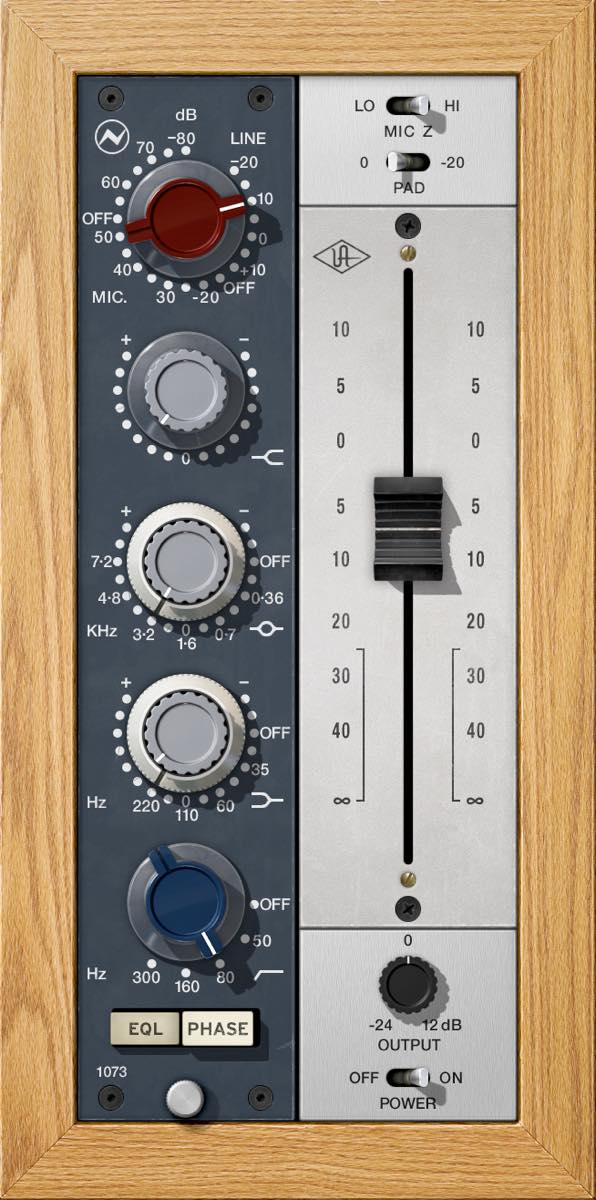
The input is set to Line at the -10 position, aiming for a pleasant amount of added harmonics. This also raises the volume, so lower it with the Level fader (this also makes comparing with bypass easier). These values depend on the level of the source, so decide them while listening carefully.
The high shelf, another key to the Neve sound, was boosted about 5 dB, but even a generous boost does not sound harsh; the highs extend smoothly.
The midrange boosts 3.2 kHz by about 4 dB to help the vocal cut through. It is easier to decide if you boost first and then switch bands to search.
The low band boosts 220 Hz slightly for strength and warmth.
Use Case 2: Applying It to the Kick
Next, an example on the kick.
We aimed for solid lows that form the foundation of the song, with mid-highs that cut through moderately.
It is not just heavier; it feels thicker. It also has a pleasant, springy body. Again, I think this is a tone unique to the Neve 1073 that you cannot get from EQ boosts alone.
The settings look like this.
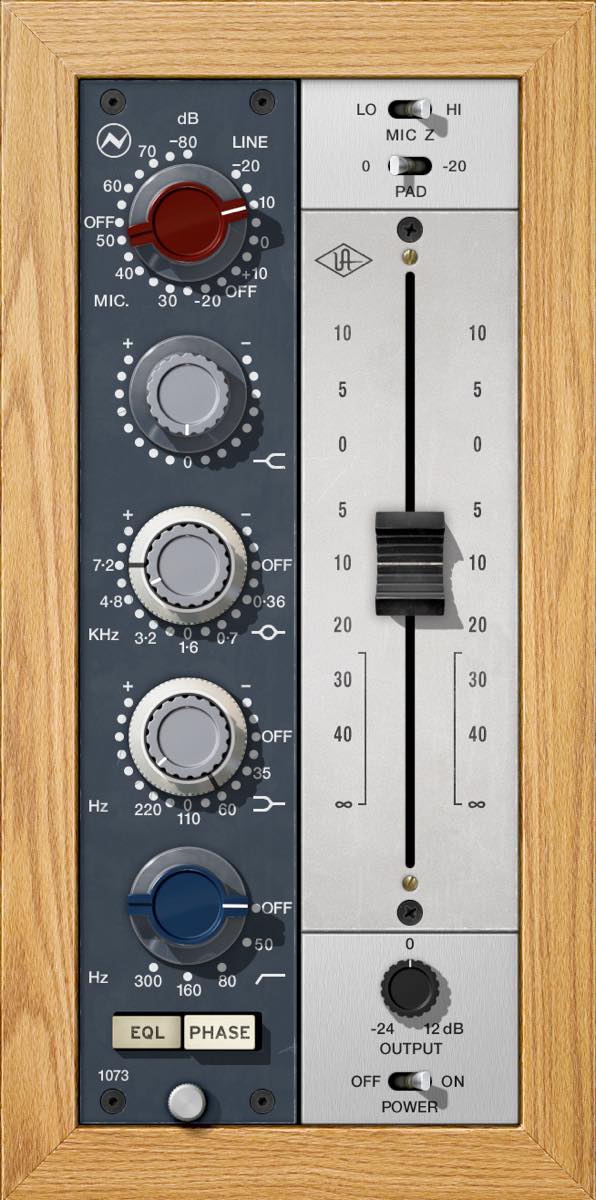
The input was set to a level that does not produce obvious distortion, ending up at Line -10. Distortion creates unnatural harmonics in the mid-highs, so it is best avoided unless that is what you are aiming for.
At this point you already get moderate tension and thickness, but the low band boosts 60 Hz slightly to shift the center of gravity. Perhaps due to the EQ curve's characteristics, the thickness above the specified frequency felt even more emphasized here.
The midrange boosts 7.2 kHz somewhat generously. This emphasizes the springy feel created by the preamp and builds a presence that does not get buried in the mix.
Use Case 3: Applying It to the Snare
Finally, let's look at a snare example.
We added a little drive with the preamp, aiming for a bright impression.
It adds a crisp brightness that feels truly analog. Yet the outline does not blur, and the source's punch is preserved.
The settings look like this.
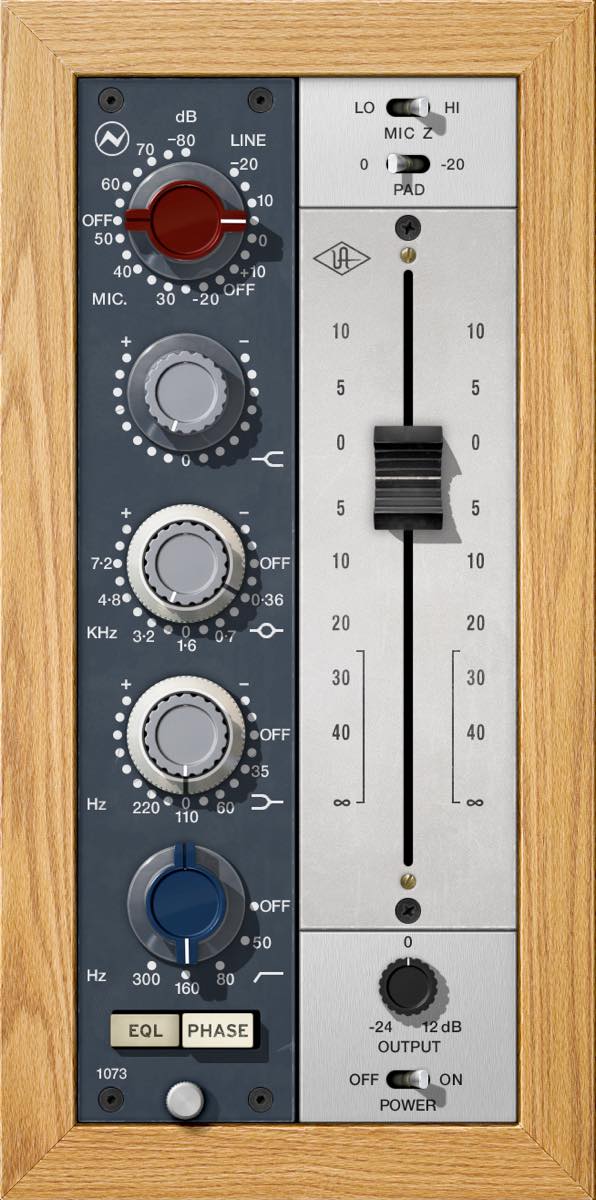
The higher you set the input, the rougher and more rock-like the sound becomes, but going too far makes it sound squashed by overdrive. That may fit genres aiming for it, but this time the -5 position was enough.
EQ correction is slight: the high shelf adds a little brightness, and the midrange targets the body resonance band to improve thickness and punch.
Finally, for reference, compare the whole mix before and after applying it to the three tracks above.
That concludes our introduction to the Neve Preamp & EQ Collection, along with the history of the original hardware.
It is such famous gear that using it gives you the thrill of "Oh, I'm getting closer to that sound." It must be a sound used on so many hit songs that it has become familiar to our ears.
Judgments of good and bad may be subjective, but since so many engineers choose it, couldn't it be called one correct answer for sound?
Please enjoy the Neve you have long admired, easily, with UAD.
Product link: Neve 1073 Preamp & EQ Collection
Frequently Asked Questions
Q1. What equipment do I need to use the Neve 1073 plug-in?
To run UAD's Neve 1073 plug-in, you need a dedicated DSP accelerator or an Apollo series audio interface. These enable its high-quality modeling.
Q2. Why has the Neve 1073 remained popular from the '70s until today?
Because its unique sound character, with silky highs created by the preamp's added harmonics and rich low mids, along with a reaction against the digital sound of the DAW era, makes it indispensable in modern recording.
Q3. What sources besides vocals can it be used on?
It is designed as a mic preamp, so it can be applied to many sources such as bass, kick and drums. It is especially recommended for low-pitched instruments that need thickness and warmth.
Q4. How faithful is the plug-in compared with a real vintage Neve 1073?
The UAD version captures all ten clipping points of the original 1970s hardware, achieving unrivaled precision in its modeling.
NEW ARTICLES
Latest English Articles