For those unsure how to choose a DAW, this article thoroughly compares five DAWs popular in Japan (Cubase, Logic Pro X, Studio One, Live and FL Studio) in terms of price, features and genre fit. It shows that the best DAW differs by music genre: Cubase, Logic Pro and Studio One suit J-pop and band production, while Live and FL Studio suit beat making and electronic production. Including upgrades from entry-level to higher editions and the use of academic editions for students, it provides criteria for choosing the best DAW for your production style and budget.
Comparing the Features and Tendencies of Each DAW from Various Angles
What you absolutely must have to do DTM is music production software, a [DAW].
There is a huge lineup of DAW products.
- Which product should I buy?
- Are some better or worse suited to certain genres?
- They are not cheap, so I don't want to make a mistake
Many of you are probably unsure about things like these.
This feature is for you.
We picked five standard DAWs widely used in Japan.
We thoroughly compare their price, suitable genres and features.
Thorough Comparison of Five DAWs Video
The Five DAWs and the Items Covered
The DAWs covered are the top five products in the "Popular DAW Ranking" we published in 2021.
- Steinberg – Cubase
- Apple – Logic Pro X
- PreSonus – Studio One
- Ableton – Live
- Image-Line – FL Studio
The five items examined are as follows.
Matching with Genres and Musical Styles

An important point to consider when choosing is "matching with your music genre".
Basically, there is no genre that a DAW cannot produce.
However, the "frequently used functions and methods" differ depending on the genre and production style.
Whether these are laid out to be easy to use is something you should understand.
Here, we check the tendencies based on data linking music genres and DAWs.
The surveys we cite are
- Results of Sleepfreaks' own survey of DTM users
- Aggregated results for popular DAWs published on the overseas site [equipboard]
The table compiling these two sources is here.
DAWs Popular with J-Pop Producers

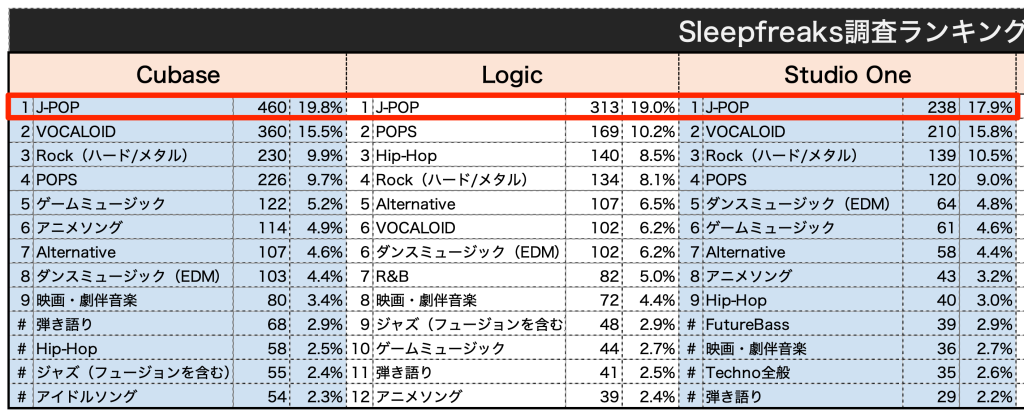
In our survey, [Cubase], [Logic Pro] and [Studio One] were the three most common products.
Comparing Japanese and overseas pop, there are the following tendencies.
- Music theory, including chord progressions, tends to be complex
- Band instruments and sounds tend to be used
Cubase and Studio One have rich features that support entering chord progressions.
Also, all three products have playing-technique control features for programming acoustic instruments.
DAWs Popular with VOCALOID Users
It is not a music genre, but a characteristic of Japanese DTM users is that many use VOCALOID (singing voice synthesis software).
The DAWs popular with those producing with VOCALOID (singing voice synthesis software) are

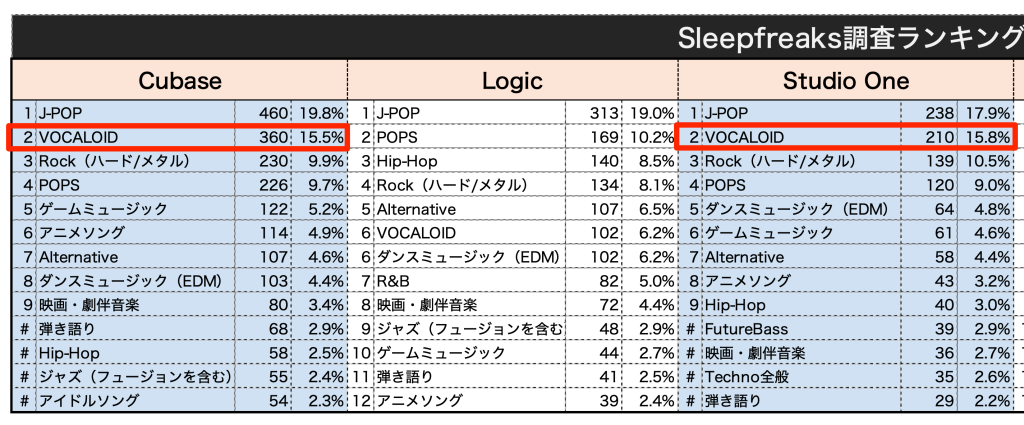
[Cubase] and [Studio One].
- Buying a Crypton Vocaloid library such as Hatsune Miku includes "Studio One Artist"
- YAMAHA's VOCALOID has a dedicated editor that runs inside Cubase (VOCALOID5)
These are presumed to be the reasons for their popularity.
DAWs Popular with Electronic/Dance Music Producers
In music genres built mainly on electronic sounds, such as synthesizers and samplers, the results differed greatly from before.
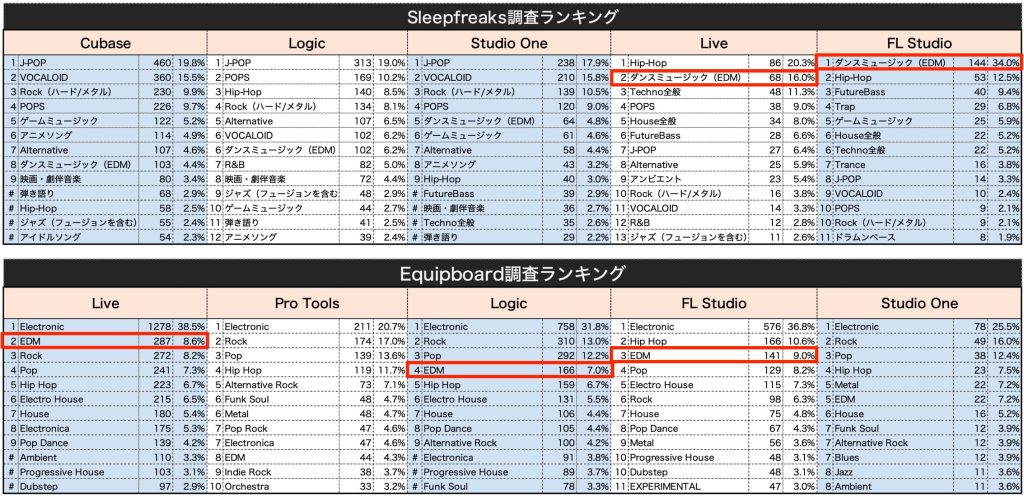
[Ableton Live] and [FL Studio] are popular.
In particular, many FL Studio users work in electronic genres, which was another characteristic we saw.
- They have features suited to music production that uses lots of loops
- Their functions for controlling changes in sound are easy to use
- They have plenty of synthesizer instruments
These are their characteristics.
DAWs Popular with Hip-Hop Producers
Next are the DAWs popular in hip-hop genres.
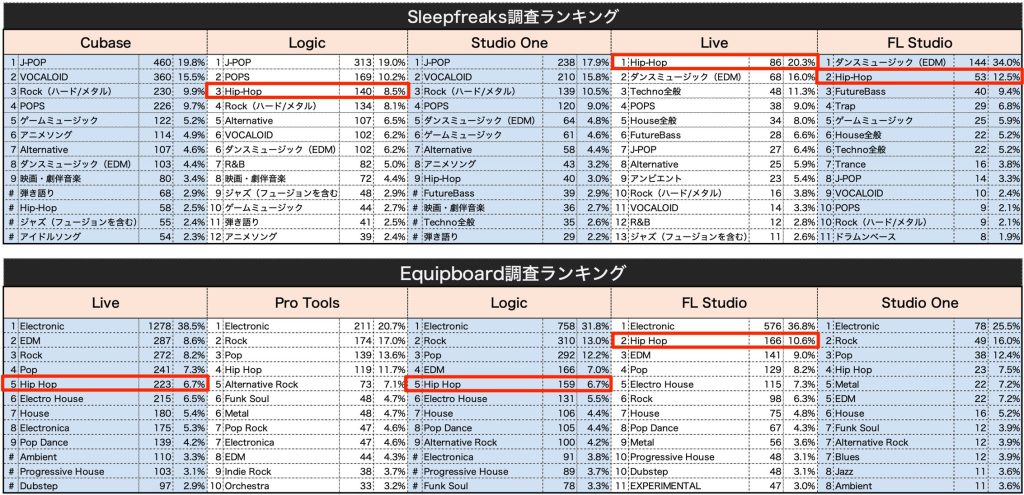
[Ableton Live], [FL Studio] and [Logic Pro].
As with electronic/dance music, the tendency toward loop-based music is similar.
FL Studio is strong in the overseas ranking, but in Japan Live was at the top.
Live has a reputation for ease of audio editing, and FL Studio for ease of MIDI editing.
It may be that the features valued, in other words the sounds sought, differ between overseas and Japan.
DAWs Popular in Rock Genres
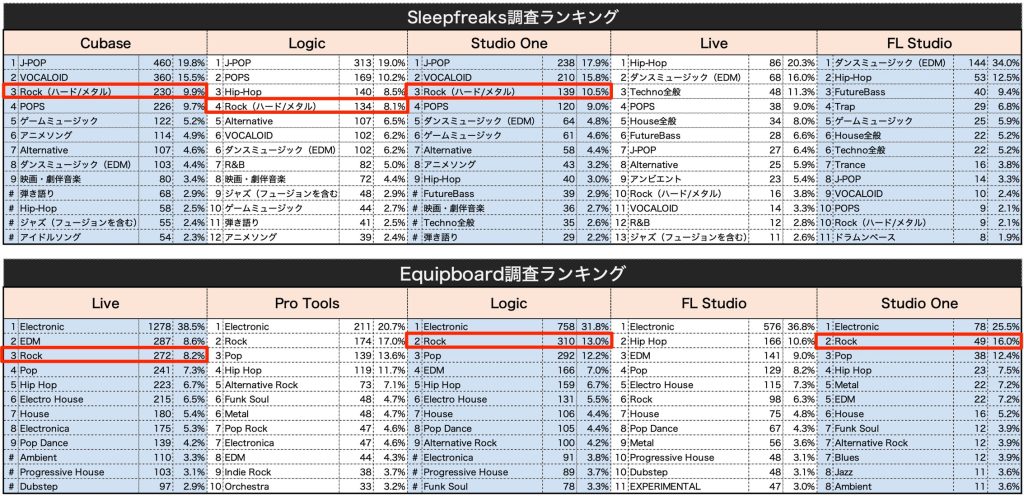
The results are the same as for J-pop: [Cubase], [Logic Pro] and [Studio One].
Overseas, Live was third, a result different from Japan. This is also interesting.
It is speculation, but because Japanese rock has many hits and syncopations while Western rock makes heavy use of loop patterns, Live may be chosen there.
Also, the fact that Ableton Live comes with audio interfaces from overseas manufacturers may be another reason for its popularity.
Summary of Genre Tendencies
As a rough tendency,
- [Logic Pro], [Ableton Live] and [FL Studio] are popular with beat makers and track makers
- [Cubase], [Logic Pro] and [Studio One] are popular with bands, singer-songwriters and arrangers
was the result.
Choosing a DAW with this in mind makes a good outcome more likely.
Product Features and Editions
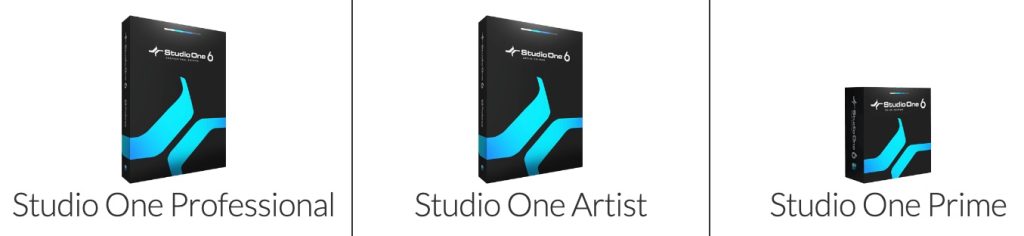
Each DAW has products of different grades (editions).
Higher editions are distinguished by
- The amount of included content
- Convenient features that speed up your work
these two points in particular.
If you want to complete songs as finished products, the top edition is recommended.
About Upgrades
Even if your budget makes the top edition difficult, you can upgrade to a higher edition later.
In many cases, you can buy it for the difference from the edition you are using, so you do not lose out.
We also recommend buying an affordable edition and switching to a higher edition when you need additional features.
About Academic Editions

Each DAW has an academic edition for students and teachers.

Logic Pro does not have an academic edition as a standalone product, and with FL Studio there are restrictions on releasing songs made with the academic edition.
For the other DAWs, you can buy the product for up to about 40% less.
The product content is the same as the regular edition, so if you are eligible, be sure to take advantage of it.
About Updates
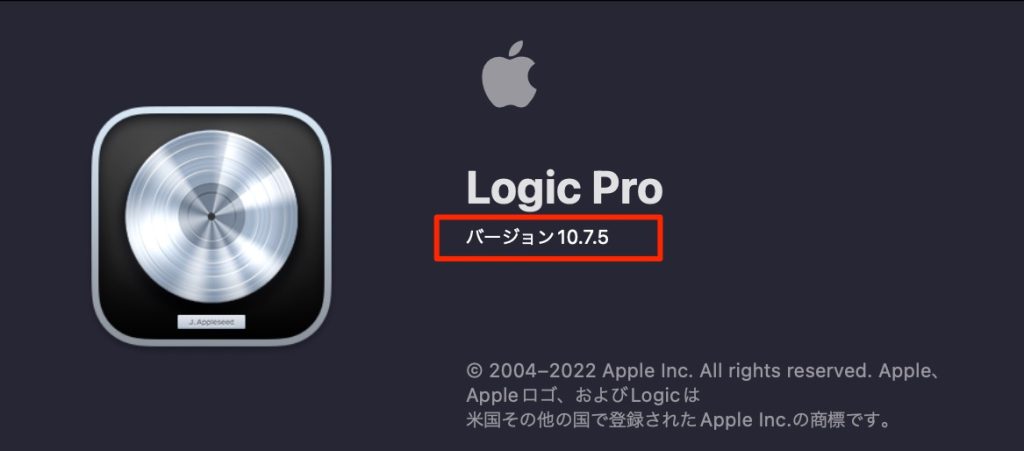
Like other software, DAWs are regularly updated to fix bugs and add new features.
The cycle of paid updates differs by product, but there are two DAWs that stand out.
FL Studio guarantees lifetime free updates, so once you buy the product, there are no update costs, ever.
Logic Pro's last paid update was in 2013, and it has been updated for free up to now.
These two products keep update costs down and can be called better value than other products.
About Included Content and Devices
DAWs come with various content used in music production.
This content falls broadly into three types.
Instruments
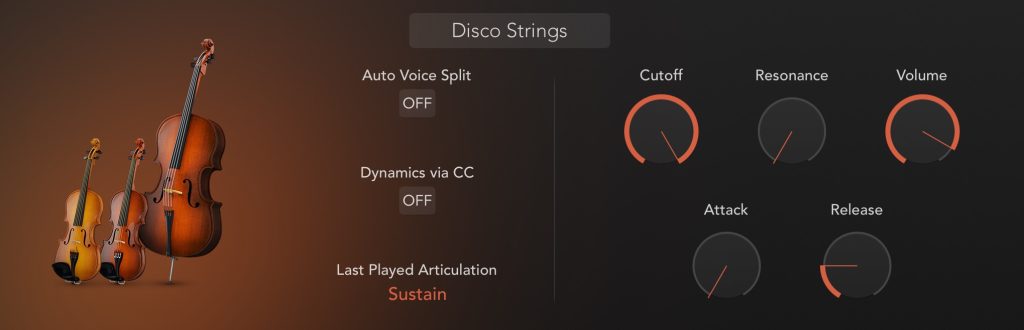
These are virtual instruments, such as drums, piano, bass and guitar, that you can launch inside the DAW.
With plenty of instruments, you can use a wide variety of sounds in your songs.
Besides the variety of instruments, sound quality is also important.
Effects
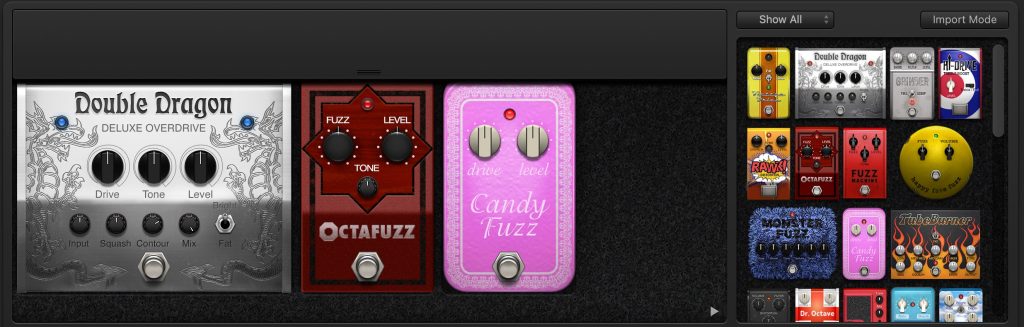
Devices that process sound are called effects.
They are used to change an existing sound, for example when you want to add echo to vocals or bring out the low end.
Here too, both quantity and quality matter.
Samples
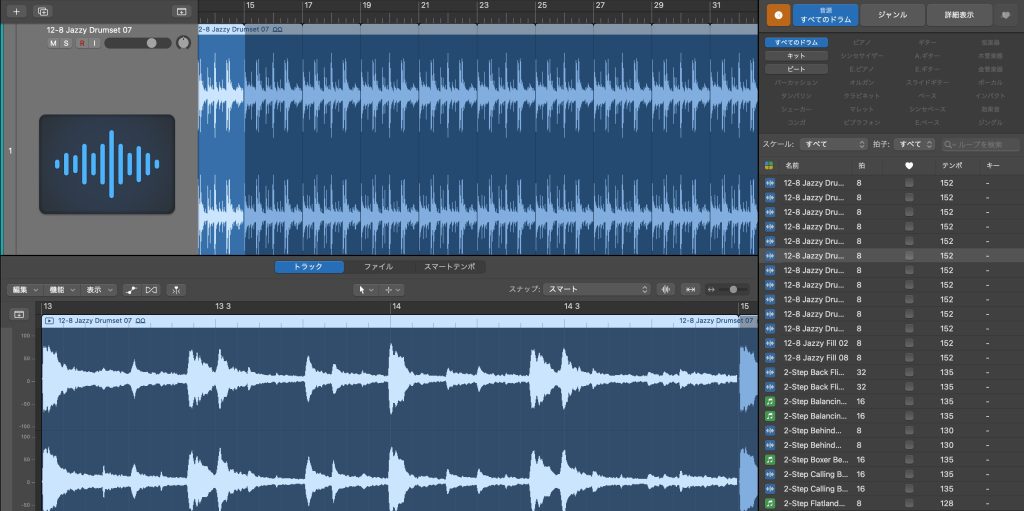
These are audio files recording the sounds of various instruments, which you import into the DAW to use.
[Loop samples] that record playing phrases,
[one-shot samples] that record a single note of an instrument, and so on.
Loop samples in particular play a phrase just by dropping them into the DAW, letting even beginners make songs easily.
Here, we compare the amount of included content in the top edition of each DAW.
Cubase: 70 GB in Total
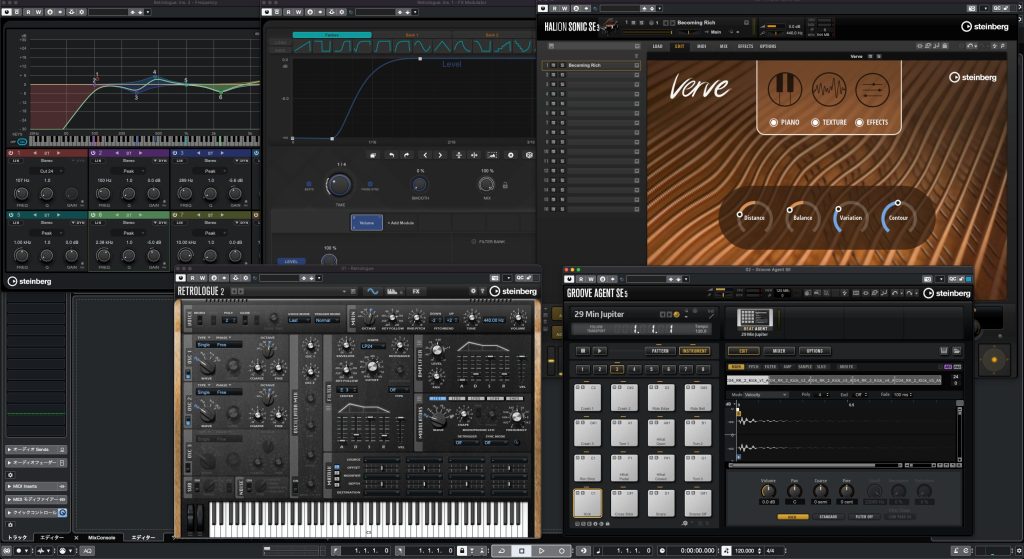
Its instruments, effects and samples include content usable across a wide range of genres.
The quality of the instruments is uneven, but the piano is on par with instruments sold separately.
Its effects tend to actively incorporate trending products, and many have quality worthy of paid products.
Logic Pro: 72 GB in Total
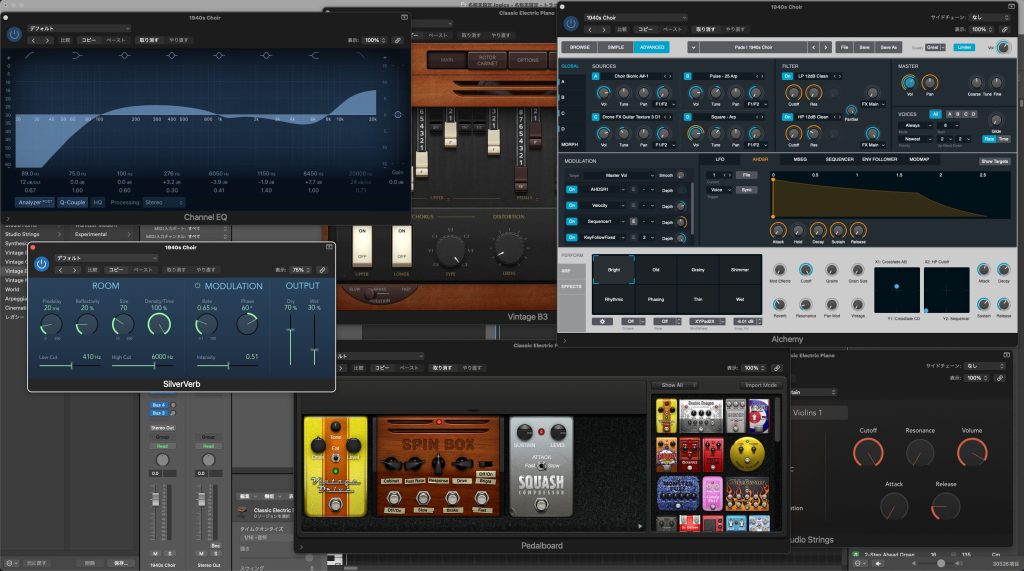
Its instruments, effects and samples are all comprehensive.
Compared with other DAWs, I felt the quality of its instruments is less uneven and high on average.
It can handle producing a wide range of music genres.
Its effects focus on shaping sound rather than drastic processing, and many are suited to genres with lots of acoustic instruments.
It also has a wealth of its own loop samples called [Apple Loops], which are very easy to use.
Studio One: 40 GB in Total
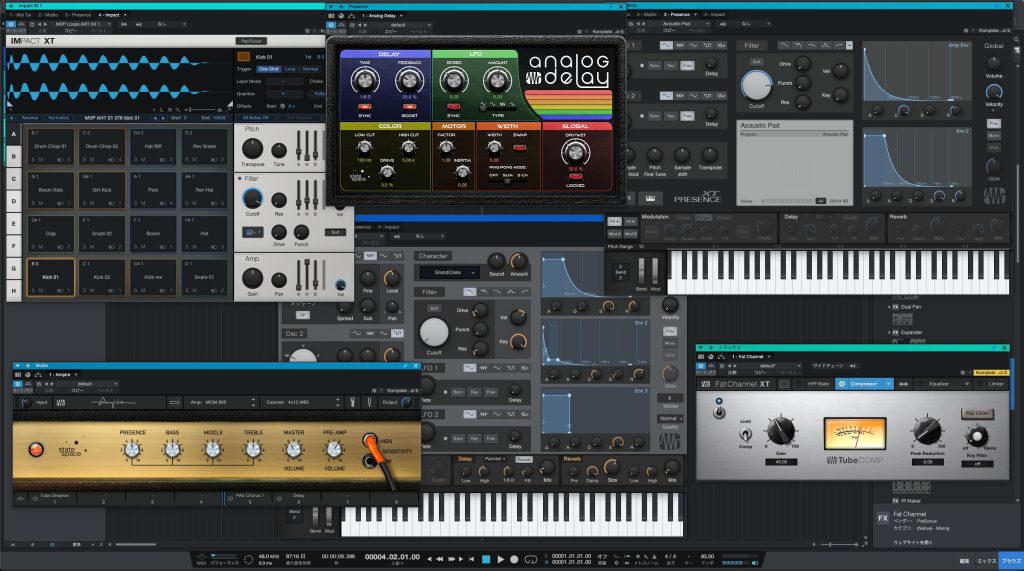
As the size suggests, its included content is more modest than the two products above.
For instruments in particular, there is a good chance you will need to buy more.
Its effects, like Logic's, give the impression of a lineup focused on mixing.
Ableton Live: 76 GB in Total
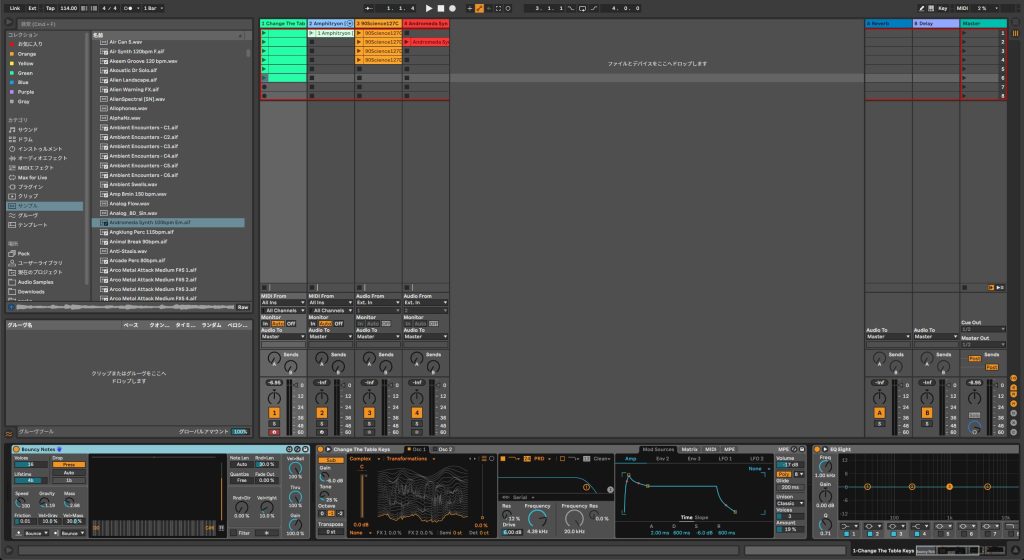
It has the largest amount of included content and can cover a wide range of genres.
Synthesizer instruments in particular are plentiful, and you can produce songs fully without adding content.
It also has plenty of effects that drastically change sounds, giving it excellent affinity with electronic music.
FL Studio: 4 GB in Total
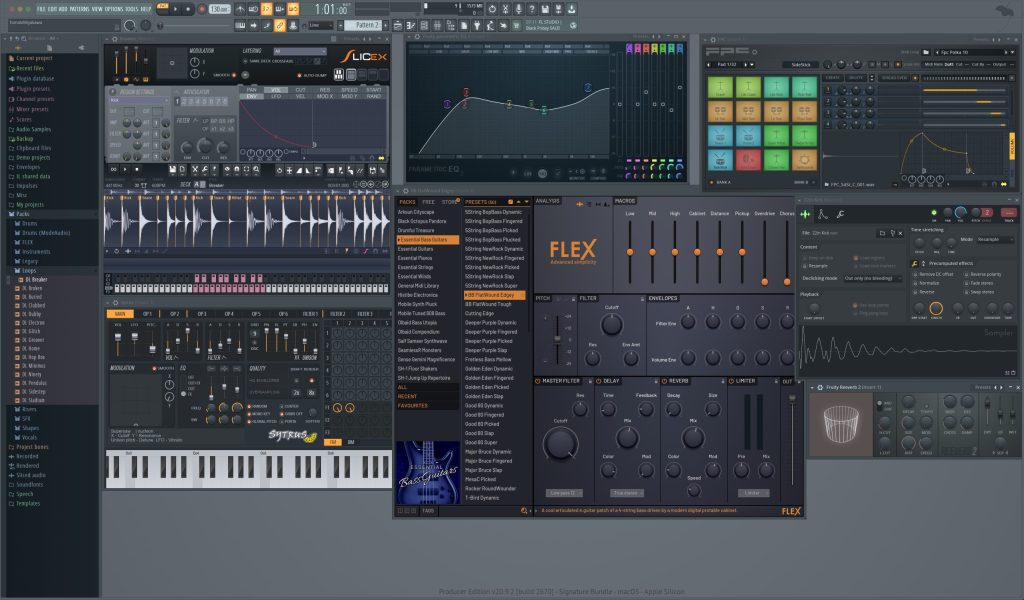
The total size is not large, but you can download additional instruments separately later.
Like Ableton Live, its selling point is plenty of synthesizers, but it has few acoustic instrument sounds, so if you want to produce genres other than electronic, you will need to add instruments.
It emphasizes digital effects and can be called a DAW specialized for electronic genres.
4. Ease of Learning

DAWs are highly specialized, and there is a lot to learn before you can use them freely.
For those starting DTM, not only the richness of features but how easy it is to learn is also important.

[Cubase], which has many users in Japan, lets you get a great deal of information from blogs, videos and social media, which can be called an advantage.
[Studio One] is designed so that the functions needed in modern music production are easy to access.
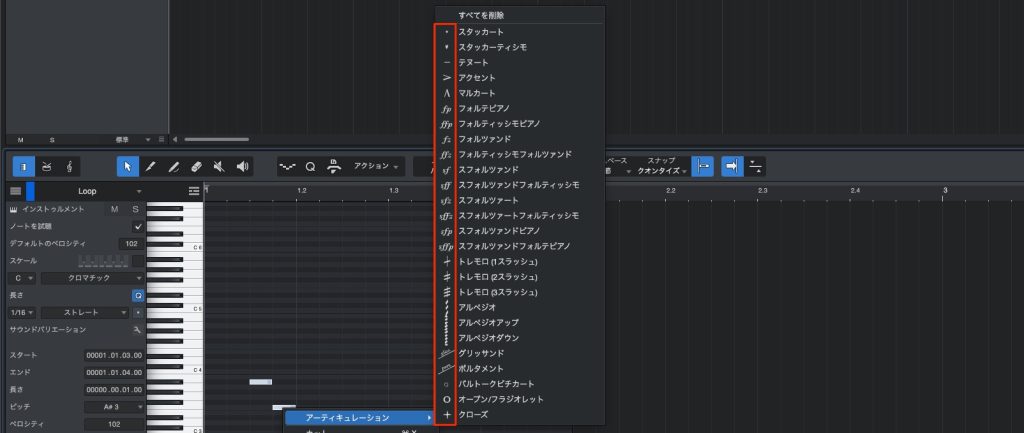
Each function in the menus shows an icon, making it visually easy to understand, a feature other products do not have.
Conversely, note that FL Studio does not support Japanese, and all menus are in English.
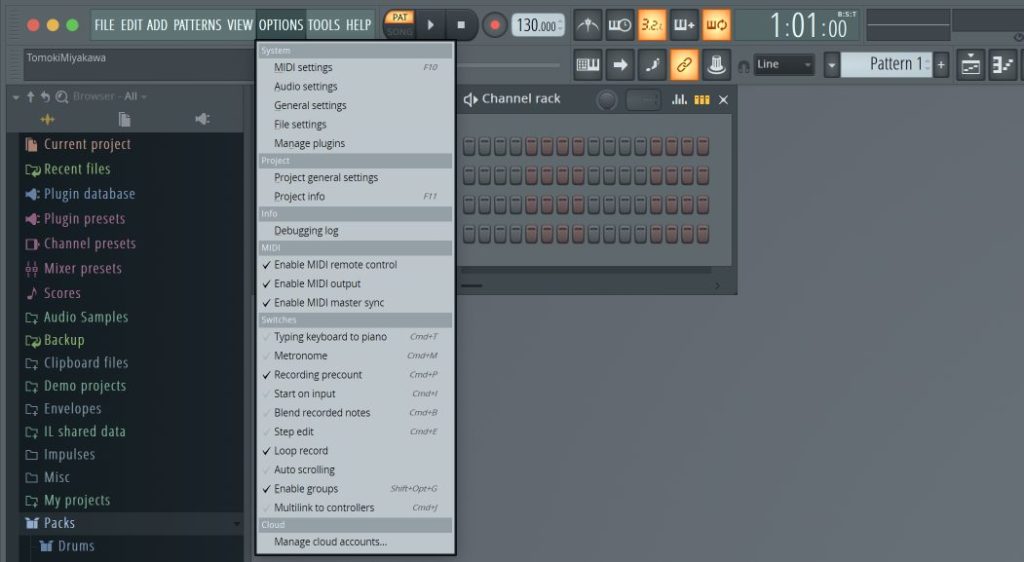
For those who are not good at English, you need to understand music terms and English at the same time, so the hurdle to mastering it can be called high.
5. Richness of Composition Aid Features
In music production, one hurdle is music theory.
Basic theory such as scales and chords involves a lot of study, and a single wrong note can often take a song away from what you imagined.
Some DAWs have composition aid features that support making songs, so let's check them.
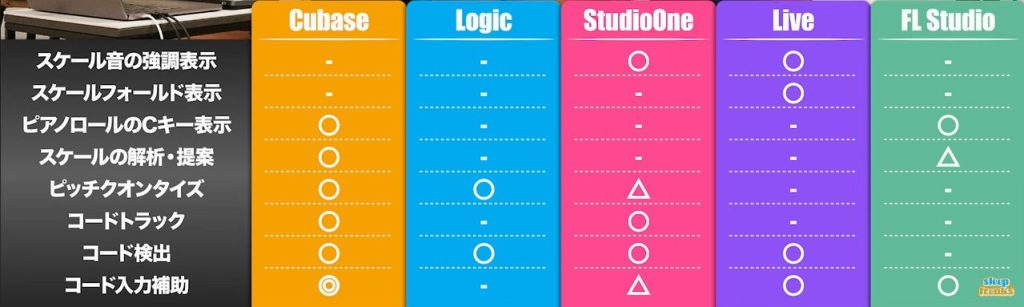
[Cubase]
It has many very practical tools, such as Chord Pads and Scale Assistant.
[Studio One]
It has many convenient features, such as the Chord Track and transposition.
[Ableton Live]
Besides highlighting the notes of a scale, it has an excellent unique feature that can hide notes outside the scale.
It is very convenient because you can program without hitting wrong notes, without needing playing skill or knowledge.
How did you find it?
The criteria for choosing a DAW are not uniform; everyone differs in price, purpose, genre and so on.
We hope these items help you choose the right DAW.
We look forward to you creating wonderful songs in a comfortable music production environment!
[A must-read for DTM beginners] How to choose a DAW | A thorough comparison of recommended music software by price, features and genre
We picked five standard DAWs and thoroughly compare their price, suitable genres and features.
Video: https://t.co/BM5MmNH3qiArticle: https://t.co/O2lQnLshOU#DTM #DAW #composing pic.twitter.com/ln5jhBmr0g
— SLEEP FREAKS (@SLEEPFREAKS_DTM) November 27, 2022
Frequently Asked Questions
Q1. Should I choose a DAW according to genre?
Yes. Cubase, Logic Pro and Studio One suit J-pop and rock production, while Live and FL Studio suit beat making and electronic production. Basically any DAW can produce any genre, but the layout of frequently used functions and the richness of dedicated tools differ by genre, so choosing the best DAW greatly improves work efficiency.
Q2. Is it okay for beginners to start with a cheap edition?
No problem. Many DAWs can be upgraded to higher editions later, and you can buy the upgrade for the difference, so you do not lose out. We recommend learning the basics with an affordable entry edition and switching to a higher edition as needed.
Q3. Can students buy DAWs at a discount?
Yes. DAWs other than Logic Pro X have academic editions, which you can buy for up to about 40% less. If you qualify as a student or teacher, an academic edition is worth considering.
Q4. Which DAW is recommended for using VOCALOID?
Cubase or Studio One is recommended. These DAWs have strengths in VOCALOID integration: Studio One Artist comes with purchases such as Hatsune Miku, and YAMAHA's VOCALOID 5 runs inside Cubase as a dedicated editor.
NEW ARTICLES
Latest English Articles