For music production with DTM, monitor speakers that reproduce sound accurately are essential. Ordinary speakers and headphones embellish the sound, so if you produce with them, your music will sound off when heard on other devices. This article introduces five models, the Focal Shape 40, EVE Audio SC204, Yamaha MSP5 Studio, IK Multimedia iLoud Micro Monitor and ADAM Audio A5X, and explains each one's sound characteristics and the genres they suit. It's a practical guide to choosing the best monitor speakers for your space, budget and production genre.
The benefits of getting monitor speakers
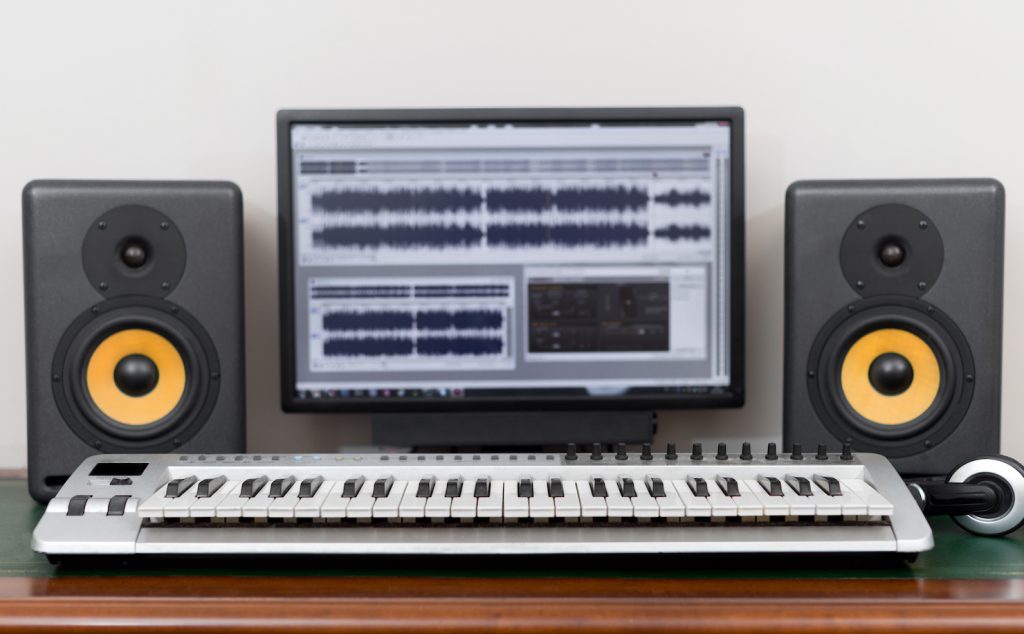
This time I'd like to introduce five monitor speakers, one of the indispensable items for making music.
When listening to music in everyday life, I think most people use headphones, earphones, or wireless speakers connected to a computer or smartphone.
However, to make listening to music more enjoyable, these almost always color the sound.
If you make music with them, you'll produce and mix with colored sound, so it will sound off when others listen to it.
Monitor speakers, by contrast, excel at faithfully reproducing the sound as it was produced, so you can produce and mix so that it sounds clean on any speakers, earphones or headphones.
Let's get right to the top five recommended monitor speakers.
1. Focal Shape 40

The Shape 40 is the stylish one among the monitor speakers introduced this time.
With touches like flax fibers used in the woofer cone, it's meticulous about both design and sound down to the details.
It also has dual passive radiators on both sides, so despite its 4-inch size, you can monitor the lows properly.

Also, the bottom of the speaker has screw-type rubber feet, so you can easily set it up angled slightly up or down.

As for the sound, the lows and mids come through well, so my impression is that it pairs well mainly with rock, pop and jazz.
A great choice for those who want to be particular not only about the speaker's sound but also its design!
2. EVE Audio SC204

Next is the SC204.
This product achieves high-quality sound with a woofer called the Silver Cone and an AMT tweeter unit.
The SC204 also has high-quality DSP circuitry, and with the push knob on the front of the speaker, you can control everything from volume to filters.
While many speakers put their knobs and filter settings on the back, the SC204 lets you easily adjust the sound while monitoring when you want to tweak it.
As for the sound, its tight highs and lows are distinctive, so it's recommended for those looking for monitor speakers for programmed, electronic music.
3. YAMAHA MSP5 STUDIO

Next is Yamaha's MSP5 STUDIO, which hardly needs any introduction.
This speaker is a monitor speaker trusted by many people, from amateurs to pros.
With the bass reflex port at the top front, it delivers very tight lows.
The back also has filters for adjusting the sound, so you can set it up to suit your environment and preferences.
As for the sound, it has tight lows and mid-highs that aren't overemphasized.
My impression is that it pairs well with programmed music and pop.
4. IK Multimedia iLoud Micro Monitor
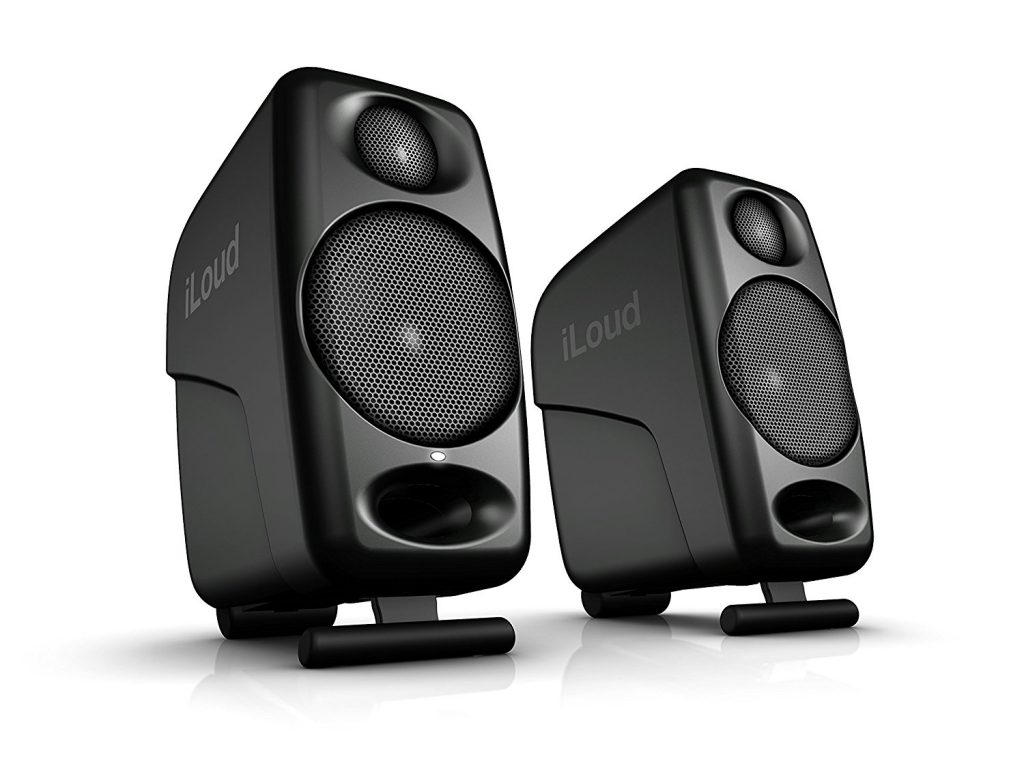
You only have a little space for speakers, but you want good sound, and speakers that make the lows easy to monitor...
The iLoud Micro Monitor makes those wishes come true.
First, the body is very compact. Even among 3-inch speakers, it's in the quite compact category.
But despite its small size, the back has RCA inputs, an EQ for adjusting the sound, a volume knob and even Bluetooth.

Because it supports Bluetooth connection, it can also be used as mixing speakers for people making music on iOS.
As for the all-important sound, it produces lows so full you wouldn't believe they're 3-inch speakers. The mid-highs also have no particular coloration.
My impression is that it can be used for programmed music, pop, EDM, rock and more.
It can also be used as a Bluetooth speaker outside of production, so you can expect it to be useful in a wide range of situations.
5. ADAM Audio A5X

If you want monitor speakers with strong lows, these are the first candidate that comes up.
They produce a lot of low end, so if you're planning to put them on a table, I recommend getting isolators as well.
Also, thanks to the X-ART tweeter, the highs hold their own against the lows.
The front has a volume knob and power button, so adjusting the volume while listening is very easy.
The back also has filter adjustments, so you can tweak the sound to suit your space and preferences.
My recommendation: my impression is that they pair well with hip-hop, EDM and rock.
The company has also released the T Series for DTM beginners.
- T Series "T5V / T7V"

They're built around the concept of being for casual users, and their price is kept extremely low for their performance.
ADAM Audio's accumulated technology has gone into them generously, and their outstanding sound quality is a key feature.
Next, I'd like to explain in order the audio interface, speaker stands and isolators used when setting up monitor speakers.
Connecting via an audio interface, and cables
Buying only the monitor speakers above will make it difficult to connect them to your computer.
Even if you manage to connect them, noise may occur.
That's where you need a piece of gear called an audio interface.
Here's an overview of how to connect things.
First, an audio interface is an essential item for connecting speakers, mics, synthesizers and so on to a computer.
Please look at the image below.

I've summarized how to connect each piece of gear and the computer in an image.
As you can see, there are various cables you can use to connect, depending on the monitor speakers you choose.

To avoid being unable to connect after buying, check with a music store clerk before buying, or check which cables the product supports.
Also, connecting to speakers mainly with what's called an XLR (or cannon) cable produces less noise, so I recommend checking this as well.
The benefits of using speaker stands
When setting up monitor speakers, the best setup is to have your ears at the same height as the part called the tweeter (the round part near the top of the speaker).
With your ears and the tweeters at the same height, you can judge the sound accurately, and that shows in your work.
What you need for this is speaker stands.
The main types are ones that sit on a table and freestanding stands.


Which one to get depends on your setup, so check with a music store or in advance before deciding.
The benefits of using isolators
Is the low end from your speakers boomy?
That's when isolators come in handy; you place them between the speakers and the stand.

The benefit of isolators is that they suppress unwanted vibration from the monitor speakers.
Unwanted vibration here refers to things like the low end resonating with the desk when you place the speakers directly on it.
Removing it lets you monitor the lows more accurately.
What did you think?
I've covered things to watch out for before getting monitor speakers.
Some of you who've read this far may think, "Wow, setting up speakers is a lot of work..."
But please think about it more casually.
At first, I think what matters is wanting to hear the sound you're making through speakers.
If, as you use them, you feel you'd like to improve your setup more, I'd be glad if you looked over what I've written above again.
About the author
be-bee (Shun Ito)
Born in 1987. A Logic Pro X and Ableton Live user.
After returning from studying in the US, graduated from music school and made a debut as a composer.
Composes and arranges mainly EDM and pop, and also works as an engineer.
Twitter ID: @bebee330
Instagram ID: https://www.instagram.com/bu_e_bu/
YouTube channel: https://www.youtube.com/user/murmur330
Frequently asked questions
Q1. What's the difference between monitor speakers and ordinary speakers?
Monitor speakers specialize in faithfully reproducing the sound as produced without coloring it. Ordinary speakers and headphones embellish the sound, so if you produce with them, it may sound off when heard on other devices.
Q2. If space is limited, which monitor speakers do you recommend?
We recommend the IK Multimedia iLoud Micro Monitor. At 3 inches it's compact, with full lows and uncolored mid-highs. It also has Bluetooth and supports production on iOS.
Q3. Which monitor speakers are best for producing hip-hop and EDM?
The ADAM Audio A5X is ideal. Its strong low end pairs well with producing these genres, and with its X-ART tweeter the highs are powerful too.
Q4. Are there affordable monitor speakers for beginners?
ADAM Audio's T Series (T5V/T7V) is built around the concept of being for casual users, with prices kept low for their high performance.
Q5. Which monitor speakers are good for producing pop and rock?
The Focal Shape 40, Yamaha MSP5 Studio and IK Multimedia iLoud Micro Monitor are suitable. They feature tight lows and uncolored mid-highs and handle multiple genres.
NEW ARTICLES
Latest English Articles