Understanding a song's key

This time, let's learn about keys.
Once you know the key, you can see which notes you can basically use in a song.
You have probably raised or lowered the "key" at karaoke because it was too high or too low.
Also, in a band, if the vocalist says, "The key of this song is low, so raise it," you need to change the melody and chords to match.
What you learn this time is useful in situations like these.
First, take a listen to this.

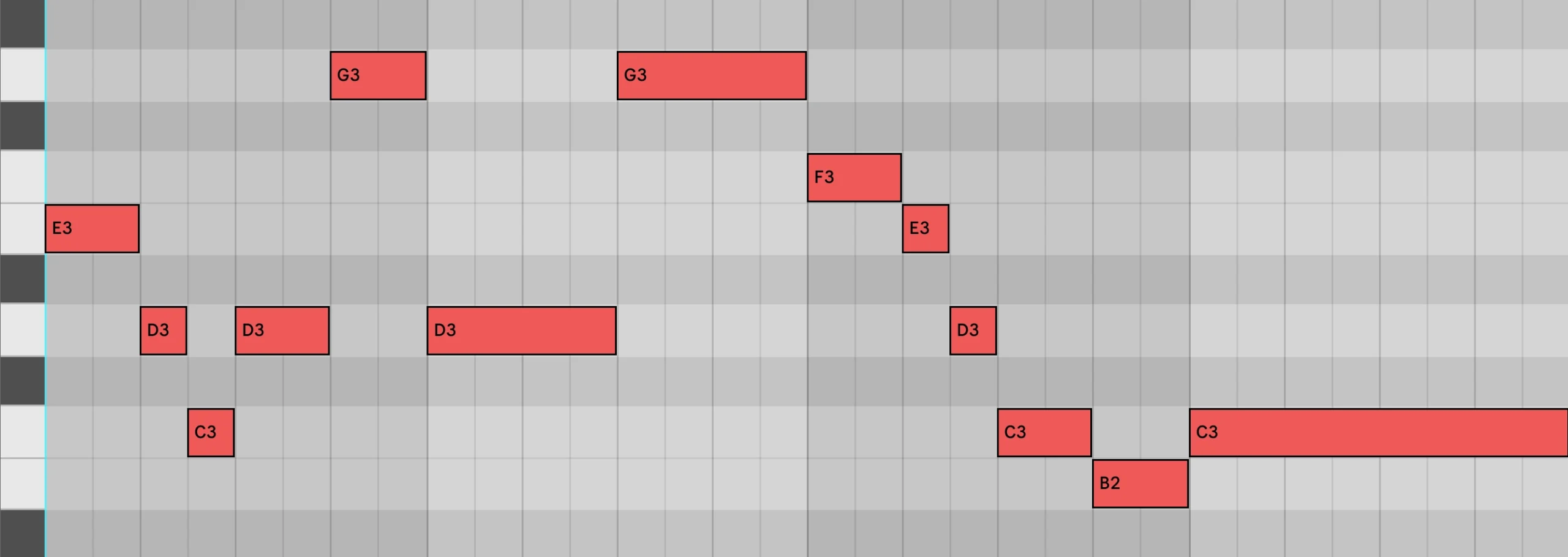
In Lesson 2, we learned the C major scale; this melody is made only from its notes.
Following the melody made only from the C major scale,
we raise the key, just like at karaoke.
Next, we lower the key.
The pitches are different, but it sounds like the same song.
So what is a "key"?
This is related to the major scale from Lesson 2.
With C as the tonic (main note), arranging notes in the order whole, whole, half, whole, whole, whole, half
produced the bright-sounding C major scale.
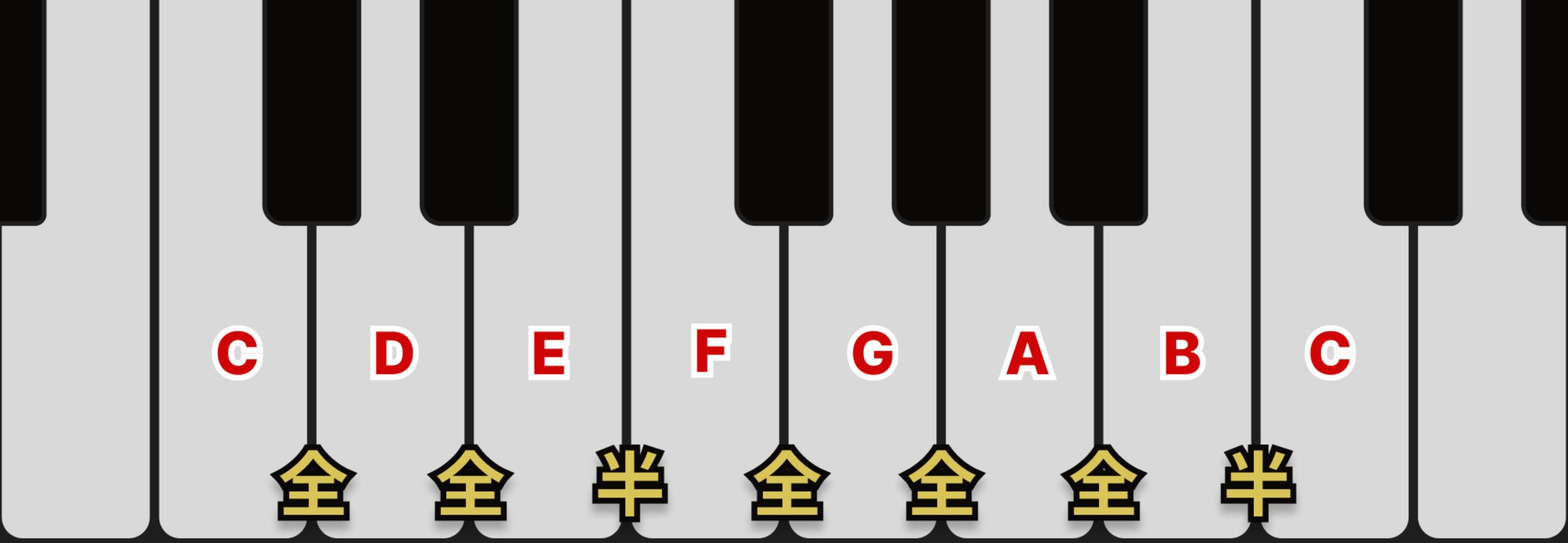
With C as the tonic and these pitches at the center,
you can create a song in the key of C major = a major song with C as the tonic (a bright song centered on C).
Now let's look at this key raised by +2 (two half steps).
In notation, it looks like this.


Checking it in the piano roll is very easy.
Select all the notes, then move everything up by "+2 (two half steps)."
Before raising (key of C major)
After raising (key of D major)
The pitches that appear in the melody in the key of D major
are, of course, the notes of the D major scale.
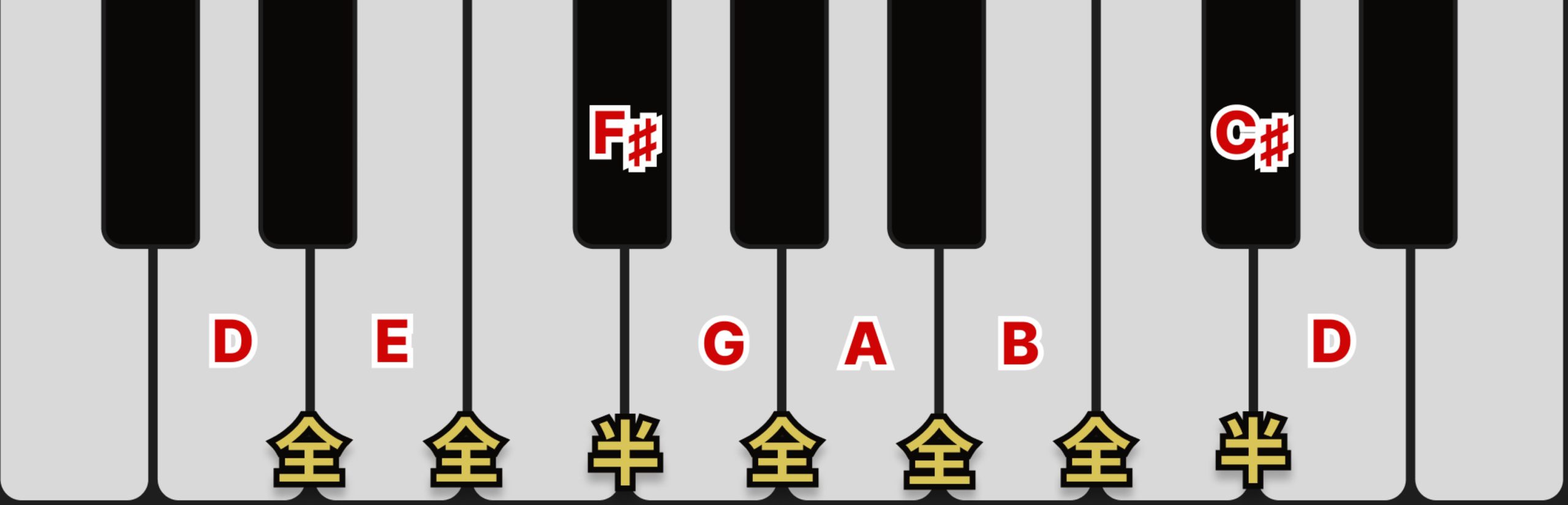
This is the basic idea of a key.
Understanding just this much makes music theory feel much more approachable.
Next time, while continuing the discussion of keys,
we will move on to explaining the circle of fifths.
There is also a video explaining keys in another course.
Please refer to it as well.
Video explanation
Excerpts of questions and answers from the YouTube video

How do you count flats?

Please count using either sharps or flats consistently. For example, C# and D♭ are just different names that can refer to the same note (strictly speaking they differ slightly depending on the tuning system, but you can treat them as the same here).
The phrase "chords of hit songs" bothers me a bit. Those chords are used in plenty of songs that didn't sell at all, right?
As you say, similar chord progressions are used even in songs that did not sell, and using the progressions explained here as they are does not mean a song will be a hit. Our aim is simply to give people who dislike music theory because it seems difficult a chance to find it interesting, by explaining the functions of chords in songs that actually became hits. Thank you for your valuable feedback, and we appreciate your continued support.

Frequently asked questions
Q1. How do you change the key in music production?
Select all of the melody's notes in your DAW's piano roll and move them up or down to change the key easily. For example, simply raising them by two half steps changes the key from C major to D major.
Q2. What is the relationship between a key and a scale?
A key is the combination of a tonic (main note) and the scale built around it. In the key of C major, C is the tonic and the song is made from the notes of the C major scale.
Q3. Is raising the key at karaoke the same as in music production?
The basic idea is the same, but in music production you select all the notes in the piano roll and move them together, so you can change the key more accurately and easily.
Q4. Does changing the key change the impression of the melody?
Because the relative pitch relationships do not change, the impression and mood of the melody basically stay the same. However, people do perceive the change in pitch.
NEW ARTICLES
Latest English Articles