Mid-side (M/S) processing is a mastering technique that lets you treat the center and sides of a mix separately. Increasing the side level can create a wider stereo image. Waves MS Matrix offers a way to do this by applying it to the master track and exporting audio. This article walks beginners and experienced producers through the process as one approach to finishing a mix.
Using M/S Processing to Shape Width and Loudness
Mid-side processing is a technique used in mastering, the final stage of finishing a track.
The typically louder center component and
often quieter side component can be processed independently.
Raising the side level can make the mix sound wider; the original tutorial also aims to increase perceived loudness. Results depend on the material and processing.
We have also prepared the following software-specific articles on M/S processing.
Those methods can involve a lot of steps.
The plug-in that lets you bypass much of that complexity is MS Matrix.
Selected Questions and Answers from the YouTube Video

Thank you for the tutorial. Can the split-channel export shown at 2:05 also be done in Pro Tools?

Yes. Change the format in the export window to “Multi-Mono.” https://sleepfreaks-dtm.com/for-advance-protools/ms_protools/ You can also perform M/S processing without first exporting a file, as shown here: https://youtu.be/-7w9MO9BzvY?t=702
In Studio One, should I also turn off the post-effects on the master track?
Yes. Since the processing will be done after export, turn them off before exporting.
When I send a mono track to a mono plug-in, the sound on the receiving side is panned to either the left or right. What should I do?
Could you try changing the plug-in on the send destination from mono to stereo?
Does this method make phase shifts noticeable? I suppose any processing can shift phase, but even when I use something like H-EQ, the overall cohesion seems to disappear and the song sounds blurred. I think my level adjustment skills may be the problem. Would it be better to apply this kind of processing at the stems stage?
The original response recommends keeping M/S processing subtle in mastering because processing can alter phase relationships. One option is to leave out elements that need a solid position, such as drums, bass, and vocals, and bus other tracks together for M/S processing. Note that M/S encoding and decoding alone are reversible; phase changes depend on the processing applied.
The video says to avoid hitting red when exporting audio. If the meter does turn red, should I lower the output?
The original answer suggests lowering the fader and exporting a 32-bit floating-point WAV to preserve audio quality. Floating-point files provide additional headroom, but they cannot repair clipping that has already occurred earlier in the signal chain; check levels throughout.
Purchase the product: https://bit.ly/3aQu0HT
Video Highlights: Apply It to the Master Track
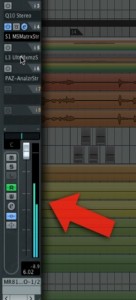
Apply MS Matrix to the song’s master track.
Finish the mix first.
The “L” channel carries the center (mid),
and the “R” channel carries the side.
Video Highlights: Export Audio Files
You could use an EQ or compressor that can process “L” and “R” separately,
but exporting the audio first can make the next steps easier to manage.
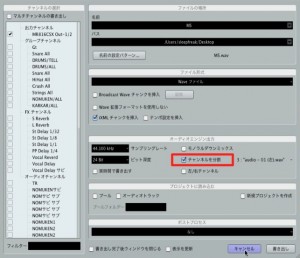
Export with the channels split.
Video Highlights: Apply M/S Processing
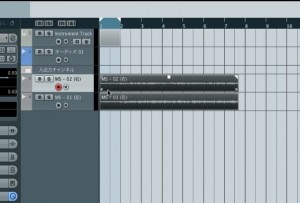
Import the exported audio files.
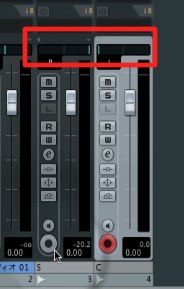
Recreate the routing used before the audio export:
pan the center hard left
and the side hard right.
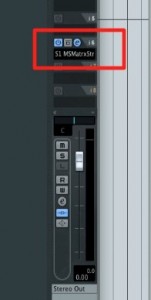
Apply MS Matrix to the master track again.
This decodes the signals back to stereo.
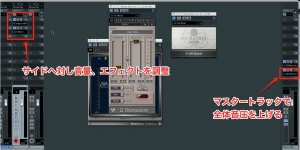
You can now adjust the volume or apply effects to the side only.
Finally, adjust the overall loudness on the master track to finish.
Frequently Asked Questions
Q1. What is M/S processing?
M/S processing separates a stereo signal into mid (center) and side components so they can be processed independently. Increasing the side level can widen the stereo image; the effect on loudness depends on the material and settings.
Q2. What are the advantages of Waves MS Matrix?
Traditional M/S setups can involve multiple steps. MS Matrix can be applied to the master track to make separating and processing the mid and side components easier and streamline the workflow.
Q3. Can beginners use M/S processing?
Yes. With MS Matrix, the workflow shown involves applying the plug-in to the master track and exporting the audio. Listen carefully to the result as you adjust it.
Q4. What is the final step after M/S processing?
After adjusting the side level or applying effects, adjust the overall loudness on the master track to finish and check the balance.
NEW ARTICLES
Latest English Articles