The distance between notes: understanding intervals

This time, let's learn about intervals.
There is a lot to memorize at first.
However, intervals also play an important role in the explanation of chords later on.
To explain intervals in a word:
- Interval = the distance between two notes.
First, take a look at the images below.
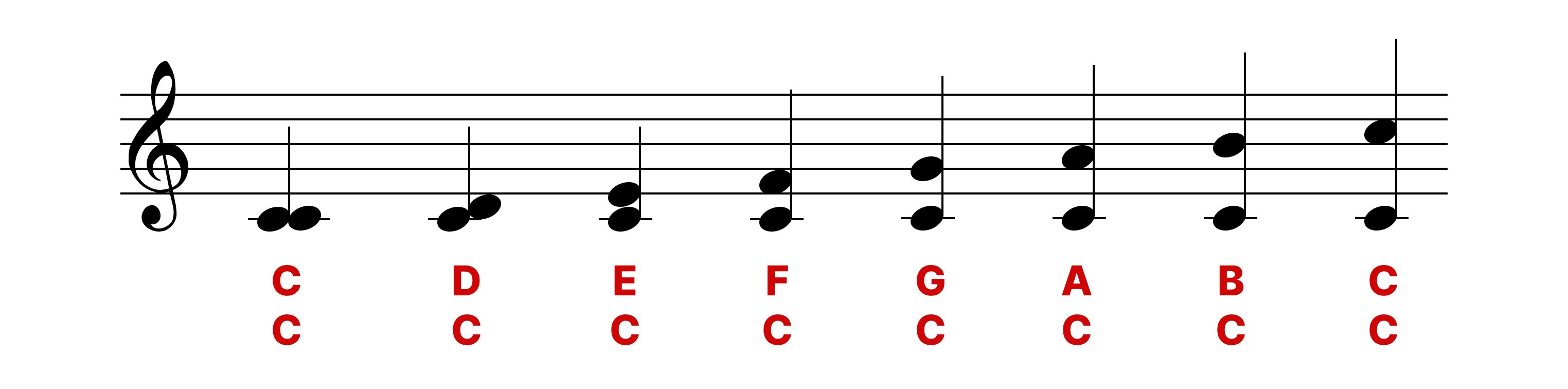
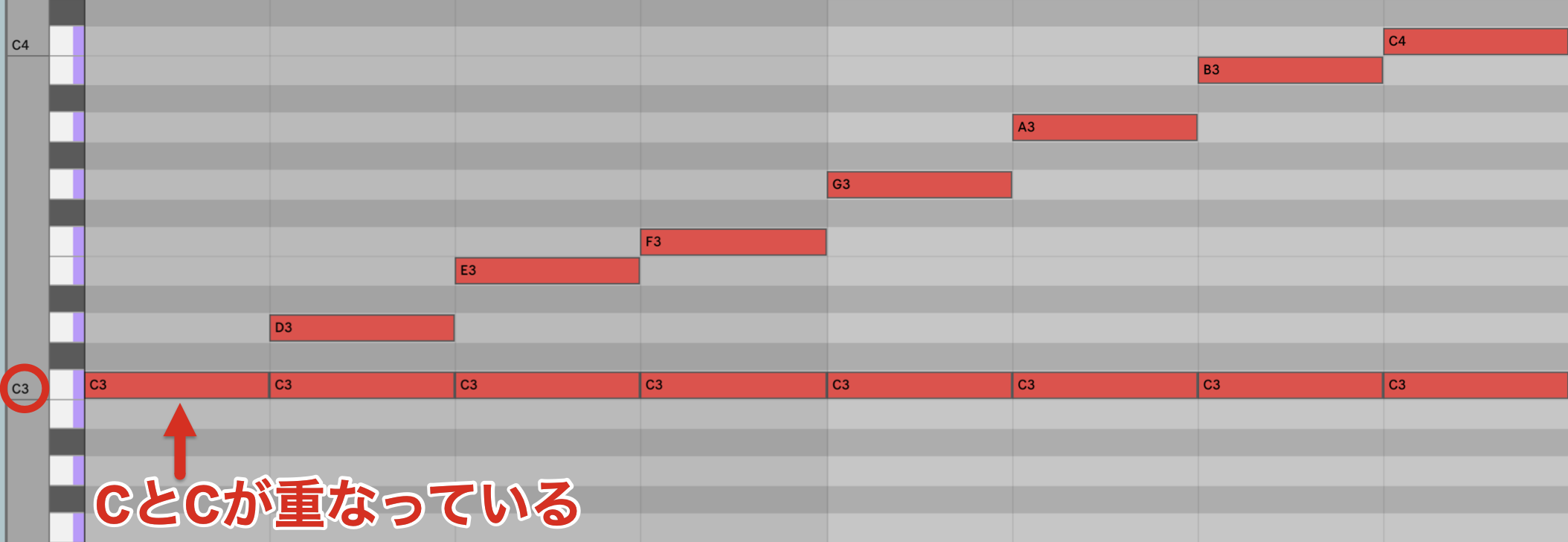
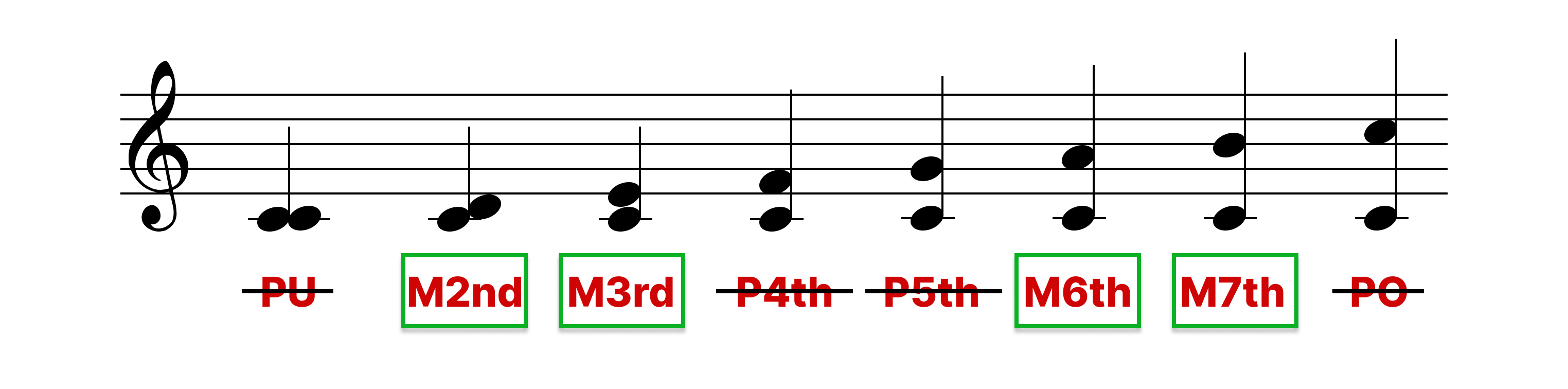
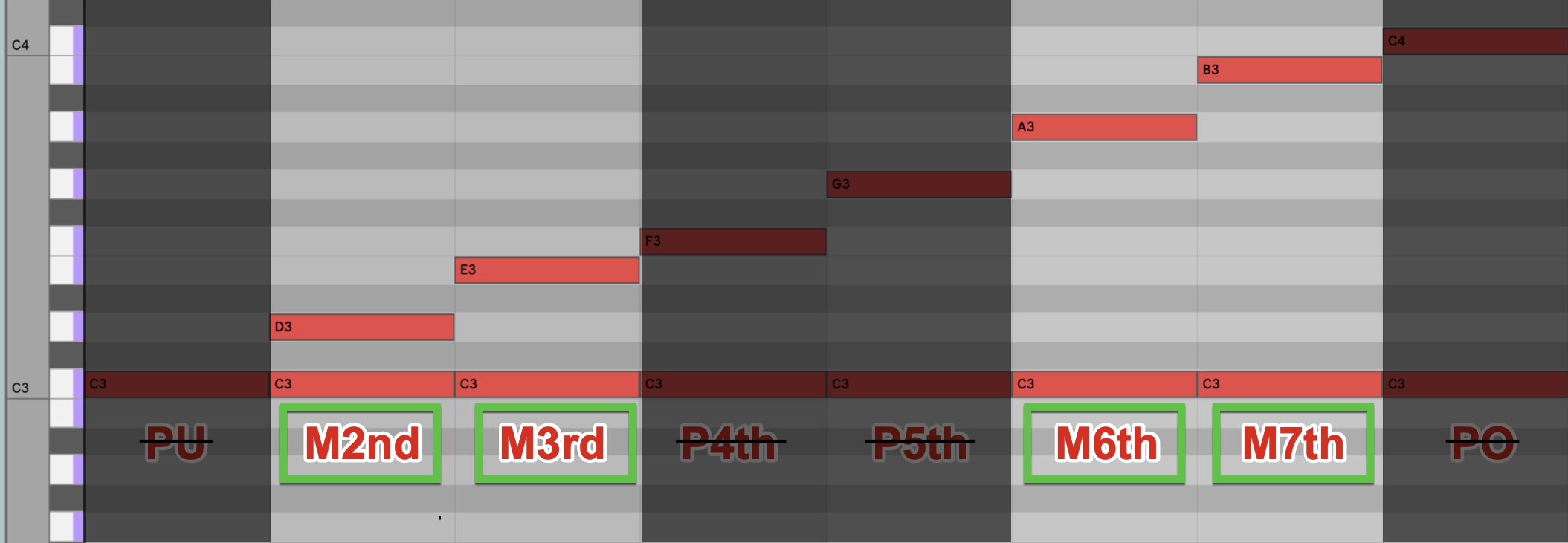
Enter the note C eight times, then layer the C major scale on top of it.
That completes the preparation.
Let's listen to the pitches in this state.
Each pitch creates a different sound.
The distance between the reference pitch "C" and each pitch has a name.
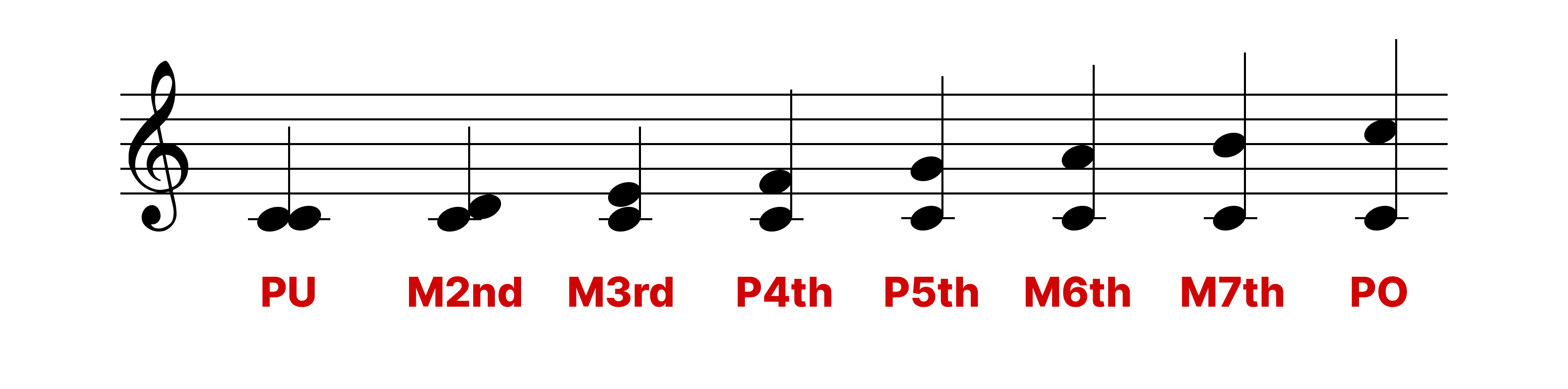
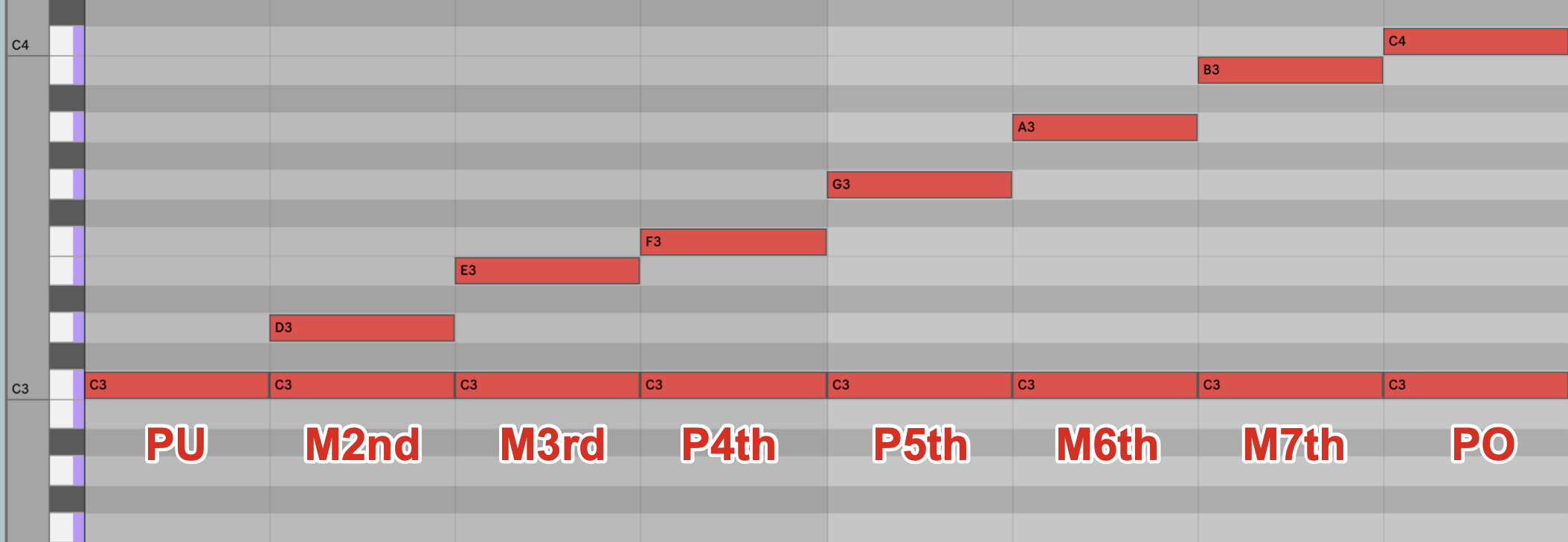
- PU = Perfect Unison
- M2nd = Major 2nd
- M3rd = Major 3rd
- P4th = Perfect 4th
- P5th = Perfect 5th
- M6th = Major 6th
- M7th = Major 7th
- PO = Perfect Octave
People often say "one octave up" or "an octave down"; C4 can be described as one octave above C3.
There are intervals named "major" and intervals named "perfect."
Let's focus on this.
Major and perfect intervals
Let's listen to M2nd, M3rd, M6th, and M7th.
Next, let's listen to the "perfect" intervals: PU, P4th, P5th, and PO.
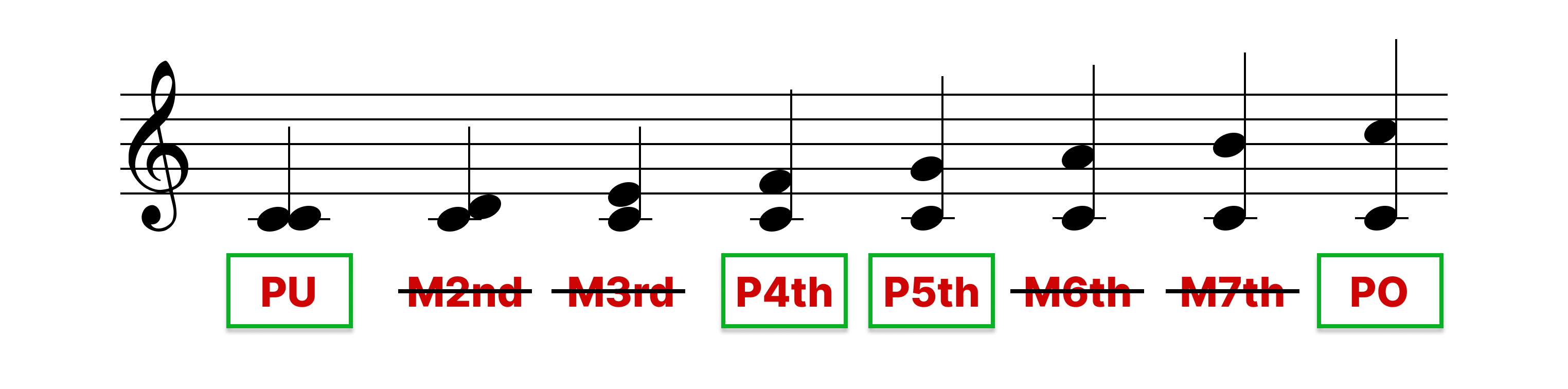
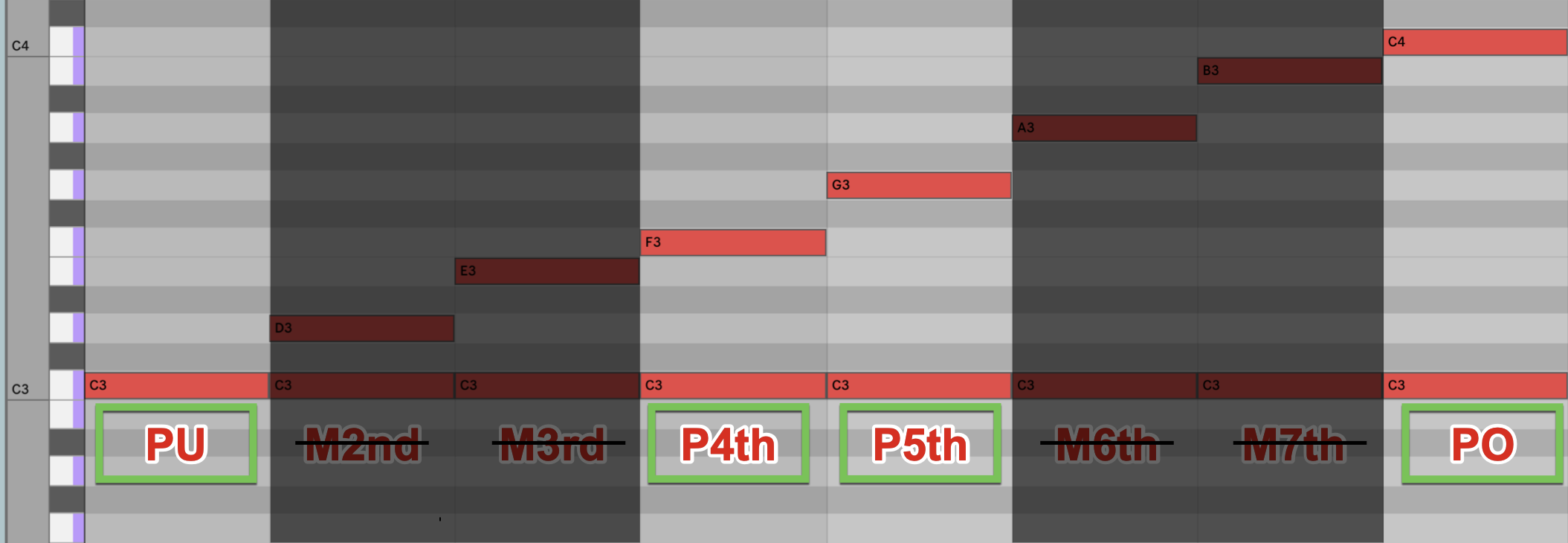
The intervals named perfect sound clean, without muddiness.
They are called "perfect" fourths, "perfect" fifths, and so on.
The sound created between the two notes resonates "perfectly," producing a crystal-clear sound.
Let's stop here for this lesson.
Note that an interval is the distance between a reference note and a note layered on it, and that this distance creates musical sound.
Next time, we will explain the sounds created by adjusting these intervals.
Frequently asked questions
Q1. Why do I need to learn intervals for music production?
Intervals form the foundation of the chord theory explained later and are essential for understanding what sound each combination of notes produces. This lets you build songs theoretically rather than by feel alone.
Q2. How do perfect intervals and major intervals sound different?
Perfect intervals produce a clean, clear resonance without muddiness, while major intervals have a different tonal color. This difference is used to color songs and create atmosphere.
Q3. What is an octave?
An octave is the relationship between notes with the same name whose frequencies differ by a factor of two. For example, the distance from C3 to C4 is one octave, and this concept is the basis for recognizing scales in music production.
NEW ARTICLES
Latest English Articles