DAW Usage Survey: Results from 3,952 Respondents
2020 DAW Ranking Results
First, let's look at the computers our respondents use.
- Mac: 1,678 respondents — 42.46%
- Windows: 2,363 respondents — 63.08%
Respondents could select more than one operating system to account for those using both Mac and Windows.
The percentages total 105.54%, indicating that approximately 219 of the 3,952 respondents use both Mac and Windows.
Although the difference is not overwhelming, more respondents use Windows.
The popular DAW Logic X runs only on Mac, so the operating-system split inevitably has some influence on the rankings.
FL Studio, meanwhile, added Mac support in version 20. It will be interesting to see how that affects the results.
Now let's move on to the DAW rankings.
As in last year's survey, these figures represent the combined ownership of main and secondary DAWs among 3,952 respondents.
1st: Cubase — 1,698 Votes, 43.7% Usage Share
Main DAW: 1,336 votes (1st) / Secondary DAW: 362 votes (2nd)

Cubase takes first place again this year, with a commanding lead.
Cubase remains strong in Japan. Its extensive features and ability to cover a wide range of genres may be among the reasons.
Its usage share increased by 2.1 percentage points compared with last year's survey.
2nd: Studio One — 1,104 Votes, 28.4% Usage Share
Main DAW: 716 votes (2nd) / Secondary DAW: 388 votes (1st)

Studio One moves up from third place last year to second place.
Its usage share also increased by 4.8 percentage points.
The availability of a capable, completely free edition is likely a major factor.
Many respondents also use it as a secondary DAW because its mastering features let them finish an entire production within the software.
3rd: Logic — 950 Votes, 24.4% Usage Share
Main DAW: 679 votes (3rd) / Secondary DAW: 271 votes (4th)
Logic drops one place from second last year to third this year.
Its usage share decreased by 0.3 percentage points.
The lack of a major announcement such as Logic 11 may have meant fewer headlines. However, frequent smaller updates and instrument additions make it an excellent DAW for existing users.
Considering the Mac/Windows split above, these results also show the strength of Apple's brand and the quality of the DAW.
4th: FL Studio — 664 Votes, 17.1% Usage Share
Main DAW: 434 votes (4th) / Secondary DAW: 230 votes (7th)

FL Studio holds on to fourth place from last year.
It stands out for its particularly strong support among producers working in EDM-related genres.
It has been about a year and a half since the Mac version was released.
Of its 664 votes, 94 came from Mac users, suggesting potential for further growth.
Its usage share also increased by 4.1 percentage points compared with last year.
5th: Ableton Live — 503 Votes, 12.9% Usage Share
Main DAW: 263 votes (5th) / Secondary DAW: 240 votes (5th)

Ableton Live also retains its position from last year, ranking fifth.
Like FL Studio, it enjoys strong support among producers working in EDM-related genres.
Outside Japan, where there are many EDM producers, it is popular enough to compete for first or second place.
6th–10th Place
The results for sixth through tenth place are as follows.
- 6th: GarageBand — 390 votes, 10% usage share
Main DAW: 50 votes (8th) / Secondary DAW: 340 votes (3rd) - 7th: Pro Tools — 372 votes, 9.6% usage share
Main DAW: 137 votes (6th) / Secondary DAW: 235 votes (6th) - 8th: Cakewalk by BandLab — 256 votes, 6.6% usage share
Main DAW: 103 votes (7th) / Secondary DAW: 153 votes (8th) - 9th: Maschine — 101 votes, 2.6% usage share
Main DAW: 15 votes (13th) / Secondary DAW: 86 votes (9th) - 10th: Reaper — 90 votes, 1.3% usage share
Main DAW: 26 votes (11th) / Secondary DAW: 64 votes (11th)
Pro Tools drops one place, with GarageBand, which comes with Mac computers, taking sixth place.
GarageBand is often used as a secondary DAW. When counting main DAWs alone, Pro Tools ranks sixth.
11th–16th Place: Combined Main and Secondary DAW Votes (Added)
- 11th: KORG Gadget — 89 votes
- 12th: Sonar — 86 votes
- 13th: Reason — 65 votes
- 14th: Digital Performer — 59 votes
- 15th: Ability — 47 votes
- 16th: Acid — 45 votes
How Many People Use Multiple DAWs?
This survey counted main and secondary DAWs separately.
Here, we'll focus on the six highest-ranked main DAWs and examine how they relate to secondary DAW use.
Of the 3,952 respondents, 3,565 used one of the top six main DAWs.
That means approximately 90% used one of these six leading DAWs.

Of these 3,565 users, 1,982 (55.6%) also used a secondary DAW.
The remaining 1,583 (44.4%) used only their main DAW, with no secondary DAW.
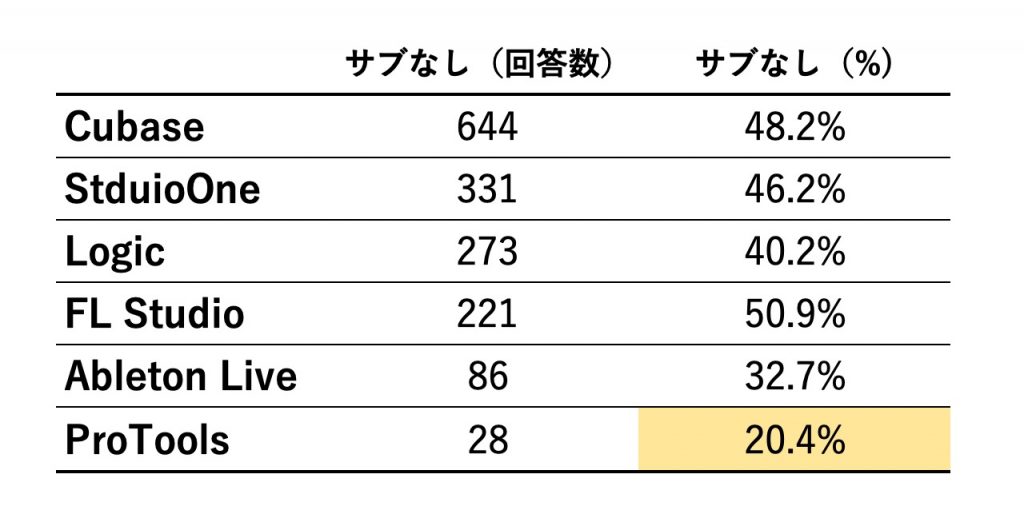
Here is the breakdown of secondary DAW use by main DAW.
Among Pro Tools users, 80% use a secondary DAW: four out of five combine it with another DAW.
One common pattern may be to use Pro Tools for exchanging projects with recording studios and for audio recording and mixing, while using another company's DAW for MIDI programming.
We also think a lower rate of secondary DAW use may suggest greater satisfaction with the main DAW, with fewer unmet functional needs.

The following chart shows which secondary DAWs are used alongside each leading main DAW.
- Pro Tools users, who frequently use another DAW, often pair it with Studio One or Logic.
- Is Studio One often paired with Cubase for mastering?
- Combining Logic, FL Studio, or Live with Maschine is another trend.
- In EDM-related genres, pairing Logic, FL Studio, or Live with Maschine is also a trend.
- With Sonar's development and support having ended, many users are considering switching to Cubase or Studio One.
- GarageBand, which comes with a Mac, is often used alongside Logic—or users have upgraded from GarageBand to Logic.
- Live is frequently paired with KORG Gadget, which offers a wide variety of distinctive synthesizer instruments.
These were our impressions of the results.
Music Genres by DAW
We also asked respondents which genres they produce and which DAWs they use.
First, here are the genres produced across all DAWs. Respondents could select more than one genre.

Musical genres are diverse and difficult to categorize. Unfortunately, we also forgot to include Hip-Hop/Trap among the choices.
Here are the results with those genres grouped into broader categories.

Pop songs with vocals are the most common, followed by EDM.
Here is the genre breakdown by DAW.

Pro Tools has a strong presence in vocal music and music featuring live instruments, while FL Studio and Live are particularly strong in EDM.
Cubase also stands out for its balanced distribution across genres. The results clearly reflect the different characteristics of these DAWs.
About Our Respondents
Finally, let's look at the people making music with computers.
Gender
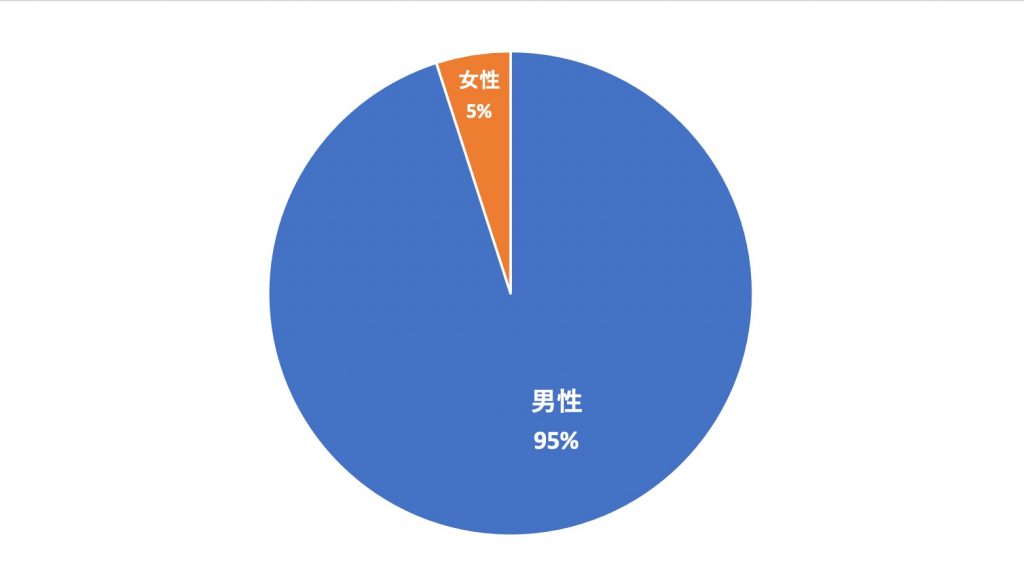
- Male: 3,756 respondents — 95.04%
- Female: 196 respondents — 4.96%
As expected, the respondents were overwhelmingly male.
If more women feel comfortable getting into computer-based music production, it could bring even more energy to the industry.
We will also keep working to help people who are not confident with computers or are just starting music production avoid giving up along the way.
Age
Here is the age distribution of those who took part in the survey.
It also gives us a picture of the people who use our content.
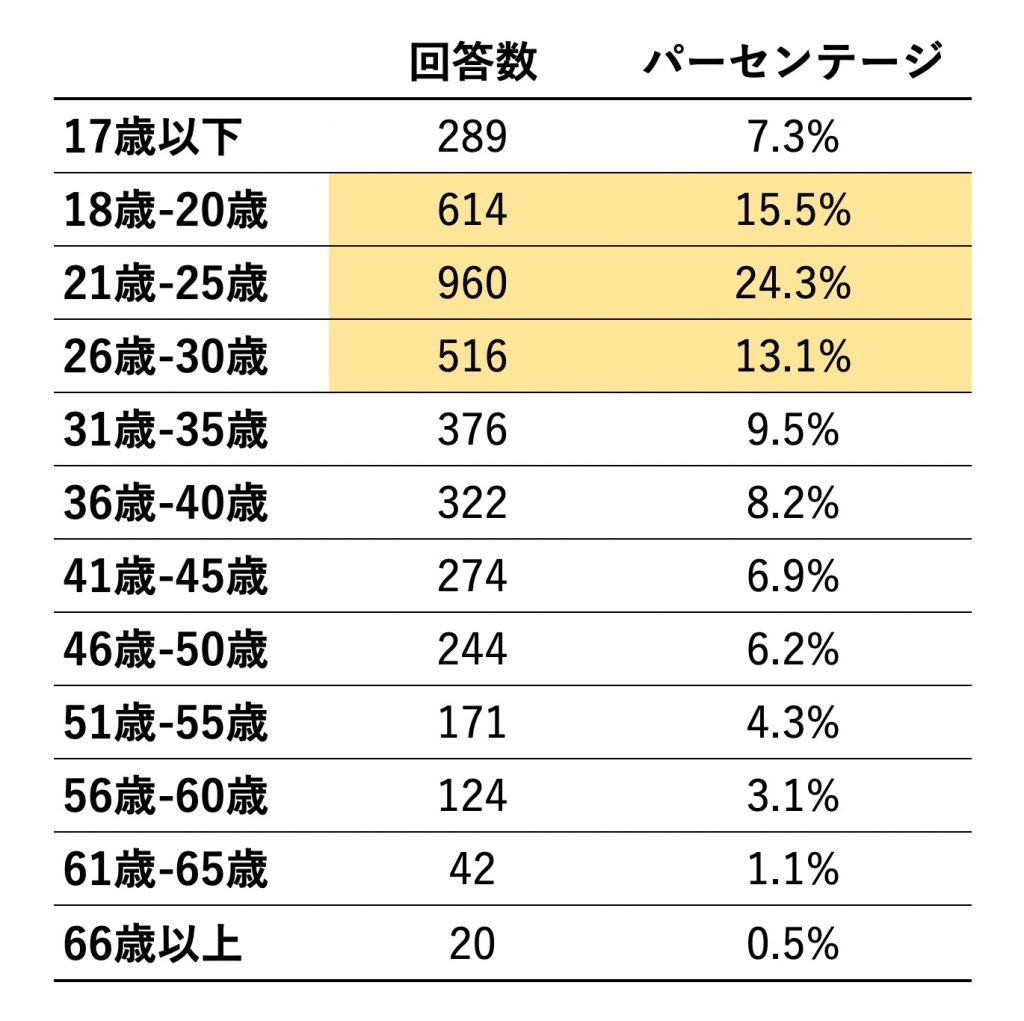
Young people aged 18–25 make up the largest group, accounting for approximately 40%.
Respondents aged 17 or younger account for 7.31%, with participation generally declining in the older age groups.

We can see that DAW preferences vary by age.
Music Production Goals and Occupations
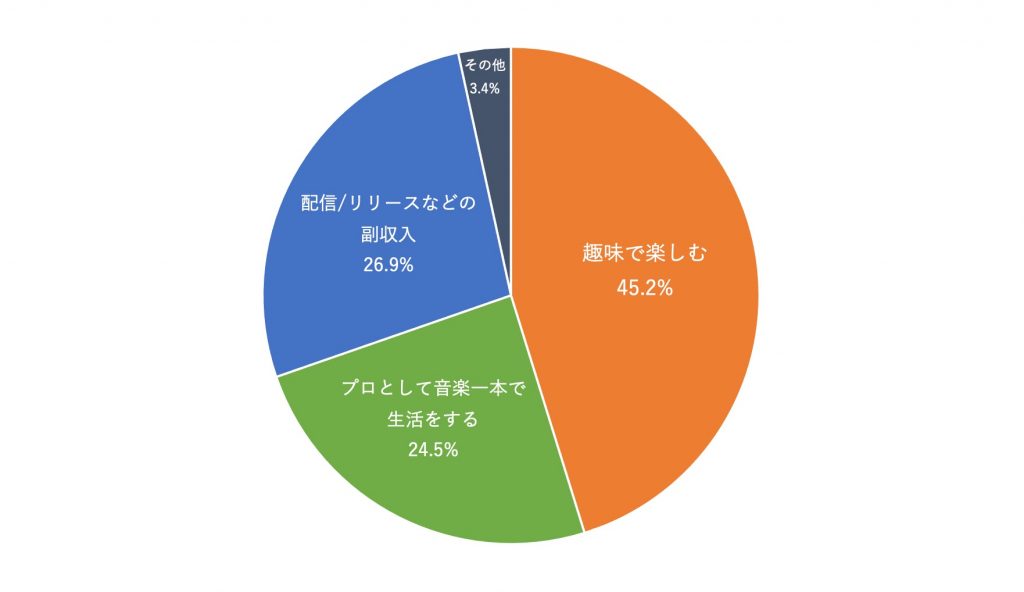
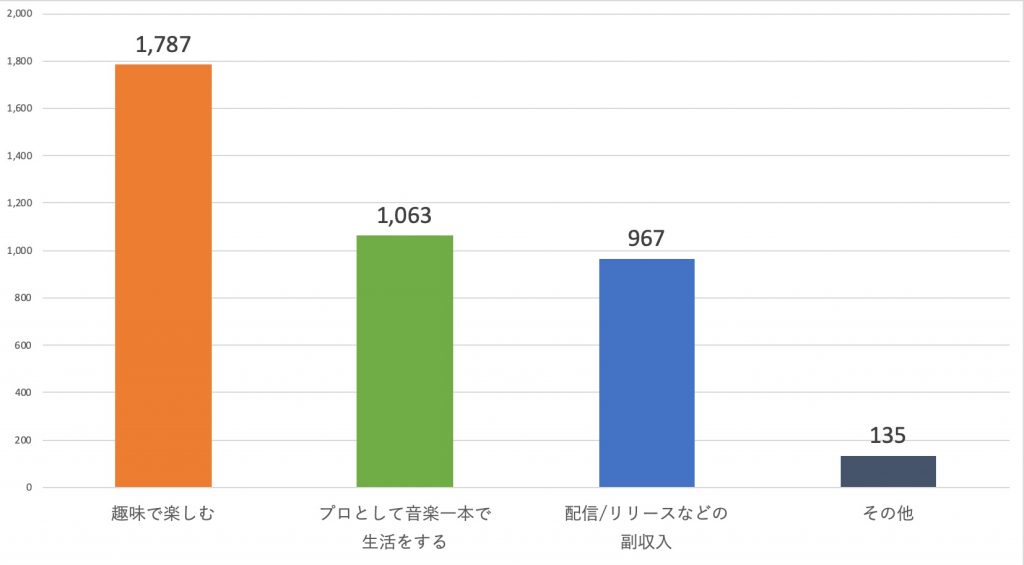
The largest group makes music as a hobby: 1,787 respondents, or 45.22%.
Other frequently mentioned answers included:
- Writing songs for major-label artists
- Creating music for games and getting it used in games
- Making music as a means of personal expression
These were also common responses.
There were differences in DAW use between those aiming to become professionals (or already working professionally) and those making music as a hobby. (Added)

The DAWs shown above display particularly clear differences.
The most common occupations among respondents were:
- Students: 1,214 respondents — 30.72%
- Music-related work: 534 respondents — 13.51%
- IT / Programming: 390 respondents — 9.87%
These were the leading categories.
We are delighted that our content reaches many people working in music, as well as students.
Final Thoughts
Thank you very much to everyone who took the time to answer our survey.
We will use your requests and suggestions to help shape our future content.
We are also grateful for all the encouraging comments.

We've put together an article covering the results of our 2020 DAW rankings, based on 3,952 survey responses! 🎉
It also covers computer platforms, multiple-DAW use, music genres by DAW, gender, age, and more! ‼️
Thanks for watching! ✨📝 Article: https://t.co/5dYoPHFVjI
🎥 YouTube: https://t.co/GmDH3hTFDL#DTM #DTMer pic.twitter.com/iVetE04ZN9
— SLEEP FREAKS (@SLEEPFREAKS_DTM) January 26, 2020
NEW ARTICLES
Latest English Articles