Overview of the "6/9 (Six-Nine)" Chord

Over the past several lessons, we have introduced chords created by adding notes to or altering standard chords.
This time, we cover a chord created by modifying the sixth chord: the "6/9 (six-nine)".
Learn it while paying attention to how it differs from the sixth chord.

The Sound of the Six-Nine
First, let's compare a major sixth with a major six-nine.
The chord tones are played one by one, followed by the chord.
- C6
- C6/9
The six-nine gives the impression of more sparkle, thickness and spaciousness.
Notation of the Six-Nine
The six-nine has various notations, as shown below.

Here, as already written, we will use 6/9.
How the Six-Nine Is Formed
If you have studied this far, you can probably guess, but let's use the major scale again to check what note is added to the sixth.
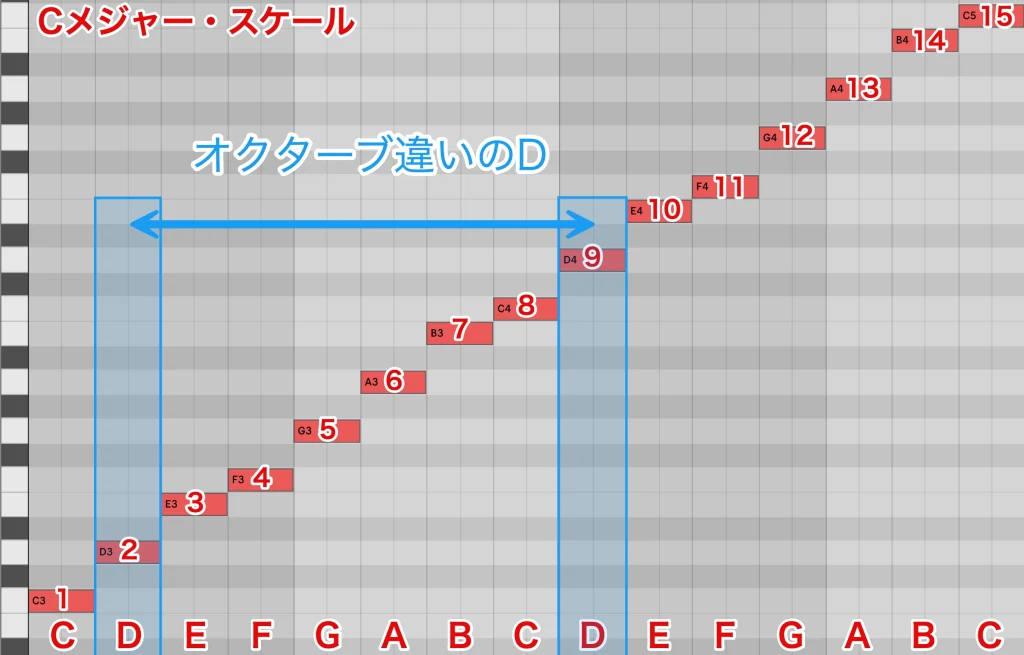
For C6/9, D, the 9th note counting from the root (M9th), is added to the 6th chord.
Of course, the D an octave lower also counts.
Let's check it on the score and the piano roll.

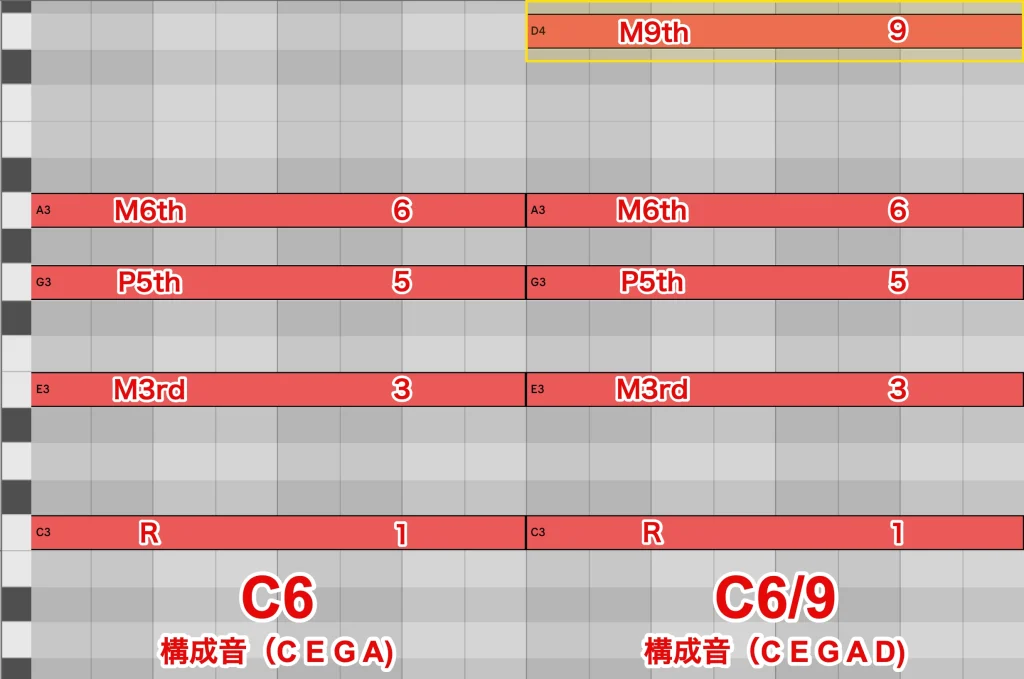
As you can see, it is a chord with five stacked notes.
Using the Six-Nine
This time, let's compare a regular triad, a sixth and a six-nine in a II-V-I progression.
- IIm7 → V7 → I Dm7 → G7 → C
- IIm7 → V7 → I6 Dm7 → G7 → C6
- IIm7 → V7 → I6/9 Dm7 → G7 → C6/9
You could also deliberately end with a top note other than the root.
Try all kinds of voicings and variations.
The Minor Six-Nine Chord
Finally, let's also check the minor six-nine.
The point to watch with major sixth and minor sixth chords was the difference in the 3rd.
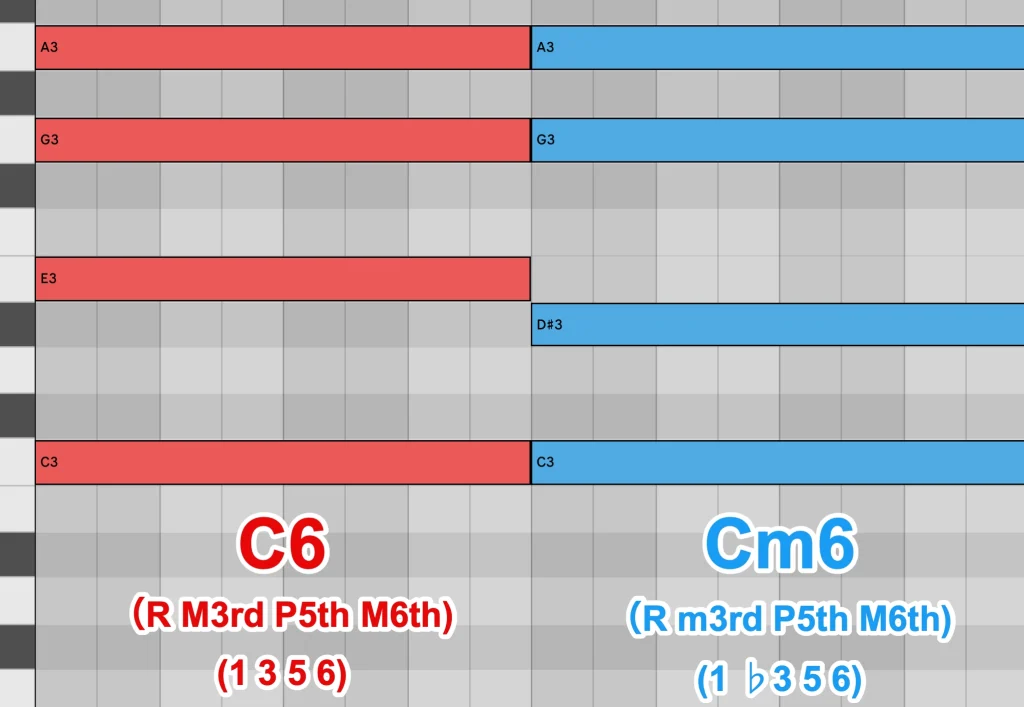
The same applies to the six-nine.
Let's compare the sound of the two.
- Cm6
- Cm6/9
If by now you can imagine the notes just by listening, that's wonderful.
To check your answer, let's look at the root position on the score and the piano roll.


In minor, a slightly mysterious atmosphere is added.
When you find it while analyzing songs, pay attention to the kind of flow it is used in.
This wraps up chords for now; from next time, we move on to content of a slightly different flavor.
Be sure to thoroughly review what you have learned so far before going on.
Frequently Asked Questions
Q1. What is the difference between a 6/9 chord and a 6 chord?
A 6/9 chord is a 6 chord with the 9th note from the root added (such as the note D on the major scale). Adding the 9th gives a more sparkling, spacious sound.
Q2. In what situations is the minor six-nine used?
The minor six-nine has a somewhat unstable, mysterious atmosphere, so it can be used effectively in jazz, background music and emotional sections of pop songs.
Q3. What notations are there for the 6/9 chord?
Besides 6/9, there are several notations such as add9 and 6add9, but this article uses 6/9 throughout. DAW software uses similar notations.
Q4. What effect does changing the voicing have?
Varying the voicing, for example by ending with a top note other than the root, changes the impression and flow even with the same chord, leading to more refined music.
NEW ARTICLES
Latest English Articles